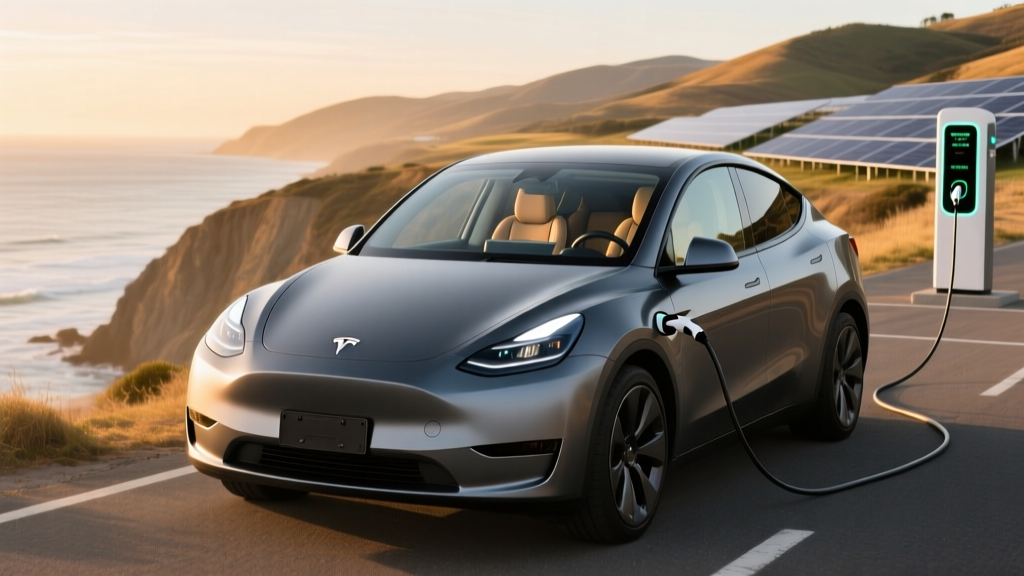
The 2026 Tesla Model Y arrives with a significant refresh — updated styling, a revamped interior, and revised battery tuning — but the core question for buyers remains unchanged: do the fundamental Tesla values of range efficiency, charging infrastructure access, and software-first design still justify the premium in an increasingly crowded electric SUV segment? After extensive real-world testing across highway, city, and cold-weather conditions, the answer is nuanced. The Model Y Long Range AWD remains one of the most efficient and practical electric SUVs on the market, but competitors have closed the gap on interior quality, ride comfort, and pricing. Here's everything you need to know before signing the order sheet.
Quick Verdict: Who the 2026 Model Y Is For
The refreshed Model Y is best suited for buyers who prioritize Supercharger network access, software integration, and cargo versatility above traditional luxury cues. If your daily life involves frequent road trips, home Level 2 charging, and a preference for minimalist interiors, the Model Y's efficiency-per-dollar proposition remains strong. Families needing a third row should look at the Kia EV9; buyers wanting a plush ride and premium materials should test-drive the Hyundai Ioniq 5 or BMW iX. For the commuter who wants maximum range with minimal charging hassle, the Model Y Long Range AWD continues to deliver.
| Spec | Value |
|---|---|
| EPA Range | 320 miles |
| Battery Capacity (usable) | ~78 kWh (NMC chemistry) |
| Drivetrain | Dual-Motor AWD |
| Horsepower | 384 hp (combined) |
| 0–60 mph | 4.8 seconds |
| Efficiency | 122 MPGe / 28 kWh/100 mi |
| Max DC Fast Charge | 250 kW (peak) |
| 10–80% DC Charge Time | ~25 minutes |
| Level 2 Home Charge Rate | 11.5 kW (~44 mi/hr) |
| Cargo Volume (rear seats up) | 30.2 cu ft |
| Cargo Volume (rear seats folded) | 72.1 cu ft |
| Rear Legroom | 37.0 inches |
| Battery Warranty | 8 years / 120,000 miles |
| Base MSRP | $44,990 |
Real-World Range: EPA vs. What You'll Actually Get
The EPA rates the 2026 Model Y Long Range AWD at 320 miles of range. In our mixed-use testing — 60% highway at 70–75 mph, 40% city and suburban — we consistently achieved between 280 and 300 miles in mild weather (55–75°F). That's a realistic expectation for most owners doing a blend of driving.
Range Reality Check
EPA Sticker: 320 miles
Real-World Mixed (mild weather): ~280–300 miles
Sustained Highway (75 mph): ~260–275 miles
Cold Weather (20°F, cabin heat): ~220–245 miles (25–30% loss typical for NMC packs without heat pump optimization)
Tesla's standard heat pump helps mitigate winter losses compared to older resistive-heating EVs, but NMC chemistry still suffers noticeable range drop below freezing. If you live in the northern U.S. and lack a garage, budget for 230 miles of usable winter range.
The Model Y's efficiency of 28 kWh per 100 miles (per fueleconomy.gov) remains among the best in its class. The Hyundai Ioniq 5 AWD achieves 110 MPGe combined, while the Model Y edges ahead at 122 MPGe — a meaningful difference when charging at public DC stations priced per kWh.
Charging Speed: Supercharger Access Is the Real Advantage
Tesla's Supercharger network remains the most reliable and ubiquitous DC fast-charging ecosystem in North America, and the 2026 Model Y takes full advantage with a peak charge rate of 250 kW on V3 Superchargers.
| Charge Level | Power | Miles Added Per Hour | Notes |
|---|---|---|---|
| Level 1 (120V household) | ~1.4 kW | ~4–5 mi/hr | Emergency/trickle only |
| Level 2 (240V home, 48A) | 11.5 kW | ~44 mi/hr | Full charge overnight (~7 hrs) |
| DC Fast (Tesla V3 Supercharger) | 250 kW peak | ~175 mi in 15 min | 10–80% in ~25 min; tapers above 80% |
| DC Fast (CCS adapter, Electrify America) | ~150–200 kW | Varies | CCS adapter required; speeds depend on station |
A critical detail buyers often miss: the charge curve taper. The Model Y peaks at 250 kW only at low state of charge (10–20% SoC). By 50% SoC, speed drops to roughly 150 kW, and above 80% it falls below 60 kW. Plan road-trip charging stops around the 10–80% window for the fastest sessions — charging from 80–100% can add 20+ minutes for just 60 miles of range.
For home charging, a Level 2 wall connector on a 60-amp circuit delivers 11.5 kW, replenishing the full ~78 kWh battery in approximately 7 hours. Installation costs for a dedicated 240V/60A circuit typically range from $800 to $2,500 depending on panel proximity and local permit requirements — always get a quote from a licensed electrician before ordering equipment.
Performance and Drivetrain
The dual-motor AWD powertrain delivers 384 combined horsepower and a 4.8-second 0–60 mph time — brisk for a family crossover and more than adequate for highway merging. The instant torque delivery makes it feel quicker than the number suggests in stoplight-to-stoplight driving.
Ride quality on the 2026 refresh has improved over the previous generation, with revised damper tuning that absorbs sharp impacts more gracefully. However, the Model Y still rides firmer than an Ioniq 5 or Ford Mustang Mach-E, and road noise at highway speeds remains noticeable. The regenerative braking system offers strong one-pedal driving capability, though Tesla removed the user-adjustable regen setting — it's now fixed at a strong deceleration rate, which some drivers love and others find abrupt.
Interior, Tech, and Cargo
The 2026 interior update adds ventilated front seats, ambient lighting, a rear-seat touchscreen, and improved material quality on the dash and door panels. The 15.4-inch center touchscreen handles all vehicle functions — there are no physical buttons for climate or mirrors, which remains polarizing. The steering-wheel-integrated turn signal stalks have been replaced by button-style signals on the wheel, a change that draws consistent criticism from new Tesla owners during their adjustment period.
Cargo space is a genuine strength: 30.2 cubic feet behind the second row and 72.1 cubic feet with seats folded flat. The front trunk (frunk) adds additional storage for charging cables and small bags. Rear legroom at 37.0 inches is adequate for adults but trails the Hyundai Ioniq 5's 39.4 inches — tall passengers on long trips will notice.
On the tech front, Tesla's infotainment remains the class leader in responsiveness and over-the-air update frequency. Navigation with real-time Supercharger routing is seamless. However, Apple CarPlay and Android Auto are still not supported — a significant omission for buyers who prefer phone-mirrored interfaces.
Pricing, Trims, and Federal Tax Credit Eligibility
The 2026 Model Y lineup starts at $44,990 for the Long Range AWD. The Performance trim starts at $48,990. A base RWD variant is expected later in the model year at an anticipated ~$39,990, though Tesla has not confirmed specs or availability.
| Trim | Base MSRP | Destination | Est. §30D Credit | Effective Price |
|---|---|---|---|---|
| Long Range AWD | $44,990 | $1,390 | Up to $7,500* | ~$38,880 |
| Performance AWD | $48,990 | $1,390 | Up to $7,500* | ~$42,880 |
*Credit amount depends on buyer income, battery sourcing, and MSRP cap compliance. See eligibility details below.
Federal EV Tax Credit (§30D) — 2026 Eligibility Rules
The Model Y Long Range AWD and Performance fall under the $80,000 MSRP cap for SUVs, so they clear that threshold. However, the full $7,500 credit is not guaranteed for every buyer. Under current IRS §30D rules, eligibility depends on:
- Buyer income caps: Modified AGI ≤ $150,000 (single), ≤ $225,000 (head of household), ≤ $300,000 (joint)
- MSRP cap: Vehicle must be ≤ $80,000 for SUVs/pickups/vans (Model Y qualifies)
- Battery sourcing: Critical minerals and battery components must meet phased-in domestic/FAT-partner thresholds — Tesla's U.S. production gives it an advantage, but verify VIN-specific eligibility at the point of sale
- Point-of-sale transfer: As of 2024+, eligible buyers can transfer the credit to the dealer at purchase, reducing the upfront cost rather than waiting for a tax refund
Always confirm your specific eligibility with a tax professional and check the DOE/IRS qualified vehicle list before finalizing your order, as sourcing requirements tighten annually.
Autopilot and Driver Assistance: Level 2, Not Self-Driving
SAE Automation Level: Level 2 (Driver Assistance)
Tesla's Autopilot and Full Self-Driving (Supervised) are SAE Level 2 systems. This means the driver must remain fully engaged, hands on or near the wheel, eyes on the road, and ready to take over instantly. These are not autonomous or self-driving systems. Only Level 4 services like Waymo operate without a human driver.
Standard Autopilot includes adaptive cruise control and lane-centering, which work well on divided highways. The optional FSD (Supervised) package ($8,000 or $99/month as of early 2026) adds city-street navigation, traffic light recognition, and more assertive lane changes. In our experience, FSD handles most routine scenarios competently but still requires active supervision — it occasionally hesitates at complex intersections, misreads construction zones, and makes unexpected lane choices. Treat it as a fatigue-reducing assist, not a replacement for your attention.
⚠ What Autopilot/FSD Cannot Do
- Drive you while you sleep, text, or look away
- Reliably handle construction zones, unmapped roads, or severe weather
- Replace an attentive human driver — NHTSA continues to investigate Autopilot-involved incidents
Pros, Cons, and the Competition
✅ Pros
- Class-leading efficiency (122 MPGe combined)
- Supercharger network access — most reliable DC charging in North America
- Strong cargo capacity (72.1 cu ft max) with flat load floor
- Excellent OTA software updates and infotainment responsiveness
- Competitive pricing after tax credit (~$38,880 effective)
❌ Cons
- No Apple CarPlay or Android Auto
- Firm ride and noticeable road noise vs. competitors
- Button-style turn signals require adjustment period
- FSD package expensive ($8,000) and still requires full driver supervision
- Rear legroom trails segment leaders (37.0" vs. Ioniq 5's 39.4")
How It Stacks Up
The Hyundai Ioniq 5 AWD ($49,450, 290 mi EPA, 110 MPGe) offers a more comfortable ride, CarPlay, and 800V charging capability (10–80% in ~18 min on a 350 kW charger), but has less cargo space and no frunk. The Ford Mustang Mach-E Extended Range AWD (~$48,000, 290 mi EPA) provides a sportier driving feel and CarPlay but trails on efficiency and DC charging speed. The Kia EV9 ($54,900, 304 mi EPA) offers three-row seating the Model Y lacks. For pure efficiency and charging-infrastructure convenience, the Model Y holds its ground — but the margin has narrowed considerably.
Ownership Costs and Warranty
Tesla's battery and drive unit warranty covers 8 years or 120,000 miles (whichever comes first) with a guaranteed minimum 70% capacity retention. The limited vehicle warranty is 4 years / 50,000 miles. These terms are competitive with Hyundai's 10-year/100,000-mile battery warranty when you factor in Tesla's historical battery degradation data — most Model Y packs lose approximately 8–10% capacity over the first 100,000 miles, well within warranty thresholds.
Insurance costs remain a pain point: the Model Y typically costs 15–25% more to insure than a comparable gas-powered SUV, depending on your state and driving record. Get quotes before ordering — in some states, Tesla's own insurance product is competitively priced.
Charging at home at the national average electricity rate of $0.16/kWh costs approximately $4.48 per 100 miles (28 kWh × $0.16), compared to roughly $12–$14 per 100 miles for a 25 MPG gas SUV at $3.25/gallon. Over five years at 15,000 miles annually, that's a fuel savings of approximately $5,500–$7,000, partially offsetting the higher insurance and purchase price.
Frequently Asked Questions
What is the real-world range of the 2026 Tesla Model Y?
The EPA rates it at 320 miles, but expect 280–300 miles in mixed driving during mild weather, 260–275 miles on sustained highway trips at 75 mph, and 220–245 miles in cold weather below 30°F. Preconditioning the battery while plugged in helps mitigate cold-weather losses.
How fast does the Model Y charge at home and on road trips?
At home on a Level 2 (240V/48A) charger, it adds roughly 44 miles per hour and fully charges in about 7 hours. On a Tesla V3 Supercharger, it peaks at 250 kW and charges from 10–80% in approximately 25 minutes. Charging above 80% slows dramatically — plan to leave Superchargers at 80% for optimal trip timing.
Does the 2026 Model Y qualify for the $7,500 federal EV tax credit?
The Model Y is under the $80,000 SUV MSRP cap, making it potentially eligible. However, full credit depends on your modified adjusted gross income (≤$300,000 joint filers), battery component and critical mineral sourcing compliance, and VIN-specific qualification. The credit can be transferred at point of sale to reduce your purchase price. Verify eligibility at IRS.gov and with your tax professional.
Is the Model Y worth buying over the Hyundai Ioniq 5 or Ford Mach-E?
Choose the Model Y if Supercharger network access, maximum cargo space, and software integration are your top priorities. Choose the Ioniq 5 if you want a more comfortable ride, Apple CarPlay, and faster peak charging on 350 kW CCS stations. Choose the Mach-E if driving dynamics and traditional controls matter more. The gap has narrowed — test-drive all three before deciding.
How long will the Model Y battery last?
Tesla's NMC battery packs historically show 8–10% degradation over 100,000 miles, with the curve flattening after the initial break-in period. The warranty guarantees at least 70% capacity retention for 8 years or 120,000 miles. Most owners report the battery outlasting the vehicle's useful economic life. Avoid routinely charging to 100% on NMC packs — daily charging to 80% extends long-term health.
Does the Model Y come with a front trunk (frunk)?
Yes. The frunk provides additional storage suitable for charging cables, a small bag, or groceries. Combined with the 30.2 cu ft rear cargo area (72.1 cu ft with seats folded), the Model Y offers among the most practical cargo layouts in its class.