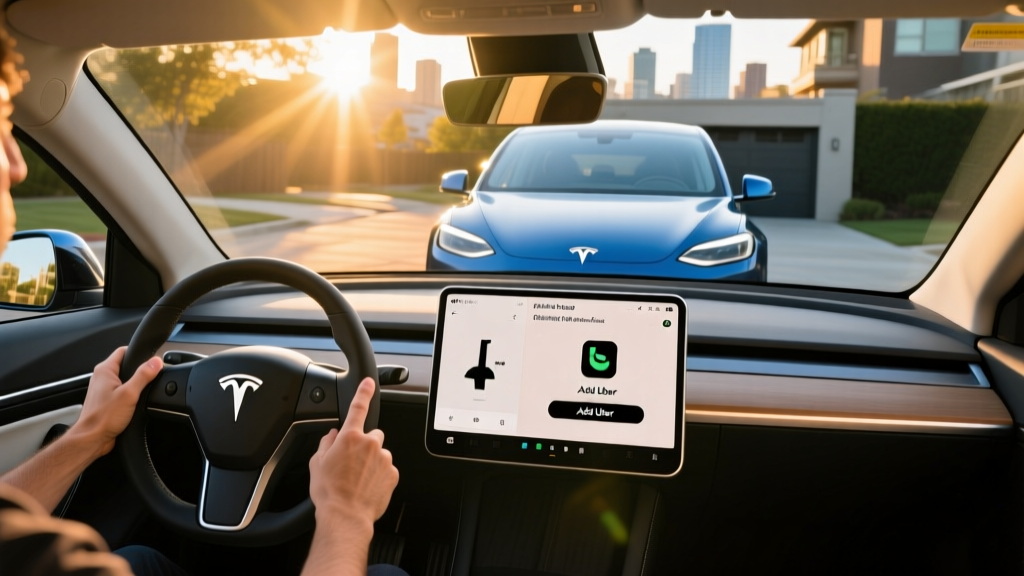
If you drive a Tesla and want to pick up Uber trips, you've probably searched for a native Uber app in the vehicle's infotainment system — only to come up empty. Tesla does not offer a dedicated Uber driver app in its onboard app launcher, and as of early 2026, there is no official integration between Uber's driver platform and Tesla's in-car software. But that doesn't mean you're out of luck. Below, we break down the practical workarounds for running Uber from a Tesla, then deliver a comprehensive 2026 Tesla Model Y profile covering range, charging, pricing, and ownership economics so you know exactly what you're signing up for as a rideshare driver or daily commuter.
Why There's No Native Uber App on Tesla (and What to Do Instead)
Tesla's infotainment system runs a proprietary Linux-based OS. Unlike Android Automotive vehicles (such as the Polestar 2 or Volvo EX30), Tesla does not support third-party app sideloading or a general app store for driver-facing applications like Uber or Lyft. The Tesla app ecosystem is curated and limited to Tesla-approved entertainment, navigation, and utility apps.
Workaround 1: Tesla In-Car Browser
The most direct method is to open the Tesla's built-in web browser and navigate to drivers.uber.com. From there, you can log into the Uber Driver portal. However, the browser experience has significant limitations:
- The browser is not optimized for the Uber Driver web interface — buttons may be misaligned, and the map view may lag.
- Trip requests and navigation handoff are clunky compared to the native mobile app.
- The browser may time out or require re-authentication frequently.
- You cannot receive push-style ride notifications through the browser.
Verdict: The browser method works in a pinch for checking earnings or account settings, but it is not a viable replacement for the Uber Driver app during active shifts.
Workaround 2: Phone Mount + Mobile App (Recommended)
The overwhelming consensus among Tesla rideshare drivers in 2026 is to use a phone mount and run the Uber Driver app on your smartphone. This is the only method that delivers full functionality:
- Real-time ride requests with audible and push notifications
- Turn-by-turn navigation via Uber's app or handoff to Google Maps/Waze
- In-app earnings tracking, ratings, and support
- Proper background operation while Tesla navigation runs on the main screen
Use a vent-clip or dashboard mount (avoid windshield mounts in states where they're illegal). Many Tesla drivers use a MagSafe-compatible mount attached to the left side of the center display or the air vent. Run the Uber Driver app on your phone while using Tesla's built-in navigation for the actual route guidance — this gives you the best of both worlds.
Workaround 3: CarPlay Adapter (Limited Tesla Support)
As of 2026, Tesla still does not natively support Apple CarPlay or Android Auto. Some aftermarket CarPlay adapter boxes (like Carlinkit) claim compatibility via the Tesla browser, but results are inconsistent, latency is high, and Tesla's software updates frequently break these workarounds. We do not recommend relying on a CarPlay adapter for professional rideshare driving.
2026 Tesla Model Y: Quick-Verdict Review for Rideshare Drivers
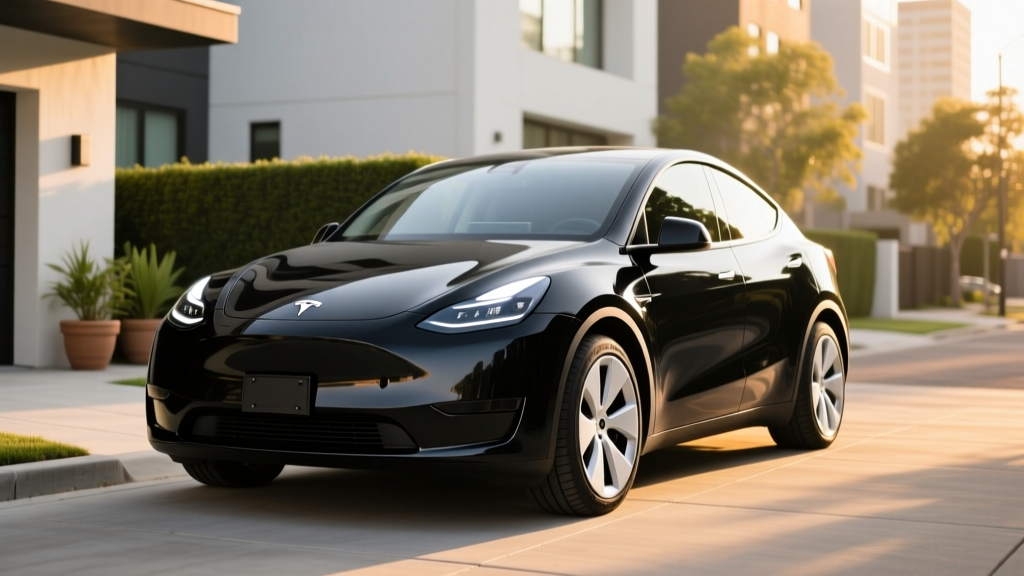
The Tesla Model Y remains one of the most popular EVs for Uber and Lyft drivers thanks to its spacious cabin, strong range, fast charging, and access to the Supercharger network. Here's the full spec breakdown for the 2026 model year.
| Spec | Long Range AWD | Performance AWD |
|---|---|---|
| EPA Range | 320 miles | 295 miles |
| Battery (usable) | ~75 kWh, NMC | ~75 kWh, NMC |
| Drivetrain | Dual-Motor AWD | Dual-Motor AWD |
| Horsepower | 384 hp | 510 hp |
| 0-60 mph | 4.8 sec | 3.5 sec |
| Max DC Fast Charge | 250 kW | 250 kW |
| 10-80% DC Time | ~25 min | ~25 min |
| Level 2 Home Charge | 11.5 kW (~44 mi/hr) | 11.5 kW (~44 mi/hr) |
| MPGe (combined) | 122 MPGe | 111 MPGe |
| Efficiency | 28 kWh/100 mi | 30 kWh/100 mi |
| Cargo (rear seats up) | 30.2 cu ft | 30.2 cu ft |
| Cargo (rear seats down) | 72.1 cu ft | 72.1 cu ft |
| Rear Legroom | 41.6 in | 41.6 in |
| Base MSRP | $47,990 | $52,990 |
| Battery Warranty | 8 yr / 120,000 mi | 8 yr / 120,000 mi |
Real-World Range: What the EPA Number Doesn't Tell You
EPA Estimated: 320 miles (Long Range AWD). Real-world expectation: ~260-280 miles at sustained highway speeds (70-80 mph). In cold weather (below 32°F), expect 20-30% range reduction, dropping effective range to ~220-250 miles without preconditioning. City driving with regenerative braking recovers energy and can exceed the EPA estimate in stop-and-go traffic — some drivers report 330+ miles in warm-weather urban conditions.
For rideshare drivers, this matters enormously. A typical Uber shift might cover 150-200 miles. The Long Range AWD can handle a full shift without a charging stop in moderate conditions, but if you're running 10+ hour shifts or driving in winter, plan for one mid-shift DC fast-charge session. The Model Y's access to Tesla Superchargers (over 6,500 stations in North America as of 2026) makes this far less painful than in competing EVs reliant on third-party networks.
Charging Speed: DC Fast, Level 2, and What Rideshare Drivers Need
| Level | Power | Miles Added per Hour | Typical Use Case |
|---|---|---|---|
| Level 1 (120V) | ~1.4 kW | ~5 mi/hr | Emergency/overnight trickle |
| Level 2 (240V, 48A) | 11.5 kW | ~44 mi/hr | Home daily charging |
| DC Fast (Supercharger V3/V4) | Peak 250 kW | ~1,000 mi/hr (peak) | Road trips, mid-shift top-ups |
The Model Y's charging curve is well-managed. At a V3 Supercharger, the battery will peak near 250 kW up to roughly 35-40% State of Charge (SoC), then taper progressively. The 10-80% session takes approximately 25 minutes — fast enough for a meal break during a rideshare shift. Above 80%, charging slows dramatically to protect the NMC battery chemistry; a full 10-100% session can take 45+ minutes. For daily driving and rideshare work, charge to 80-90% and only charge to 100% when you need maximum range for a long trip.
At home, a Wall Connector on a 60-amp circuit delivers the full 11.5 kW (48 amps). This adds roughly 44 miles of range per hour, meaning an overnight session (8 hours) replenishes around 350 miles — more than a full battery. Installation typically costs $500-$1,500 depending on panel proximity and local permitting, on top of the $475 Wall Connector hardware cost.
Pricing, Tax Credits, and Total Cost for Uber Drivers
| Trim | MSRP | §30D Credit Eligibility | Effective Price (if eligible) |
|---|---|---|---|
| Long Range AWD | $47,990 | Up to $7,500 (see rules) | ~$40,490 |
| Performance AWD | $52,990 | Up to $7,500 (see rules) | ~$45,490 |
Federal tax credit eligibility under IRS §30D is not automatic. To qualify for the full $7,500 credit in 2026, you must meet all of the following:
- MSRP cap: SUVs/vans must be under $80,000 (both Model Y trims qualify).
- Income cap: Modified AGI ≤ $150,000 (single) or ≤ $300,000 (joint filers).
- Battery sourcing: A percentage of critical minerals and battery components must be sourced from the US or free-trade-agreement countries. Tesla's US-built Model Y has historically met partial or full requirements, but the exact qualifying amount ($3,750 vs. $7,500) depends on current-year sourcing percentages confirmed by the IRS.
- Point-of-sale transfer: As of 2024+, you can transfer the credit to the dealer at purchase, reducing your out-of-pocket cost immediately rather than waiting for tax filing.
For rideshare drivers, the Model Y's eligibility for the full or partial credit significantly improves the financial case. Always verify current-year eligibility at fueleconomy.gov before purchasing, as battery-sourcing rules tighten annually.
Interior, Tech, and the Rideshare Passenger Experience
The Model Y's cabin is minimalist — a 15.4-inch center touchscreen controls virtually everything. For passengers, this means a clean, open rear seat with generous legroom (41.6 inches) and a flat floor. The 30.2 cu ft cargo area behind the rear seats easily fits 3-4 airport suitcases, a practical advantage for UberX and Uber Comfort trips.
Key tech features for drivers:
- Tesla Navigation: Excellent real-time routing with Supercharger-aware trip planning. Battery preconditioning activates automatically when navigating to a Supercharger, warming the pack for faster charging.
- Autopilot (standard): SAE Level 2 driver-assist with adaptive cruise control and lane centering. Useful for highway segments between rides, but you must keep hands on the wheel and eyes on the road. This is not self-driving.
- Full Self-Driving (Supervised): Optional $8,000 add-on (or $99/month). Still SAE Level 2 — requires active supervision. Adds automatic lane changes, traffic light/stop sign recognition, and Navigate on Autopilot.
- Sentry Mode & Dashcam: Built-in cameras record incidents, valuable for rideshare dispute resolution.
- Dog Mode / Climate Keep: Maintains cabin temperature between rides — useful during wait times.
Tesla Autopilot and FSD (Supervised) are SAE Level 2 driver-assistance systems. The driver must remain fully engaged, hands on the wheel, eyes on the road, at all times. These systems do not make the vehicle autonomous. Only Level 4 services like Waymo operate without a human driver.
Pros and Cons for Rideshare and Daily Use
- Access to 6,500+ Tesla Superchargers — the most reliable DC fast-charging network
- 320-mile EPA range covers most full shifts without charging
- Spacious rear seat and 30+ cu ft cargo for passenger comfort
- Low per-mile energy cost (~$0.04-$0.06/mi on home charging)
- Minimal maintenance (no oil, no transmission, regenerative braking saves brake pads)
- Strong resale value relative to competing EVs
- Over-the-air updates continuously add features
- No native Uber/Lyft driver app — must use phone mount
- No Apple CarPlay or Android Auto support
- Firm ride quality may draw passenger complaints on rough roads
- Insurance premiums run 15-30% higher than comparable gas SUVs
- NMC battery degrades faster than LFP if routinely charged to 100%
- Minimalist interior lacks physical buttons (climate, mirrors adjusted via screen)
- Cold-weather range loss of 20-30% requires shift planning in northern states
Who the Model Y Suits Best
Choose the Model Y if: You're a rideshare driver who values range, fast charging, and Supercharger reliability; you drive in a region with good Tesla charging infrastructure; you want low per-mile operating costs; you need a versatile crossover for both work and family use.
Look elsewhere if: You need native Uber/Lyft integration (consider Android Automotive vehicles like the Chevy Equinox EV); you want Apple CarPlay; you drive primarily in extreme cold without garage charging access; you need a vehicle under $35,000.
Frequently Asked Questions
Can I run the Uber Driver app directly on a Tesla screen?
Not natively. Tesla does not offer the Uber app in its app launcher. The best method is a phone mount running the Uber Driver app on your smartphone while using Tesla's built-in navigation for routing. The Tesla web browser can access drivers.uber.com for account management, but it's not suitable for active ride acceptance.
What is the real-world range of the 2026 Model Y?
The EPA rates the Long Range AWD at 320 miles. In real-world highway driving at 70-80 mph, expect 260-280 miles. In cold weather (below freezing), plan for 220-250 miles. City driving with regenerative braking can exceed 320 miles in warm conditions.
How fast does the Model Y charge at home and on the road?
At home on a Level 2 Wall Connector (11.5 kW), the Model Y gains about 44 miles of range per hour — a full charge overnight. On a Tesla V3/V4 Supercharger, it peaks at 250 kW and charges from 10-80% in approximately 25 minutes.
Does the 2026 Tesla Model Y qualify for the federal EV tax credit?
The Model Y (MSRP under $80,000) meets the price cap. Eligibility for the full $7,500 depends on your income (≤$150K single / ≤$300K joint) and current-year battery sourcing requirements under IRS §30D. The credit can be transferred at point of sale. Verify at fueleconomy.gov before purchasing.
Is the Model Y worth buying vs. competitors for rideshare driving?
Against the Hyundai Ioniq 5, Ford Mustang Mach-E, and Chevy Equinox EV, the Model Y wins on Supercharger network access, range (320 mi), and cargo space. Competitors may offer CarPlay, softer rides, or lower starting prices, but the Supercharger advantage is decisive for high-mileage rideshare drivers who need reliable, fast charging during shifts.
What's the battery warranty on the Model Y?
Tesla covers the battery and drive unit for 8 years or 120,000 miles (whichever comes first), with a guaranteed minimum 70% capacity retention over that period. For rideshare drivers who may hit 120,000 miles in 3-4 years, this is an important consideration — monitor your battery's State of Health (SoH) via the Tesla app.