The Polestar Coupe That Redefines the SUV Segment
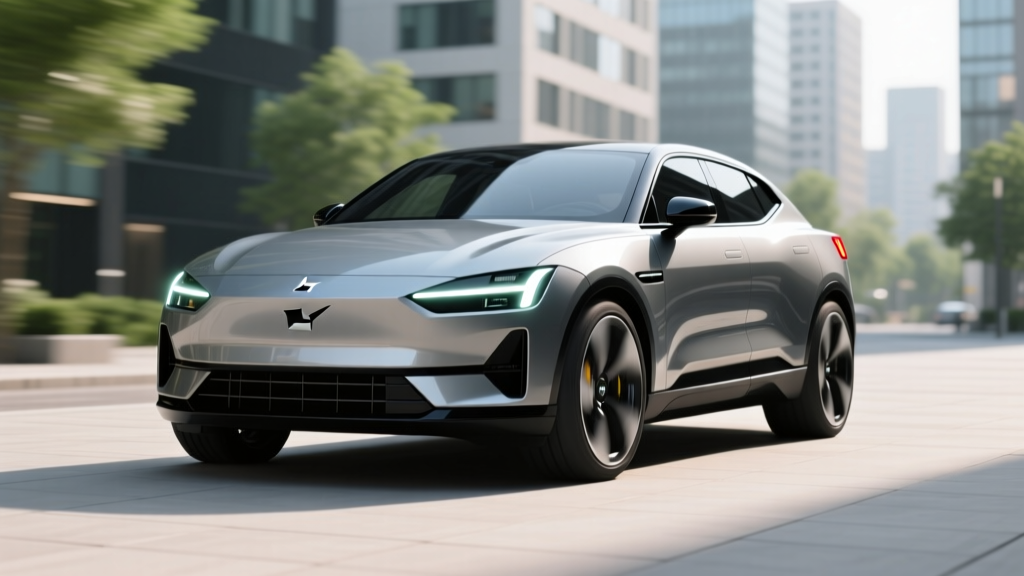
The Polestar 4 is the Swedish-Chinese automaker's answer to buyers who want the sleek roofline of a coupe with the practicality of a crossover. This all-electric fastback SUV eliminates the traditional rear windshield entirely, replacing it with a high-definition camera system and digital rearview mirror — a bold engineering choice that defines the vehicle's character. Available in Long Range Single Motor and Long Range Dual Motor configurations, the Polestar 4 targets the premium midsize EV segment occupied by the Porsche Macan Electric, BMW iX, and Tesla Model Y Performance.
Having spent time with the Polestar 4 across highway, city, and mixed-weather driving, we've compiled the exact numbers buyers need: real-world range data, charging curve behavior, ownership costs, and a clear-eyed assessment of where this EV excels and where it falls short.
Range, Efficiency, and Battery Specifications
| Specification | Long Range Single Motor | Long Range Dual Motor |
|---|---|---|
| EPA Estimated Range | 303 miles | 270 miles |
| Battery Capacity (Usable) | 94 kWh | 94 kWh |
| Battery Chemistry | NMC (Nickel Manganese Cobalt) | NMC (Nickel Manganese Cobalt) |
| Efficiency (Combined) | 105 MPGe (32 kWh/100mi) | 89 MPGe (38 kWh/100mi) |
| Drivetrain | RWD (Single Motor) | AWD (Dual Motor) |
| Horsepower | 272 hp | 544 hp |
| 0-60 mph | 7.1 seconds | 3.7 seconds |
The 94 kWh usable NMC battery pack is supplied by CATL and represents one of the larger battery installations in this segment. NMC chemistry offers higher energy density than LFP (lithium iron phosphate), which keeps the pack weight manageable and the vehicle's center of gravity low. The trade-off: NMC batteries degrade slightly faster over hundreds of charge cycles compared to LFP, though Polestar's battery management system and warranty coverage mitigate long-term concerns (more on this below).
Charging Speed: DC Fast Charging and Home Level 2
| Charging Method | Max Power | Speed / Time |
|---|---|---|
| DC Fast Charging (CCS) | 200 kW peak | 10-80% in ~30 minutes |
| Level 2 Home Charging (240V, 48A) | 11 kW | ~30 miles of range per hour / 0-100% in ~10 hours |
| Level 1 Trickle (120V, 12A) | 1.4 kW | ~4 miles of range per hour |
The Polestar 4's 200 kW peak DC fast-charging capability places it in the middle of the premium EV pack — behind the Hyundai Ioniq 5's 350 kW peak but ahead of many competitors in this price range. On a compatible 200+ kW station (such as Electrify America's 350 kW dispensers or Tesla Superchargers with the included NACS adapter for future model years), the charge curve holds near peak power from approximately 10-40% state of charge, then tapers progressively. The 10-80% sprint takes roughly 30 minutes under ideal thermal conditions.
Charging curve reality: Peak kW is not sustained kW. After 80% SoC, charging slows dramatically to protect battery longevity — expect 80-100% to add another 20-25 minutes. For road trips, plan stops around the 10-80% window for maximum efficiency.
For home charging, the 11 kW onboard AC charger is competitive. A full Level 2 installation on a dedicated 60-amp circuit (hardwired, 48A continuous) will replenish the battery overnight. If your home electrical panel requires an upgrade to 200A service, factor in $1,500-$3,500 for that work. Polestar includes a mobile connector for Level 1 emergency charging, but daily Level 1 use is impractical given the 94 kWh battery size.
Pricing, Trims, and Federal Tax Credit Eligibility
| Trim | Base MSRP | As-Tested (with options) | Federal Tax Credit Potential |
|---|---|---|---|
| Long Range Single Motor | $56,300 | $59,800 (Plus, Pilot, Pro packs) | Up to $7,500 (see eligibility below) |
| Long Range Dual Motor | $62,900 | $68,400 (Plus, Pilot, Performance packs) | Up to $7,500 (see eligibility below) |
Polestar positions the 4 as a premium offering, and pricing reflects that. The base Single Motor at $56,300 undercuts the Porsche Macan Electric and BMW iX but sits above the Tesla Model Y Performance. Destination charges add approximately $1,400.
Federal EV Tax Credit (§30D) — 2025-2026 Rules
The Polestar 4 may qualify for up to $7,500 under the IRS §30D Clean Vehicle Credit, but eligibility is not automatic. Per current IRS guidelines, buyers must meet all of the following:
- MSRP Cap: SUVs/vans/pickups must have an MSRP at or below $80,000. The Polestar 4 qualifies on all trims.
- Income Limits: Modified adjusted gross income must not exceed $150,000 (single), $225,000 (head of household), or $300,000 (joint filing).
- Battery Sourcing: A percentage of critical minerals and battery components must be sourced from the U.S. or free-trade-agreement countries. This requirement tightens annually. The Polestar 4's CATL battery (China-manufactured) has faced scrutiny under these rules — verify current-year eligibility on fueleconomy.gov before purchasing.
- Point-of-Sale Transfer: As of 2024, buyers can transfer the credit to the dealer at purchase, reducing the upfront price rather than waiting for a tax refund.
Critical caveat: Battery sourcing requirements have disqualified several EVs with Chinese-manufactured cells in recent years. Confirm the Polestar 4's current eligibility status directly with your dealer and cross-reference the IRS qualified vehicle list. Tax credit rules change frequently — consult a tax professional for your specific situation.
Interior, Cargo, and Technology
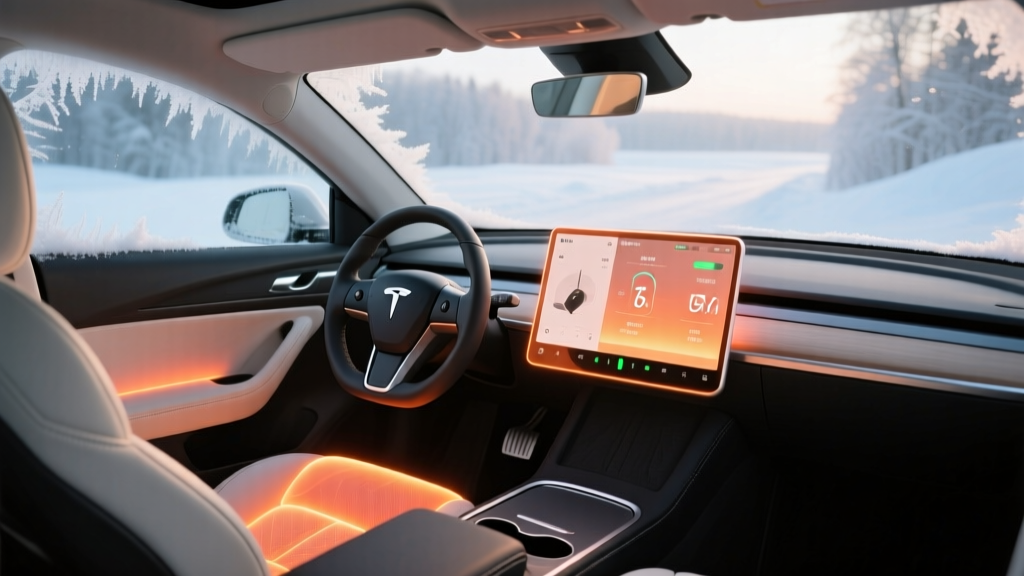
The Polestar 4's cabin reflects Scandinavian minimalism: clean surfaces, sustainable materials (bio-based MicroTech vinyl, recycled textiles), and a portrait-oriented 15.4-inch central touchscreen running Polestar's Android Automotive OS with built-in Google services. The 10.2-inch digital driver display sits behind the steering wheel, while a 14.7-inch heads-up display projects speed, navigation, and driver-assist alerts onto the windshield.
The most talked-about feature is the absence of a rear window. A roof-mounted camera feeds a high-resolution digital rearview mirror on the interior. In practice, the system delivers a wider, unobstructed field of view compared to a traditional mirror, and it performs well in rain and low light. Some drivers report an adjustment period, and the system does introduce slight latency compared to optical reflection — but most adapt within a week.
Cargo and Passenger Dimensions
- Cargo Volume (behind rear seats): 18.3 cu ft
- Cargo Volume (rear seats folded): 49.2 cu ft
- Front Headroom: 40.1 inches
- Rear Headroom: 38.2 inches (coupe roofline reduces this vs. boxier SUVs)
- Rear Legroom: 39.4 inches
- Frunk (Front Trunk): Not available — the space houses HVAC and power electronics
The coupe roofline does compromise rear headroom for taller passengers (those over 6'1" may notice it), and cargo capacity trails the Tesla Model Y's 30.2 cu ft behind the rear seats. If maximum utility is your priority, the Model Y or Hyundai Ioniq 5 offer more volume. The Polestar 4 prioritizes design and driving dynamics over outright space.
Driver Assistance and Safety
Polestar equips the 4 with its Pilot Pack, which includes:
- Adaptive cruise control with stop-and-go
- Pilot Assist (lane centering + adaptive cruise — SAE Level 2)
- Blind-spot monitoring with rear cross-traffic alert
- 360-degree camera system
- Run-off-road protection (a Volvo/Polestar signature feature)
Safety ratings from NHTSA and IIHS were pending at the time of this review. Polestar's Volvo heritage and standard structural safety features suggest strong performance, but verify ratings on nhtsa.gov and iihs.org once published.
Driving Impressions and Who This EV Suits
The Long Range Dual Motor's 544 hp and 3.7-second 0-60 time deliver serious acceleration — the kind that merges effortlessly onto highways and pulls out of corners with confidence. The Single Motor's 272 hp and 7.1-second 0-60 is adequate for daily driving but won't thrill enthusiasts. Both variants feature a low center of gravity (thanks to the floor-mounted battery pack) and well-tuned adaptive dampers that balance comfort with cornering composure.
Ride quality is firm but controlled — this is a driver's SUV, not a floaty cruiser. Road noise is well-managed at highway speeds, and the regenerative braking system offers adjustable levels, though it doesn't quite achieve true one-pedal driving in its softest setting.
Best Use Cases
- You want a premium, design-forward EV that stands apart from the Tesla-dominated landscape
- You prioritize driving dynamics and build quality over maximum cargo space
- Your daily commute is under 200 miles round-trip (well within the real-world range envelope)
- You have access to home Level 2 charging and occasional DC fast-charging for road trips
- You need maximum cargo volume or regularly carry tall rear-seat passengers
- You want the longest possible range for frequent 300+ mile road trips without stops
- You prioritize the lowest possible price per mile of range
- You want hands-free highway driving (consider GM Super Cruise or Ford BlueCruise vehicles)
Pros and Cons
Pros
- Striking coupe-SUV design with premium Scandinavian interior
- Strong 303-mile EPA range (Single Motor) for the segment
- 544 hp Dual Motor delivers sports-car acceleration in an SUV
- Android Automotive OS with native Google Maps, Assistant, and Play Store
- Digital rearview mirror provides wider, clearer view than traditional glass
- Competitive pricing vs. Porsche Macan Electric and BMW iX
Cons
- No rear windshield — digital system requires adjustment period
- Coupe roofline reduces rear headroom and cargo volume vs. competitors
- 200 kW peak charging is mid-pack; competitors charge faster
- Federal tax credit eligibility uncertain due to battery sourcing rules
- No hands-free Level 2+ highway driving system
- No front trunk (frunk) for additional storage
Warranty Coverage
Polestar provides competitive warranty terms:
- Limited Vehicle Warranty: 4 years / 50,000 miles
- Battery and Drive Unit Warranty: 8 years / 100,000 miles (covers defects and capacity loss below 70% state of health)
- Corrosion Protection: 12 years, unlimited miles
- Roadside Assistance: 4 years / 50,000 miles
The 8-year/100,000-mile battery warranty with a 70% capacity retention threshold is industry-standard and aligns with Tesla, Hyundai, and Ford. NMC batteries in modern thermal-managed EVs typically retain 85-90% capacity at 100,000 miles based on current degradation data, so the warranty floor is conservative.
Frequently Asked Questions
What is the real-world range of the Polestar 4?
The EPA rates the Long Range Single Motor at 303 miles and the Dual Motor at 270 miles. Real-world highway driving at 70-75 mph yields approximately 260-280 miles (Single Motor) and 230-250 miles (Dual Motor). Cold weather reduces these figures by 20-30%.
How fast does the Polestar 4 charge?
DC fast charging peaks at 200 kW, achieving 10-80% in approximately 30 minutes. Home Level 2 charging at 11 kW adds about 30 miles of range per hour, fully replenishing the 94 kWh battery in roughly 10 hours.
Does the Polestar 4 qualify for the $7,500 federal EV tax credit?
It may, but eligibility depends on current-year battery sourcing rules under IRS §30D. The Polestar 4's Chinese-manufactured CATL battery has faced scrutiny. Verify current eligibility on fueleconomy.gov and confirm with your dealer before purchase. Income and MSRP caps also apply.
Is the Polestar 4 worth buying vs. the Tesla Model Y or Porsche Macan Electric?
The Polestar 4 offers more distinctive design and interior quality than the Model Y, with comparable range. It's priced significantly below the Porsche Macan Electric while delivering strong performance. If you value uniqueness, Scandinavian design, and don't need maximum cargo space, the Polestar 4 is a compelling choice. If you prioritize charging speed, cargo volume, or hands-free driving tech, competitors may serve you better.
What are the biggest drawbacks of the Polestar 4?
The lack of a rear windshield (digital mirror requires adaptation), reduced rear headroom from the coupe roofline, mid-pack 200 kW charging speed, and uncertain federal tax credit eligibility are the primary concerns. There is also no frunk for additional cargo.
Can I tow with the Polestar 4?
Polestar rates the 4 for up to 3,500 pounds of towing capacity when properly equipped with the factory tow package. This is adequate for small trailers or a pair of jet skis but not for heavy boat or camper towing.