Quick Verdict: The Model Y's Cost-Per-Mile Story in 2026
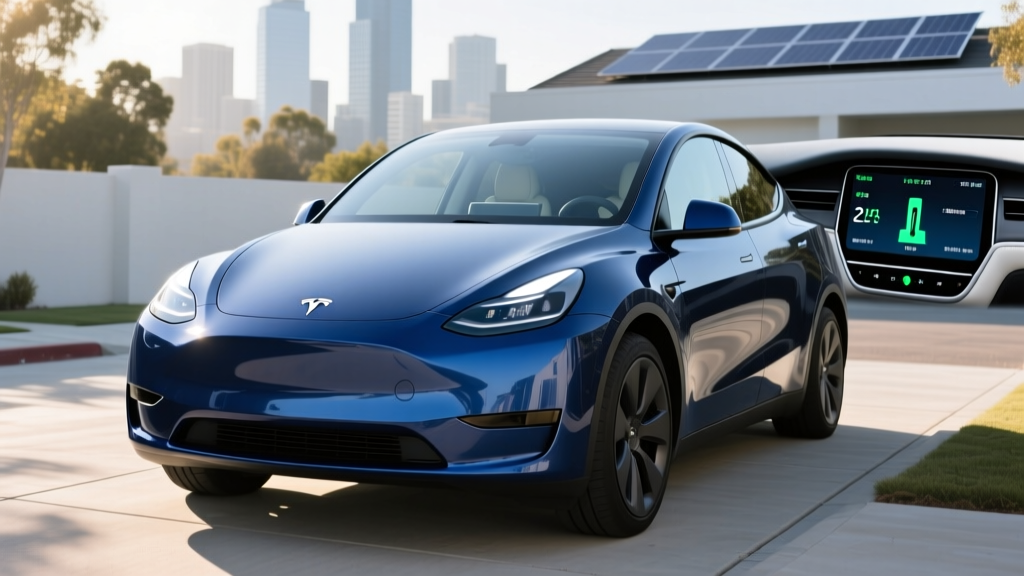
If you've been searching for the Tesla Model Y true cost per mile, you've likely noticed most sources stop at the EPA efficiency sticker and call it a day. That's not enough. The real cost of driving a Model Y depends on your electricity rate, charging habits, climate, insurance premiums, and whether you qualify for the federal §30D tax credit at point of sale.
The 2026 Tesla Model Y Long Range AWD starts at an MSRP of approximately $44,990 (before destination and options), delivers an EPA-estimated 308 miles of range, and achieves roughly 28 kWh per 100 miles in mixed driving. At the US average residential electricity rate of ~$0.17/kWh, that translates to approximately $0.048 per mile in energy cost alone — roughly one-third the fuel cost of a comparable gasoline crossover getting 25 MPG at $3.40/gallon.
But energy is just one line item. This profile breaks down every cost factor with exact figures so you can calculate your personal Model Y true cost per mile.
2026 Tesla Model Y Specifications at a Glance
| Specification | Long Range AWD | Performance AWD | RWD (Standard) |
|---|---|---|---|
| EPA Range | 308 miles | 277 miles | 260 miles |
| Battery (usable) | ~75 kWh (NMC) | ~75 kWh (NMC) | ~60 kWh (LFP) |
| MPGe (combined) | 122 MPGe | 111 MPGe | 128 MPGe |
| Efficiency | 28 kWh/100 mi | 30 kWh/100 mi | 26 kWh/100 mi |
| 0-60 mph | 4.8 sec | 3.5 sec | 6.6 sec |
| Horsepower | ~384 hp | ~456 hp | ~295 hp |
| Drivetrain | Dual-motor AWD | Dual-motor AWD | Rear-motor RWD |
| Max DC Charge Rate | 250 kW | 250 kW | 170 kW |
| 10-80% DC Time | ~25 min | ~25 min | ~30 min |
| Level 2 Rate | 11.5 kW (~44 mi/hr) | 11.5 kW (~44 mi/hr) | 11.5 kW (~44 mi/hr) |
| Base MSRP | $44,990 | $51,490 | $39,990 |
| Cargo (rear seats up) | 30.2 cu ft | 30.2 cu ft | 30.2 cu ft |
| Cargo (rear seats folded) | 72.1 cu ft | 72.1 cu ft | 72.1 cu ft |
| Rear Legroom | 41.6 in | 41.6 in | 41.6 in |
| Battery Warranty | 8 yr / 120,000 mi | 8 yr / 120,000 mi | 8 yr / 100,000 mi |
Source: EPA fueleconomy.gov and Tesla specifications. Figures reflect 2026 model year data and are subject to change.
Real-World Range: What the EPA Sticker Doesn't Tell You
Real-World Expectation: 250–280 miles highway at 70-75 mph; 220–260 miles in freezing weather with cabin heat
The EPA test cycle includes low-speed urban driving with generous regen-braking recovery. In sustained highway driving at 70-75 mph, expect the Long Range AWD to deliver roughly 250-280 miles before the battery buffer kicks in at low SoC. The Model Y's efficiency drops further in sub-freezing temperatures — cold-weather range loss of 15-25% is typical for NMC packs without consistent preconditioning.
The RWD model uses an LFP (lithium iron phosphate) battery, which has slightly lower energy density but offers superior longevity and can be routinely charged to 100% without the degradation concerns of NMC chemistry. That means the RWD's real-world usable range gap versus the Long Range narrows when you factor in daily charging habits — you can use all 260 EPA miles of the LFP pack regularly, while Tesla recommends charging NMC to 80% for daily use (effectively ~246 usable miles on the Long Range).
For road trips, the Model Y's Supercharger network access remains its strongest practical range extender. Preconditioning the battery via navigation routing to a Supercharger consistently delivers peak charge rates, a feature many competitors still lack.
Charging Speed: DC Fast, Level 2, and What It Costs
| Charging Level | Power (kW) | Miles Added per Hour | Typical Cost per kWh | Cost per Mile* |
|---|---|---|---|---|
| Level 1 (120V outlet) | ~1.4 kW | ~3-4 mi/hr | $0.17 (avg residential) | $0.048 |
| Level 2 (240V home) | 11.5 kW | ~44 mi/hr | $0.17 (avg residential) | $0.048 |
| DC Fast (Supercharger V3) | Up to 250 kW (peak) | ~1,000 mi/hr (peak) | $0.25-$0.35 (varies) | $0.070-$0.098 |
| DC Fast (EA / third-party) | Up to 150-350 kW | Varies | $0.30-$0.55 | $0.084-$0.154 |
*Cost per mile based on 28 kWh/100 mi (Long Range AWD efficiency).
Understanding the charge curve is critical. The 250 kW peak rate on the Long Range and Performance trims applies only at low state of charge (roughly 10-30% SoC). The rate tapers progressively — by 60% SoC you'll see ~100 kW, and above 80% it drops below 50 kW. That 10-80% session takes approximately 25 minutes at a V3 Supercharger, but a 10-95% session can stretch past 45 minutes. Plan road-trip stops around 10-80% top-ups for the best time efficiency.
At home on a 48-amp Level 2 circuit (the most common dedicated EV charger installation), the onboard 11.5 kW charger replenishes about 44 miles of range per hour. A full overnight charge from 20% to 80% takes roughly 4 hours — more than sufficient for daily driving needs. The IRS also offers a separate credit (30C) for qualified home charging equipment installation, up to $1,000.
Calculating the Model Y True Cost Per Mile
Here's where the math gets specific. Your personal cost per mile depends on five variables: energy, insurance, maintenance, depreciation, and financing. Below is a 5-year / 75,000-mile ownership model for the Long Range AWD, assuming 15,000 miles driven annually and 80% home charging / 20% public DC fast charging.
| Cost Category | 5-Year Total | Cost Per Mile | Notes |
|---|---|---|---|
| Purchase (after $7,500 credit) | $38,490* | $0.513 | $44,990 MSRP + $1,000 dest. - $7,500 §30D credit |
| Energy (80% home / 20% DC) | $4,253 | $0.057 | Blended rate ~$0.20/kWh at 28 kWh/100 mi |
| Insurance | $12,750 | $0.170 | Avg ~$213/mo (varies heavily by state/driver) |
| Maintenance & Repairs | $2,100 | $0.028 | Tire rotation, cabin filter, wiper fluid, brake fluid check |
| Tires (1 replacement set) | $1,400 | $0.019 | EV-specific tires wear 20-30% faster due to weight + torque |
| Depreciation (est. resale at 5yr) | $14,200 | $0.189 | Estimated 63% retention at 75k miles (varies by market) |
| Total Estimated | $73,193 | $0.976 | Before financing costs, state incentives, or tolls |
*Assumes full §30D credit eligibility. Actual credit depends on income caps, MSRP limits, battery sourcing, and point-of-sale transfer. See tax credit section below.
For comparison, a gasoline crossover averaging 25 MPG combined at $3.40/gallon burns $0.136/mile in fuel alone — more than double the Model Y's blended energy cost. Over 75,000 miles, that's a $5,947 fuel savings for the Tesla. However, the Model Y's higher insurance premiums (typically 20-40% above comparable gas vehicles, per industry data) offset a significant portion of that energy savings.
Federal Tax Credit Eligibility: §30D Rules for 2026
To qualify for the full $7,500 federal clean vehicle credit on a 2026 Model Y, you must meet ALL of the following (per IRS §30D):
- MSRP Cap: Vehicle MSRP must not exceed $80,000 for SUVs (Model Y qualifies — all trims are under this cap)
- Buyer Income Cap: Modified AGI must not exceed $150,000 (single), $225,000 (head of household), or $300,000 (joint filing)
- Battery Sourcing: Critical minerals and battery components must meet phased-in domestic/free-trade-agreement sourcing thresholds (Tesla has progressively shifted supply chains to comply — verify current-year status at purchase)
- Final Assembly: Vehicle must undergo final assembly in North America (Model Y is assembled in Fremont, CA and Austin, TX — qualifies)
- Point-of-Sale Transfer: You can transfer the credit to the dealer at purchase for an immediate $7,500 price reduction, or claim it on your tax return
Critical caveat: Battery component and critical mineral sourcing requirements tighten annually. A trim that qualifies in January may see partial credit reduction ($3,750 instead of $7,500) if sourcing thresholds shift mid-year. Always verify current eligibility on the fueleconomy.gov tax credit lookup tool before signing a purchase agreement.
| Trim | MSRP | With $7,500 §30D | With $3,750 (partial) | No Credit |
|---|---|---|---|---|
| RWD (Standard) | $39,990 | $32,490 | $36,240 | $39,990 |
| Long Range AWD | $44,990 | $37,490 | $41,240 | $44,990 |
| Performance AWD | $51,490 | $43,990 | $47,740 | $51,490 |
Prices shown before destination fees, options, state/local incentives, and taxes. Consult a tax professional for personal eligibility.
Tech, Driver Assistance, and Interior Practicality
The Model Y continues with Tesla's minimalist interior — a single 15.4-inch center touchscreen handles all infotainment, climate, and vehicle settings. There is no traditional instrument cluster; speed and navigation appear on the screen's driver-side corner. The 2026 refresh (internally called "Juniper") brought a ventilated front seat upgrade, ambient lighting, a rear-seat touchscreen, and improved NVH (noise, vibration, harshness) insulation that noticeably reduces road noise compared to pre-2025 models.
Autopilot and FSD (Supervised): Every Model Y ships with basic Autopilot (traffic-aware cruise control and lane centering). Full Self-Driving (Supervised) remains an $8,000 add-on (or $99/month subscription). This is an SAE Level 2 driver-assistance system — it does not make the vehicle autonomous. The driver must remain attentive, keep hands available for steering input, and is legally responsible for all driving decisions at all times.
Cargo space remains a Model Y strong suit: 30.2 cubic feet behind the second row and 72.1 cubic feet with seats folded, plus a modest front trunk (frunk) for charging cables or a small bag. Rear legroom at 41.6 inches is competitive with midsize crossovers. Towing capacity is rated at 3,500 pounds for the Long Range and Performance trims — adequate for a small utility trailer but not a camper.
Pros, Cons, and Who Should Buy the Model Y
Pros
- Lowest cost-per-mile energy in its class at ~$0.048-$0.057/mi (home-heavy charging)
- Access to the Tesla Supercharger network — still the most reliable DC fast-charging ecosystem in the US
- Class-leading cargo volume (72.1 cu ft) and practical hatchback form factor
- Over-the-air updates continuously add features without dealer visits
- Strong resale value relative to most EV competitors
- Qualifies for full $7,500 §30D credit (subject to sourcing rules and income caps)
Cons
- Insurance premiums run 20-40% higher than comparable gas crossovers
- Ride quality on 20-inch wheels can be firm on rough pavement
- No Apple CarPlay or Android Auto — Tesla's proprietary system is the only option
- FSD (Supervised) remains Level 2 despite the "self-driving" marketing name
- Service center wait times can stretch weeks in high-population areas
- Lack of physical buttons for climate and wipers frustrates some drivers
Is the Model Y Right for You?
Choose the Model Y Long Range AWD if: You drive 30-60 miles daily, have home Level 2 charging access, take 2-4 road trips per year, and want the lowest blended energy cost with the broadest fast-charging network.
Choose the RWD if: You're budget-conscious, live in a mild climate, commute under 40 miles round-trip, and want the longest-lasting LFP battery chemistry with 100% daily charging capability.
Look at competitors (Hyundai Ioniq 5, Ford Mustang Mach-E, Kia EV6) if: You need physical controls, prefer Apple CarPlay, want a more traditional dealership service experience, or find Tesla's minimalist interior too austere.
Frequently Asked Questions
What is the real-world range of the 2026 Tesla Model Y?
The Long Range AWD carries a 308-mile EPA estimate, but expect 250-280 miles in sustained highway driving at 70-75 mph and 220-260 miles in freezing temperatures. The RWD's 260-mile EPA figure is more consistently achievable because its LFP battery can be charged to 100% daily without degradation concerns.
How fast does the Model Y charge at home and on the road?
At home on a 240V Level 2 charger, the Model Y charges at up to 11.5 kW, adding approximately 44 miles of range per hour — a full overnight session easily covers daily needs. On a Tesla V3 Supercharger, the Long Range peaks at 250 kW and charges from 10-80% in about 25 minutes, though the rate tapers significantly above 60% SoC.
How much does the Model Y cost after the federal tax credit?
With the full $7,500 §30D credit applied at point of sale, the Long Range AWD drops from $44,990 to approximately $37,490 (before destination and options). The RWD can reach as low as ~$32,490. Eligibility requires meeting income caps ($150K single / $300K joint), MSRP limits (under $80K for SUVs), and current-year battery sourcing rules. Always verify on fueleconomy.gov before purchase.
Does the Tesla Model Y qualify for the federal EV tax credit in 2026?
Yes — the Model Y qualifies for the §30D credit as of early 2026, with final assembly in the US and MSRP under the $80,000 SUV cap. However, the battery critical-mineral and component sourcing requirements tighten each year. The credit amount ($7,500 or partial $3,750) depends on Tesla's current supply-chain compliance status at the time of delivery. Check the latest eligibility on fueleconomy.gov.
Is the Model Y worth buying versus the Hyundai Ioniq 5 or Ford Mach-E?
The Model Y wins on Supercharger network access, energy efficiency (28 kWh/100 mi vs. 30-32 for competitors), cargo space, and software ecosystem. The Ioniq 5 offers faster peak charging (up to 350 kW on 800V architecture, 10-80% in ~18 min), physical controls, and Apple CarPlay. The Mach-E provides a more traditional crossover feel and Ford's dealership service network. If Supercharger access matters to your road-trip routine, the Model Y retains a practical edge; if you primarily charge at home and want a more conventional interface, the Ioniq 5 is a strong alternative at a comparable price point.
What are the biggest ongoing costs of owning a Model Y?
Insurance is the single largest variable cost — averaging $200-$280/month depending on state, driving record, and coverage level. Energy costs are low (~$70-$85/month for 15,000 miles/year at blended home/public rates). Maintenance is minimal (cabin air filter every 2 years, tire rotation every 6,250 miles, brake fluid check every 3 years), but tire replacement comes sooner than on gas vehicles due to the Model Y's weight and instant torque — budget $1,200-$1,600 for a set of EV-rated tires around 30,000-40,000 miles.
How long will the Model Y battery last?
Tesla warranties the Long Range and Performance NMC battery for 8 years or 120,000 miles (whichever comes first) with a minimum 70% capacity retention threshold. The RWD's LFP battery is warranted for 8 years or 100,000 miles. Real-world degradation data from high-mileage Tesla owners suggests NMC packs typically lose 8-12% capacity over the first 100,000 miles, while LFP packs show slower degradation curves. Battery replacement outside warranty currently costs $12,000-$16,000 including labor — though most owners never need one within typical ownership periods.