Tesla Model Y Towing: Hitch Options, Costs, and What You Can Actually Pull
The Tesla Model Y remains one of the best-selling electric vehicles in the U.S., and for good reason: crossover practicality, Supercharger access, and competitive range. But buyers eyeing light-duty towing — bike racks, small utility trailers, or a compact camper — often hit a wall of conflicting forum advice about hitch options, wiring, and real-world range loss while towing. This review covers the Tesla Model Y tow hitch installation cost, towing capacity, and the full ownership picture for 2026, so you can decide whether the Model Y fits your hauling needs.
Let's start with the hard numbers: the 2026 Tesla Model Y (Long Range AWD and Performance trims) carries a 3,500-pound maximum towing capacity when properly equipped with a hitch receiver. The base Rear-Wheel Drive trim is not rated for towing in the U.S. market. That 3,500-lb figure covers the combined weight of trailer plus cargo — not including passengers in the vehicle.
Tow Hitch Installation Cost: OEM vs. Aftermarket Breakdown
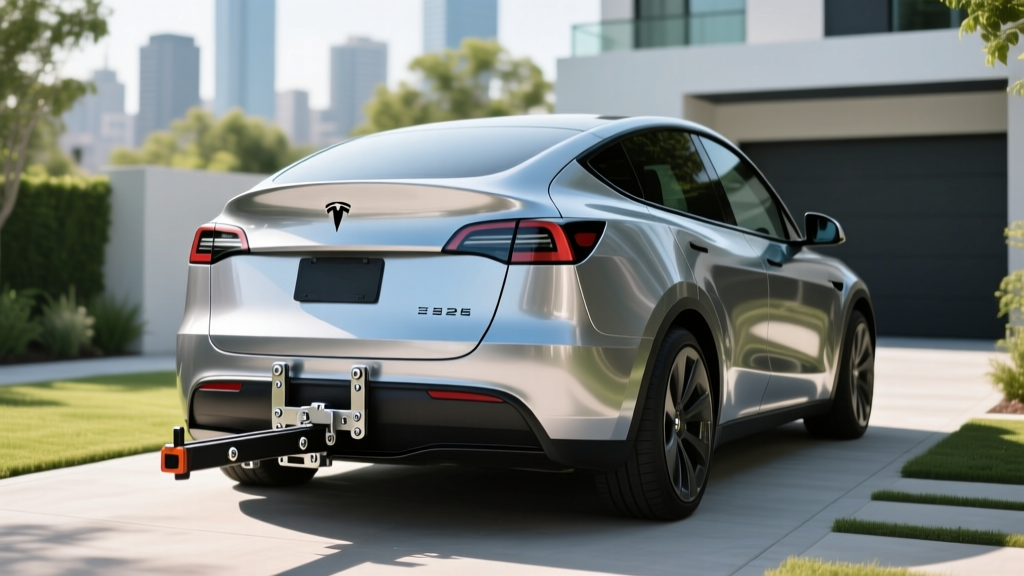
Tesla offers a factory tow hitch through its service centers and mobile service, but it has historically been one of the more expensive OEM hitches on the market. Aftermarket options from Curt, Draw-Tite, and EcoHitch provide meaningful savings, though each carries trade-offs in fitment, wiring integration, and warranty implications.
| Option | Hitch Hardware | Wiring Harness | Labor | Total Est. |
|---|---|---|---|---|
| Tesla OEM (Service Center) | $600–$750 | $150–$250 | $300–$500 | $1,050–$1,500 |
| EcoHitch (Stealth or Standard) | $350–$500 | $50–$80 | $200–$350 | $600–$930 |
| Curt Class III (aftermarket) | $180–$280 | $40–$70 | $150–$300 | $370–$650 |
| DIY Install (Curt or EcoHitch) | $180–$500 | $40–$80 | $0 | $220–$580 |
What the OEM hitch includes that aftermarket may not: Tesla's factory hitch integrates directly with the vehicle's software, enabling Tow Mode in the touchscreen. Tow Mode adjusts stability control, suspension damping (on adaptive-suspension trims), and regenerative braking behavior for trailer loads. Aftermarket hitches mount to the same frame rails and provide equivalent structural capacity, but you will not get the software Tow Mode activation unless Tesla enables it via a service visit — and Tesla has been inconsistent about activating Tow Mode on vehicles with third-party hitches.
Wiring harness reality: The Model Y does not have a traditional 12V trailer-lighting tap point like an ICE vehicle. You need a powered converter module that draws from the 12V accessory battery (the lithium-ion auxiliary battery in 2024+ Model Y variants). Budget-friendly Curt harnesses work but require routing under the rear bumper fascia. The OEM harness plugs into a pre-existing connector behind the rear bumper on tow-package-equipped vehicles.
Real-World Range While Towing: The Honest Numbers
Towing is the single biggest range killer for any EV. Aerodynamic drag increases with the square of speed, and a boxy trailer at 65 mph can cut your range by 40–55%. Here's what the 2026 Model Y Long Range AWD delivers with and without a trailer.
EPA Estimated: 320 miles (Long Range AWD, 2026)
Real-World Highway (no trailer, 70 mph, mild weather): ~275–290 miles
Real-World Cold Weather (30°F, highway, heater on): ~230–250 miles
Towing a 2,500-lb camper trailer (60 mph): ~155–175 miles
Towing a bike rack with 2 bikes (~100 lbs): ~260–280 miles
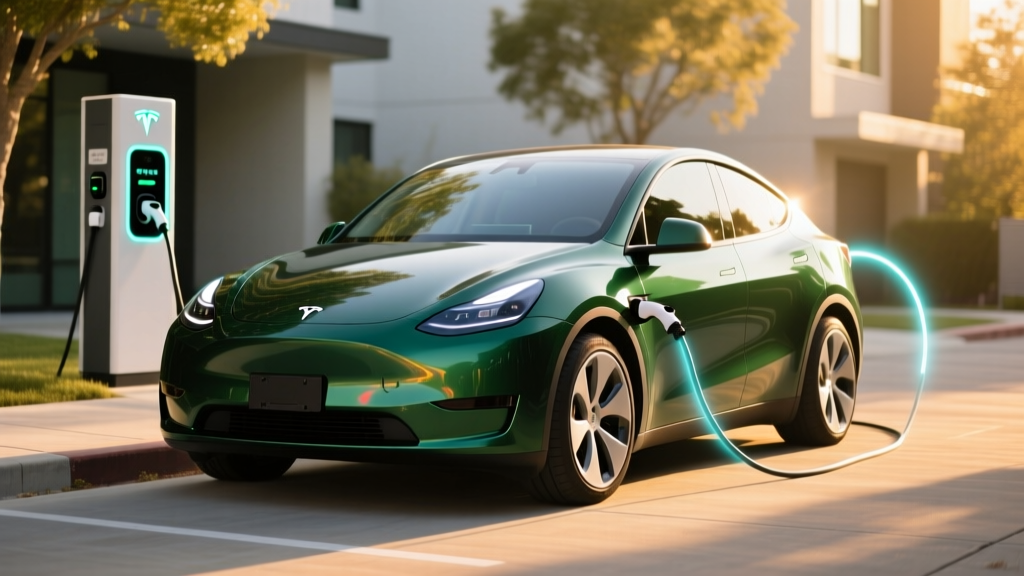
If your towing use case is a 4-bike rack or a 5x8 utility trailer under 1,500 pounds, the range penalty is manageable — roughly 10–20%. But if you plan to pull a loaded travel trailer or boat, expect to stop at Superchargers every 120–160 miles on the highway. The good news: Tesla's Supercharger network handles this better than any other charging ecosystem, with stalls at travel plazas and truck stops that accommodate vehicles with trailers — though you may need to unhitch at some locations.
Full Model Y Specs: Range, Battery, Charging, and Performance
| Spec | RWD | Long Range AWD | Performance |
|---|---|---|---|
| EPA Range | 308 mi | 320 mi | 295 mi |
| Battery (usable) | ~60 kWh (LFP) | ~75 kWh (NMC) | ~75 kWh (NMC) |
| Drivetrain | RWD (single motor) | AWD (dual motor) | AWD (dual motor) |
| Horsepower | 295 hp | 384 hp | 456 hp |
| 0–60 mph | 6.6 sec | 4.8 sec | 3.5 sec |
| Max DC Fast Charge | 170 kW | 250 kW | 250 kW |
| 10–80% DC Time | ~28 min | ~22 min | ~22 min |
| Level 2 Home (11.5 kW) | ~30 mi/hr | ~44 mi/hr | ~44 mi/hr |
| Efficiency (MPGe) | 128 MPGe | 117 MPGe | 111 MPGe |
| kWh/100 mi | 26 | 29 | 30 |
| Towing Capacity | Not rated | 3,500 lbs | 3,500 lbs |
| Base MSRP | $44,990 | $48,990 | $52,490 |
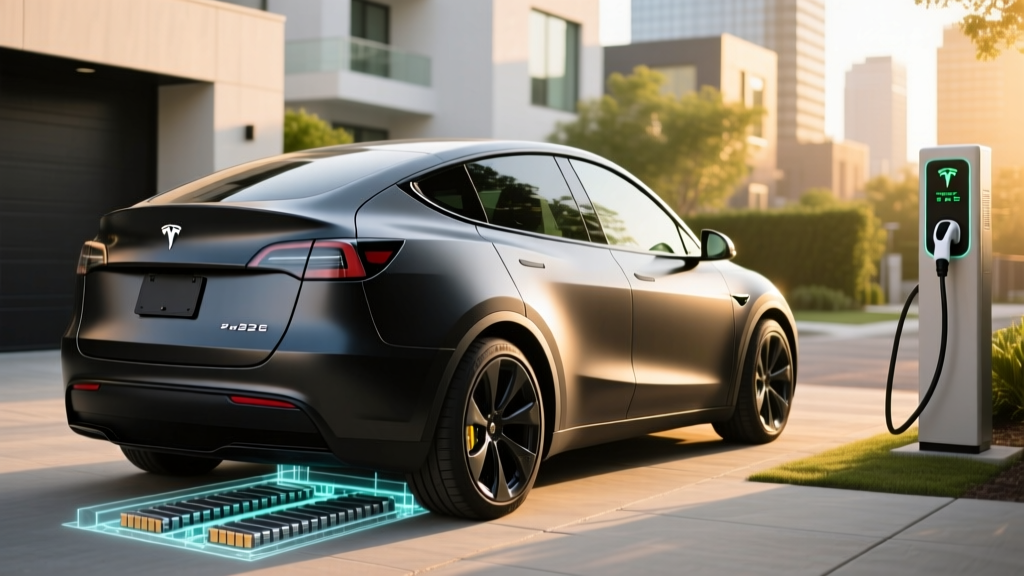
Chemistry note: The RWD trim uses an LFP (lithium iron phosphate) battery — heavier but longer-lasting with minimal degradation, and Tesla recommends charging to 100% regularly. The Long Range and Performance trims use NMC (nickel manganese cobalt) chemistry for higher energy density, with an 80% daily charge recommendation to preserve longevity. For towing, the NMC trims are the only viable choice, both because of the tow rating and the larger usable capacity.
Charging curve reality: The 250 kW peak on Long Range and Performance trims applies only between roughly 10–30% state of charge. The curve tapers significantly above 50%, and charging from 80–100% at a Supercharger can add another 20+ minutes. Plan your road-trip stops to charge from 10–80% and move on — that's where the speed is. Source: fueleconomy.gov.
Pricing, Trims, and Federal Tax Credit Eligibility
The 2026 Model Y lineup is straightforward: three trims, no paid paint colors beyond white (grey, blue, and red are now included), and the tow hitch is a dealer-installed or service-center-installed accessory rather than a factory-order option.
| Trim | MSRP | Est. §30D Credit | Net Price |
|---|---|---|---|
| RWD | $44,990 | $3,750–$7,500* | $37,490–$41,240 |
| Long Range AWD | $48,990 | $3,750–$7,500* | $41,490–$45,240 |
| Performance | $52,490 | $3,750–$7,500* | $44,990–$48,740 |
*§30D Federal Tax Credit Caveats: The IRS clean vehicle credit has multiple eligibility gates. The Model Y qualifies as an SUV under the $80,000 MSRP cap. However, the credit amount depends on battery component sourcing ($3,750) and critical minerals sourcing ($3,750), which Tesla has been adjusting through supply-chain shifts. As of early 2026, some Model Y configurations qualify for the full $7,500 while others receive $3,750. Buyer income caps also apply: $300,000 joint / $225,000 head of household / $150,000 single filer (modified AGI). The credit can be transferred to the dealer as a point-of-sale discount. Always verify current eligibility on the IRS website or with a tax professional before purchasing.
Cargo, Interior Space, and Daily Practicality
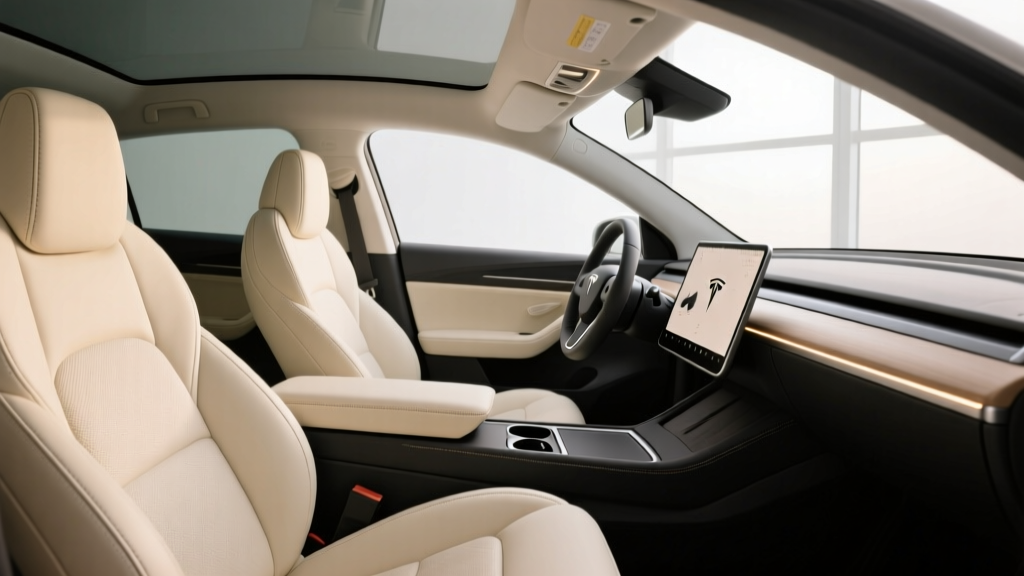
The Model Y's hatchback design is its secret weapon for families and haulers. With the second row upright, you get 30.2 cubic feet of cargo space behind the rear seats. Fold the 60/40 split rear seats and that expands to 72.1 cubic feet — competitive with midsize SUVs like the Honda CR-V. The front trunk (frunk) adds another 4.1 cubic feet for charging cables or a small bag.
Passenger space is generous for the class: 41.8 inches of front legroom and 37.4 inches of rear legroom. The panoramic glass roof creates an airy cabin, though it does reduce headroom with the optional third-row seat (which shrinks cargo space to 12.8 cu ft and is best suited for small children).
Notable drawbacks: The minimalist interior means no physical buttons for climate, wipers, or glove-box release — everything routes through the 15.4-inch touchscreen. Turn-signal stalks were removed in the 2025 refresh, replaced by steering-wheel-mounted buttons that require an adjustment period. Rear visibility is limited by the sloping roofline; the backup camera is essential. There is no Apple CarPlay or Android Auto — Tesla's proprietary infotainment handles everything including navigation, media, and vehicle controls.
Driver Assistance: Autopilot and FSD Supervised
Autopilot comes standard and includes Traffic-Aware Cruise Control and Autosteer (lane centering) on highways. FSD (Supervised) is a $8,000 add-on (or $99/month subscription as of 2026) that adds city-street navigation, traffic-light recognition, and automatic lane changes. In real-world use, FSD handles most highway scenarios well but still requires intervention in construction zones, unprotected left turns, and adverse weather. For towing, Autopilot's stability control integration is helpful, but FSD is not recommended while pulling a trailer — the system does not account for trailer dynamics in its path planning.
Warranty, Ownership Costs, and Longevity
Tesla's warranty covers the battery and drive unit for 8 years or 120,000 miles (Long Range/Performance) and 8 years or 100,000 miles (RWD), whichever comes first, with a minimum 70% capacity retention threshold. The limited vehicle warranty is 4 years or 50,000 miles. These are competitive with Hyundai's 10-year/100,000-mile battery warranty but below the 8-year/100,000-mile standard that most legacy automakers match.
Insurance: Model Y insurance premiums run 15–30% higher than comparable ICE crossovers, driven by Tesla's high repair costs (aluminum body panels, integrated sensor arrays, and proprietary parts). Expect $1,800–$2,800/year depending on your state, driving record, and coverage level. Shop multiple carriers — Tesla Insurance is available in some states and can be competitive.
Maintenance: Minimal. No oil changes, no transmission fluid, no spark plugs. Budget for cabin air filter replacement (~$100 every 2 years), tire rotation every 6,250 miles, and brake fluid checks every 2 years. Regenerative braking significantly extends pad life; many owners report original brake pads past 80,000 miles.
Pros and Cons: Is the Model Y Right for Your Towing Needs?
Pros
- 3,500-lb towing capacity covers most light-duty needs
- Supercharger network — best public charging infrastructure in the U.S.
- 250 kW DC fast charging (Long Range/Performance) minimizes road-trip downtime
- 72.1 cu ft cargo space with seats folded
- Strong efficiency (117 MPGe LR) keeps home-charging costs low
- Over-the-air updates add features post-purchase
- Low maintenance costs vs. ICE competitors
Cons
- Towing range drops to ~150–175 mi with a loaded trailer
- OEM hitch install cost ($1,050–$1,500) is expensive
- Aftermarket hitch may not activate Tow Mode software
- No physical buttons — steep learning curve for some drivers
- Insurance premiums 15–30% above class average
- RWD trim not tow-rated
- Turn-signal buttons on steering wheel take getting used to
Model Y vs. Competitors for Towing
| Vehicle | Max Tow | EPA Range | Starting MSRP |
|---|---|---|---|
| Tesla Model Y LR AWD | 3,500 lbs | 320 mi | $48,990 |
| Ford Mustang Mach-E (GT) | Not rated | 290 mi | $54,995 |
| Hyundai Ioniq 5 (AWD) | 2,300 lbs | 290 mi | $49,950 |
| VW ID.4 (AWD Pro S) | 2,700 lbs | 275 mi | $49,245 |
| Kia EV6 (GT-Line AWD) | 2,300 lbs | 282 mi | $51,400 |
The Model Y's 3,500-lb rating is the highest in this segment. If your towing needs exceed that — say, a 5,000-lb boat or horse trailer — you need to look at the Ford F-150 Lightning, Rivian R1S, or Chevrolet Silverado EV. But for bike racks, cargo trailers, and small campers, the Model Y Long Range AWD is the segment leader in tow capacity combined with charging infrastructure.
Frequently Asked Questions
Does installing an aftermarket hitch void my Tesla warranty?
No — under the Magnuson-Moss Warranty Act, an aftermarket hitch cannot void your entire vehicle warranty. However, if a wiring issue from a third-party harness causes damage to the vehicle's electrical system, Tesla may deny coverage for that specific repair. Structural and drivetrain warranty remains intact. Use a reputable installer and keep documentation.
Can I install a tow hitch on the Model Y RWD?
Physically, yes — the frame rails accept the same hitch hardware. But the RWD trim is not rated for towing by Tesla, meaning you have no official tow capacity, no Tow Mode in software, and potential liability and insurance issues if you tow. We strongly recommend only installing a hitch on the Long Range AWD or Performance trims.
How much range do I lose towing a small U-Haul trailer?
A 5x8 U-Haul enclosed trailer weighs roughly 1,200 lbs empty and presents significant aerodynamic drag. Expect a 40–50% range reduction at highway speeds, bringing the Model Y Long Range AWD to approximately 150–180 miles of real-world range. Plan Supercharger stops accordingly.
Does the Model Y qualify for the full $7,500 federal tax credit in 2026?
It depends on the specific battery sourcing in your vehicle's production batch and your income. The Model Y meets the MSRP cap (under $80,000 as an SUV) and is assembled in North America. As of 2026, some units qualify for the full $7,500 while others receive $3,750 (half credit). Check the fueleconomy.gov tax credit lookup for your specific configuration.
Is the Model Y worth buying over a gas SUV for towing?
If you tow frequently (more than 5,000 miles/year with a trailer), a gas or diesel SUV still offers easier long-distance towing with no range anxiety and faster refueling. But if you tow occasionally — weekend bike trips, a seasonal camper, or moving-runs with a utility trailer — the Model Y's low daily operating cost, home charging, and strong non-towing range make it a compelling dual-purpose vehicle. The math favors the EV when towing is under 20% of your annual mileage.