Quick Verdict: The Ride Quality Fix Tesla Owners Waited For
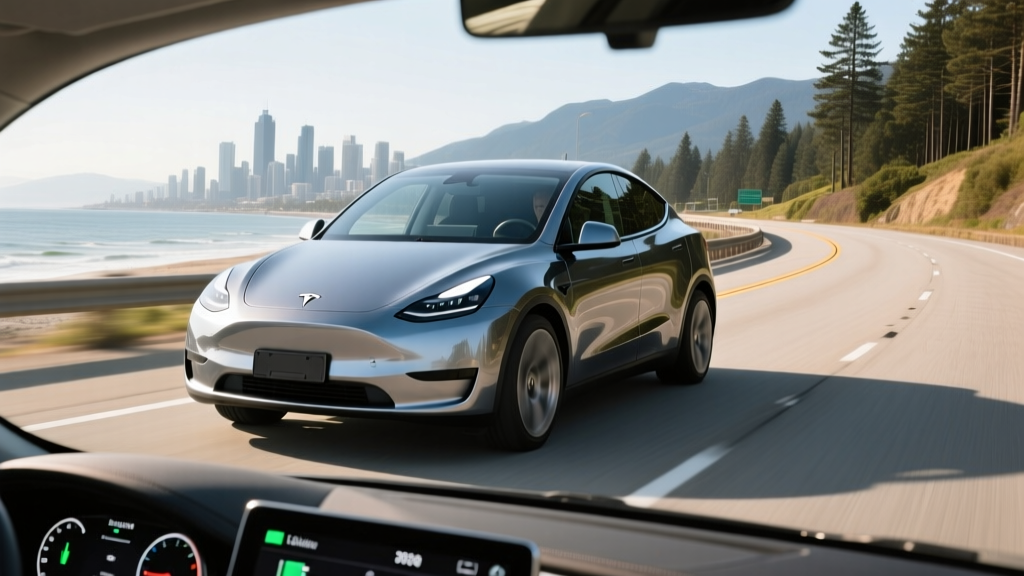
For years, the Tesla Model Y's firm ride was the single most common complaint among owners and reviewers alike. The 2026 Model Y — building on the "Juniper" refresh introduced for the 2025 model year — carries forward a substantially revised suspension architecture that addresses this criticism head-on. Tesla replaced the previous setup with new frequency-selective dampers, revised spring rates, and additional sound-deadening material throughout the chassis. The result is a crossover that finally rides like its premium price suggests, while retaining the handling precision that made it a best-seller.
But the suspension upgrade is only part of the story. The 2026 Model Y Long Range AWD still delivers an EPA-estimated 320 miles of range, peaks at 250 kW on DC fast chargers, and qualifies for the full $7,500 federal tax credit under current IRS §30D rules. Here's everything you need to know before you configure one.
2026 Tesla Model Y: Core Specifications
| Specification | Long Range AWD | Performance |
|---|---|---|
| EPA Range | 320 miles | 295 miles |
| Battery Capacity (usable) | ~75 kWh (NMC) | ~75 kWh (NMC) |
| Drivetrain | Dual Motor AWD | Dual Motor AWD |
| Horsepower | 384 hp (combined) | 456 hp (combined) |
| 0-60 mph | 4.8 seconds | 3.5 seconds |
| Max DC Fast Charge | 250 kW (peak) | 250 kW (peak) |
| 10-80% DC Charge Time | ~25 minutes | ~25 minutes |
| Level 2 Charge Rate | 11.5 kW (~44 mi/hr) | 11.5 kW (~44 mi/hr) |
| MPGe (combined) | 111 MPGe | 103 MPGe |
| Efficiency | 30 kWh/100 mi | 33 kWh/100 mi |
| Cargo Volume (rear seats up) | 30.2 cu ft | 30.2 cu ft |
| Cargo Volume (rear seats folded) | 72.1 cu ft | 72.1 cu ft |
| Front Trunk (Frunk) | 4.1 cu ft | 4.1 cu ft |
| Rear Legroom | 41.0 inches | 41.0 inches |
| Base MSRP | $44,990 | $52,490 |
| Battery/Drive Unit Warranty | 8 yr / 120,000 mi | 8 yr / 120,000 mi |
| Basic Vehicle Warranty | 4 yr / 50,000 mi | 4 yr / 50,000 mi |
Source: Tesla Model Y Design Studio, fueleconomy.gov. Specs reflect 2026 model year.
Real-World Range: What the EPA Sticker Doesn't Tell You
Real-World Highway (70-75 mph): ~260-280 miles
Real-World Cold Weather (below 32°F): ~220-250 miles
Real-World Mixed Commuting: ~280-300 miles
The EPA's 320-mile figure for the Long Range AWD is achievable in moderate temperatures at city speeds with liberal regenerative braking. On highway road trips at sustained 70-75 mph, expect to see roughly 260-280 miles of practical range before you need to stop — a consequence of aerodynamic drag scaling with the square of velocity. In sub-freezing winter conditions, the NMC battery's internal resistance increases and cabin heating draws significant energy, reducing usable range to approximately 220-250 miles. The Model Y's heat pump (standard on all trims) mitigates this loss compared to resistive heating, but physics still wins.
For context, the ~75 kWh usable battery capacity (NMC chemistry) means you're consuming roughly 30 kWh per 100 miles in mixed driving, per fueleconomy.gov data. That's competitive with the Hyundai Ioniq 5 and slightly behind the BMW iX3 in efficiency terms.
Charging Speed: 250 kW Peak, But Read the Curve
| Charging Level | Power / Rate | Miles Added Per Hour | Notes |
|---|---|---|---|
| Level 1 (120V household) | ~1.4 kW | ~3-5 mi/hr | Emergency/trickle only |
| Level 2 (240V home, 48A) | 11.5 kW | ~44 mi/hr | Full charge overnight (~8 hrs) |
| DC Fast Charge (V3 Supercharger) | 250 kW peak | ~180 mi in 15 min | 10-80% in ~25 min |
| DC Fast Charge (CCS adapter, 350 kW station) | ~200-250 kW peak | Varies | Depends on station output and battery temp |
The 250 kW peak charge rate is impressive on paper, but the charge curve tells the real story. The Model Y sustains near-peak power from roughly 10% to 45% State of Charge (SoC), then progressively tapers. From 45% to 65%, you'll see roughly 150-180 kW; above 80%, the rate drops below 60 kW to protect battery longevity. This is why Tesla (and every other manufacturer) quotes 10-80% times rather than 0-100%.
For home charging, a properly installed Level 2 wall connector on a 60-amp circuit (48A continuous) delivers 11.5 kW — enough to fully replenish the battery in about 8 hours. Most owners who charge overnight at home never visit a gas station or think about range. Budget $500-$1,500 for a professional Level 2 installation depending on your panel capacity and run distance to the garage.
Pro tip: Enable navigation-based battery preconditioning when routing to a Supercharger. The Model Y will warm the battery en route, which can shave 5-10 minutes off your charging session in cold weather.
The 2026 Suspension Upgrade: What Changed and Why It Matters
The headline improvement on the current-generation Model Y is the redesigned suspension system, which Tesla introduced with the Juniper update and has carried forward into 2026 with minor calibration refinements. Here's what's different from the pre-2025 Model Y:
- Frequency-selective dampers: These new shock absorbers use a dual-valve design that provides softer response to small, high-frequency inputs (expansion joints, rough pavement texture) while maintaining firm control over larger, low-frequency body motions (cornering, braking dive). This is the same technology found on higher-end European sedans.
- Revised spring rates: Tesla softened the front springs by approximately 10-15% and retuned the rear to reduce the "crashy" impact feel over sharp bumps that plagued earlier Model Y vehicles.
- Additional chassis isolation: New subframe bushings and added sound-deadening material reduce the transmission of road noise and vibration into the cabin.
- Updated steering calibration: The electric power steering mapping was revised to better match the new damper tuning, with slightly reduced effort at parking speeds and improved on-center feel at highway speeds.
The net effect: the 2026 Model Y absorbs broken pavement and highway seams with a muted, controlled thud instead of the sharp jolt that earlier owners learned to dread. Body control remains tight — this is still one of the better-handling crossovers in its class — but the ride compliance has moved from "sporty-firm" to "comfortably composed." For buyers cross-shopping against the BMW iX3 or Mercedes EQB, this closes the ride-quality gap substantially.
What hasn't changed: The Model Y still rides on the same basic front double-wishbone, rear multi-link architecture. Ground clearance remains approximately 6.6 inches. The 19-inch Gemini wheels (standard on Long Range) offer noticeably better ride quality than the optional 20-inch Helix wheels due to taller tire sidewalls. If ride comfort is your priority, stick with the 19s.
Pricing, Trims, and Federal Tax Credit Eligibility
| Trim | Base MSRP | Est. After $7,500 Credit | Destination |
|---|---|---|---|
| Long Range AWD | $44,990 | $37,490* | $1,390 |
| Performance | $52,490 | $44,990* | $1,390 |
*After-tax-credit prices assume full $7,500 §30D credit eligibility. Your actual credit depends on tax liability, income limits, and battery sourcing requirements. See details below.
IRS §30D Federal Tax Credit: Do You Qualify?
The Tesla Model Y (all trims) is assembled at Tesla's Fremont, California factory and Austin, Texas Gigafactory, and as of the 2026 model year continues to qualify for the federal EV tax credit. However, eligibility is not automatic. Per IRS §30D rules, you must meet all of the following:
- Adjusted Gross Income (AGI) caps: $150,000 (single), $225,000 (head of household), $300,000 (married filing jointly). If your AGI exceeds these in either the current or prior tax year, you are ineligible.
- MSRP cap: The vehicle's MSRP (including options but before destination) must not exceed $80,000 for SUVs/trucks/vans. All Model Y trims clear this threshold.
- Battery sourcing requirements: At least a specified percentage of critical minerals must be sourced from the U.S. or FTA partners, and battery components must be manufactured or assembled in North America. Tesla's supply chain currently satisfies these thresholds for the Model Y, but the percentages ratchet up annually — verify at the time of purchase.
- Point-of-sale transfer: As of 2024, you can transfer the credit to the dealer at purchase, reducing your out-of-pocket cost by $7,500 at the point of sale rather than waiting to claim it on your tax return. You must still meet all income and sourcing requirements.
- Tax liability: If claiming on your return (not point-of-sale), the credit is non-refundable — it can only reduce your federal tax liability to zero, not generate a refund beyond that.
Bottom line: Most Model Y buyers who fall under the income caps will qualify for the full $7,500 credit. Always confirm current eligibility on irs.gov and consult a tax professional before relying on the credit in your purchase budget.
Tech, Interior, and Driver Assistance
The 2026 Model Y's interior carries forward the minimalist approach introduced with Juniper: a 15.4-inch center touchscreen handles all infotainment, climate, and vehicle settings. A new 8-inch rear touchscreen for passengers provides climate and entertainment controls. There are no physical stalks — turn signals are on the steering wheel, and gear selection is via the touchscreen or a roof-mounted button panel.
Notable tech features:
- Ambient lighting with customizable color zones
- Ventilated front seats (new for Juniper generation)
- Power-folding second-row seats
- HEPA air filtration with Bioweapon Defense Mode
- Sentry Mode dashcam recording with 4-camera coverage
- Over-the-air software updates that add features post-purchase
Driver Assistance: Autopilot and FSD (Supervised)
Autopilot and Full Self-Driving (Supervised) require continuous driver supervision. You must keep your hands on the wheel and eyes on the road at all times. These systems are not self-driving and do not make the vehicle autonomous.
Standard Autopilot includes Traffic-Aware Cruise Control and Autosteer (lane centering) on marked highways. The optional FSD (Supervised) package ($8,000 one-time or $99/month subscription as of 2026) adds automatic lane changes, Navigate on Autopilot for highway interchanges, and city-street traffic light/stop sign recognition. While FSD has improved substantially in smoothness and route-following capability, it still requires active monitoring and occasional intervention. Treat it as an advanced cruise control system, not a chauffeur.
Pros and Cons: An Honest Assessment
Pros
- Dramatically improved ride quality over pre-2025 Model Y
- 320-mile EPA range is practical for road trips with Supercharger network
- 250 kW DC fast charging with reliable 10-80% in ~25 min
- Class-leading cargo space (72.1 cu ft with seats folded)
- Qualifies for $7,500 federal tax credit (verify eligibility)
- OTA updates continue to add features years after purchase
- Access to Tesla's Supercharger network — still the most reliable DC fast-charging ecosystem
- Low running costs: ~$0.04-$0.06/mile on home electricity
Cons
- No physical controls — all adjustments via touchscreen can be distracting
- No Apple CarPlay or Android Auto integration
- Rear visibility is limited; relies heavily on backup camera
- Insurance premiums run 15-30% higher than comparable ICE crossovers
- FSD (Supervised) is expensive and still requires full driver attention
- Turn signal buttons on steering wheel take adjustment (no stalk)
- Panel gap quality, while improved, still inconsistent vs. German competitors
Who Should Buy the 2026 Tesla Model Y?
The 2026 Model Y with its revised suspension is the most well-rounded version of Tesla's best-selling vehicle to date. Here's who it suits best:
Choose the Model Y Long Range AWD if:
- You want a practical family EV with 320 miles of range and don't need sub-4-second acceleration
- You have access to home Level 2 charging and want to minimize public charging stops
- You take road trips and value the Supercharger network's reliability
- Ride comfort is important to you (the suspension upgrade delivers)
- You want to maximize cargo versatility (72.1 cu ft is class-leading)
Look at competitors instead if:
- You need Apple CarPlay/Android Auto (Hyundai Ioniq 5, Kia EV6)
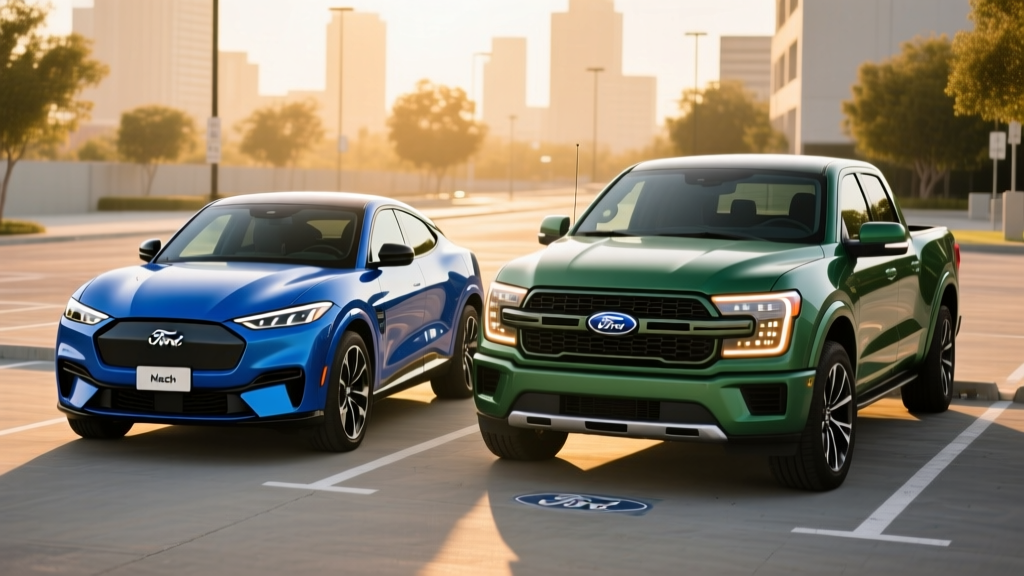
- You want a more traditional interior with physical buttons (Ford Mustang Mach-E, BMW iX3)
- You need a third row for more than two children (Kia EV9)
- You want the absolute lowest price point in an electric crossover (Chevrolet Equinox EV)
Frequently Asked Questions
What is the real-world range of the 2026 Tesla Model Y?
The EPA rates the Long Range AWD at 320 miles. In real-world mixed driving, expect 280-300 miles. Highway driving at 70-75 mph drops this to approximately 260-280 miles, and cold weather below 32°F can reduce range to 220-250 miles. The heat pump helps, but battery chemistry and cabin heating demands take a toll in winter.
How fast does the 2026 Model Y charge at home and on the road?
At home on a Level 2 (240V, 48A) charger, the Model Y adds about 44 miles of range per hour, fully charging in roughly 8 hours. On a V3 Supercharger or equivalent 250 kW DC fast charger, it goes from 10% to 80% in approximately 25 minutes. Above 80%, charging slows significantly to protect the battery.
How much does the 2026 Model Y cost after the federal tax credit?
The Long Range AWD starts at $44,990 plus $1,390 destination. If you qualify for the full $7,500 §30D federal tax credit (income caps, sourcing requirements, and tax liability apply), the effective price drops to approximately $38,880. The Performance trim starts at $52,490 and drops to roughly $46,380 after the credit. Verify current eligibility on irs.gov before purchasing.
Is the 2026 Model Y worth buying vs. the Hyundai Ioniq 5 or Ford Mustang Mach-E?
The Model Y wins on Supercharger network access, cargo space, and software ecosystem. The Ioniq 5 offers faster 800V charging (~18 min 10-80% at 350 kW stations), Apple CarPlay/Android Auto, and a more distinctive design. The Mach-E provides a more traditional driving feel and physical controls. Test-drive all three — the suspension upgrade makes the Model Y far more competitive on ride comfort than it was two years ago.
Does the Tesla Model Y qualify for the federal EV tax credit in 2026?
Yes, as of the 2026 model year the Model Y qualifies for up to $7,500 under IRS §30D, provided you meet income caps ($150K single / $300K joint), the vehicle MSRP is under $80,000 (it is), and battery critical-mineral and component sourcing requirements are met. The credit can be transferred at the point of sale. Rules change periodically — always verify on the IRS clean vehicle credits page and consult a tax professional.
What's the difference between kW and kWh in EV specs?
kW (kilowatts) measures power — how fast energy flows. Think of it like the diameter of a hose. kWh (kilowatt-hours) measures energy capacity — how much total energy the battery stores. The Model Y's 250 kW peak charge rate is how fast it can accept energy; its ~75 kWh battery is how much total energy it holds. Confusing the two is the most common EV spec mistake.