Quick Verdict: The Juniper Model Y Finally Fixes the Ride
If you've read forum threads or watched early reviews of the refreshed Tesla Model Y (internally codenamed "Juniper"), you already know the search volume around Tesla suspension has spiked for good reason. For years, the Model Y's stiff, crashy ride over imperfect pavement was its most common complaint — a harshness that contrasted sharply with the cabin's tech-forward appeal. The 2026 Model Y addresses this head-on with retuned dampers, revised bushings, and improved acoustic insulation that collectively transform the daily-driving experience without sacrificing the handling precision buyers expect.
But the suspension update is just one piece. The Juniper refresh brings a cleaner exterior, a ventilated-seat-equipped interior, a rear-seat touchscreen, and continued access to Tesla's Supercharger network — still the most reliable DC fast-charging ecosystem in North America. Here's everything you need to know about range, charging, pricing, and whether the 2026 Model Y earns your garage space versus a Hyundai Ioniq 5, Ford Mustang Mach-E, or Chevrolet Equinox EV.
2026 Tesla Model Y Specifications at a Glance
| Spec | Long Range AWD | Performance (if available) |
|---|---|---|
| EPA Range | 320 miles | ~295 miles (est.) |
| Battery (usable) | ~75 kWh, NMC | ~75 kWh, NMC |
| Drivetrain | Dual-Motor AWD | Dual-Motor AWD |
| Horsepower | ~384 hp | ~456 hp |
| 0–60 mph | 4.8 sec | 3.5 sec |
| Peak DC Fast Charge | 250 kW | 250 kW |
| 10–80% DC Time | ~25 min | ~25 min |
| Level 2 (11.5 kW AC) | ~37 mi/hr | ~37 mi/hr |
| MPGe (combined) | 111 MPGe | ~102 MPGe |
| Efficiency | 30 kWh/100 mi | ~33 kWh/100 mi |
| Cargo (rear seats up) | 30.2 cu ft | 30.2 cu ft |
| Cargo (rear seats folded) | 72.1 cu ft | 72.1 cu ft |
| Rear Legroom | 41.6 in | 41.6 in |
| Base MSRP | $46,630 | TBA |
| Battery Warranty | 8 yr / 120,000 mi | 8 yr / 120,000 mi |
Source: EPA fueleconomy.gov, Tesla spec sheets. Performance trim specs preliminary where noted.
Range, Efficiency, and the Real-World Reality
Real-World Highway (70–75 mph, mild weather): ~260–280 miles
Real-World Cold Weather (below 32°F, mixed driving): ~210–240 miles
Efficiency: 111 MPGe combined / 30 kWh per 100 miles
The EPA's 320-mile rating for the Long Range AWD is competitive with the segment, but as with every EV, your actual mileage depends heavily on speed, temperature, and terrain. At sustained highway speeds of 70–75 mph, expect to use roughly 27–29 kWh/100 mi, which translates to about 260–280 miles before you'll want to stop. In freezing temperatures, lithium-ion chemistry and cabin heating demands can reduce range by 20–30%, dropping effective range to approximately 210–240 miles. The Model Y's standard heat pump helps mitigate this compared to resistive-heating EVs, but physics still applies.
For context, a 300-mile road trip in summer conditions is doable without a charge stop if you leave at 100% State of Charge. The same trip in January across the Midwest? Plan on one 20-minute Supercharger stop.
Charging Speed: Supercharger Network Advantage
| Charging Level | Power | Speed | Use Case |
|---|---|---|---|
| Level 1 (120V) | ~1.4 kW | ~4 mi/hr | Emergency / overnight trickle |
| Level 2 (240V, 48A) | 11.5 kW | ~37 mi/hr | Home daily charging |
| DC Fast (V3 Supercharger) | Peak 250 kW | 10–80% in ~25 min | Road trips |
| DC Fast (V4 Supercharger) | Peak 250+ kW | 10–80% in ~22 min | Newer corridor stations |
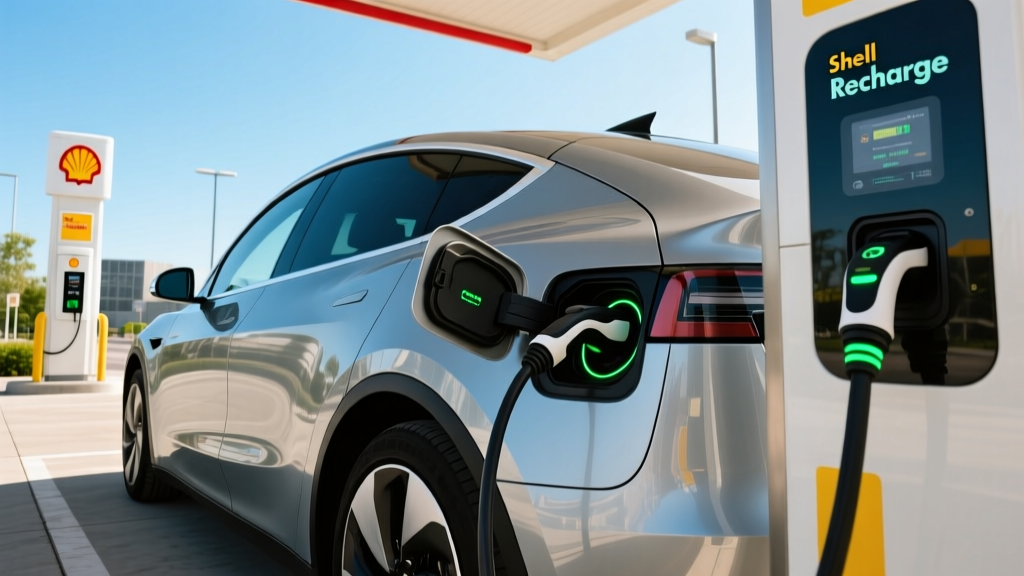
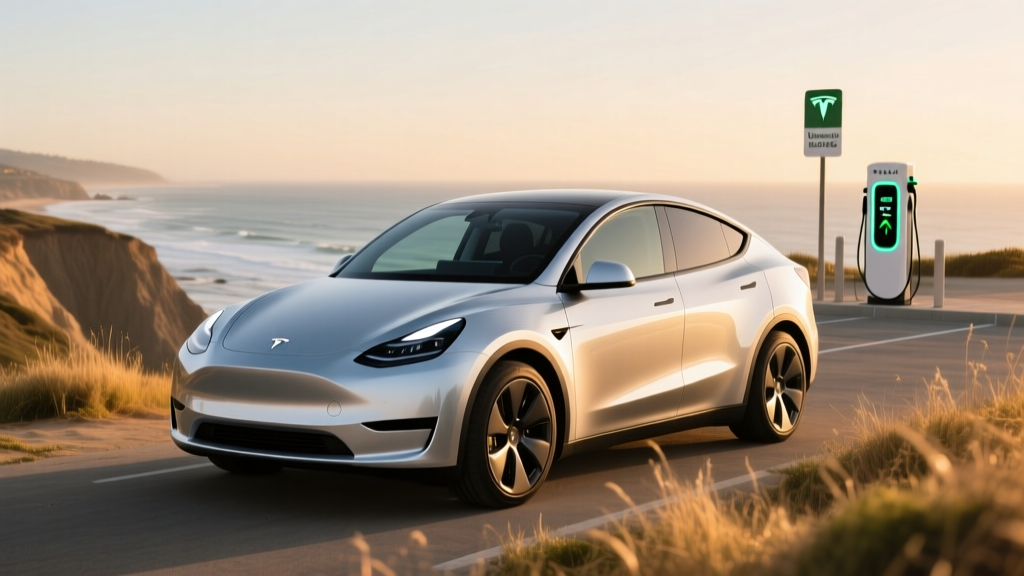
Tesla's 250 kW peak DC fast-charging rate isn't the highest in the segment — the Hyundai Ioniq 5 and Porsche Macan Electric can peak higher — but the sustained charge curve is well-managed, and more importantly, the Supercharger network's reliability remains unmatched. Plug-in authentication is automatic, stalls are consistently operational, and navigation-based battery preconditioning warms the pack before arrival to maximize charge speed.
Charge curve reality check: The Model Y peaks at 250 kW only at low State of Charge (roughly 10–25%). From 50–80%, expect sustained rates closer to 60–90 kW as the battery management system tapers current to protect cell longevity. This is normal for NMC chemistry and is why the 10–80% time matters more than peak kW alone.
With the included NACS (North American Charging Standard) port, the Model Y also accesses third-party networks like Electrify America and EVgo via adapters, though reliability on those networks remains more variable. Tesla has opened portions of its Supercharger network to non-Tesla NACS-equipped vehicles, but Tesla owners still get priority pricing and seamless integration.
The Tesla Suspension Story: What Changed for 2026
The Juniper refresh brought more than cosmetic updates to the chassis. Tesla engineers retuned the damper valving, adopted new compliance bushings at the rear subframe, and added frequency-selective damping technology that firms up during aggressive cornering while softening over small-amplitude road imperfections. The result is a ride that absorbs expansion joints, patched potholes, and gravel-road washboard without the jarring crash that defined pre-2025 Model Ys.
Body control remains tight — this is still a performance-oriented crossover, not a floaty luxury barge — but the high-frequency harshness that fatigued drivers on long highway stints is substantially reduced. Acoustic laminated glass and additional sound-deadening material further isolate the cabin from road and wind noise.
If you're cross-shopping and Tesla suspension complaints from older model years gave you pause, the 2026 version is meaningfully different. We'd still recommend a test drive on roads you know well to confirm the tuning matches your preference, but the gap between Model Y and its comfort-biased competitors (Ioniq 5, Equinox EV) has narrowed considerably.
Pricing, Trims, and Federal Tax Credit Eligibility
| Trim | Base MSRP | Est. After §30D Credit | Destination |
|---|---|---|---|
| Long Range AWD | $46,630 | ~$39,130* | $1,390 |
| Performance AWD | TBA (est. ~$52,000) | ~$44,500* | $1,390 |
*Credit eligibility depends on buyer income, battery sourcing, and MSRP caps. See checklist below.
- MSRP Cap: SUVs/crossovers must be ≤ $80,000 — Model Y qualifies ✓
- Buyer Income Cap: Modified AGI ≤ $300,000 (joint), $225,000 (head of household), $150,000 (single)
- Battery Sourcing: Critical minerals and battery components must meet escalating domestic/free-trade-partner thresholds — Tesla's supply chain has progressively localized, but confirm at point of sale
- Point-of-Sale Transfer: You can transfer the credit to the dealer at purchase for an immediate price reduction rather than claiming on your tax return
- Filing: IRS Form 8936 required; consult a tax professional for your specific situation
Source: IRS.gov Clean Vehicle Credit
The Model Y Long Range AWD at ~$39,130 after the maximum credit (if you qualify) positions it aggressively against the Ioniq 5 SEL (~$47,000 before credit) and Mach-E Premium (~$49,000 before credit). However, credit eligibility is not universal — battery sourcing requirements tightened in 2025 and 2026, and some build dates may qualify for the full $7,500, a partial $3,750, or nothing. Always verify the specific VIN's credit status on fueleconomy.gov before committing.
Interior, Tech, and Daily Livability
The Juniper interior borrows heavily from the refreshed Model 3 (Highland): ambient lighting strips, ventilated front seats, a rear 8-inch touchscreen for passengers, power-folding second-row seats, and improved material quality across touchpoints. The 15.4-inch front touchscreen remains the command center for navigation, media, climate, and vehicle settings — there are still no physical buttons for HVAC or volume, which continues to divide opinion.
Driver assistance: Basic Autopilot (lane centering + adaptive cruise) is standard. Full Self-Driving (Supervised) remains a $8,000 option or $99/month subscription. To be clear: FSD is an SAE Level 2 system — you must keep your eyes on the road and hands available to take over at any moment. It is not autonomous driving. Tesla's camera-only vision stack has improved in urban environments, but it still makes occasional errors at construction zones, unmapped intersections, and adverse weather.
Cargo and passenger space: With 30.2 cu ft behind the second row and 72.1 cu ft with seats folded, the Model Y offers strong utility for a compact crossover. The front trunk (frunk) adds roughly 4.1 cu ft for charging cables or groceries. Rear legroom at 41.6 inches accommodates adults comfortably, and the flat floor (no transmission tunnel) makes the middle seat usable for short trips.
Warranty and Long-Term Ownership
| Coverage | Term |
|---|---|
| Basic Vehicle | 4 years / 50,000 miles |
| Battery & Drive Unit | 8 years / 120,000 miles |
| Battery Capacity Retention | Minimum 70% over warranty period |
Tesla's 8-year/120,000-mile battery warranty is competitive and guarantees at least 70% capacity retention. Real-world degradation data from Tesla's fleet suggests NMC packs in the Model Y typically lose 8–12% capacity over the first 100,000 miles, with the steepest drop occurring in the first 15,000–20,000 miles before stabilizing. To maximize longevity, Tesla recommends daily charging to 80% for NMC chemistry and reserving 100% charges for road trips.
Insurance costs remain a consideration — the Model Y tends to carry premiums 15–25% higher than comparable gas crossovers due to repair costs and parts pricing. Get quotes before purchasing to avoid surprises.
Pros, Cons, and Who Should Buy
- Supercharger network reliability remains best-in-class
- 320-mi EPA range covers most daily and regional driving
- Retuned suspension significantly improves ride comfort
- Strong efficiency (30 kWh/100 mi) keeps charging costs low
- Over-the-air updates continuously add features
- Spacious cargo area with flat floor and frunk
- No physical buttons — all controls via touchscreen
- FSD (Supervised) still requires constant driver attention
- Insurance premiums higher than segment average
- 250 kW peak charge rate trails some newer competitors
- Turn-signal stalk removed (buttons on steering wheel)
- Tax credit eligibility varies by build date and sourcing
- Choose Model Y if: You value Supercharger access for road trips, want strong range and efficiency, prefer OTA-updatable tech, and the suspension improvements satisfy your comfort threshold.
- Choose Ioniq 5 if: You prioritize 800V ultra-fast charging (350 kW peak), prefer physical buttons and a more conventional interior layout, or want Hyundai's 10-year powertrain warranty.
- Choose Mach-E if: You prefer Ford's dealer network for service, want a sportier driving feel, or need BlueCruise hands-free highway driving on approved routes.
- Choose Equinox EV if: Budget is paramount — the base Equinox EV undercuts the Model Y by $8,000+ and offers 315+ miles of range, though with slower DC charging.
Frequently Asked Questions
What is the real-world range of the 2026 Tesla Model Y?
The EPA rates the Long Range AWD at 320 miles. In real-world highway driving at 70–75 mph in mild conditions, expect 260–280 miles. In freezing weather with cabin heating, plan for 210–240 miles. Use the in-car navigation's energy predictions — they're remarkably accurate when you enter your destination.
How fast does the Model Y charge at home and on the road?
At home on a 240V/48A Level 2 charger (11.5 kW), you'll gain roughly 37 miles of range per hour — a full overnight session easily replenishes a day's driving. On a V3 Supercharger, peak rate is 250 kW, with a 10–80% session taking approximately 25 minutes. Actual speed depends on State of Charge, ambient temperature, and whether the battery has preconditioned via navigation routing.
Does the 2026 Model Y qualify for the $7,500 federal EV tax credit?
It can, but eligibility depends on your income (≤ $300K joint / $150K single), the specific VIN's battery sourcing compliance, and the MSRP being under $80,000 (which it is). Credit amounts can be $7,500, $3,750, or $0 depending on critical-mineral and battery-component sourcing thresholds. Verify on fueleconomy.gov and consult a tax professional. The credit can be transferred at point of sale for an immediate price reduction.
Did Tesla actually fix the Model Y's suspension for 2026?
Yes, meaningfully. The Juniper refresh includes retuned dampers with frequency-selective technology, revised rear subframe bushings, and additional acoustic insulation. The ride over broken pavement is substantially less harsh than pre-2025 models, while body control and handling precision remain intact. It's not as plush as an Ioniq 5 or Equinox EV over large bumps, but the previous generation's crashy impacts are largely gone.
Is the Model Y worth buying over competitors in 2026?
For buyers who road-trip regularly and value the Supercharger network's reliability, the Model Y remains the default choice. For those who prioritize ultra-fast charging flexibility on non-Tesla networks, the Ioniq 5's 800V architecture is compelling. Budget-focused buyers should cross-shop the Equinox EV. The Model Y's combination of range, efficiency, cargo space, and software ecosystem keeps it at the top of the segment, but it's no longer the only strong option.
What's the battery warranty, and how long will it last?
Tesla covers the battery and drive unit for 8 years or 120,000 miles, guaranteeing at least 70% capacity retention. Fleet data suggests NMC packs typically lose 8–12% over 100,000 miles. Charging to 80% daily (rather than 100%) and avoiding frequent DC fast charging when not needed will help maximize long-term State of Health.