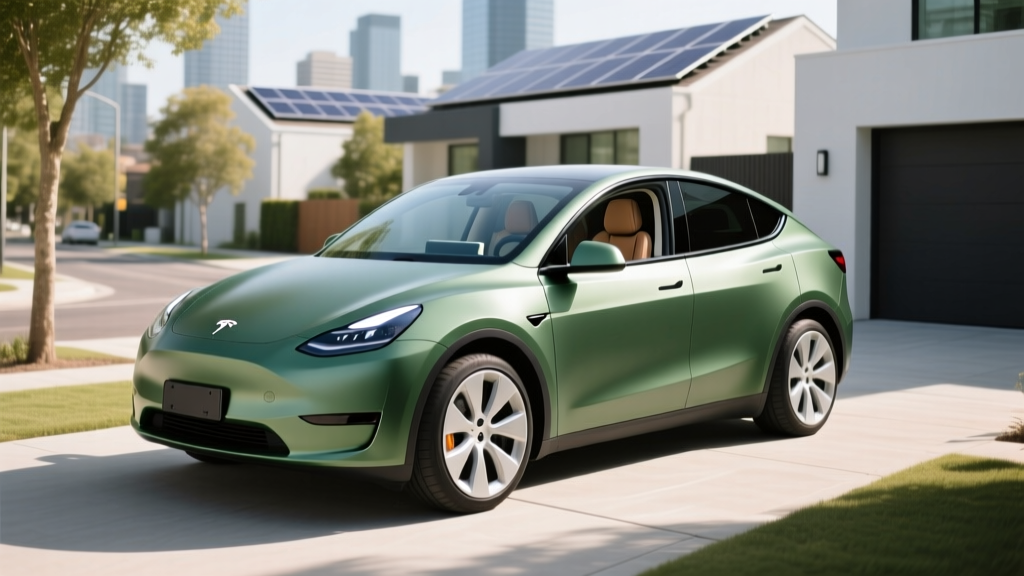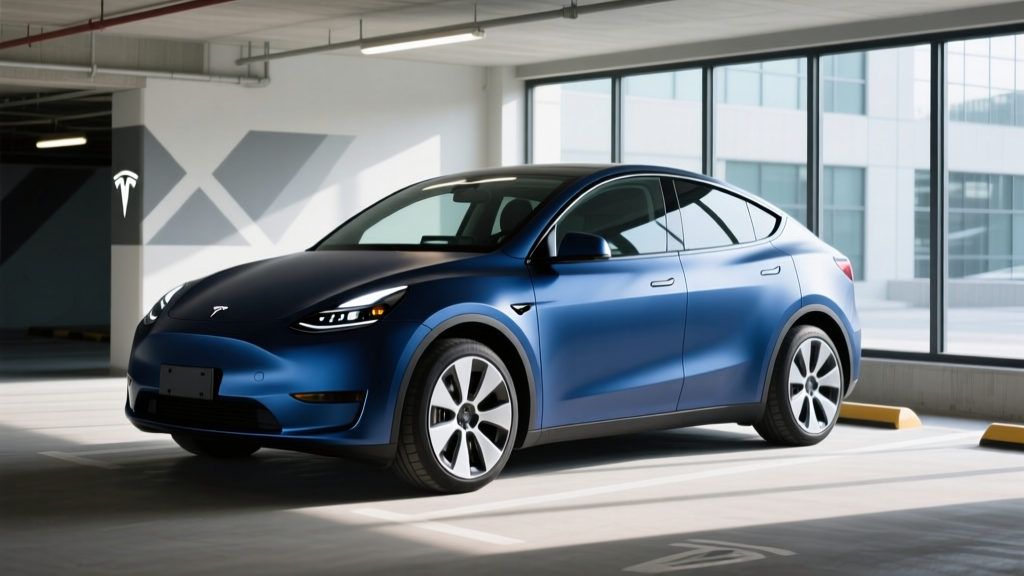
Tesla Model Y at a Glance: Dimensions and What They Mean
If you've ever searched "Tesla Model Y size" before pulling up a spec sheet, you're not alone. The Model Y occupies a curious middle ground in Tesla's lineup—longer and taller than the Model 3 sedan, but shorter and sleeker than the Model X. For 2026, Tesla continues to refine the crossover with updated efficiency, revised pricing, and the Juniper refresh that debuted in early 2025 carrying forward with minor adjustments.
Here's the dimensional reality: the Model Y measures 187.0 inches long, 75.6 inches wide (without mirrors), and 63.9 inches tall, riding on a 113.8-inch wheelbase. That translates to interior space that genuinely competes with midsize SUVs like the Ford Mustang Mach-E and Hyundai Ioniq 5, while the cargo area remains one of the strongest selling points in its class.
| Spec | Long Range RWD | Long Range AWD | Performance |
|---|---|---|---|
| EPA Range | 320 mi | 308 mi | 277 mi |
| Battery (usable) | ~78 kWh (LFP) | ~78 kWh (NMC) | ~78 kWh (NMC) |
| 0-60 mph | 5.8 sec | 4.8 sec | 3.5 sec |
| Horsepower | 346 hp | 384 hp | 456 hp |
| Drivetrain | RWD | Dual Motor AWD | Dual Motor AWD |
| Top Speed | 125 mph | 125 mph | 155 mph |
| Base MSRP | $44,990 | $47,990 | $52,490 |
| Efficiency (MPGe) | 123 combined | 117 combined | 111 combined |
| kWh/100 mi | 27 | 29 | 30 |
Cargo Space and Passenger Room: The Numbers That Matter
The reason so many buyers specifically search for Tesla Model Y size data is cargo versatility. With the second row upright, you get 30.2 cubic feet behind the rear seats. Fold that 60/40 split bench flat and the space expands to 72.1 cubic feet—enough to swallow furniture, camping gear, or a week's worth of Costco runs without a roof box.
Front legroom measures 41.8 inches, and rear legroom sits at 40.5 inches. These are genuinely generous figures; a six-foot passenger behind a six-foot driver won't feel pinched. Headroom is 41.0 inches up front and 39.4 inches in the rear. The panoramic glass roof eats slightly into rear headroom compared to a conventional steel roof, but the open, airy feel compensates.
There's also a front trunk (frunk) offering approximately 4.1 cubic feet—handy for a charging cable kit, groceries, or a small carry-on. It's not class-leading (the Ioniq 5's frunk is larger), but it's a useful bonus that gas-powered crossovers can't match.
Real-World Range vs. the EPA Sticker
EPA Estimate: 320 miles (Long Range RWD) / 308 miles (Long Range AWD)
Real-World Expectation: Expect 260–285 miles on a highway-heavy road trip at 70–75 mph. In cold weather (below 32°F), plan for 20–30% range loss, bringing usable range down to roughly 220–250 miles depending on cabin heating usage and driving style.
The EPA cycle is a blended test, and Tesla's efficiency engineering is legitimately strong. The Model Y Long Range RWD achieves 123 MPGe combined, which translates to roughly 27 kWh per 100 miles—one of the most efficient electric crossovers on the market. That efficiency is partly why Tesla can deliver over 300 miles of range from a battery pack smaller than some competitors'.
But physics always wins on the highway. At sustained 75 mph speeds, aerodynamic drag increases exponentially, and real-world consumption climbs to approximately 30–33 kWh/100mi. Add winter temperatures and the battery's thermal management system draws additional energy, plus cabin heating (the Model Y uses a heat pump, which helps significantly compared to resistive heaters, but still consumes power).
For daily commuting with home charging, the EPA figure is achievable and sometimes beatable. For cross-country road trips, budget conservatively and plan Supercharger stops every 220–250 miles in winter conditions.
Charging Speed: DC Fast Charging and Home Level 2
The 2026 Model Y supports peak DC fast charging at up to 250 kW on Tesla's V3 and V4 Superchargers. In practice, the charging curve matters more than the peak number. From a 10% state of charge, the Model Y can sustain approximately 200+ kW through roughly 40% SoC before tapering. A 10–80% charge takes approximately 22–25 minutes at a V3 Supercharger, adding roughly 170–190 miles of range in that window.
| Charging Level | Power (kW) | Speed | Notes |
|---|---|---|---|
| Level 1 (120V household) | ~1.4 kW | ~4 mi/hr | Emergency/trickle only |
| Level 2 (240V home, 48A) | 11.5 kW | ~38 mi/hr | Full charge overnight (~8 hrs) |
| DC Fast (Tesla Supercharger V3) | Peak 250 kW | ~170 mi in 15 min | 10–80% in ~22–25 min |
| DC Fast (CCS via adapter) | Up to 250 kW | Varies by station | Requires Tesla CCS adapter |
At home on a Level 2 wall connector wired to a 60-amp circuit (48 amps continuous), the onboard charger accepts up to 11.5 kW, adding roughly 38 miles of range per hour of charging. A full charge from 10% to 100% takes about 7.5 to 8 hours—perfect for overnight replenishment.
One important note on battery chemistry: the Long Range RWD trim uses an LFP (lithium iron phosphate) battery, which Tesla recommends charging to 100% regularly for accurate range estimation and longevity. The Long Range AWD and Performance trims use NMC (nickel manganese cobalt) chemistry, where Tesla recommends daily charging to 80% and 100% only for trips. This is a meaningful ownership difference—LFP owners effectively get more daily usable range because they can charge to full without degradation concern.
Pricing, Trims, and the 2026 Federal Tax Credit
The 2026 Tesla Model Y lineup starts at $44,990 for the Long Range RWD, climbs to $47,990 for the Long Range AWD, and tops out at $52,490 for the Performance variant. These prices exclude the $1,390 destination fee and any optional paint, wheels, or interior upgrades.
| Trim | MSRP | Est. After §30D Credit | Credit Eligibility |
|---|---|---|---|
| Long Range RWD | $44,990 | ~$37,490 | Up to $7,500 (see rules) |
| Long Range AWD | $47,990 | ~$40,490 | Up to $7,500 (see rules) |
| Performance | $52,490 | ~$44,990 | Up to $7,500 (see rules) |
The federal EV tax credit under IRS §30D can reduce your effective cost by up to $7,500, but eligibility is not automatic. Here's what determines whether you qualify:
- MSRP Cap: The Model Y qualifies as an SUV under IRS rules, so the cap is $80,000. All 2026 trims clear this easily.
- Buyer Income Cap: Modified adjusted gross income must not exceed $300,000 (joint filers), $225,000 (head of household), or $150,000 (single). Income is based on the tax year of delivery or the prior year—whichever is lower.
- Battery Sourcing Requirements: The credit splits into two halves—$3,750 for critical minerals and $3,750 for battery component manufacturing. Sourcing rules tighten annually, and the exact credit amount for a specific VIN can change. Tesla provides a credit estimator at checkout, but always verify with a tax professional.
- Point-of-Sale Transfer: As of 2024, eligible buyers can transfer the credit to the dealer at purchase, reducing the upfront price rather than waiting for a tax refund. Tesla participates in this program.
Because battery sourcing rules are complex and subject to change, we recommend checking the latest guidance on fueleconomy.gov and consulting a tax advisor before finalizing your purchase.
Tech, Safety, and Driver Assistance
The Model Y's cabin is dominated by a 15.4-inch center touchscreen that handles everything: navigation, climate, media, vehicle settings, and even the glovebox release. There are no physical buttons for HVAC or volume—the screen handles it all, which some buyers love and others find distracting. The 2025 Juniper refresh added ventilated front seats, ambient lighting, a rear-seat touchscreen, and power-folding second-row seats, all of which carry into 2026.
Standard Autopilot includes Traffic-Aware Cruise Control and Autosteer, which is a competent SAE Level 2 driver-assistance system. It keeps the car centered in its lane and manages speed in traffic, but it is emphatically not self-driving—you must keep your hands on the wheel and eyes on the road. Tesla's camera-based system (no radar or ultrasonic sensors) works well on well-marked highways but can be less confident in construction zones, faded lane markings, or heavy rain.
⚠️ Driver-Assistance Limitation: Tesla Autopilot and FSD (Supervised) are SAE Level 2 systems. The driver is fully responsible for the vehicle at all times. "Full Self-Driving" is a product name, not a capability—no Tesla vehicle sold to consumers drives itself without supervision.
Full Self-Driving (Supervised) is available as a $8,000 add-on or $99/month subscription. It adds automatic lane changes, navigation-guided on/off-ramp handling, and traffic light/stop sign recognition. In our experience, FSD is impressive on highways but requires constant vigilance and occasional intervention, particularly in complex urban environments.
Safety ratings are strong: the Model Y earned a 5-star overall rating from NHTSA and top marks from IIHS in prior model years. Standard features include automatic emergency braking, blind-spot monitoring, lane departure warning, and rear cross-traffic alert.
Warranty, Reliability, and Ownership Costs
Tesla covers the Model Y with a 4-year/50,000-mile basic vehicle warranty and an 8-year/120,000-mile battery and drive unit warranty. The battery warranty guarantees that capacity will remain above 70% during the coverage period—if degradation drops below that threshold, Tesla will repair or replace the pack.
In practice, Tesla's NMC and LFP packs have shown strong longevity. Data aggregated from owner reports suggests typical degradation of 8–12% over the first 100,000 miles, with the curve flattening significantly afterward. LFP chemistry, found in the RWD trim, tends to show even slower degradation and tolerates 100% daily charging better than NMC.
Insurance costs are a real consideration. The Model Y's repair costs (particularly for body panels and the glass roof) push premiums higher than many gas-powered crossovers. Expect annual insurance costs of $2,000–$3,200 depending on your state, age, and driving record. Get quotes before purchasing—this is a line item that surprises some buyers.
On the savings side, electricity costs roughly $0.13–$0.16/kWh on average nationally, meaning a full charge costs roughly $10–$13 at home. At 27 kWh/100mi, that's about $0.035–$0.045 per mile—roughly one-third the per-mile fuel cost of a comparably sized gas crossover getting 25 MPG at $3.50/gallon.
Pros, Cons, and Who Should Buy the Model Y
✅ Pros
- Class-leading efficiency (27 kWh/100mi on RWD)
- 30.2 cu ft cargo behind rear seats; 72.1 cu ft total
- Access to Tesla's Supercharger network (20,000+ stalls in North America)
- 250 kW peak DC fast charging; 10–80% in ~22 min
- Strong safety ratings (5-star NHTSA)
- Over-the-air updates add features post-purchase
- LFP battery option allows daily 100% charging
❌ Cons
- No physical buttons—everything through the touchscreen
- Higher insurance premiums than gas competitors
- Performance trim's 277-mile range is modest for the price
- FSD (Supervised) requires constant driver attention despite its name
- Rear visibility is compromised by the sloping roofline and small rear window
- Build quality, while improved, still shows occasional panel-gap variance
Choose the Tesla Model Y if: You want the best efficiency-to-cargo ratio in an electric crossover, rely on fast-charging road trips, and value the Supercharger network's reliability. It's ideal for families, commuters with home charging, and buyers who prioritize range per dollar.
Look at competitors if: You want physical climate controls (Hyundai Ioniq 5), a more luxurious interior (BMW iX), faster peak charging (Hyundai/Kia E-GMP platform at 350 kW), or a third row (Kia EV9). The Mach-E offers a sportier driving feel, and the Cadillac Lyriq delivers a quieter, more traditional luxury experience.
Frequently Asked Questions
What is the real-world range of the 2026 Tesla Model Y?
The EPA rates the Long Range RWD at 320 miles and the Long Range AWD at 308 miles. In real-world highway driving at 70–75 mph, expect 260–285 miles. In freezing temperatures, plan for 220–250 miles due to battery thermal losses and cabin heating demands.
How fast does the Model Y charge at home and on the road?
At home on a 240V Level 2 Wall Connector (48A), the Model Y charges at 11.5 kW, adding about 38 miles of range per hour—a full overnight charge. On a Tesla V3 Supercharger, it peaks at 250 kW and charges from 10–80% in approximately 22–25 minutes.
Does the 2026 Model Y qualify for the $7,500 federal tax credit?
All trims fall under the $80,000 SUV MSRP cap. Eligibility depends on your income (under $300K joint / $150K single), battery sourcing compliance, and tax liability. The credit can be applied at the point of sale. Always verify current rules on irs.gov and consult a tax professional.
How does the Model Y size compare to the Model 3?
The Model Y is about 7 inches longer, 1.8 inches wider, and 8 inches taller than the Model 3. Cargo space is dramatically larger (30.2 cu ft vs. 23 cu ft in the Model 3 trunk), and rear headroom and legroom are noticeably improved.
Is the Model Y worth buying over the Hyundai Ioniq 5 or Ford Mach-E?
The Model Y wins on efficiency, Supercharger access, and cargo volume. The Ioniq 5 charges faster on 350 kW stations (10–80% in ~18 min), has physical buttons and V2L capability. The Mach-E offers a more engaging drive and a traditional dealership experience. Test-drive all three before deciding.
What battery chemistry does the 2026 Model Y use?
The Long Range RWD uses LFP (lithium iron phosphate), which is durable and can be charged to 100% daily. The Long Range AWD and Performance trims use NMC (nickel manganese cobalt), which offers slightly higher energy density but should be charged to 80% for daily use.