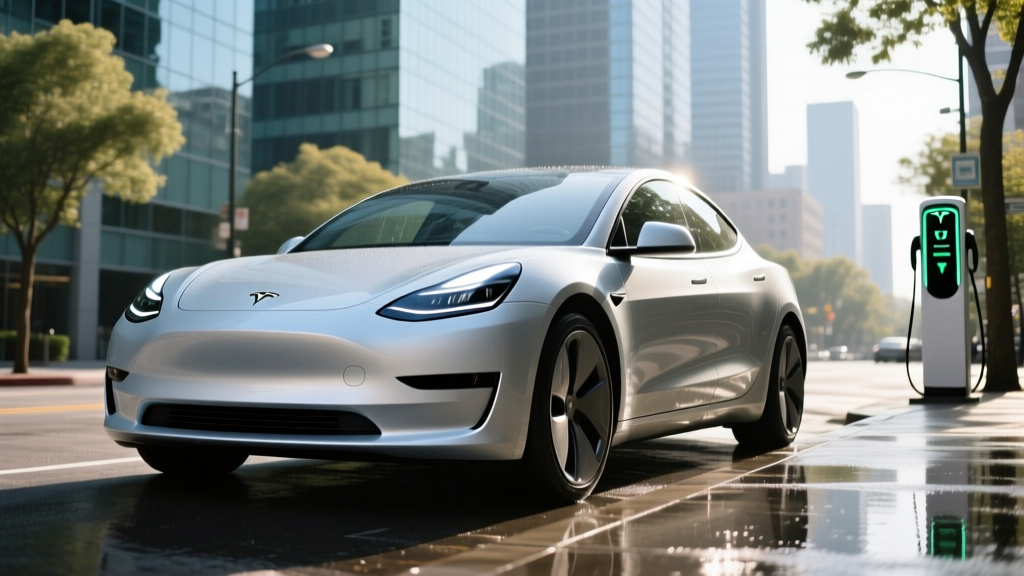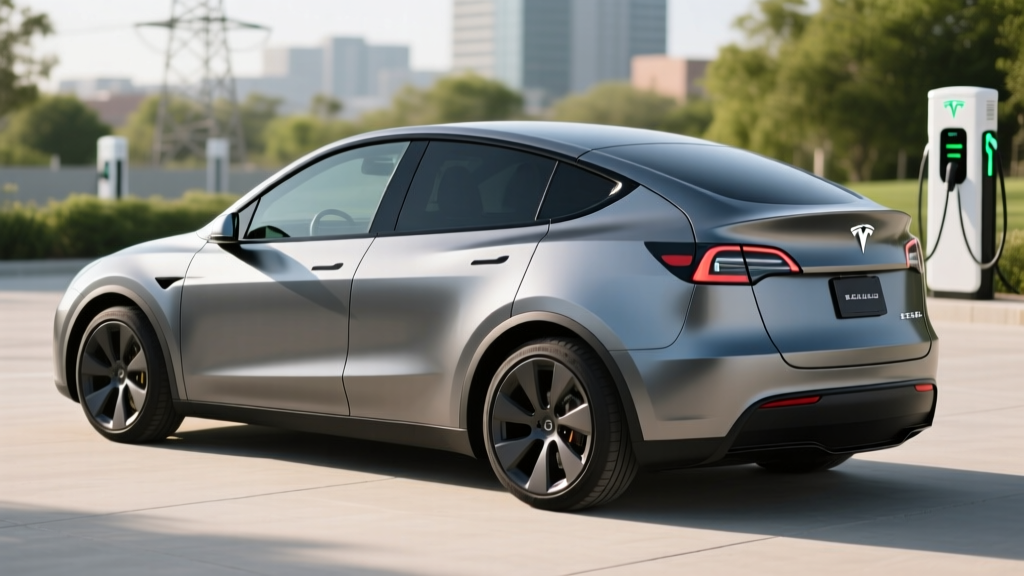
The Tesla Model Y remains one of the most recognizable silhouettes on the road, and the Tesla Model Y side view tells you almost everything about the vehicle's engineering priorities: a fastback roofline optimized for aerodynamic efficiency, flush door handles that reduce drag, and a tall, crossover stance that maximizes interior volume. For the 2026 model year, Tesla has continued refining the platform introduced with the "Juniper" refresh, making the Model Y a benchmark in the electric compact SUV segment.
This review breaks down everything buyers need to know — from real-world range and charging performance to pricing after federal tax credits — so you can decide whether the Model Y earns a spot in your driveway.
Tesla Model Y Side View: Design Language and Aerodynamic Purpose
Study the Tesla Model Y side view and you'll notice the design is driven by function over ornamentation. The gently sloping roofline — reminiscent of the BMW X6 or Porsche Cayenne Coupe — isn't purely aesthetic. It contributes to a drag coefficient (Cd) of approximately 0.23, one of the lowest in the crossover segment. That aerodynamic efficiency translates directly to highway range.
Key side-profile design elements include:
- Flush retractable door handles that sit flush with the body panels, reducing turbulent airflow
- Frameless windows that contribute to the coupe-like silhouette
- Short front overhang and longer rear overhang, giving the Model Y a planted, forward-leaning stance
- Standard 19-inch Gemini wheels with aero covers (20-inch Induction wheels available, at a range cost of roughly 15–20 miles)
- Full glass roof visible from the side, extending from the windshield header to the rear hatch, creating an airy cabin feel
The 2026 Juniper-refreshed Model Y carries a slightly revised light bar across the front fender and updated side mirrors with integrated turn signals, but the fundamental proportions remain unchanged. Wheelbase measures 113.8 inches, with an overall length of approximately 188.9 inches — compact enough for city parking, yet long enough to accommodate five adults comfortably.
2026 Tesla Model Y Specifications at a Glance
| Specification | Long Range AWD | Performance AWD |
|---|---|---|
| EPA Estimated Range | 320 miles | 293 miles |
| Battery Capacity (Usable) | ~75 kWh (NMC) | ~75 kWh (NMC) |
| Drivetrain | Dual-Motor AWD | Dual-Motor AWD |
| Horsepower | 384 hp | 456 hp |
| 0–60 mph | 4.8 seconds | 3.5 seconds |
| Top Speed | 125 mph | 155 mph |
| MPGe (Combined) | 111 MPGe | 102 MPGe |
| Efficiency | 30 kWh/100 mi | 33 kWh/100 mi |
| Max DC Fast Charge | 250 kW | 250 kW |
| 10–80% DC Fast Charge | ~25 minutes | ~25 minutes |
| Level 2 Home Charging | 11.5 kW (~44 mi/hr) | 11.5 kW (~44 mi/hr) |
| Cargo Volume (rear seats up) | 30.2 cu ft | 30.2 cu ft |
| Cargo Volume (rear seats folded) | 72.1 cu ft | 72.1 cu ft |
| Rear Legroom | 37.7 inches | 37.7 inches |
| Base MSRP | $44,990 | $49,990 |
| Battery Warranty | 8 yr / 120,000 mi | 8 yr / 120,000 mi |
Source: fueleconomy.gov and Tesla specifications. Figures reflect 2026 model-year data.
Real-World Range: What the EPA Number Doesn't Tell You
EPA Estimate: 320 miles (Long Range AWD)
Highway (70–80 mph, mild weather): ~270–290 miles
Cold Weather (below 32°F, mixed driving): ~220–260 miles
City / Suburban (moderate speeds, regen braking): ~300–330 miles
The EPA range figure of 320 miles for the Long Range AWD is a useful baseline, but real-world results depend heavily on driving conditions. At sustained highway speeds above 70 mph, aerodynamic drag increases exponentially, and you can expect range to drop to roughly 270–290 miles in mild temperatures. This is physics, not a Tesla-specific flaw — every EV experiences this.
Cold weather introduces a second variable. Lithium-ion batteries lose efficiency in low temperatures, and cabin heating draws significant energy. In sub-freezing conditions, expect a 15–25% range reduction, bringing effective range to approximately 220–260 miles. The Model Y's standard heat pump mitigates this somewhat — it's substantially more efficient than resistive heating — but it cannot eliminate cold-weather loss entirely.
Conversely, city and suburban driving at moderate speeds with frequent regenerative braking opportunities can push range at or even slightly above the EPA figure. If your commute involves stop-and-go traffic at 25–45 mph, the Model Y's efficiency shines.
The Model Y uses an NMC (nickel manganese cobalt) battery chemistry in the Long Range and Performance trims, offering high energy density suitable for maximizing range in a compact package. Tesla has not published an official usable kWh figure, but independent testing places it at approximately 75 kWh usable.
Charging Performance: DC Fast Charging and Home Setup
Charging speed is where the Model Y's Supercharger network integration pays dividends. Here's the complete charging profile:
| Charging Level | Power / Rate | Miles Added per Hour | Notes |
|---|---|---|---|
| Level 1 (120V household) | ~1.4 kW | ~4–5 miles/hr | Emergency/trickle only |
| Level 2 (240V home, Wall Connector) | 11.5 kW | ~44 miles/hr | Full charge in ~7 hours |
| DC Fast Charge (V3 Supercharger) | Peak 250 kW | Up to ~1,000 mi/hr | 10–80% in ~25 min |
| DC Fast Charge (V4 Supercharger) | Peak 250 kW* | Up to ~1,000 mi/hr | Improved cable management |
| CCS Adapter (non-Tesla DCFC) | Up to 150–170 kW typical | Varies | Requires CCS adapter |
*The Model Y's onboard architecture caps at approximately 250 kW. V4 Supercharger stalls may support higher rates for future platforms.
On a V3 or V4 Tesla Supercharger, the Model Y peaks at approximately 250 kW when the battery is preconditioned and at a low state of charge (around 10–15%). However, like all EVs, the charge curve tapers significantly above 50–60% SoC, and drops sharply above 80%. The 10–80% charge takes roughly 25 minutes under optimal conditions — competitive but not class-leading against 800V architectures like the Hyundai Ioniq 5 or Kia EV6, which can achieve 10–80% in approximately 18 minutes.
For home charging, the Tesla Wall Connector on a 60-amp circuit delivers 11.5 kW (48 amps continuous), adding approximately 44 miles of range per hour. A full overnight session easily replenishes a day's worth of driving. Most owners find that Level 2 home charging eliminates the need for routine public charging entirely.
Performance and Driving Dynamics
The dual-motor all-wheel-drive powertrain in the Long Range Model Y delivers 384 horsepower and a 0–60 mph time of 4.8 seconds — quick enough to merge onto any highway with confidence. The Performance trim bumps output to 456 hp and drops the 0–60 time to 3.5 seconds, putting it in sports-car territory.
Driving dynamics benefit from the low center of gravity inherent to skateboard-style battery placement. Body roll is well-controlled for a crossover, and the steering is precise if somewhat light. The Juniper refresh introduced revised suspension tuning that improves ride compliance over pre-2025 models, addressing one of the most common owner complaints about the earlier Model Y.
Regenerative braking is strong and predictable, enabling effective one-pedal driving in most scenarios. The Model Y does not offer adjustable regen levels — Tesla's approach is "optimized for you" — but most owners adapt within a few days.
Pricing, Trims, and Federal Tax Credit Eligibility
For 2026, the Tesla Model Y is available in two primary configurations:
| Trim | Base MSRP | Est. Federal Credit (§30D) | Effective Price (before state incentives) |
|---|---|---|---|
| Long Range AWD | $44,990 | Up to $7,500* | ~$37,490* |
| Performance AWD | $49,990 | Up to $7,500* | ~$42,490* |
*Federal tax credit eligibility depends on multiple IRS §30D requirements. See checklist below.
The federal EV tax credit under IRS §30D can reduce the effective purchase price by up to $7,500, and as of 2024, this credit can be transferred to the dealer at point of sale as a direct price reduction. However, eligibility is not automatic. Buyers must satisfy all of the following:
- MSRP Cap: Vehicle MSRP must not exceed $80,000 for SUVs (Model Y qualifies)
- Buyer Income Cap: Modified AGI must not exceed $150,000 (single), $225,000 (head of household), or $300,000 (joint filers)
- Battery Sourcing: Critical minerals and battery components must meet phased-in domestic/free-trade sourcing thresholds (check IRS.gov for current-year requirements)
- Final Assembly: Vehicle must undergo final assembly in North America (Model Y assembled in Austin, TX — qualifies)
- Point-of-Sale Transfer: Credit can be applied at purchase or claimed on your tax return
Always verify current-year rules at irs.gov and consult a tax professional before relying on credit eligibility.
Interior, Cargo, and Technology
The Model Y's cabin follows Tesla's minimalist philosophy: a single 15.4-inch touchscreen handles infotainment, climate, navigation, and vehicle settings. There is no instrument cluster — all driving information appears on the left portion of the central screen. The Juniper refresh added ambient lighting, ventilated front seats, power-folding second-row seats, and an 8-inch rear touchscreen for passengers.
Cargo space is generous for the segment: 30.2 cubic feet behind the second row and 72.1 cubic feet with the rear seats folded flat. A front trunk (frunk) adds additional storage for charging cables or a small bag. Rear legroom measures 37.7 inches, adequate for adults on longer trips.
Tech highlights include:
- Autopilot (standard): SAE Level 2 driver-assist with adaptive cruise control, lane centering, and automatic emergency braking
- Full Self-Driving (Supervised) ($8,000 option): Enhanced Level 2 with auto lane change, Navigate on Autopilot, and traffic light recognition — driver supervision required at all times
- Over-the-air updates that periodically add features and refine existing ones
- Sentry Mode and dashcam functionality using the vehicle's external cameras
- Phone-as-key entry with Bluetooth proximity detection
Tesla Autopilot and FSD (Supervised) are SAE Level 2 driver-assistance systems. The driver must remain fully engaged, hands on or near the wheel, and eyes on the road at all times. These systems do not make the vehicle self-driving. Only Level 4 robotaxi services (e.g., Waymo) operate without a driver.
Pros and Cons: The Honest Assessment
- Class-leading Supercharger network access (19,000+ stalls in North America)
- Strong real-world efficiency (111 MPGe combined)
- Spacious cargo area and practical crossover form factor
- Excellent over-the-air software update cadence
- Strong resale value relative to EV segment average
- Heat pump standard for cold-weather efficiency
- DC fast-charge speed (250 kW peak) trails 800V competitors
- Minimalist interior not for everyone — no physical buttons for climate or volume
- FSD (Supervised) remains a Level 2 system despite the name
- Ride quality improved but still firm over sharp imperfections
- No Apple CarPlay or Android Auto integration
- Insurance premiums tend to run higher than segment average
Who Should Buy the 2026 Tesla Model Y?
The Model Y is best suited for buyers who:
- Commute 30–80 miles daily and can charge at home — the efficiency and Level 2 charging speed make this effortless
- Take regular road trips and value the reliability and density of the Tesla Supercharger network over non-Tesla public charging
- Need family-friendly cargo space without stepping up to a larger, more expensive SUV like the Model X
- Want strong performance in an electric crossover — even the Long Range trim hits 60 mph in under 5 seconds
It may not be the best choice if you:
- Prefer physical controls and a traditional instrument cluster (consider the Hyundai Ioniq 5 or Ford Mustang Mach-E)
- Need the absolute fastest DC charging available (the Ioniq 5 and EV6 with 800V architecture charge faster)
- Want Apple CarPlay or Android Auto (not available on any Tesla)
Frequently Asked Questions
What is the real-world range of the 2026 Tesla Model Y?
The EPA rates the Long Range AWD at 320 miles. In real-world highway driving at 70–80 mph, expect approximately 270–290 miles. In cold weather below freezing, range can drop to 220–260 miles. City driving with regenerative braking may match or slightly exceed the EPA figure.
How fast does the Model Y charge at home and on DC fast chargers?
On a Tesla Wall Connector (Level 2, 11.5 kW), the Model Y adds approximately 44 miles of range per hour, achieving a full charge in about 7 hours. On a V3 or V4 Supercharger (DC fast charge), it peaks at 250 kW and charges from 10–80% in roughly 25 minutes when preconditioned.
Does the 2026 Tesla Model Y qualify for the federal EV tax credit?
The Model Y is assembled in North America and falls under the $80,000 SUV MSRP cap, making it potentially eligible for up to $7,500 under IRS §30D. However, buyer income limits, battery-sourcing requirements, and other criteria apply. Verify current eligibility at irs.gov and consult a tax professional.
Is the Model Y worth buying vs. competitors like the Ioniq 5 or Mach-E?
The Model Y wins on Supercharger network access, cargo space, efficiency, and software. The Hyundai Ioniq 5 offers faster 800V DC charging and a more distinctive interior. The Ford Mustang Mach-E provides a more traditional driving experience. Your priority — charging speed, interior feel, or ecosystem — should guide the decision.
What battery chemistry does the Model Y use, and how long will it last?
The Long Range and Performance trims use NMC (nickel manganese cobalt) chemistry for high energy density. Tesla's battery warranty covers 8 years or 120,000 miles with a minimum 70% capacity retention threshold. Real-world degradation data from the Tesla fleet suggests most Model Y batteries retain approximately 85–90% capacity at 100,000 miles.
What is the warranty coverage on the 2026 Model Y?
Tesla provides a 4-year/50,000-mile limited vehicle warranty and an 8-year/120,000-mile battery and drive unit warranty. The battery warranty guarantees a minimum of 70% capacity retention over the warranty period.