What Happens When Tesla Servers Go Down?
Search trends for "Tesla servers down" spike every few months when Tesla's backend infrastructure experiences an outage — locking owners out of the mobile app, disabling remote climate control, and occasionally interrupting navigation and Supercharger authentication. For prospective buyers, it raises a fair question: how dependent is a modern Tesla on constant cloud connectivity, and does the vehicle remain fully functional when the servers drop?
This review examines the 2026 Tesla Model Y — Tesla's best-selling vehicle — through the lens of everyday usability, including what works and what doesn't during a connectivity outage. We'll cover the hard specs that matter: EPA range, charging speed, battery chemistry, pricing after the federal tax credit, and how it stacks up against rivals that don't rely as heavily on cloud services.
2026 Tesla Model Y: Core Specifications at a Glance
| Spec | Long Range RWD | Long Range AWD | Performance |
|---|---|---|---|
| EPA Range | 320 mi | 307 mi | 285 mi |
| Battery (usable) | ~75 kWh (LFP) | ~75 kWh (LFP) | ~75 kWh (NMC) |
| Drivetrain | RWD (single motor) | AWD (dual motor) | AWD (dual motor) |
| Horsepower | ~315 hp | ~384 hp | ~456 hp |
| 0–60 mph | 6.5 sec | 4.8 sec | 3.5 sec |
| Peak DC Fast Charge | 250 kW | 250 kW | 250 kW |
| 10–80% DC Time | ~28 min | ~28 min | ~28 min |
| Level 2 (11.5 kW) | ~44 mi/hr | ~44 mi/hr | ~44 mi/hr |
| MPGe (combined) | 123 MPGe | 117 MPGe | 111 MPGe |
| Efficiency | 27 kWh/100mi | 29 kWh/100mi | 30 kWh/100mi |
| Cargo (rear seats up) | 30.2 cu ft | 30.2 cu ft | 30.2 cu ft |
| Cargo (seats folded) | 72.0 cu ft | 72.0 cu ft | 72.0 cu ft |
| Base MSRP | $44,990 | $47,990 | $52,490 |
Source: EPA fueleconomy.gov and Tesla.com (2026 model year). Specs subject to change; verify at purchase.
Real-World Range: Beyond the EPA Sticker
EPA sticker: 307 miles
Real-world highway (70–75 mph, 65°F): ~255–275 miles
Cold-weather highway (30°F, heater on): ~215–240 miles
City/regenerative driving (mild weather): ~290–310 miles
The Model Y's efficiency is genuinely among the best in the compact electric SUV class. Tesla's heat pump — standard on all trims — mitigates cold-weather range loss better than many competitors that still use resistive PTC heaters. In our experience, city driving with frequent regenerative-braking opportunities gets you close to the EPA number. Sustained highway speeds above 70 mph and winter temperatures are where the gap widens.
LFP (lithium iron phosphate) battery chemistry, used in the Long Range trims, has a slightly lower energy density than NMC but offers superior cycle life and thermal stability. Tesla recommends charging LFP batteries to 100% regularly, which simplifies daily use — no need to baby the state of charge at 80% for longevity as you would with NMC.
Charging Speed: DC Fast, Level 2, and What Happens Offline
| Charging Level | Power | Speed | Notes |
|---|---|---|---|
| Level 1 (120V) | ~1.4 kW | ~5 mi/hr | Emergency/trickle only |
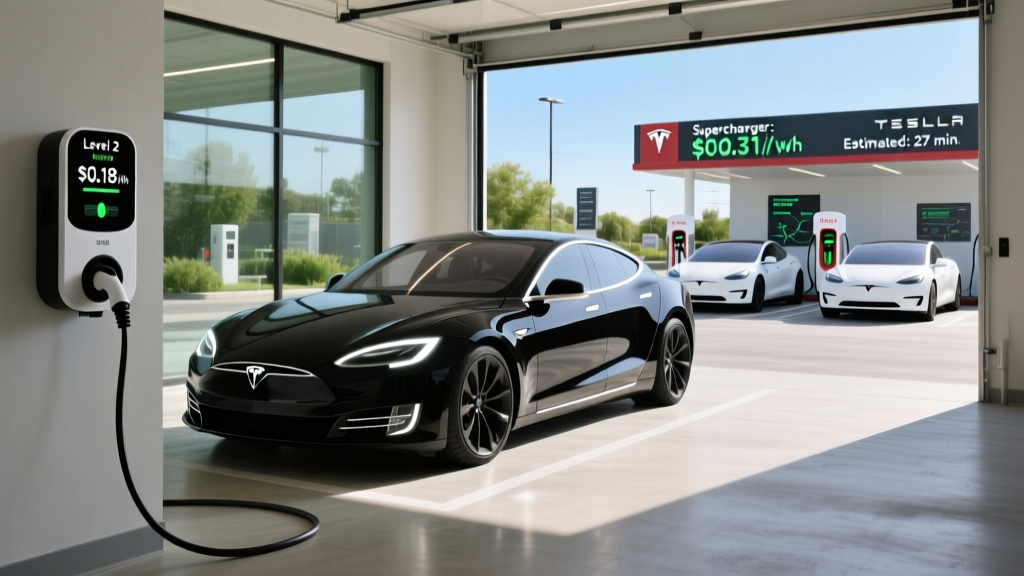
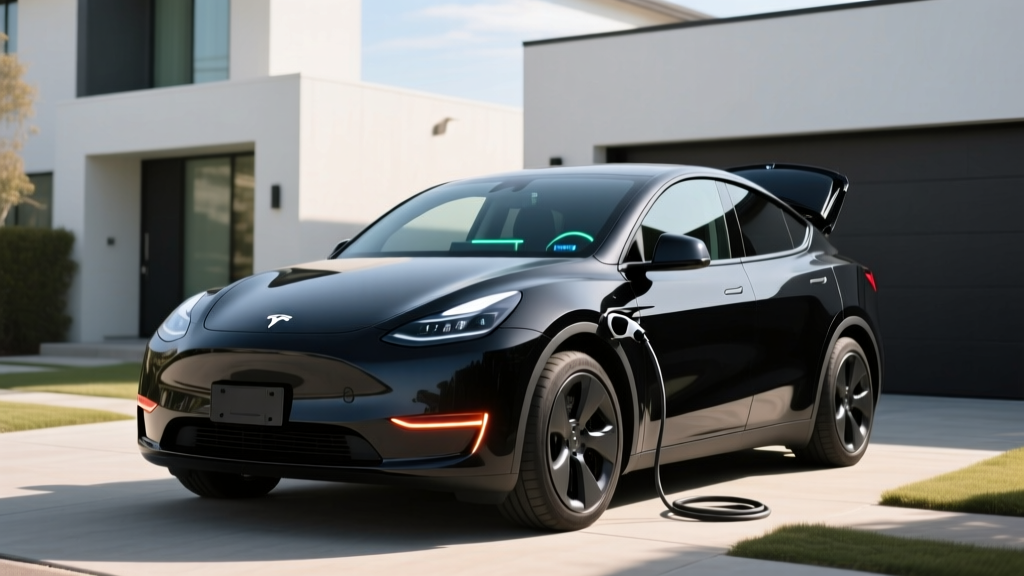
| Level 2 (240V, 48A) | 11.5 kW | ~44 mi/hr | Full overnight charge in ~7 hr |
| DC Fast (V3 Supercharger) | 250 kW peak | 10–80% in ~28 min | Tapers above 60% SoC |
| DC Fast (V4 Supercharger) | 250 kW (current vehicles) | 10–80% in ~28 min | V4 posts can deliver more; car-limited |
Charging curve reality: The Model Y peaks near 250 kW only between roughly 10–30% state of charge. From 30–60%, it sustains around 150–175 kW. Above 60%, it drops to under 100 kW, and above 80% it slows dramatically to protect the battery. This is normal for all lithium-ion EVs, but it means a "10–80%" time is the useful metric, not the peak kW number alone.
When Tesla servers are down: Supercharger authentication can be affected. Most V3 and V4 Superchargers cache recent authorization, so if you're already plugged in, the session typically continues. However, initiating a new session at some stalls may fail until connectivity restores. Plug&Charge (automatic billing via the car's identity) depends on backend validation. Keeping a Tesla RFID card or ensuring your account is linked as a backup is prudent.
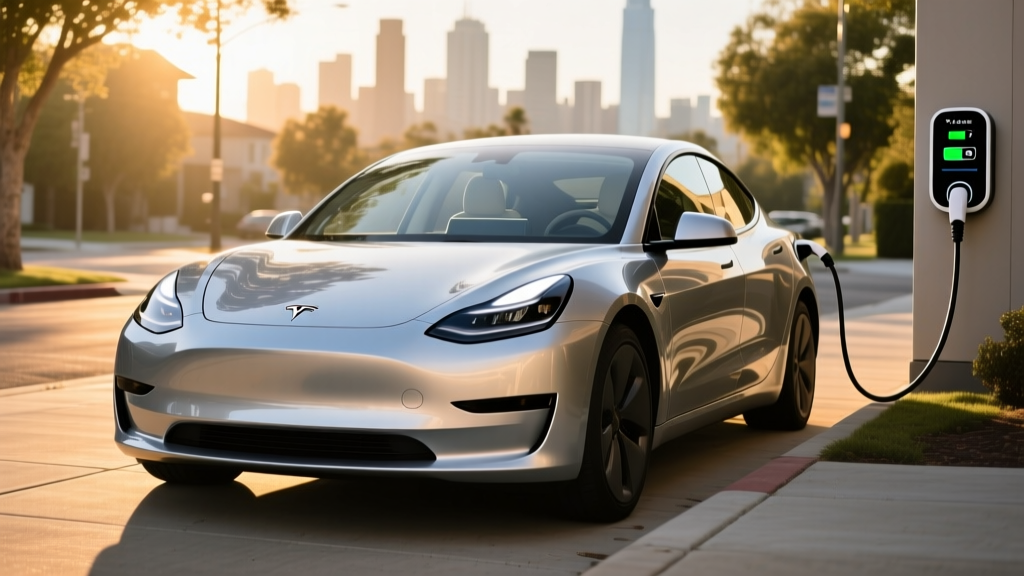
The Model Y uses the NACS (North American Charging Standard) connector natively. With the broader industry adopting NACS through 2025–2026, the Model Y now has access to both Tesla Superchargers and an expanding number of third-party NACS stations from Electrify America and others.
What Still Works (and What Doesn't) During a Server Outage
This is the core question behind every "Tesla servers down" search. Here's a practical breakdown:
- Driving: Fully functional. The car does not need internet to operate, accelerate, brake, or steer.
- Navigation: Onboard maps are cached, but real-time traffic, routing updates, and Supercharger availability/status require connectivity. You can still navigate to saved or manually entered addresses.
- Phone-as-key: Bluetooth-based phone key works without internet. The NFC key card always works as a backup — keep one in your wallet.
- Climate control (remote): Requires server connection. Preconditioning from the app will fail during an outage.
- Media streaming: Spotify, Tidal, and Tesla's streaming services require connectivity. Bluetooth audio from your phone works fine. USB media works fine.
- Autopilot/FSD: Basic Autopilot (lane centering, adaptive cruise) works offline. FSD (Supervised) may lose access to some map-dependent features but core vision processing is on-device.
- OTA updates: Obviously paused during outages, but these are never time-critical for driving.
Bottom line: the car drives, charges (with minor Supercharger friction), and navigates (without live traffic) during an outage. The inconvenience is real but not strand-you-on-the-roadside severe.
Pricing, Tax Credits, and Total Cost
| Trim | Base MSRP | Est. §30D Credit | Effective Price* |
|---|---|---|---|
| Long Range RWD | $44,990 | Up to $7,500 | ~$37,490 |
| Long Range AWD | $47,990 | Up to $7,500 | ~$40,490 |
| Performance | $52,490 | Up to $7,500 | ~$44,990 |
*Effective price assumes full §30D credit eligibility. Destination charges, taxes, and options not included.
- MSRP cap: SUVs must be under $80,000 — all Model Y trims qualify.
- Buyer income cap: AGI ≤ $150,000 (single), $225,000 (head of household), $300,000 (joint). Exceed these and the credit phases out.
- Battery sourcing: Critical minerals and battery component requirements tighten annually under §30D. Verify current-year compliance on IRS.gov before purchase.
- Point-of-sale transfer: You can transfer the credit to the dealer at purchase to reduce your out-of-pocket cost immediately, rather than waiting to claim it on your tax return.
The Model Y's pricing places it in a competitive position against the Hyundai Ioniq 5 ($42,900+), Ford Mustang Mach-E ($43,000+), and Chevrolet Equinox EV ($33,000+). The Tesla's advantage remains the Supercharger network and efficiency; the Equinox EV wins on base price, and the Ioniq 5 offers faster 10–80% charging (~18 min on 350 kW chargers via its 800V architecture).
Interior, Tech, and Cargo Practicality
The 2026 Model Y continues Tesla's minimalist interior approach — a single 15.4-inch touchscreen handles virtually all vehicle controls, media, and navigation. The "Juniper" refresh (introduced for the 2025 model year and carried forward) added ventilated front seats, ambient lighting, a rear-seat touchscreen, and improved sound insulation. Build quality has improved noticeably over earlier Fremont-built cars, with the Austin and Shanghai plants producing tighter panel gaps.
Passenger space: Front legroom is 41.8 inches; rear legroom is 41.6 inches — competitive with midsize SUVs despite the compact exterior footprint. The flat floor (no transmission tunnel) makes the rear middle seat genuinely usable.
Cargo: 30.2 cubic feet behind the second row, expanding to 72.0 cu ft with seats folded. The front trunk (frunk) adds modest additional storage for a charging cable or small bag. The power liftgate is standard.
Notable tech:
- Sentry Mode (360° camera-based security recording)
- Dog Mode (climate control for pets with external display message)
- Camp Mode (maintains climate and USB power overnight)
- Over-the-air updates that add features post-purchase
- Native NACS charging — no adapter needed at Tesla Superchargers
Drawbacks:
- No physical buttons for climate or volume (everything is on-screen or via steering-wheel scroll wheels)
- No Apple CarPlay or Android Auto — you're in Tesla's ecosystem
- Turn-signal stalks removed in favor of steering-wheel buttons (polarizing among drivers)
- Heavy reliance on connectivity for many convenience features
Warranty and Battery Longevity
Tesla provides a 4-year/50,000-mile basic vehicle warranty and an 8-year/120,000-mile battery and drive unit warranty for the Model Y (Long Range and Performance). The warranty guarantees the battery will retain at least 70% of its original capacity over that period.
LFP batteries in the Long Range trims have demonstrated slower degradation than NMC in fleet data. Real-world degradation of 5–8% over the first 50,000 miles is typical for LFP Teslas, with the curve flattening significantly thereafter. NMC Performance models may see slightly higher initial degradation (8–10%) but remain well within warranty thresholds under normal use.
For reference, the IIHS has rated the Model Y a Top Safety Pick+ in recent years, and NHTSA has awarded it 5 stars overall.
Pros
- Class-leading efficiency (27–30 kWh/100mi)
- Extensive Supercharger network (NACS native)
- Spacious interior and cargo for its footprint
- LFP battery longevity and 100% daily charging
- Strong resale value relative to most EVs
- Continuous OTA feature additions
Cons
- High connectivity dependence for convenience features
- No Apple CarPlay / Android Auto
- Turn-signal buttons on steering wheel (learning curve)
- Minimalist interior isn't for everyone
- DC fast charging slower than 800V competitors
- Insurance premiums often above segment average
Who Should Buy the 2026 Model Y — and Who Shouldn't?
Choose the Model Y if:
- You want access to the most reliable DC fast-charging network in the U.S.
- You value efficiency and can accept ~255 real-world highway miles
- You charge at home and rarely need app-dependent features when away from the car
- You want a practical family SUV with strong cargo capacity and safety ratings
Look elsewhere if:
- You need Apple CarPlay or physical buttons for climate/media
- You frequently drive in areas with poor cellular coverage (rural routes, mountains)
- Fastest possible DC charging matters (Ioniq 5 / EV6 with 800V architecture charge 10–80% in ~18 min)
- You want a lower entry price (Chevrolet Equinox EV starts ~$33,000)
Frequently Asked Questions
Can I still drive my Tesla if the servers are down?
Yes. The Model Y is fully drivable without internet connectivity. Acceleration, braking, steering, navigation to saved destinations, Bluetooth audio, and basic Autopilot all function offline. Remote features (app-based climate control, live traffic, remote locking via app) require the servers to be operational.
What is the real-world range of the 2026 Tesla Model Y?
The EPA rates the Long Range AWD at 307 miles. In real-world highway driving at 70–75 mph in mild weather, expect 255–275 miles. In freezing temperatures with the heater running, plan for 215–240 miles. City driving with regenerative braking gets you closer to the EPA figure.
How fast does the Model Y charge at home and on the road?
At home on a Level 2 (240V, 48A) charger, the Model Y adds approximately 44 miles of range per hour — a full charge takes about 7 hours. On a V3 or V4 Supercharger, it peaks at 250 kW and charges from 10–80% in roughly 28 minutes, with significant tapering above 60% state of charge.
Does the 2026 Model Y qualify for the federal EV tax credit?
All Model Y trims are under the $80,000 SUV MSRP cap. Buyer eligibility depends on adjusted gross income (≤$150K single, ≤$300K joint) and current-year battery sourcing requirements under IRS §30D. The credit can be transferred to the dealer at point of sale. Always verify eligibility on IRS.gov and consult a tax professional before purchase.
Is the Model Y worth buying versus the Hyundai Ioniq 5 or Ford Mach-E?
The Model Y wins on efficiency, Supercharger network access, and cargo space. The Ioniq 5 charges faster (800V architecture, ~18 min 10–80%) and offers a more distinctive design. The Mach-E provides a more traditional interior with physical controls and Apple CarPlay. All three are strong choices — the decision often comes down to charging-network preference and interior ergonomics.
How do I prepare for a Tesla server outage?
Keep your NFC key card in your wallet as a backup to phone-as-key. Enable Wi-Fi at home so the car can connect independently of cellular. Download offline maps when possible. If you're about to road-trip, precondition and charge while still on home Wi-Fi to reduce dependence on cellular connectivity at departure.