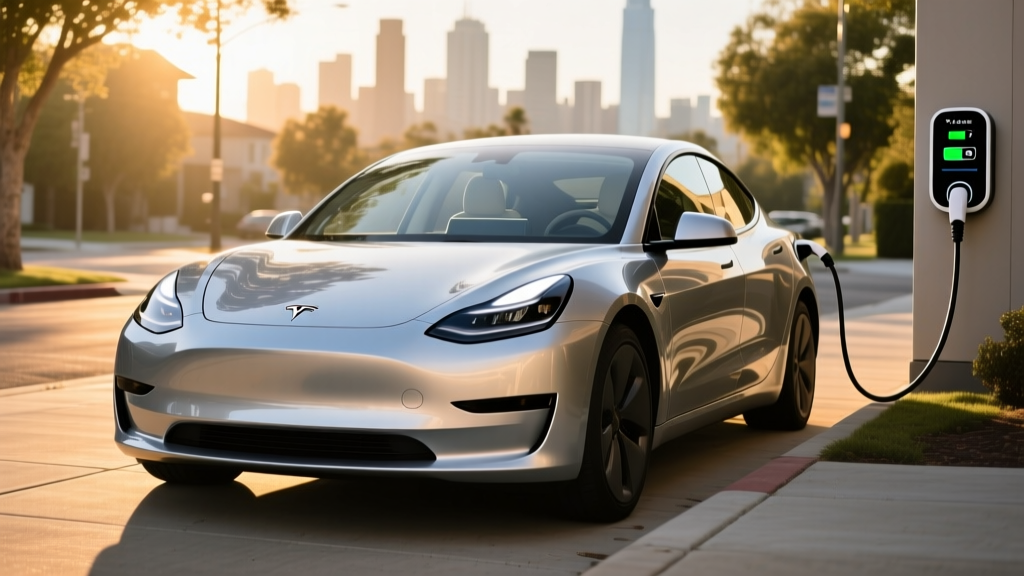
The Tesla Model 3 remains one of the most data-rich vehicles on the road for evaluating long-term electric ownership. With millions of cumulative miles logged across global fleets, the Model 3 offers the clearest picture of what an EV's life span actually looks like — not in marketing terms, but in measurable battery degradation, warranty claims, and real-world charging patterns. If you're researching the Tesla Model 3 life span before committing to a purchase, this review covers every metric that matters: battery chemistry and longevity, range retention over time, charging infrastructure costs, and whether the math still pencils out in 2026.
2026 Tesla Model 3: Quick Verdict
The current-generation Model 3 (the "Highland" refresh that debuted for the 2024 model year and carries into 2026) is a more refined, quieter, and better-built sedan than its predecessor. It sacrifices nothing in efficiency — the Long Range AWD variant still posts class-leading MPGe figures — while gaining a ventilated-seat option, ambient lighting, rear passenger touchscreen, and substantially improved NVH (noise, vibration, harshness). For buyers prioritizing life span and total cost of ownership, the Model 3's combination of proven battery durability, Tesla's Supercharger network access, and strong residual values make it a defensible long-hold purchase.
| Spec | RWD (Base) | Long Range AWD | Performance |
|---|---|---|---|
| EPA Range | 272 mi | 341 mi | 315 mi |
| Battery (usable) | ~57.5 kWh (LFP) | ~75 kWh (NMC) | ~75 kWh (NMC) |
| Drivetrain | Rear-Wheel Drive | Dual-Motor AWD | Dual-Motor AWD |
| 0-60 mph | 5.8 sec | 4.2 sec | 2.9 sec |
| Horsepower | 271 hp | 346 hp | 510 hp |
| Max DC Fast Charge | 170 kW | 250 kW | 250 kW |
| 10-80% DCFC Time | ~25 min | ~22 min | ~22 min |
| Level 2 Home Charge | 11.5 kW (~44 mi/hr) | 11.5 kW (~44 mi/hr) | 11.5 kW (~44 mi/hr) |
| MPGe (combined) | 132 MPGe | 131 MPGe | 119 MPGe |
| kWh/100 mi | 25 | 26 | 29 |
| Cargo Volume | 23 cu ft (trunk + frunk combined) | ||
| Rear Legroom | 35.3 in | ||
| Battery Warranty | 8 yr / 100,000 mi | 8 yr / 120,000 mi | |
| Base MSRP | $38,990 | $44,990 | $52,990 |
Battery Life Span: LFP vs. NMC Chemistry Explained
The single most important factor in the Tesla Model 3 life span is its battery pack — and the chemistry inside it. Tesla currently uses two distinct lithium-ion chemistries across the Model 3 lineup, and understanding the trade-off is essential for long-term buyers.
| Factor | LFP (Lithium Iron Phosphate) | NMC (Nickel Manganese Cobalt) |
|---|---|---|
| Used In | Model 3 RWD | Model 3 Long Range / Performance |
| Energy Density | Lower (heavier pack for same kWh) | Higher (lighter, more range) |
| Cycle Life | ~3,000+ cycles to 80% SoH | ~1,500-2,000 cycles to 80% SoH |
| Daily Charging | Can charge to 100% daily (recommended) | Better at 80% daily; 100% for trips only |
| Cold-Weather Performance | Weaker in sub-freezing temps | Better cold-weather discharge |
| Thermal Stability | Excellent (lower runaway risk) | Good (requires more active management) |
| Cost | Lower | Higher |
What this means for longevity: The LFP pack in the RWD Model 3 is chemically rated for significantly more charge cycles before hitting 80% State of Health (SoH) — the threshold at which Tesla's warranty triggers. At an average of 30 miles driven per day, an LFP Model 3 owner could theoretically cycle the battery well over 2,500 times across 15+ years of ownership before approaching warranty territory. The NMC packs in Long Range and Performance trims offer more range per charge but degrade somewhat faster per cycle. That said, Tesla's real-world fleet data — shared in their annual Impact Reports — shows median degradation of roughly 12-15% across 200,000 miles for Model 3/Y vehicles, meaning most packs retain 85%+ capacity well past the warranty period.
Tesla's battery warranty guarantees that the pack will retain at least 70% of its original capacity for 8 years or 100,000 miles (RWD) or 8 years or 120,000 miles (Long Range / Performance), whichever comes first. If degradation exceeds 30% within that window, Tesla will replace or refurbish the pack at no cost. Out-of-warranty battery replacement currently runs approximately $12,000-$16,000 depending on trim, though prices have trended downward as cell costs decline.
Real-World Range vs. EPA Estimates
EPA Sticker vs. Reality: The Long Range AWD carries an EPA estimate of 341 miles. In real-world mixed driving (70-75 mph highway, moderate climate), expect 285-310 miles. In sustained cold weather (below 30°F), highway range can drop to 240-260 miles due to battery heating demands and reduced regenerative braking efficiency. The RWD's 272-mile EPA figure translates to roughly 230-250 miles in mixed real-world use.
The Model 3's efficiency is a core strength. At 25-29 kWh per 100 miles depending on trim, it extracts more distance per unit of energy than nearly every competitor. The heat pump (standard on all trims) significantly reduces cold-weather cabin-heating energy draw compared to resistive heaters, preserving range in winter conditions. Still, physics is physics: any EV loses 15-30% of range in sustained sub-freezing temperatures, and the Model 3 is no exception.
For life-span planning, range retention matters. A Model 3 Long Range purchased today with 341 miles of EPA range will likely show 290-300 miles of range at 100,000 miles driven, based on fleet degradation curves. That's still ample for daily commuting and most road trips with a single charge stop.
Charging Speed, Infrastructure, and Long-Term Costs
| Charging Level | Power | Miles Added per Hour | Typical Use Case |
|---|---|---|---|
| Level 1 (120V outlet) | ~1.4 kW | ~4-5 mi/hr | Emergency/trickle top-up |
| Level 2 (240V home, 48A) | 11.5 kW | ~44 mi/hr | Daily home charging (full overnight) |
| DC Fast Charge (RWD) | Peak 170 kW | ~600+ mi/hr (peak) | Road trips; 10-80% in ~25 min |
| DC Fast Charge (LR/Perf) | Peak 250 kW | ~1,000 mi/hr (peak) | Road trips; 10-80% in ~22 min |
The charging curve reality: The 250 kW peak rate on Long Range and Performance models is not sustained across the entire session. The pack pulls peak power roughly between 10-40% State of Charge, then tapers progressively — dropping to ~100 kW by 60% and ~40 kW by 80%. A 10-80% session at a V3 Supercharger takes approximately 22 minutes; an 80-100% top-off can add another 20+ minutes. For road-trip planning, plan stops around the 10-80% window to avoid the taper penalty.
For home Level 2 charging, Tesla's Wall Connector ($420) delivers up to 11.5 kW on a 60-amp circuit (48A continuous). A typical home installation — including the electrician, permit, wiring run, and panel assessment — costs between $800 and $2,500 depending on your electrical panel's proximity to the garage and whether a 200-amp service upgrade is needed. Most Model 3 owners with home Level 2 charging report "refueling" costs of approximately $0.04-$0.06 per mile (based on the US average of $0.16/kWh), compared to $0.12-$0.15 per mile for a comparable 30-MPG gas sedan.
Tesla's Supercharger network remains a key life-span ownership advantage. With over 6,000 V3/V4 stalls across North America and native NACS (North American Charging Standard) integration, Model 3 owners avoid the adapter-reliability and payment-app fragmentation that still plague CCS-equipped vehicles on third-party networks. According to Tesla's Supercharger page, average pricing hovers around $0.25-$0.35/kWh depending on location and time-of-use, translating to roughly $0.07-$0.10 per mile on road trips — still below gasoline on a per-mile basis.
Pricing, Tax Credits, and Total Cost of Ownership
| Trim | Base MSRP | As-Tested (typical options) | §30D Credit Eligibility | Effective Price (if eligible) |
|---|---|---|---|---|
| RWD | $38,990 | $40,490 (w/ FSD transfer) | Up to $7,500 (point-of-sale) | ~$31,490 - $32,990 |
| Long Range AWD | $44,990 | $47,990 (w/ paint + wheels) | Up to $7,500 (point-of-sale) | ~$37,490 - $40,490 |
| Performance | $52,990 | $55,490 | Up to $7,500 (point-of-sale) | ~$45,490 - $47,990 |
Federal tax credit caveats: Under IRS §30D rules, the $7,500 credit is not guaranteed for every buyer. Eligibility hinges on three requirements: (1) Buyer income caps — adjusted gross income must not exceed $150,000 (single), $225,000 (head of household), or $300,000 (joint); (2) MSRP cap — the vehicle's base MSRP must not exceed $55,000 for sedans (all Model 3 trims currently qualify); (3) Battery sourcing requirements — a percentage of critical minerals and battery components must be sourced from the US or free-trade-agreement countries, with thresholds tightening annually. Tesla's US-built battery cells and LFP sourcing from CATL create a complex eligibility picture that shifts by model year. Always verify current-year eligibility at IRS.gov or confirm the point-of-sale transfer amount with Tesla at purchase.
Over a 5-year, 75,000-mile ownership period, a Model 3 Long Range owner can expect total cost of ownership (purchase price + energy + insurance + maintenance − residual value) to compare favorably with a BMW 3 Series or Mercedes C-Class, primarily due to dramatically lower fuel and maintenance costs. The Model 3 has no engine oil, transmission fluid, spark plugs, or timing belts to replace. Brake pad life is extended significantly by regenerative braking — many owners report original pads at 80,000+ miles. The main recurring costs are cabin air filters (~$50-80 every 2 years), tire rotation ($30-50 every 6,000 miles), and wiper fluid. Insurance, however, tends to run 15-25% higher than comparable gas sedans due to repair cost structures — get quotes before purchasing.
Tech, Interior, and Daily Livability
The Highland-refreshed Model 3 interior is a meaningful step up in perceived quality. Ventilated front seats, acoustic glass all around, ambient lighting, and a rear 8-inch touchscreen for passengers address the most common complaints of the pre-2024 cabin. The 15.4-inch front touchscreen runs Tesla's latest software with responsive navigation, streaming apps, and over-the-air updates that continue to add features years after purchase.
Autopilot and FSD (Supervised): Tesla's standard Autopilot includes adaptive cruise control and lane-centering on highways — a solid SAE Level 2 system that requires continuous driver supervision. The optional Full Self-Driving (Supervised) package ($8,000 one-time or $99/month subscription as of 2026) adds city-street navigation, traffic-light recognition, and automated lane changes. This is not autonomous driving — it is an advanced Level 2 driver-assist system that demands active oversight at all times. Drivers who treat FSD as a convenience layer on long commutes report high satisfaction; those expecting hands-off operation will be disappointed and potentially unsafe.
Cargo space is generous for a compact sedan: 23 cubic feet combined between the rear trunk and front trunk (frunk). Rear legroom at 35.3 inches is adequate for adults on shorter trips but tighter than a Hyundai Ioniq 6 or BMW i4 for long-distance rear-seat passengers. The lack of physical buttons (climate controls, glovebox release, and mirror adjustments all live on the touchscreen) remains a polarizing design choice and a genuine ergonomics drawback for some drivers.
Pros
- Class-leading efficiency (25-29 kWh/100 mi) maximizes range per kWh
- Supercharger network access — the most reliable DC fast-charging ecosystem in North America
- LFP battery option (RWD) offers exceptional cycle life and daily 100% charging flexibility
- Over-the-air updates continuously improve the vehicle post-purchase
- Strong residual values relative to most EV competitors
- Minimal scheduled maintenance reduces long-term operating costs
Cons
- Touchscreen-dependent controls (no physical buttons for climate, mirrors, or glovebox)
- Rear seat space is tighter than some competitors in this price range
- Insurance premiums run 15-25% above comparable gas sedans
- No Apple CarPlay or Android Auto — Tesla's native infotainment only
- Ride quality on 19-inch wheels can be firm over rough pavement
- FSD (Supervised) requires constant driver attention despite the "Full Self-Driving" name
Who the Model 3 Suits Best — and Who Should Look Elsewhere
Choose the Model 3 if: You're a daily commuter (20-60 miles round trip) with access to home Level 2 charging, you take 2-4 road trips per year within Supercharger coverage, and you want to minimize per-mile energy cost over a 7-10 year ownership horizon. The RWD trim with LFP battery is the life-span play — built for high cycle counts and daily 100% charging without accelerated degradation.
Choose the Long Range AWD if: You regularly drive 200+ miles between charges, live in a cold climate where AWD traction matters, or need the additional 70 miles of EPA range for flexibility. The NMC pack trades some cycle life for energy density and cold-weather performance.
Look elsewhere if: You need a spacious rear seat for adult passengers on long trips (consider the Hyundai Ioniq 6 or BMW i4), you require physical buttons and knobs for climate/audio controls, or you want Apple CarPlay integration. For towing, the Model 3 is not rated for trailer loads — consider the Model Y or a truck-platform EV.
Tesla Model 3 Life Span FAQ
How many miles can a Tesla Model 3 battery last before replacement?
Based on Tesla's fleet data and independent analysis from sources like fueleconomy.gov, most Model 3 battery packs retain 85-88% of original capacity at 200,000 miles. The LFP pack in the RWD trim is rated for 3,000+ charge cycles, which translates to roughly 300,000+ miles of driving before approaching the 80% SoH threshold. Battery replacement is rarely needed within the typical ownership period, and out-of-warranty costs have been declining — currently in the $12,000-$16,000 range.
Does the Tesla Model 3 qualify for the $7,500 federal tax credit in 2026?
All three Model 3 trims fall under the $55,000 MSRP cap for sedans under §30D. However, eligibility depends on your income (capped at $150K single / $300K joint), and the battery must meet annual critical-mineral and component-sourcing thresholds that tighten each year. Tesla offers a point-of-sale transfer, meaning the credit reduces your purchase price at delivery rather than waiting until tax filing. Always confirm current eligibility on IRS.gov before ordering.
What is the real-world range of the Tesla Model 3 Long Range?
The EPA rates the Long Range AWD at 341 miles. In real-world mixed driving at highway speeds (70-75 mph), expect 285-310 miles. In sustained sub-30°F weather with highway driving, range can drop to 240-260 miles. The heat pump helps mitigate winter losses compared to EVs using resistive cabin heating, but a 20-25% cold-weather reduction is normal for all lithium-ion packs.
How fast does the Model 3 charge at home and on road trips?
At home on a Level 2 (240V, 48A) Tesla Wall Connector, the Model 3 charges at 11.5 kW — adding roughly 44 miles of range per hour, or a full charge overnight in 7-8 hours. On a V3 Supercharger (250 kW peak for LR/Performance), a 10-80% session takes approximately 22 minutes. The RWD peaks at 170 kW with a 10-80% time of about 25 minutes. Charging above 80% slows dramatically due to the charge-curve taper.
Is the Tesla Model 3 worth buying over the Hyundai Ioniq 6 or BMW i4?
The Model 3 wins on efficiency, Supercharger network access, software updates, and LFP battery longevity. The Ioniq 6 offers more rear-seat space and an 800V architecture for faster peak charging (up to 350 kW on compatible chargers). The BMW i4 delivers a more traditional luxury interior with physical controls and Apple CarPlay, but at a higher starting price and lower efficiency. For pure life-span value and per-mile cost, the Model 3 RWD with LFP remains the segment benchmark in 2026.
What maintenance does a Tesla Model 3 require over its life span?
Very little compared to a gas vehicle. Tesla recommends cabin air filter replacement every 2 years (~$50-80), tire rotation every 6,250 miles (~$30-50), brake fluid testing every 3 years, and A/C desiccant bag replacement every 6 years. There is no engine oil, transmission fluid, timing belt, or exhaust system. Regenerative braking dramatically extends brake pad life — many owners report 80,000+ miles on original pads. Budget roughly $300-$500 per year for scheduled maintenance, versus $1,000-$1,500 for a comparable gas sedan.