Quick Verdict: The Model Y in 2026
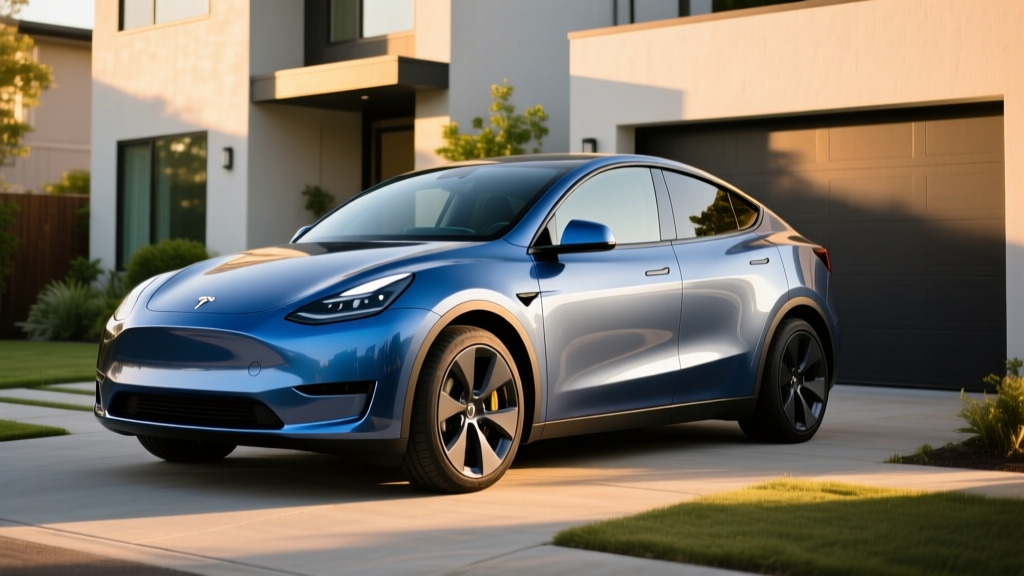
The Tesla Model Y remains the best-selling EV in the United States for good reason: it pairs competitive range, access to the largest fast-charging network in North America, and class-leading software in a crossover body that fits a family of five. For 2026, the refreshed Model Y (internally dubbed "Juniper") brings a redesigned interior, updated exterior lighting, and a slightly larger battery pack. But the real question for most buyers isn't whether the Model Y is a good EV — it's what you'll actually pay after incentives, and how it stacks up against an increasingly crowded field of midsize electric crossovers.
This review breaks down every number that matters: EPA range versus real-world expectations, charging speeds across the curve, exact pricing by trim, and the current federal and state incentives that can shave thousands off the sticker price.
2026 Tesla Model Y Spec Sheet at a Glance
| Specification | Long Range AWD | Performance AWD |
|---|---|---|
| EPA Range | 320 miles | 295 miles |
| Battery (usable) | ~78 kWh (NMC) | ~78 kWh (NMC) |
| Drivetrain | Dual-motor AWD | Dual-motor AWD |
| Horsepower | 384 hp | 456 hp |
| 0-60 mph | 4.8 seconds | 3.5 seconds |
| Peak DC Fast Charge | 250 kW | 250 kW |
| 10-80% DC Charge Time | ~25 minutes | ~25 minutes |
| Level 2 Home Charging | 11.5 kW (~44 mi/hr) | 11.5 kW (~44 mi/hr) |
| MPGe (combined) | 122 MPGe | 111 MPGe |
| Efficiency | 28 kWh/100 mi | 30 kWh/100 mi |
| Cargo Volume (rear seats up) | 30.2 cu ft | 30.2 cu ft |
| Cargo Volume (rear seats folded) | 72.1 cu ft | 72.1 cu ft |
| Base MSRP (before incentives) | $44,990 | $51,490 |
| Battery Warranty | 8 yr / 120,000 mi | 8 yr / 120,000 mi |
| Basic Vehicle Warranty | 4 yr / 50,000 mi | 4 yr / 50,000 mi |
Note: The base RWD Model Y was discontinued for the 2026 model year in the U.S. market. A Long Range RWD variant is available in select markets at a lower MSRP; check Tesla's configurator for current availability.
Range and Efficiency: EPA vs. the Real World
EPA sticker: 320 miles (Long Range AWD)
Expect in practice: ~270-290 miles on a mixed highway/city drive at 70 mph; ~220-250 miles in sustained cold weather (below 30°F) without preconditioning; up to ~310 miles in city-dominant driving with regen in mild temps.
The 2026 Model Y Long Range AWD carries an EPA-estimated 320 miles of range, a modest improvement over the pre-refresh model's 308 miles. That bump comes from a slightly larger usable battery capacity (~78 kWh, up from ~75 kWh) and improved aerodynamics from the Juniper exterior redesign.
Efficiency is rated at 28 kWh per 100 miles (122 MPGe combined), which is excellent for a dual-motor AWD crossover. For context, the Hyundai Ioniq 5 AWD uses about 30 kWh/100 mi, and the Ford Mustang Mach-E Extended Range AWD sits around 31 kWh/100 mi. Tesla's heat pump and integrated thermal management system are a big part of this advantage — they scavenge waste heat from the drivetrain to warm the cabin, reducing the energy penalty of cold-weather driving.
But the EPA number is a best-case blended cycle. In our experience and consistent with third-party highway testing, plan for about 15-20% range reduction at sustained 75-80 mph highway speeds, and 25-35% reduction in sub-freezing temperatures if you don't precondition the battery. Preconditioning (which the car does automatically when a Supercharger is set as your navigation destination) mitigates some of this by warming the pack for optimal efficiency and charging speed.
Charging Speed: Supercharger Network and Home Charging
Charging infrastructure remains Tesla's strongest competitive moat. The Model Y charges on the NACS (North American Charging Standard) connector natively — no adapter needed — and has full access to Tesla's Supercharger network, which now exceeds 6,000 stations and 60,000+ stalls across North America. Starting in 2025, many non-Tesla networks (Electrify America, EVgo) have also begun deploying NACS connectors, further expanding options.
| Charging Level | Power / Voltage | Miles Added Per Hour | Use Case |
|---|---|---|---|
| Level 1 (120V household) | ~1.4 kW | ~4-5 miles/hr | Emergency / overnight trickle |
| Level 2 (240V home wall connector) | 11.5 kW (48A) | ~44 miles/hr | Daily home charging (full overnight) |
| DC Fast Charge (Supercharger V3/V4) | Peak 250 kW | Up to ~1,000 mi/hr at peak | Road trips, 10-80% in ~25 min |
DC fast charging detail: The Model Y peaks at 250 kW on a V3 or V4 Supercharger, but that peak rate only holds between roughly 10-30% state of charge. The charging curve tapers progressively: expect ~150 kW around 50% SoC, ~80 kW at 70%, and ~40 kW above 85%. This is why Tesla quotes the 10-80% time (~25 minutes) rather than a full 0-100% figure. Charging above 80% at a DC fast charger is painfully slow and generally not worth the wait unless you absolutely need those last miles.
Home Level 2 charging: The Tesla Wall Connector (Gen 3) delivers up to 11.5 kW on a 60-amp circuit (48 amps continuous), adding roughly 44 miles of range per hour. A full 10-100% charge takes about 7.5-8 hours. Installation costs vary widely — expect $800-$2,500 for a straightforward install on an existing 200-amp panel, but a panel upgrade to 200A can push total costs to $3,500-$5,000+. Always get a quote from a licensed electrician before committing.
Tesla Model Y Sales Incentives: What You Actually Pay
This is where the math gets interesting — and where careful buyers can save thousands. The 2026 Model Y's eligibility for incentives depends on several factors that shift based on IRS rules, your personal tax situation, and Tesla's periodic pricing adjustments.
| Trim | Base MSRP | §30D Federal Credit | Effective Price (if eligible) | Destination Fee |
|---|---|---|---|---|
| Long Range AWD | $44,990 | Up to $7,500 | ~$37,490* | $1,390 |
| Performance AWD | $51,490 | Up to $7,500 | ~$43,990* | $1,390 |
*Effective price assumes full $7,500 credit eligibility. Actual credit may be $3,750 or $0 depending on battery-sourcing compliance. See eligibility checklist below.
Federal §30D Tax Credit Eligibility Checklist
The IRS §30D Clean Vehicle Credit can reduce your federal tax liability by up to $7,500 — and as of 2024, it can be transferred to the dealer at point of sale, meaning you get the discount upfront rather than waiting until you file taxes. But eligibility is not automatic. Here's what must align:
- MSRP cap: The Model Y qualifies as an SUV under IRS rules, so the cap is $80,000. Both trims clear this easily.
- Buyer income cap: Modified adjusted gross income must not exceed $150,000 (single), $225,000 (head of household), or $300,000 (married filing jointly).
- Battery sourcing: The $7,500 credit splits into two halves — $3,750 for critical minerals sourcing and $3,750 for battery component manufacturing. As of early 2026, the Model Y Long Range AWD built at Giga Texas has qualified for the full $7,500, but sourcing requirements tighten annually. Always verify current eligibility on fueleconomy.gov before purchasing.
- Point-of-sale transfer: You can elect to transfer the credit to Tesla at purchase, reducing your out-of-pocket cost immediately. If your tax liability is less than the credit amount, the point-of-sale transfer still works — it's effectively a rebate in this case.
Additional Incentives to Stack
Beyond the federal credit, several state and utility incentives can further reduce cost:
- State rebates: States like Colorado, California (CVRP, income-dependent), Massachusetts, and New York offer additional rebates of $1,000-$5,000+. Check your state's energy office for current programs.
- Utility incentives: Many electric utilities offer $250-$1,000 rebates for EV purchase or home charger installation. Some also offer time-of-use rates that cut charging costs significantly.
- HOV lane access: In states like California, New York, and Virginia, EVs qualify for carpool lane stickers — a non-monetary perk worth hundreds in time savings annually.
Key caveat: Incentive rules change frequently. The figures above reflect early 2026 rules. Consult a tax professional and check the IRS and fueleconomy.gov before finalizing your purchase.
Performance, Interior, and Tech
The 2026 Model Y Long Range AWD delivers 384 horsepower from its dual-motor setup and sprints to 60 mph in 4.8 seconds. The Performance variant bumps that to 456 hp and a 3.5-second 0-60 — sports-car territory in a family crossover. Both trims offer precise, well-weighted steering and a low center of gravity from the under-floor battery pack that keeps body roll minimal in corners.
The Juniper refresh brought meaningful interior upgrades:
- Ambient lighting strips across the dashboard and door panels >Ventilated front seats (previously absent and a common complaint)
- Acoustic glass on all windows, noticeably reducing road and wind noise
- A rear-seat touchscreen for climate and entertainment control
- Power-folding second-row seats
The 15.4-inch center touchscreen runs Tesla's latest software, which remains the most responsive and feature-rich infotainment system in the EV market. Navigation, media, climate, and vehicle controls all route through the screen — there are no physical buttons aside from steering-wheel controls and window switches. This minimalist approach divides opinion: some buyers love the clean aesthetic, others find it frustrating to adjust mirrors or open the glovebox through a touchscreen.
Driver Assistance: Autopilot and FSD (Supervised)
Tesla Autopilot and Full Self-Driving (Supervised) are Level 2 driver-assistance systems under the SAE J3016 framework. This means the vehicle can control steering, acceleration, and braking under certain conditions, but the driver must remain fully engaged — eyes on the road, hands available to take over at any moment. This is not autonomous or self-driving capability.
Autopilot (standard) includes adaptive cruise control and lane-centering on highways. FSD (Supervised), a $8,000 add-on or $99/month subscription, adds automatic lane changes, traffic-light and stop-sign recognition, and navigation-guided on/off-ramp handling. In practice, FSD is impressive on well-marked highways but still requires constant supervision and can make unexpected decisions in construction zones or complex intersections.
Cargo and Passenger Space
The Model Y offers 30.2 cubic feet of cargo space behind the second row and 72.1 cubic feet with the 60/40 split rear seats folded — competitive with the Toyota RAV4 and larger than the Ioniq 5's 27.2 cu ft. The rear frunk (front trunk) adds roughly 4.1 cu ft for charging cables or a small bag. Rear legroom measures 41.6 inches, which is generous for the segment, though the sloping roofline cuts into headroom for passengers over 6 feet tall.
How It Compares: Model Y vs. Key Competitors
| Attribute | Tesla Model Y LR AWD | Hyundai Ioniq 5 Limited AWD | Ford Mach-E ER AWD |
|---|---|---|---|
| EPA Range | 320 mi | 290 mi | 305 mi |
| Battery | ~78 kWh NMC | 84 kWh NMC | 91 kWh NMC (extended) |
| Peak DC Charge | 250 kW | 240 kW (350 kW capable) | 150 kW |
| 10-80% DC Time | ~25 min | ~18 min | ~38 min |
| 0-60 mph | 4.8 sec | 5.1 sec | 5.1 sec |
| MPGe (combined) | 122 | 110 | 101 |
| Cargo (seats up) | 30.2 cu ft | 27.2 cu ft | 29.7 cu ft |
| Base MSRP (AWD) | $44,990 | $52,600 | $48,995 |
| NACS Native? | Yes | Yes (2026 models) | No (CCS, adapter avail.) |
Pros
- Best-in-class efficiency (122 MPGe combined)
- Native NACS + Supercharger network access
- Strong cargo capacity (30.2 / 72.1 cu ft)
- Over-the-air updates continuously add features
- Competitive pricing after §30D credit (~$37,490 LR)
- Excellent software and infotainment responsiveness
Cons
- No physical buttons — everything through the touchscreen
- FSD (Supervised) is expensive and still Level 2
- Rear headroom limited by coupe-like roofline
- DC charge speed trails Ioniq 5's 800V architecture
- Service center availability varies by region
- No Apple CarPlay or Android Auto support
Who Should Buy the 2026 Tesla Model Y?
Choose the Model Y if:
- You want the lowest effective price in the segment after the full $7,500 federal credit
- Road trips are part of your routine and Supercharger access matters to you
- You value efficiency (lowest kWh/100mi in the segment) and lower electricity costs
- You want a family crossover with strong cargo space and good rear-seat legroom
- You prefer a tech-forward, minimalist interior with best-in-class software
Look at competitors if:
- You want faster peak DC charging — the Ioniq 5's 800V architecture hits 10-80% in ~18 minutes
- You need physical buttons and knobs for climate/audio controls
- You want Apple CarPlay or Android Auto integration
- You need maximum rear headroom for tall passengers (consider the Mach-E or Ioniq 5)
Frequently Asked Questions
What is the real-world range of the 2026 Tesla Model Y?
The EPA rates the Long Range AWD at 320 miles. In real-world mixed driving at highway speeds, expect 270-290 miles. In cold weather (below 30°F), range can drop to 220-250 miles without preconditioning. City driving with regenerative braking in mild weather can approach or slightly exceed the EPA figure.
How fast does the Model Y charge at home and on the road?
On a Level 2 home charger (Tesla Wall Connector at 11.5 kW), the Model Y adds about 44 miles of range per hour, with a full charge taking roughly 7.5-8 hours. On a 250 kW Supercharger, 10-80% takes approximately 25 minutes, though the rate tapers significantly above 80% state of charge.
Does the 2026 Tesla Model Y qualify for the $7,500 federal EV tax credit?
As of early 2026, the Model Y Long Range AWD built at Giga Texas qualifies for the full $7,500 §30D credit, assuming the buyer meets income caps ($150K single / $300K joint) and the vehicle's battery sourcing continues to meet critical-mineral and component-manufacturing thresholds. The credit can be transferred at point of sale for an immediate price reduction. Always verify current eligibility on fueleconomy.gov and consult a tax professional.
How much does the Model Y cost after incentives?
The Long Range AWD starts at $44,990 plus a $1,390 destination fee. With the full $7,500 federal credit applied at point of sale, the effective price drops to approximately $37,490 before state incentives, taxes, or registration. Additional state rebates (where available) can reduce this further.
Is the Model Y worth buying versus the Ioniq 5 or Mach-E?
The Model Y wins on efficiency, Supercharger network access, and effective pricing after incentives. The Ioniq 5 wins on peak DC charging speed (18 min 10-80% on a 350 kW charger) and has physical buttons plus CarPlay. The Mach-E offers a more traditional driving feel and a spacious interior but charges slower on DC. Your priority — charging speed, network access, or interface preference — should drive the decision.
What is the battery warranty on the 2026 Model Y?
Tesla covers the battery and drive unit for 8 years or 120,000 miles (whichever comes first) with a minimum 70% capacity retention threshold. If the battery degrades below 70% of its original capacity within the warranty period, Tesla will repair or replace it at no cost. The basic vehicle warranty is 4 years or 50,000 miles.