Quick Verdict: Audi's Performance Electric SUV Hits the Sweet Spot
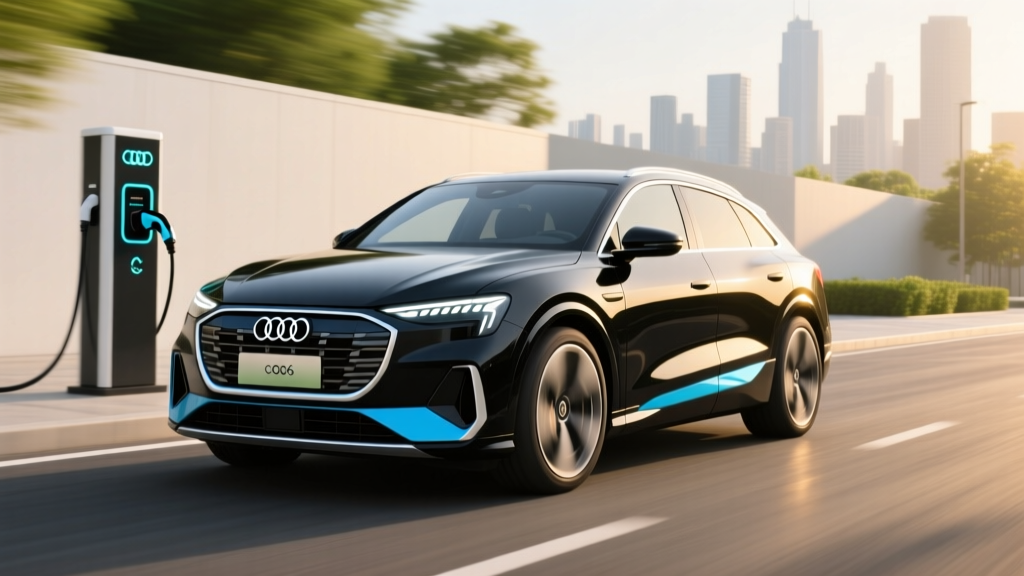
The 2026 Audi SQ6 e-tron arrives as the sport-tuned variant of Audi's PPE-platform (Premium Platform Electric) midsize SUV, co-developed with Porsche. It targets buyers who want the practicality of a family electric SUV but refuse to sacrifice straight-line punch or chassis composure. With 509 horsepower, an EPA-estimated range near 300 miles, and 270 kW peak DC fast-charging capability, the SQ6 e-tron slots between comfort-oriented luxury EVs and hardcore performance machines like the Tesla Model X Plaid or BMW iX M60.
But numbers only tell part of the story. After spending time with the SQ6 e-tron's specs, charging behavior, and ownership economics, the picture is one of impressive engineering wrapped in a premium package — with a few trade-offs that buyers should weigh carefully before signing a purchase agreement.
Range, Efficiency, and the Real-World Reality Check
Real-World Expectation: ~250–275 miles on mixed highway driving; ~220–240 miles in sustained cold weather (below 32°F) or at sustained 80+ mph highway speeds. City driving with regenerative braking can push closer to or slightly above the EPA sticker.
The SQ6 e-tron draws from a 100 kWh gross battery pack (approximately 94.9 kWh usable) using NMC (nickel manganese cobalt) lithium-ion chemistry. Audi has opted for an 800-volt electrical architecture — the same backbone found in the Porsche Macan Electric and Hyundai Ioniq 5 — which unlocks both rapid charging and sustained power delivery.
Efficiency lands in the neighborhood of 89–93 MPGe combined (roughly 36–38 kWh per 100 miles), per fueleconomy.gov data for the PPE platform. That's competitive with the BMW iX xDrive50 but slightly behind the more aerodynamically optimized Mercedes EQE SUV. The SQ6's sport-tuned suspension, wider tires, and aggressive aero profile extract a small efficiency penalty versus the standard Q6 e-tron, which is the expected trade-off for the performance upgrade.
Cold-weather note: Like all NMC packs, expect 15–25% range reduction in sub-freezing temperatures without preconditioning. The SQ6 e-tron includes a heat pump as standard equipment, which mitigates cabin-heating energy draw — but the battery itself still loses efficiency in cold weather. Preconditioning the battery while plugged in (via the myAudi app) before a DC fast-charging stop is essential to hitting peak charge rates in winter.
Charging Speed: 800V Architecture Delivers
The SQ6 e-tron's 800-volt platform is its most compelling ownership advantage for road-trippers. Here's what the charging profile looks like across all three levels:
| Charging Level | Power / Rate | Time or Miles Added |
|---|---|---|
| Level 1 (120V household) | ~1.4 kW | ~3–4 miles per hour |
| Level 2 (240V home / public) | 11.5 kW (onboard charger max) | ~25–28 miles per hour; 0–100% in ~9.5 hours |
| DC Fast Charge (peak) | 270 kW peak | 10–80% in approximately 21 minutes |
Charging curve reality: The 270 kW figure is a peak, not a sustained rate. In practice, the SQ6 e-tron holds above 200 kW from roughly 10% to 40% state of charge, then tapers progressively. From 80% to 100%, charging slows dramatically to protect battery longevity — expect that final 20% to take as long as the first 70%. For road-trip planning, plan your stops around the 10–80% window, which is where the PPE platform shines.
At a 350 kW Electrify America or comparable CCS/NACS station, the SQ6 e-tron can add roughly 160 miles of range in 10 minutes under ideal conditions. That puts it in the upper tier of current-production EVs for charging speed, though slightly behind the Hyundai Ioniq 5 N's 10–80% time of ~18 minutes.
Home charging setup: The 11.5 kW onboard AC charger means a 48-amp Level 2 home circuit (hardwired, 60-amp breaker) will fully replenish the pack overnight. Budget $800–$2,200 for a quality Level 2 home station (ChargePoint Home Flex, Wallbox Pulsar Plus, or similar) plus licensed electrician installation. Homes with 100-amp electrical panels may require a panel upgrade ($1,500–$3,500) — get a quote before purchase.
Performance: 509 Horsepower, Quattro Standard
| Specification | 2026 Audi SQ6 e-tron |
|---|---|
| Powertrain | Dual-motor AWD (quattro) |
| Horsepower | 509 hp (496 hp standard; launch control boost) |
| Torque | 605 lb-ft |
| 0–60 mph | 4.3 seconds (with launch control) |
| Top Speed | 143 mph (electronically limited) |
| Drivetrain | AWD with torque vectoring rear axle |
| Suspension | Adaptive air suspension (S-tuned) |
| Towing Capacity | 4,400 lbs (braked) |
The dual-motor setup delivers Audi's signature quattro all-wheel drive with a rear-biased torque distribution under normal driving — giving the SQ6 a more dynamic, tail-happy character than older Audi EVs. Engaging launch control unlocks the full 509 hp burst, dropping the 0–60 time to 4.3 seconds. That's comfortably quicker than a BMW iX xDrive50 (4.4 seconds) and slots in just behind the Mercedes-AMG EQE SUV (3.8 seconds), though the AMG costs significantly more.
The S-specific adaptive air suspension lowers the ride height by 10 mm versus the standard Q6 e-tron and firms up damping in Dynamic mode. On twisty back roads, body control is impressive for a 5,300-pound SUV. The trade-off is that ride quality in Comfort mode, while compliant, doesn't quite match the pillow-soft isolation of a Mercedes EQE SUV on rough pavement.
Interior, Cargo, and Technology
Audi's latest-generation interior architecture defines the SQ6 e-tron cabin. The centerpiece is an 11.9-inch digital instrument cluster paired with a 14.5-inch central infotainment touchscreen, with an available 10.9-inch front-passenger display (a feature that keeps the co-pilot entertained without distracting the driver). The infotainment system runs Audi's newest MIB4 software, which is noticeably more responsive than the MIB3 system in outgoing models.
Passenger space:
- Front legroom: 40.9 inches
- Rear legroom: 36.1 inches
- Front headroom: 40.0 inches
- Rear headroom: 38.7 inches
Cargo volume:
- Behind rear seats: 28.5 cubic feet
- With rear seats folded: 60.4 cubic feet
- Front trunk (frunk): ~1.8 cubic feet (small, best for charging cables)
The frunk is disappointingly small — a common compromise on the PPE platform, which packages power electronics where a larger frunk might otherwise sit. If cargo capacity is a top priority, the Genesis Electrified GV70 and Tesla Model X both offer more total volume.
Driver assistance: The SQ6 e-tron ships with Audi's Adaptive Cruise Assist with lane guidance, which is an SAE Level 2 system. This means the driver must remain engaged, with hands on or near the wheel, at all times. It is not a self-driving system. Available features include remote park assist, traffic-sign recognition, and a 360-degree camera system. Audi does not currently offer a hands-free highway driving system comparable to GM's Super Cruise or Ford's BlueCruise on this platform.
Pricing, Trims, and Federal Tax Credit Eligibility
| Trim | Base MSRP | Est. As-Tested | Federal Tax Credit |
|---|---|---|---|
| SQ6 e-tron Premium Plus | $65,095 | $68,000–$72,000 | Up to $7,500* |
| SQ6 e-tron Prestige | $69,895 | $74,000–$80,000 | Up to $7,500* |
*Destination charge ($1,195) included in MSRP. As-tested pricing reflects common option packages.
Federal EV tax credit (§30D) eligibility: The Audi SQ6 e-tron is expected to qualify for up to $7,500 under current IRS rules, but eligibility depends on several factors that buyers must verify for their specific situation:
- MSRP cap: SUVs must have an MSRP at or below $80,000. The SQ6 e-tron Premium Plus clears this easily; a heavily optioned Prestige trim could approach the cap.
- Buyer income cap: Modified adjusted gross income must not exceed $300,000 (joint filers), $225,000 (head of household), or $150,000 (individual).
- Battery sourcing: Critical minerals and battery components must meet phased-in domestic-content thresholds. Audi has been working to secure compliant supply chains, but verify current-year eligibility on irs.gov before relying on the credit.
- Point-of-sale transfer: As of 2024, buyers can transfer the credit to the dealer at purchase, reducing the upfront cost rather than waiting for a tax refund. This option is available on the SQ6 e-tron if the vehicle qualifies.
Important: Tax credit rules evolve annually. Always confirm eligibility with a tax professional and check the latest IRS guidance before finalizing your purchase. State and local incentives may stack on top but vary by jurisdiction — consult your state energy office or AFDC for details.
Ownership Costs and Warranty Coverage
Audi backs the SQ6 e-tron with competitive warranty coverage:
- New-vehicle limited warranty: 4 years / 50,000 miles
- Battery and powertrain warranty: 8 years / 100,000 miles (covers battery capacity below 70% of original)
- Corrosion perforation warranty: 12 years, unlimited miles
- Complimentary maintenance: 1 year / 10,000 miles
The 70% capacity-retention threshold on the battery warranty is industry-standard, matching BMW and Mercedes. Tesla's threshold is slightly more generous at 70% for the same 8-year/100,000-mile period (some Tesla models get 120,000 miles). NMC battery degradation in normal use typically results in 10–15% capacity loss over 100,000 miles based on industry fleet data — meaning most owners will never approach a warranty claim.
Estimated 5-year cost of ownership: With home charging at $0.14/kWh (national average), the SQ6 e-tron costs approximately $1,900–$2,200 per year in electricity for 12,000 miles of driving. That compares to roughly $2,800–$3,200 per year in gasoline for a comparable Audi Q5 45 TFSI at current fuel prices. Insurance premiums for the SQ6 e-tron run 15–25% higher than a gas Q5, per industry averages — factor in $2,400–$3,200 annually depending on your profile.
How It Compares: SQ6 e-tron vs. Key Rivals
| Spec | 2026 Audi SQ6 e-tron | 2026 BMW iX xDrive50 | 2026 Mercedes EQE 350+ SUV |
|---|---|---|---|
| EPA Range | ~300 mi | ~324 mi | ~305 mi |
| Battery (usable) | ~94.9 kWh (NMC) | 105.2 kWh (NMC) | 90.6 kWh (NMC) |
| Peak DC Charge | 270 kW | 195 kW | 170 kW |
| 10–80% DC Time | ~21 min | ~34 min | ~32 min |
| Horsepower | 509 hp | 516 hp | 288 hp |
| 0–60 mph | 4.3 sec | 4.4 sec | 6.4 sec |
| Base MSRP | $65,095 | $87,250 | $77,900 |
| Cargo (rear up) | 28.5 cu ft | 35.5 cu ft | 14.0 cu ft |
The SQ6 e-tron's standout advantage is value: it undercuts the BMW iX by more than $22,000 while matching its 0–60 time and vastly exceeding its DC fast-charging speed. The iX wins on cargo space and range. The Mercedes EQE 350+ SUV prioritizes ride comfort and efficiency over performance — the AMG variant competes on speed but starts above $100,000.
For buyers cross-shopping the Tesla Model X, note that the Model X offers more cargo room and a larger frunk, access to the Supercharger network (though Audi's CCS/NACS adapter strategy is closing that gap), and available third-row seating — but at a higher starting price and with panel-gap and build-quality concerns that Audi's Ingolstadt and Neckarsulm plants don't share.
Pros, Cons, and Who Should Buy
Pros
- Class-leading 270 kW DC fast-charging speed
- Sub-$66K starting price for a 509-hp luxury EV SUV
- 800V architecture enables sustained high-power delivery
- Adaptive air suspension with S-tuned sport dynamics
- Heat pump standard (improves cold-weather efficiency)
- Strong build quality and premium materials throughout
- Likely eligible for full $7,500 federal tax credit
Cons
- Tiny frunk (1.8 cu ft) limits front cargo utility
- Rear cargo space trails BMW iX and Tesla Model X
- No hands-free highway driving assist (Level 2 only)
- Infotainment learning curve with MIB4 touch-heavy interface
- Efficiency drops noticeably at sustained highway speeds
- No NACS port built-in (adapter required for Tesla Superchargers)
Who Should Buy the SQ6 e-tron
Choose the Audi SQ6 e-tron if: You want a premium electric SUV with genuine sports-sedan acceleration, best-in-class DC fast-charging speed for road trips, and a starting price thousands below German rivals — and you can charge at home.
Look elsewhere if: Maximum cargo volume is essential (BMW iX), you need third-row seating (Tesla Model X, Kia EV9), you want hands-free highway driving (GM Super Cruise vehicles), or you live in an area where DC fast-charging infrastructure is sparse and rely on the Tesla Supercharger network exclusively.
Frequently Asked Questions
What is the real-world range of the Audi SQ6 e-tron?
The EPA estimates 300 miles for the SQ6 e-tron quattro on 20-inch wheels. In real-world mixed highway driving at 70–75 mph, expect 250–275 miles. In cold weather (below freezing), plan for 220–240 miles unless you precondition the battery while plugged in.
How fast does the SQ6 e-tron charge at home and on the road?
At home on a 240V Level 2 charger (11.5 kW), the SQ6 e-tron adds roughly 25–28 miles per hour and fully charges in about 9.5 hours. On a DC fast charger, it peaks at 270 kW and reaches 10–80% in approximately 21 minutes — one of the fastest charging times in its class.
Does the Audi SQ6 e-tron qualify for the $7,500 federal EV tax credit?
The SQ6 e-tron is expected to qualify for up to $7,500 under IRS §30D rules, subject to buyer income limits ($300K joint / $150K individual), the $80K MSRP cap for SUVs, and battery-sourcing requirements. Always verify current eligibility on irs.gov and consult a tax professional before purchase.
Is the SQ6 e-tron worth buying over the BMW iX or Tesla Model X?
It depends on your priorities. The SQ6 e-tron offers the best value proposition — matching the BMW iX's performance at a $22,000+ discount and charging far faster. The iX wins on cargo space and range. The Model X offers Supercharger network access and available third-row seating at a higher price. For most luxury EV SUV buyers who prioritize charging speed and value, the SQ6 e-tron is the strongest pick.
What battery chemistry does the SQ6 e-tron use?
The SQ6 e-tron uses NMC (nickel manganese cobalt) lithium-ion cells, which offer high energy density suited to the performance and range targets of the PPE platform. NMC chemistry is standard for premium European EVs, though it requires more careful thermal management than LFP (lithium iron phosphate) packs found in some competitors.
Can the SQ6 e-tron tow?
Yes. The SQ6 e-tron is rated to tow up to 4,400 pounds (braked trailer), which is sufficient for a small boat, light utility trailer, or a pair of personal watercraft. Towing will reduce range by 30–50% depending on trailer weight and aerodynamics.