Tesla's Safety Paradox: Great Crash Protection, Controversial Driver Assist
Searches for "Tesla car crashes" spike every time a high-profile incident makes headlines — a Semi truck jackknifing on I-5, a Model S wedged under a trailer, or an FSD-equipped vehicle clipping a construction barrel. The viral nature of these events creates an outsized perception of risk. But what does the actual data say about Tesla crash safety in 2026?
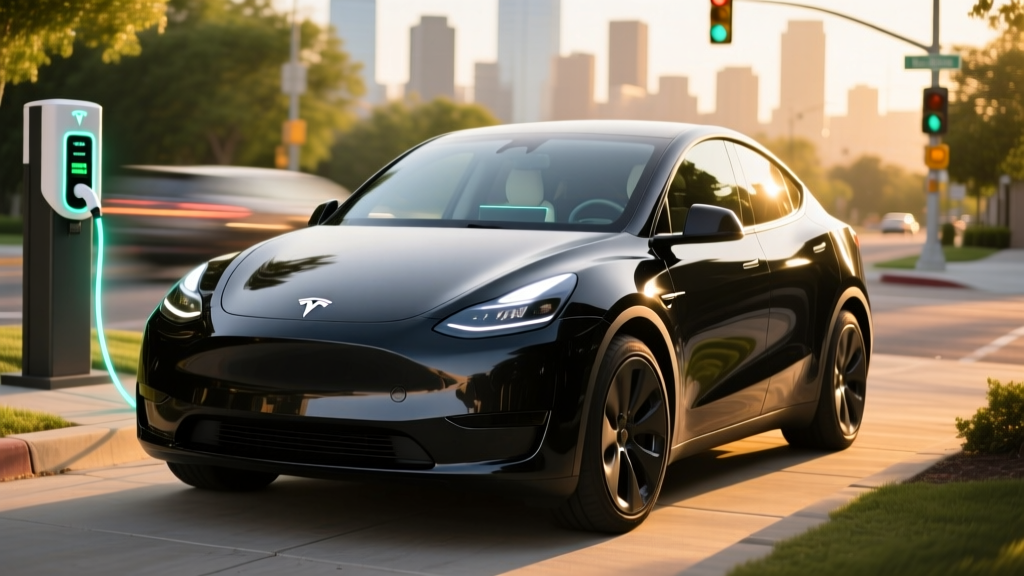
The answer is layered. Tesla vehicles consistently earn top marks in crashworthiness — the metal, glass, and airbags protecting occupants when impacts happen. Where controversy lives is in crash avoidance: specifically, whether Tesla's Autopilot and Full Self-Driving (Supervised) systems are making collisions more or less likely. This review uses the 2026 Tesla Model Y Long Range AWD as our lens, pairing hard crash data with a full spec breakdown so you can weigh the engineering against the automation risks.
2026 Tesla Model Y: Core Specs at a Glance
| Attribute | Specification |
|---|---|
| EPA Estimated Range | 320 miles |
| Battery (usable) | ~78 kWh, NMC chemistry |
| Drivetrain | Dual-motor AWD |
| Horsepower | 384 hp (combined) |
| 0–60 mph | 4.8 seconds |
| Peak DC Fast Charge | 250 kW (V3 Supercharger) |
| 10–80% DC Charge Time | ~27 minutes |
| Level 2 Home Charge Rate | 11.5 kW (~44 mi/hr) |
| Efficiency | 122 MPGe / 28 kWh/100 mi |
| Cargo (rear seats up / down) | 30.2 / 72.1 cu ft |
| Rear Legroom | 36.6 inches |
| Battery Warranty | 8 years / 120,000 miles |
| Base MSRP | $48,990 |
Real-World Range: What the EPA Sticker Doesn't Tell You
Real-World Highway (70 mph, 75°F): ~275–290 miles
Cold Weather (32°F, mixed driving): ~225–250 miles
Mountain/Towing Scenario: Expect 30–40% reduction vs. EPA
The Model Y Long Range AWD's 320-mile EPA figure is competitive among midsize electric SUVs, but EPA testing uses low average speeds and moderate temperatures. In sustained highway driving at 70 mph, expect to see roughly 275 to 290 miles before hitting a low-state-of-charge warning. The NMC chemistry in this pack delivers strong energy density but is more sensitive to cold-soak than LFP — preconditioning via the Tesla app before departure recovers much of this loss but still costs 5–10 minutes of charge time at a Supercharger.
For daily commuters covering under 80 miles round-trip, the real-world delta is largely academic. For road trippers, plan Supercharger stops at 200–220-mile intervals to keep charge times short (the charge curve tapers sharply above 80% SoC).
Charging Speed: Supercharger Network Advantage
| Level | Power | Miles Added per Hour | Notes |
|---|---|---|---|
| Level 1 (120V) | ~1.4 kW | ~4–5 mi/hr | Emergency/trickle only |
| Level 2 (240V, 48A) | 11.5 kW | ~44 mi/hr | Full charge in ~8 hours |
| DC Fast (V3 Supercharger) | 250 kW peak | Up to ~1,000 mi/hr (peak) | 10–80% in ~27 min |
| DC Fast (V4 Supercharger) | 325 kW peak | Higher sustained rate | 10–80% in ~22 min (where available) |
Tesla's Supercharger network remains its strongest ownership mothead in 2026, with over 7,000 V3/V4 stalls across North America. The Model Y Long Range peaks at 250 kW on V3 hardware and can leverage V4's higher throughput where deployed. Critically, the sustained charge rate matters more than peak: Tesla's thermal management holds above 150 kW through roughly 55% SoC before tapering, which is why 10–80% takes 27 minutes rather than the ~15 minutes peak math might suggest.
At home, an 11.5 kW Wall Connector on a 60-amp circuit adds roughly 44 miles per hour of charging — enough to replenish a full day's driving in under two hours. Installation typically runs $800–$2,000 depending on panel proximity and conduit runs (source: Tesla Home Charging).
Tesla Car Crash Data: What NHTSA and IIHS Actually Show
The 2026 Model Y carries a 5-Star Overall Safety Rating from NHTSA, with 5 stars in frontal, side, and rollover crash tests. The IIHS awarded the refreshed Model Y a Top Safety Pick+ designation, noting "Good" ratings across all crashworthiness categories and "Good+" for headlights on trims equipped with the updated matrix LED package.
These are excellent results, and they reflect the structural advantages inherent to EV skateboard architectures: a massive low-mounted battery pack lowers the center of gravity (reducing rollover risk), the absence of an engine block up front creates a large crumple zone, and the rigid battery enclosure adds torsional strength to the passenger cell.
The Autopilot and FSD Crash Controversy
Where Tesla's record gets complicated is in crashes involving its driver-assistance systems. NHTSA's Standing General Order on crash reporting has logged hundreds of incidents involving Tesla vehicles operating with Autopilot or FSD (Supervised) engaged. Key patterns identified by the agency and independent researchers include:
- Stationary emergency vehicle strikes: Multiple documented cases where Autopilot failed to detect parked fire trucks and police cars with flashing lights.
- Lane departure at construction zones: FSD (Supervised) occasionally misreads temporary lane markings, requiring driver intervention.
- Phantom braking: Sudden, unprompted deceleration on highways — a rear-end risk for following traffic.
- Driver disengagement: Tesla's cabin camera monitoring has improved but remains less restrictive than GM's Super Cruise eye-tracking system.
Pricing, Tax Credits, and Total Cost
| Trim | MSRP | Est. After §30D Credit | Eligible? |
|---|---|---|---|
| Long Range AWD | $48,990 | ~$41,490 | Yes (if sourcing + income met) |
| Performance AWD | $53,990 | ~$46,490 | Yes (if sourcing + income met) |
Under current IRS §30D rules, the Model Y qualifies for up to $7,500 in federal clean vehicle credits — but only if you meet three conditions:
- MSRP cap: SUVs must be at or below $80,000 (both trims clear this).
- Income cap: Adjusted gross income ≤ $150,000 (single), $225,000 (head of household), or $300,000 (joint).
- Battery sourcing: A percentage of critical minerals and battery components must be sourced from the US or FTA-partner nations. Tesla's supply chain has increasingly localized, but verify current-year compliance on the IRS eligible vehicle list before purchase.
The credit can now be transferred to the dealer at point of sale, reducing your out-of-pocket cost at delivery rather than waiting for tax filing. Confirm eligibility with your tax professional — rules shift annually and depend on your specific filing status and the vehicle's build date.
Who Should Buy the 2026 Model Y (And Who Shouldn't)
- You want access to the most reliable DC fast-charging network in North America.
- Over-the-air updates and software-first UX are priorities.
- You need ~30 cu ft of cargo space with rear seats up and over 72 cu ft folded.
- You commute in suburban/urban environments where Autopilot's highway lane-keeping shines.
- You want a traditional instrument cluster, physical buttons, or Apple CarPlay/Android Auto.
- You need true hands-free driving assist — GM's Super Cruise and Ford's BlueCruise offer more robust driver monitoring and hands-off capability on mapped highways.
- You frequently tow (the Model Y is rated for 3,500 lbs, but range drops sharply under load).
- You distrust Tesla's minimalist service model — fewer physical service centers than legacy brands.
Pros and Cons: The Honest Summary
- Top-tier crash test ratings (NHTSA 5-star, IIHS TSP+)
- Supercharger network reliability and coverage
- Class-leading efficiency (122 MPGe)
- Spacious cargo area for the footprint
- OTA updates continuously add features
- Strong resale value relative to EV segment average
- Autopilot/FSD crash incidents raise legitimate concerns
- No Apple CarPlay / Android Auto
- Minimalist interior polarizes; no physical climate controls
- NMC battery more cold-sensitive than LFP competitors
- Service center wait times can stretch weeks in some metros
- FSD (Supervised) costs $8,000 extra with no guaranteed capability timeline
Frequently Asked Questions
Are Teslas more likely to crash than other cars?
Per vehicle-mile data, Tesla owners file collision claims at rates comparable to or slightly below luxury-brand averages — but Tesla vehicles are overrepresented in crashes involving driver-assistance system engagement. The distinction matters: the cars are safe when driven attentively, but the automation branding may encourage complacency that increases risk in edge cases.
Is Tesla FSD safer than a human driver?
Tesla reports lower crash rates per million miles with FSD engaged than without, but independent researchers note the data lacks comparable baselines (FSD is primarily used on highways, which are already safer than surface streets). No peer-reviewed study has conclusively proven FSD is safer than an attentive human across all driving environments. Treat it as a convenience feature, not a safety guarantee.
What is the real-world range of the 2026 Model Y Long Range?
Expect 275–290 miles in warm-weather highway driving and 225–250 miles in freezing temperatures with mixed use. The EPA sticker reads 320 miles, but real-world efficiency depends heavily on speed, temperature, and terrain.
Does the 2026 Model Y qualify for the $7,500 federal tax credit?
It can — if your income is within IRS §30D caps, the vehicle's battery meets critical-mineral sourcing requirements for the current year, and you take delivery before any program changes. Always verify on the IRS eligible vehicle list and consult a tax professional before committing.
How does Model Y safety compare to the Hyundai Ioniq 5 or Ford Mustang Mach-E?
All three earn IIHS Top Safety Pick+ and NHTSA 5-star ratings. Where they diverge is driver-assist philosophy: Tesla's Autopilot is more capable in complex scenarios but more permissive of driver inattention; Ford's BlueCruise and Hyundai's Highway Driving Assist are more conservative but enforce hands-on or eye-on engagement more strictly.
Is it worth buying a Tesla in 2026 given the crash headlines?
If you prioritize crash protection, charging infrastructure, and software-driven features, the Model Y remains a strong choice. If driver-assist controversy or service-center accessibility concerns you, test-drive a Hyundai Ioniq 5, Kia EV6, or Ford Mustang Mach-E before committing — all offer competitive range and more traditional ownership experiences.