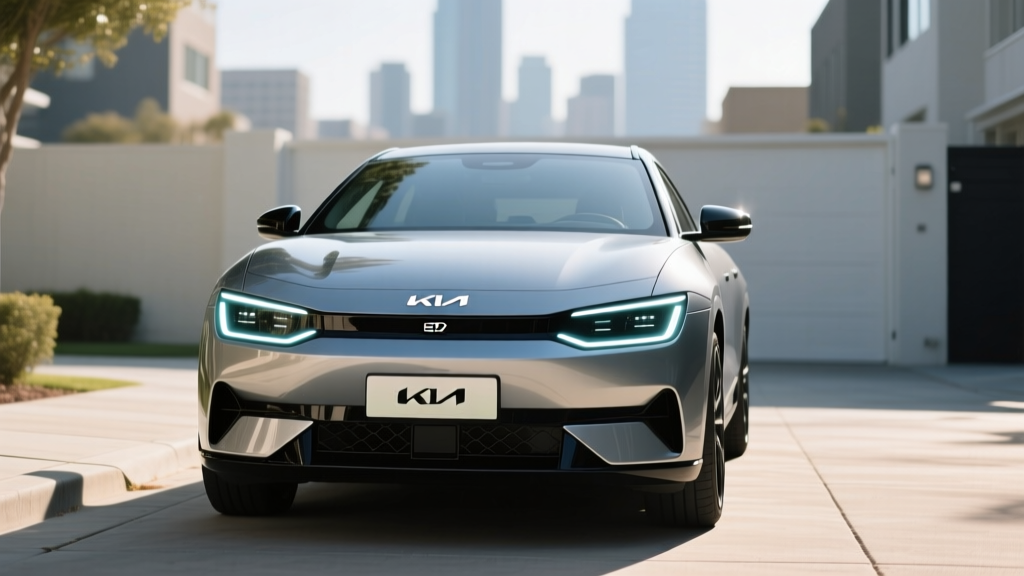
Searching for a competitive Kia EV6 lease deal in 2026? The EV6 remains one of the most compelling electric crossovers on the market, combining 800-volt fast-charging architecture, up to 310 miles of EPA range, and a spacious interior. But before you sign a lease agreement, you need to understand the full financial picture — not just the monthly payment.
This guide walks through the real 5-year ownership cost of the 2026 Kia EV6, including federal tax credit eligibility under IRS §30D, charging versus gas savings, insurance premiums, maintenance reductions, and how EV depreciation affects your lease. We use exact numbers so you can evaluate any dealer offer with confidence.
2026 Kia EV6: The Numbers That Matter
Before calculating ownership costs, here are the core specifications for the current model year. Kia has updated the EV6 for 2025 with a larger battery, and those changes carry into the 2026 model year.
| Spec | Light RWD | Wind/Land AWD | GT |
|---|---|---|---|
| Base MSRP | $42,900 | $48,900 | $61,600 |
| EPA Range | 310 mi | 280 mi | 206 mi |
| Battery (usable) | 84.0 kWh, NMC | 84.0 kWh, NMC | 84.0 kWh, NMC |
| Peak DC Charge Rate | ~240 kW | ~240 kW | ~240 kW |
| 10–80% DC Fast Charge | ~18 min | ~18 min | ~18 min |
| Level 2 Charge (11 kW) | ~7 hr 20 min | ~7 hr 20 min | ~7 hr 20 min |
| Horsepower | 225 hp | 320 hp | 576 hp |
| 0–60 mph | 7.2 sec | 5.1 sec | 3.4 sec |
| MPGe (combined) | 134 MPGe | 106 MPGe | 85 MPGe |
| Drivetrain | RWD | AWD | AWD |
| Battery/Powertrain Warranty | 10 years / 100,000 miles | ||
How Much Does It Really Cost to Own a Kia EV6 Over 5 Years?
The monthly lease payment is just one piece of the puzzle. Here's a realistic 5-year total cost of ownership (TCO) breakdown for the 2026 Kia EV6 Wind AWD — the most popular trim for lease deals — compared against a similarly priced gas-powered crossover (2026 Hyundai Tucson SEL AWD, MSRP ~$33,500).
| Cost Category | 2026 Kia EV6 Wind AWD | Gas Crossover Baseline |
|---|---|---|
| Purchase / Lease Payments (60 mo) | $23,400 (est. $390/mo) | $19,500 (est. $325/mo) |
| Federal Tax Credit (§30D) | –$7,500 (if eligible, applied at POS) | $0 |
| Effective Lease/Purchase Cost | $15,900 | $19,500 |
| Fuel / Electricity (60,000 mi) | $3,600 | $7,200 |
| Maintenance (5 years) | $1,200 | $3,500 |
| Insurance (5 years) | $12,600 | $9,000 |
| Depreciation (est. residual impact) | Included in lease | ~$14,000 loss |
| Estimated 5-Year TCO | ~$33,300 | ~$39,200 |
Federal Tax Credit: Do You Qualify for $7,500 on a Kia EV6 Lease?
The federal EV tax credit under IRS §30D offers up to $7,500 for qualifying new clean vehicles. For 2026, the rules remain strict, and not every buyer or every EV6 trim qualifies automatically.
-
§30D Federal Tax Credit Eligibility Checklist (2026 Rules):
- MSRP Cap: SUVs/crossovers must have an MSRP at or below $80,000. All 2026 EV6 trims qualify (highest is GT at ~$61,600).
- Buyer Income Cap: Modified adjusted gross income (MAGI) must not exceed $150,000 (single), $225,000 (head of household), or $300,000 (married filing jointly).
- Battery Sourcing: The vehicle's battery components must be manufactured or assembled in North America. Critical minerals must meet escalating percentage thresholds from qualifying trade partners. Kia has worked to localize EV6 battery supply, but verify current-year compliance at fueleconomy.gov.
- Point-of-Sale Transfer: As of 2024, you can transfer the credit to the dealer at purchase or lease signing, reducing your down payment or monthly cost directly. For leases, the credit is technically claimed by the lessor (financing company), but most Kia Finance agreements pass the benefit to the lessee as a capitalized cost reduction.
- One-Time Use: You can only claim one new-vehicle credit per year, and the vehicle must be for personal use, primarily in the United States.
Lease-Specific Advantage: Under §30D, leased vehicles are treated differently from purchases. The commercial clean vehicle credit (§45W) applies to the leasing entity, which often has fewer income and MSRP restrictions. In practice, this means some lessees who exceed the §30D income caps may still benefit from the credit if the lessor passes it through. Always confirm with the dealer and your tax professional how the credit is applied in your specific lease agreement.
State, Local, and Utility Incentives: What Else Is Available?
Examples of supplemental incentives that could stack with the federal credit on a Kia EV6 lease:
- California (CVRP): Up to $7,000 for income-qualified buyers, plus potential utility rebates of $500–$1,500 for home charger installation.
- Colorado: State tax credit of up to $5,000 for new EV purchases/leases (income-dependent).
- New York (Drive Clean Rebate): Up to $2,000 point-of-sale rebate for qualifying EVs.
- Utility Rebates: Many electric utilities (e.g., ConEdison, PG&E, Xcel Energy) offer $250–$1,000 rebates for purchasing an EV and/or installing a Level 2 home charger on a time-of-use rate plan.
These incentives can reduce your effective lease cost by an additional $1,000–$8,000 depending on your location and income. However, they are subject to funding availability and legislative changes — verify current eligibility before relying on them in your budget.
Charging vs. Gas: The Per-Mile Cost Reality
One of the strongest arguments for an EV6 lease is the fuel savings. But the exact savings depend on your local electricity rates and driving patterns.
| Metric | Kia EV6 Wind AWD | Gas Crossover (27 MPG combined) |
|---|---|---|
| Energy Consumption | 31 kWh/100 mi | 3.7 gal/100 mi |
| Home Charging ($0.16/kWh avg) | $0.050/mi | — |
| Public DC Fast Charging ($0.40/kWh avg) | $0.124/mi | — |
| Gasoline ($3.50/gal avg) | — | $0.130/mi |
| Annual Cost (12,000 mi, 80% home / 20% DC) | $778 | $1,560 |
| 5-Year Fuel/Energy Cost | $3,888 | $7,800 |
Assuming you charge primarily at home on a standard residential rate (~$0.16/kWh national average) and use DC fast chargers for road trips, the EV6 costs roughly $0.065 per mile blended versus $0.130 per mile for a gas crossover at $3.50/gallon. That's approximately $780 per year in savings, or nearly $3,900 over five years.
If you have access to utility time-of-use rates with off-peak pricing below $0.10/kWh, your cost drops to roughly $0.031/mi — making the savings even more dramatic. Conversely, if you rely exclusively on public DC fast charging at premium rates ($0.48–$0.60/kWh at some networks), your per-mile cost can approach or exceed the gas baseline. Home charging access is the single biggest variable in EV operating economics.
Maintenance Savings: Fewer Parts, Fewer Bills
EVs eliminate many routine maintenance items that gas vehicles require. Here's what you save — and what you still pay for — on the EV6.
| Service Item | Kia EV6 | Gas Crossover |
|---|---|---|
| Oil Changes | $0 (none required) | $600–$900 |
| Transmission Fluid | $0 (sealed reduction gear) | $150–$300 |
| Brake Pads/Rotors | $0–$200 (regen extends life 2–3×) | $600–$1,200 |
| Engine Air Filter | $0 (no engine) | $100–$150 |
| Spark Plugs | $0 | $200–$400 |
| Coolant Flush | $100 (battery thermal system) | $150–$250 |
| Cabin Air Filter | $100–$150 | $100–$150 |
| Tire Rotation/Replacement | $800–$1,200 (EVs wear tires faster due to weight and torque) | $600–$900 |
| Estimated 5-Year Total | $1,000–$1,650 | $2,500–$4,250 |
Net maintenance savings typically run $1,500–$2,500 over five years. The EV6's regenerative braking system significantly extends brake pad life — many EV owners report original brake pads lasting 80,000+ miles. However, EVs are heavier (the EV6 Wind AWD weighs ~4,500 lbs) and deliver instant torque, which accelerates tire wear. Budget for a tire replacement around 35,000–45,000 miles, especially if you opt for the GT's performance rubber.
Insurance: The Cost Item That's Usually Higher
EV insurance premiums are typically 15–30% higher than comparable gas vehicles. For the EV6 Wind AWD, expect annual premiums in the range of $2,200–$2,800 depending on your state, driving record, and coverage level — versus $1,600–$2,000 for a gas crossover.
Why the premium?
- Higher repair costs: EV battery packs, power electronics, and specialized body structures (like the EV6's 800V architecture) are expensive to repair or replace after a collision.
- Specialized labor: Fewer body shops have high-voltage certification, limiting repair network options and increasing labor rates.
- Vehicle MSRP: The EV6's higher starting price means higher comprehensive and collision coverage costs.
- Total-loss thresholds: Minor battery damage can push an EV into a total-loss declaration, increasing insurer risk exposure.
To mitigate costs, get quotes from multiple insurers before signing the lease. Some companies (e.g., GEICO, Progressive, State Farm) have developed more competitive EV-specific rate structures. Bundling with homeowners or renters insurance typically saves 10–15%.
Depreciation and Lease Residuals: What Happens at Trade-In?
EV depreciation has been volatile. In 2023–2024, a wave of Tesla price cuts and aggressive EV incentives caused used EV values to drop sharply — some models lost 40–50% of their value in the first two years. By 2025–2026, the market has stabilized somewhat, but EVs still generally depreciate faster than their gas counterparts.
For the Kia EV6, current industry estimates project 55–65% value retention at 3 years / 36,000 miles, compared to 60–70% for a popular gas crossover. Several factors influence this:
- Battery health perception: Buyers of used EVs worry about degradation. Kia's 10-year/100,000-mile battery warranty transfers to second owners, which helps support resale values.
- Technology obsolescence: As newer EVs offer faster charging and longer range, older models face steeper depreciation curves.
- Federal credit impact: When new EVs are effectively $7,500 cheaper due to tax credits, used EV prices must drop correspondingly to remain competitive.
- Market saturation: The growing volume of off-lease EVs entering the used market puts downward pressure on prices.
This is precisely why leasing can be the smart move for an EV6. A lease transfers the depreciation risk to the lessor. If residuals collapse, it's Kia Finance's problem, not yours. At lease end, you simply return the vehicle (or purchase it at the predetermined residual if the market value exceeds it). For buyers concerned about long-term EV value retention, leasing is a built-in hedge.
Evaluating a Kia EV6 Lease Deal: Your Decision Framework
- You qualify for the $7,500 federal tax credit and can apply it at point of sale as a capitalized cost reduction.
- You have access to home Level 2 charging (or can install it for $500–$1,500).
- You drive 10,000–15,000 miles per year (within typical lease mileage limits).
- You want to hedge against EV depreciation risk and battery longevity uncertainty.
- Your state or utility offers additional EV rebates that stack with the federal credit.
- You exceed the §30D income caps and your state offers no supplemental incentives.
- You cannot install or access reliable home charging.
- You regularly drive 20,000+ miles per year (lease overage penalties of $0.20–$0.30/mi add up fast).
- You live in an area with very high electricity rates ($0.30+/kWh) and limited public charging infrastructure.
When evaluating any EV6 lease offer, focus on these key numbers:
- Capitalized cost: What is the negotiated selling price before incentives? Aim for MSRP or below.
- Money factor: This is the lease interest rate (multiply by 2,400 to get the approximate APR). A competitive money factor in 2026 is 0.00200–0.00250 (4.8–6.0% APR equivalent).
- Residual value: What percentage of MSRP is the car expected to be worth at lease end? Higher residuals mean lower monthly payments. Typical 36-month EV6 residuals are 52–58%.
- Tax credit application: Confirm in writing that the $7,500 credit is applied as a cap cost reduction, not held by the lessor.
- Mileage allowance: Standard leases offer 10,000–12,000 miles/year. If you drive more, negotiate 15,000 miles/year upfront — it's cheaper than paying overage penalties later.
Frequently Asked Questions
Is the Kia EV6 eligible for the full $7,500 federal tax credit in 2026?
The EV6 has historically qualified for the full credit, but eligibility depends on current battery-sourcing and critical-mineral requirements, which tighten annually. Additionally, your personal income must fall below §30D caps ($150K single / $300K married filing jointly). For leases, the credit may pass through under §45W commercial vehicle rules with fewer restrictions. Always verify current eligibility at fueleconomy.gov before signing.
How much will I spend on charging the EV6 each month?
At the national average electricity rate of $0.16/kWh and 1,000 miles of monthly driving, expect to spend approximately $50–$65 per month on home charging. If you rely on public DC fast chargers exclusively, that figure rises to $120–$160 per month. The EV6's 31 kWh/100 mi efficiency (Wind AWD) is competitive within its class.
Does the EV6's battery warranty cover me during a lease?
Yes. Kia's 10-year/100,000-mile battery and powertrain warranty far exceeds any standard lease term (typically 36–48 months). If the battery degrades below approximately 70% of original capacity during your lease, Kia is obligated to repair or replace it at no cost. In practice, NMC batteries in the EV6's thermal management system show degradation of roughly 5–8% over the first 60,000 miles based on industry fleet data.
What happens if I exceed the lease mileage limit?
Most Kia EV6 leases set overage penalties at $0.20–$0.25 per mile. If you sign a 36-month lease with a 12,000-mile/year allowance (36,000 total) and drive 45,000 miles, you'd owe $1,800–$2,250 at lease end. If you anticipate higher mileage, negotiate a 15,000-mile/year lease upfront — the monthly payment increase is usually less than the overage penalty.
Should I buy or lease the 2026 Kia EV6?
Leasing makes sense if you want lower monthly payments, wish to avoid depreciation risk, and plan to upgrade to newer EV technology in 3–4 years. Buying makes sense if you drive high annual miles (20,000+), want to keep the vehicle 7+ years, and plan to fully utilize the battery warranty. The $7,500 tax credit applies in both scenarios, though the mechanism differs (direct claim for purchases, cap cost reduction for leases).
Does the EV6 qualify for HOV lane access?
In many states, including California, the EV6 qualifies for clean-air vehicle stickers granting single-occupant HOV lane access. California's program is income-capped for new applicants and subject to legislative renewal. Check your state's DMV for current eligibility and decal availability.