The Unanswered Question: Does Tesla Advertise?
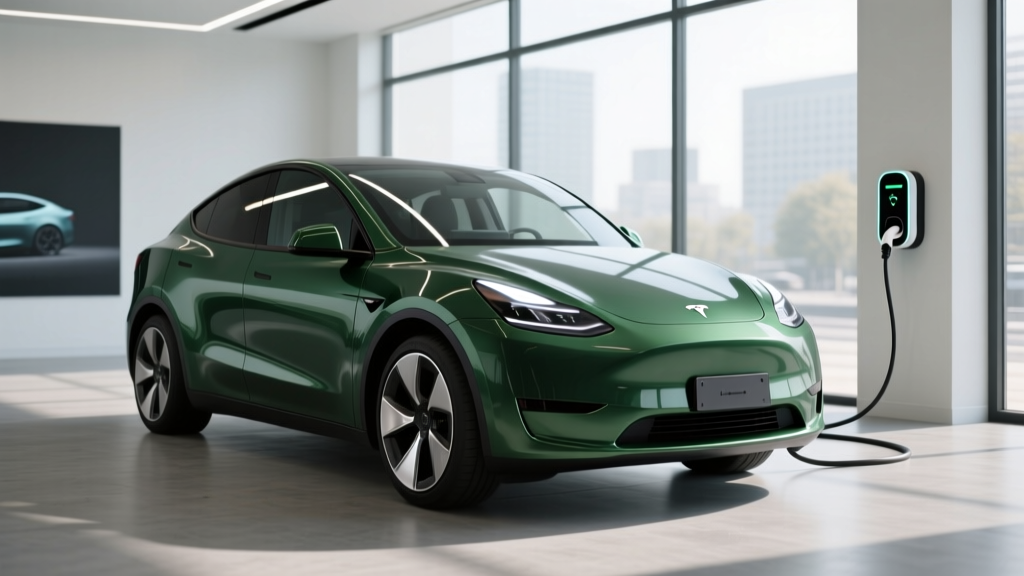
Search for a Tesla commercial during the Super Bowl, flip through a magazine, or scroll past a billboard, and you'll notice something unusual for a major automaker: there are no ads. The question "does Tesla advertise" has a straightforward answer — no, not in the traditional sense. Tesla spends $0 on conventional advertising, relying instead on referral programs, Elon Musk's social media presence, organic press coverage, and a Supercharger network that serves as a rolling billboard. But the real question for buyers isn't about Tesla's marketing budget. It's whether the product itself — specifically the best-selling 2026 Model Y — earns its reputation on merit.
This review examines the 2026 Tesla Model Y Long Range AWD with the data points that matter: real-world range, charging speed, total cost after tax credits, and how it stacks up against rivals that do spend billions on advertising.
Range and Efficiency: EPA Sticker vs. Reality
EPA Estimated Range: 320 miles
Real-World Highway (70-75 mph, mild weather): ~275–290 miles
Real-World Cold Weather (below 30°F, mixed driving): ~230–260 miles
Efficiency: 122 MPGe combined / 28 kWh per 100 miles
The EPA's 320-mile estimate for the Long Range AWD trim is competitive in the midsize electric SUV segment, but real-world results vary significantly based on driving style and climate. On highway road trips at sustained 70-75 mph speeds in moderate temperatures, expect roughly 275-290 miles before needing a charge. Tesla's thermal management system — including a standard heat pump — mitigates cold-weather losses better than many competitors, but physics is physics: in sub-freezing conditions, battery preconditioning draws energy, and cabin heating adds load. Plan for 230-260 miles in winter.
The 28 kWh/100mi efficiency figure is excellent for a vehicle of this size. For context, the Hyundai Ioniq 5 AWD uses roughly 31 kWh/100mi, and the Ford Mustang Mach-E Extended Range AWD sits around 30 kWh/100mi. Tesla's powertrain efficiency — a product of their motor design, low drag coefficient (0.23 Cd), and regenerative braking calibration — is a key reason the Model Y achieves its range with a smaller battery than some competitors.
| Specification | Value |
|---|---|
| EPA Range | 320 miles |
| Battery Capacity (usable) | ~78 kWh |
| Battery Chemistry | NMC (Nickel Manganese Cobalt) |
| Drivetrain | Dual-Motor AWD |
| Horsepower | 384 hp (combined) |
| 0–60 mph | 4.8 seconds |
| Top Speed | 125 mph |
| Max DC Fast Charge Rate | 250 kW |
| 10–80% DC Charge Time | ~25 minutes |
| Level 2 Home Charge Rate | 11.5 kW (~44 mi/hr) |
| Efficiency | 122 MPGe / 28 kWh/100mi |
| Cargo Volume (rear seats up) | 30.2 cu ft |
| Cargo Volume (rear seats folded) | 72.0 cu ft |
| Rear Legroom | 37.6 inches |
| Battery Warranty | 8 years / 120,000 miles |
| Base MSRP | $48,590 |
Charging Speed: Home and DC Fast Charging
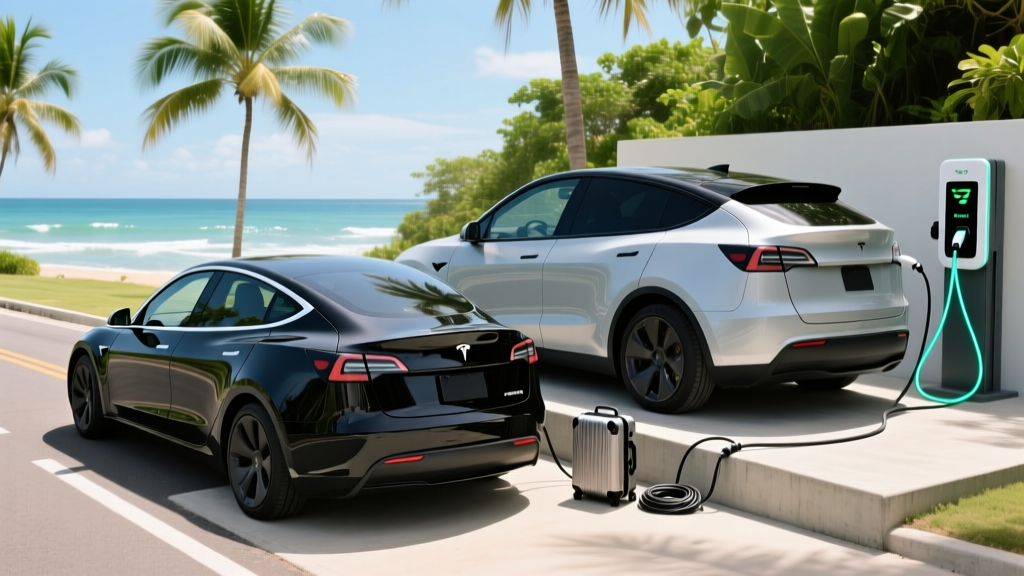
Charging speed is where Tesla's vertical integration — vehicle, Supercharger network, and navigation software — creates a tangible advantage. The 2026 Model Y Long Range supports a peak DC fast-charge rate of 250 kW on V3 and V4 Superchargers, adding up to 200 miles in approximately 15 minutes under optimal conditions. The 10-80% charge takes roughly 25 minutes, with the charge curve tapering meaningfully above 80% to protect battery longevity.
One nuance many buyers miss: peak kW is not sustained kW. The Model Y hits 250 kW only between roughly 10-30% State of Charge, then steps down progressively. By 60% SoC, you're typically seeing 120-150 kW. This is normal for NMC chemistry and explains why the 10-80% time is 25 minutes rather than the theoretical minimum.
| Charge Level | Power | Miles Added per Hour | Typical Use Case |
|---|---|---|---|
| Level 1 (120V outlet) | ~1.4 kW | ~5 mi/hr | Emergency / overnight trickle |
| Level 2 (240V, 48A) | 11.5 kW | ~44 mi/hr | Home Wall Connector / destination |
| DC Fast (Supercharger V3) | Up to 250 kW | ~1,000 mi/hr (peak) | Road trips, rapid top-ups |
| DC Fast (Supercharger V4) | Up to 250 kW | ~1,000 mi/hr (peak) | Newer stations with cable management |
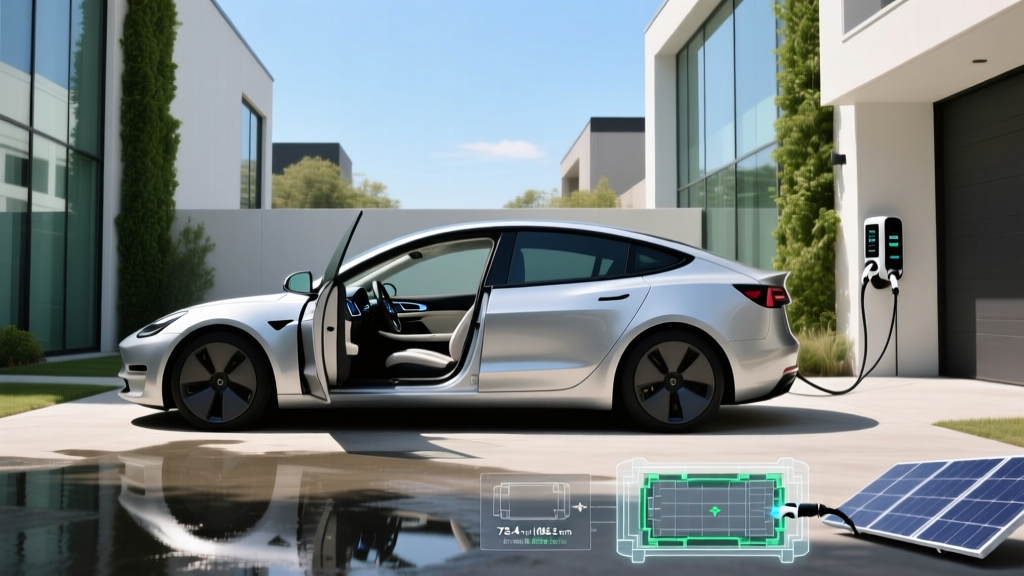
At home, a Tesla Wall Connector on a 60-amp circuit delivers 11.5 kW, recovering a full battery in roughly 7 hours. Most owners plug in nightly and wake up to a full charge — the single biggest ownership convenience advantage over gas vehicles. Installation costs for a Level 2 home setup typically run $500-$2,000 depending on panel proximity and local permitting; see our home charging installation guide for a detailed breakdown.
Tesla's navigation system automatically preconditions the battery when routing to a Supercharger, warming it to optimal temperature for maximum charge acceptance. This matters enormously in cold weather — arriving at a charger without preconditioning can cut your peak charge rate by 50% or more.
Performance and Driving Dynamics
The dual-motor AWD powertrain produces 384 horsepower and propels the Model Y Long Range from 0-60 mph in 4.8 seconds — quick for a family SUV, if not the blistering pace of the Performance trim (3.5 seconds). The instant torque delivery characteristic of electric motors means the car feels faster in daily driving than the 0-60 number suggests, particularly in 0-30 mph urban acceleration.
Ride quality has improved in the latest generation with revised suspension tuning, though the Model Y still leans sporty-firm rather than plush. Road noise is well-managed at highway speeds, and the low center of gravity (battery pack under the floor) keeps body roll controlled through corners. Regenerative braking is strong enough for one-pedal driving in most conditions, though Tesla has made the regen strength less aggressive than in prior model years — some owners prefer the older, more pronounced feel.
The steering is precise but light, and the overall driving experience is competent rather than engaging. This is a vehicle optimized for commuting and road trips, not canyon carving. For buyers who prioritize driving dynamics, the BMW iX or Porsche Macan Electric offer more involvement — at considerably higher prices.
Interior, Tech, and Cargo
The Model Y's interior remains its most polarizing feature. The minimalist cabin centers on a single 15.4-inch touchscreen that controls virtually every function — climate, mirrors, glovebox, wipers. There are no physical buttons, no instrument cluster, and no heads-up display. For some, this is refreshing simplicity; for others, it's frustrating distraction. The 2026 model year brings a rear-seat touchscreen for climate and entertainment, addressing a common complaint from families.
Build quality has improved markedly since the Fremont factory's early-production inconsistencies. Panel gaps are tighter, materials are soft-touch where they count, and the overall fit and finish now matches mainstream competitors. Ventilated front seats, a panoramic glass roof (with improved UV/heat rejection), and a premium audio system with 14 speakers are standard on Long Range.
Cargo capacity is a genuine strength: 30.2 cubic feet behind the rear seats and 72.0 cubic feet with them folded flat. The front trunk (frunk) adds 4.1 cubic feet for charging cables or a small bag. Rear legroom of 37.6 inches accommodates adults comfortably, though the sloping roofline limits headroom for passengers over six feet tall.
On the technology front, Tesla's infotainment remains the industry benchmark for responsiveness, over-the-air update frequency, and app ecosystem (Netflix, YouTube, Arcade while parked). Wireless phone charging, Bluetooth, and Wi-Fi connectivity are standard. Apple CarPlay and Android Auto are notably absent — Tesla insists on its proprietary interface, which frustrates buyers who prefer phone-mirroring.
Driver Assistance: Autopilot and FSD Supervised
Tesla Autopilot and Full Self-Driving (Supervised) are Level 2 driver-assistance systems. The driver must remain fully engaged, monitor the road, and be prepared to take over at any moment. These are not self-driving systems. No consumer Tesla vehicle is capable of unsupervised autonomous operation.
Standard Autopilot includes Traffic-Aware Cruise Control and Autosteer (lane centering) on highways. It works well in clear conditions with well-marked lanes, but struggles with construction zones, faded lane markings, and complex merges. The optional Full Self-Driving (Supervised) package — currently $8,000 or $99/month — adds automatic lane changes, navigation-guided on/off-ramp handling, and traffic light/stop sign recognition. FSD has improved substantially through neural-network training on billions of miles of fleet data, but it still makes errors that require driver intervention: phantom braking, hesitant unprotected left turns, and occasional lane-keeping confusion in work zones.
Compared to GM's Super Cruise (which allows true hands-free driving on mapped highways) or Ford's BlueCruise, Tesla's system requires more active supervision but covers a broader range of roads. The trade-off is versatility vs. relaxation — Tesla works almost everywhere but demands more attention; Super Cruise works on fewer roads but is less fatiguing when it does.
FSD (Supervised) does NOT make the Model Y self-driving. It cannot handle all weather conditions (heavy rain, snow, fog), does not reliably detect emergency vehicles, and requires continuous driver monitoring. NHTSA has investigated multiple incidents involving Tesla's driver-assist systems. Always maintain situational awareness.
Pricing, Trims, and Federal Tax Credit
| Trim | MSRP | Est. Price After §30D Credit* |
|---|---|---|
| Long Range AWD | $48,590 | ~$41,090 |
| Performance AWD | $53,590 | ~$46,090 |
*Federal tax credit eligibility depends on buyer income, battery component sourcing, and MSRP caps under IRS §30D rules. See below.
The 2026 Model Y Long Range AWD starts at $48,590 including destination. The Performance trim, with its 3.5-second 0-60 time, upgraded brakes, and 21-inch wheels, starts at $53,590. Both trims fall under the IRS §30D MSRP cap of $80,000 for SUVs, making them potentially eligible for the $7,500 federal tax credit.
However, eligibility is not automatic. Under current IRS §30D rules, the buyer must meet income caps ($150,000 single / $300,000 married filing jointly), the vehicle's battery must meet critical-mineral and battery-component sourcing requirements (which shift annually and favor North American supply chains), and the credit can now be transferred at the point of sale — meaning you receive it as a purchase-price reduction rather than waiting for a tax refund.
- ✅ MSRP under $80,000 SUV cap — both trims qualify
- ✅ Buyer AGI under $150K single / $300K joint
- ⚠️ Battery sourcing: verify current-year critical mineral and component requirements on fueleconomy.gov before purchasing — these thresholds change annually
- ✅ Point-of-sale transfer available — dealer (Tesla) applies credit at purchase
- ⚠️ Consult a tax professional for your specific situation
With the full $7,500 credit applied, the Long Range AWD effectively costs approximately $41,090 — a compelling price for a 320-mile AWD electric SUV. Without the credit, the value proposition narrows against competitors like the Hyundai Ioniq 5 (starting ~$47,000 with similar credit eligibility) and the Chevrolet Equinox EV (starting ~$35,000 but with lower range and slower charging).
Warranty and Ownership Costs
Tesla provides a 4-year/50,000-mile basic vehicle limited warranty and an 8-year/120,000-mile battery and drive unit warranty. The battery warranty guarantees retention of at least 70% capacity during the coverage period. Real-world degradation data from Tesla's fleet suggests most Model Y batteries lose approximately 10-12% capacity over the first 100,000 miles — well within the warranty threshold.
Insurance costs are a notable ownership expense. The Model Y consistently ranks among the more expensive EVs to insure due to high repair costs (particularly for the aluminum-intensive body structure and integrated battery pack). Expect annual premiums 20-40% higher than a comparably priced gas SUV, depending on your state and driving record. Tesla offers its own insurance product in some states, which uses real-time driving behavior to set premiums — it can be cheaper for safe drivers but penalizes aggressive ones.
Maintenance costs are minimal: no oil changes, no spark plugs, cabin air filter replacement every 2-3 years, brake fluid checks, and tire rotations. Tesla recommends tire replacement every 25,000-30,000 miles due to the vehicle's weight and instant torque wearing tires faster than gas equivalents.
How the Model Y Compares to Key Competitors
The Model Y doesn't exist in a vacuum. Three competitors deserve direct comparison:
Hyundai Ioniq 5 AWD — Offers 800V ultra-fast charging (10-80% in ~18 minutes on a 350 kW charger), a more distinctive design, and physical buttons. Range is slightly lower (~290 miles EPA). The Ioniq 5 charges faster but doesn't match Tesla's Supercharger network reliability.
Ford Mustang Mach-E Extended Range AWD — Competitive range (~312 miles EPA), BlueCruise hands-free driving on mapped highways, and a more traditional interior with physical controls. Charging is slower (~230 kW peak), and Ford's public charging network experience is less seamless.
Chevrolet Equinox EV 3RS AWD — Undercuts the Model Y on price (~$42,000 MSRP) with ~307 miles of range. Trade-offs include slower DC charging (~150 kW peak) and a less refined infotainment system. Strong value play for budget-conscious buyers.
The Model Y's advantages remain the Supercharger network (even as it opens to competitors via NACS adapters, Tesla owners still enjoy the most seamless plug-and-charge experience), powertrain efficiency, and over-the-air update cadence. Its disadvantages include the touchscreen-only interface, higher insurance costs, and a ride quality that some find firm.
- Best-in-class Supercharger network reliability
- Excellent efficiency (28 kWh/100mi)
- Strong cargo capacity (72 cu ft max)
- Competitive 0-60 (4.8 sec) and AWD traction
- Frequent OTA updates add features post-purchase
- Heat pump standard — good cold-weather range retention
- No Apple CarPlay / Android Auto
- Touchscreen-only controls polarize users
- Insurance premiums above segment average
- FSD (Supervised) still requires vigilant driver attention
- Firm ride quality vs. some competitors
- 250 kW peak charge rate trails Hyundai/Kia 800V platforms
Who Should Buy the 2026 Model Y?
- You take regular road trips and value Supercharger network reliability
- You want a tech-forward, minimalist interior with frequent software updates
- You need 300+ miles of range and AWD for four-season climates
- You prefer the simplicity of a single-vehicle ecosystem (Tesla app, home charger, Superchargers)
- You need physical buttons and traditional infotainment (consider Ioniq 5 or Mach-E)
- You want the fastest possible DC charging (Hyundai/Kia 800V platforms charge faster)
- You prioritize ride comfort over sportiness (consider the BMW iX or Rivian R1S)
- Low insurance premiums are a top priority
The Model Y remains the default choice for buyers entering the EV space who want a proven, well-supported electric SUV without research fatigue. Tesla doesn't need to advertise because the Model Y's combination of range, charging infrastructure, and software creates an ecosystem that's difficult for competitors to replicate wholesale — even as individual rivals match or exceed it in specific categories.
Frequently Asked Questions
What is the real-world range of the 2026 Tesla Model Y?
The EPA rates the Long Range AWD at 320 miles. In real-world highway driving at 70-75 mph in moderate temperatures, expect 275-290 miles. In cold weather (below 30°F), plan for 230-260 miles. The heat pump helps, but cold temperatures reduce battery efficiency regardless.
How fast does the Model Y charge at home and on the road?
At home on a 240V Level 2 Wall Connector (11.5 kW), the Model Y gains approximately 44 miles of range per hour, fully charging in about 7 hours. On a V3 or V4 Supercharger, it peaks at 250 kW and charges from 10-80% in roughly 25 minutes. Actual times depend on battery temperature and state of charge.
How much does the 2026 Model Y cost after the federal tax credit?
The Long Range AWD starts at $48,590. With the full $7,500 §30D federal tax credit (if eligible), the effective price drops to approximately $41,090. Eligibility depends on buyer income, battery sourcing requirements, and MSRP caps. Verify current eligibility on fueleconomy.gov and consult a tax professional.
Does the Tesla Model Y qualify for the federal EV tax credit?
Both Model Y trims fall under the $80,000 MSRP cap for SUVs. However, full $7,500 credit eligibility depends on annual battery-component and critical-mineral sourcing thresholds set by the IRS, plus buyer income limits. These rules change yearly. Check the IRS clean vehicle credit page and fueleconomy.gov for the most current eligibility status before purchasing.
Is the Model Y worth buying vs. the Hyundai Ioniq 5 or Ford Mach-E?
The Model Y wins on Supercharger network access, efficiency, and software ecosystem. The Ioniq 5 charges faster on compatible DC chargers and offers physical controls. The Mach-E provides hands-free BlueCruise on mapped highways and a more traditional interior. Test-drive all three — the best choice depends on whether you prioritize charging network reliability (Tesla), charge speed (Hyundai), or driver-assist comfort (Ford).
Does Tesla advertise at all?
Tesla does not run traditional advertising — no TV commercials, print ads, or paid sponsorships. The company relies on word-of-mouth, referral incentives, Elon Musk's social media reach, earned media coverage, and the visibility of its Supercharger stations. This zero-ad-budget approach is unique among major automakers and contributes to Tesla's industry-leading gross margins per vehicle.