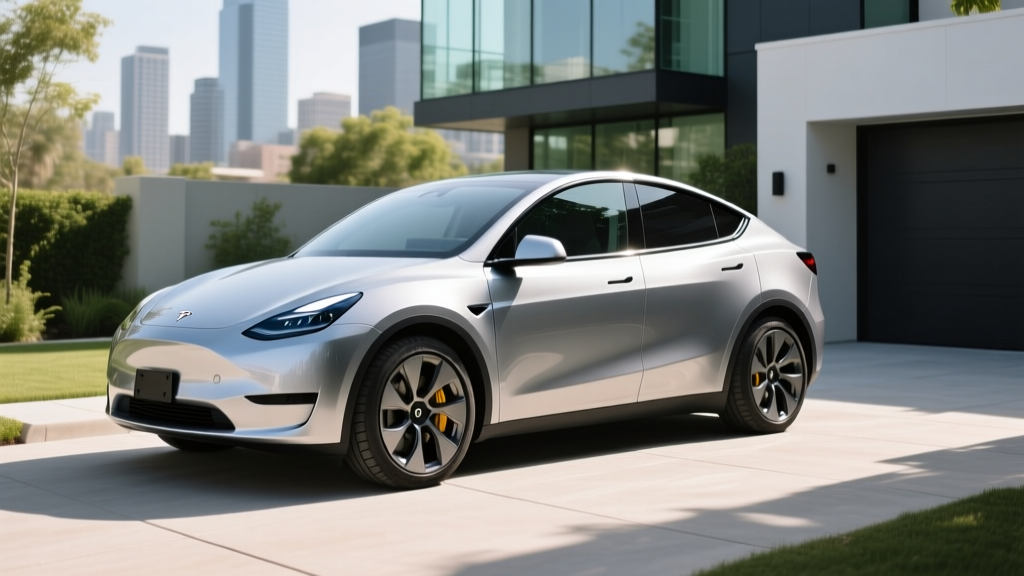
The 2026 Tesla Model Y remains one of the best-selling electric vehicles in the United States, but its track record on build quality and long-term durability has always been a polarizing topic. If you've searched for the Tesla reliability rating from Consumer Reports, J.D. Power, or NHTSA, you've likely found conflicting signals: middling predicted-reliability scores alongside some of the lowest cost-per-mile figures in the EV segment. This review reconciles the data, pairs it with the latest Juniper-refresh specs, and tells you exactly what to expect from range, charging, and ownership in 2026.
What the Tesla Reliability Rating Actually Means in 2026
Reliability in the EV world is fundamentally different from internal-combustion vehicles. There are no transmissions to fail, no timing belts to snap, and far fewer moving parts in the drivetrain. When agencies score Tesla reliability, they're largely measuring build quality, electronics stability, and trim/panel consistency — not powertrain longevity.
For the 2026 Model Y (post-Juniper refresh), here's where the major ratings land:
- Consumer Reports: Predicted reliability typically sits at 38–45 out of 100 for recent Model Y years, placing it in the "about average" to "below average" tier among all vehicles but above average among EVs.
- J.D. Power Vehicle Dependability Study: Tesla as a brand has historically ranked in the bottom third, driven by body hardware, paint, and infotainment complaints rather than powertrain issues.
- NHTSA: The Model Y continues to earn a 5-Star Overall Safety Rating across all trims.
- IIHS: Top Safety Pick+ designation when equipped with the latest hardware.
The takeaway: if your definition of reliability is "will the motor and battery last 200,000 miles?" — yes, overwhelmingly. If it's "will I need a service-center visit for a misaligned panel or a phantom sensor fault?" — plan for occasional frustration.
2026 Tesla Model Y Core Specifications
| Spec | Long Range AWD | Performance |
|---|---|---|
| EPA Range | 320 miles | 295 miles |
| Usable Battery | ~78 kWh (NMC) | ~78 kWh (NMC) |
| Drivetrain | Dual-Motor AWD | Dual-Motor AWD |
| Horsepower | 384 hp | 510 hp |
| 0–60 mph | 4.8 sec | 3.5 sec |
| Peak DC Fast Charge | 250 kW | 250 kW |
| 10–80% DC Time | ~22 min | ~22 min |
| Level 2 Charge Rate | 11.5 kW (~44 mi/hr) | 11.5 kW (~44 mi/hr) |
| MPGe (Combined) | 111 MPGe | 102 MPGe |
| Efficiency | 28 kWh/100 mi | 31 kWh/100 mi |
| Cargo (rear seats up) | 30.2 cu ft | 30.2 cu ft |
| Cargo (seats folded) | 72.0 cu ft | 72.0 cu ft |
| Base MSRP | $44,990 | $51,490 |
Source: fueleconomy.gov and Tesla's official 2026 configurator.
Real-World Range vs. the EPA Sticker
Real-World Expectation: 260–285 miles highway at 70–75 mph; ~300 miles mixed city; 220–250 miles in sub-32°F winter driving without preconditioning.
Tesla's efficiency is among the best in the segment, thanks in part to the heat pump (standard on all 2026 trims) and the Juniper generation's improved thermal management. On a 75°F day with mixed suburban driving, owners regularly report matching or slightly exceeding the 320-mile EPA figure. Highway driving at sustained 75 mph drops that to roughly 270 miles. Cold weather remains the great equalizer — expect a 20–30% reduction in range below freezing unless you precondition the battery while plugged in, which the Tesla app makes trivial to schedule.
The Long Range AWD's NMC chemistry offers higher energy density than LFP, which is why it achieves 320 miles from a ~78 kWh pack. The trade-off: NMC batteries degrade slightly faster than LFP when held at 100% SoC daily. Tesla recommends an 80% daily charge limit for NMC packs — reserve 100% for road trips.
Charging Speed: DC Fast, Level 2, and the Curve Reality
Tesla's Supercharger network remains the gold standard for public charging reliability in 2026, and the Model Y's 250 kW peak rate is competitive — though it no longer leads the segment (Hyundai/Kia's 800V platforms hit 350 kW).
| Charging Method | Power | Rate / Time |
|---|---|---|
| 120V Level 1 (standard outlet) | 1.4 kW | ~5 miles per hour |
| 240V Level 2 (Tesla Wall Connector) | 11.5 kW | ~44 miles per hour |
| DC Fast (Supercharger V3/V4) | Peak 250 kW | 10–80% in ~22 minutes |
| DC Fast (CCS adapter, Electrify America) | Peak ~150–200 kW | 10–80% in ~28–35 minutes |
Charging curve reality: The 250 kW peak is only sustained between roughly 10–30% SoC. Above 50%, the rate tapers to ~120 kW; above 80%, it drops below 50 kW. This is why Tesla (and every other automaker) quotes 10–80% times rather than 0–100%. On a road trip, plan to charge to 80% and go — sitting to 100% at a Supercharger adds 25+ minutes for the last 20%.
For home charging, the Tesla Wall Connector on a 60A circuit delivers the full 11.5 kW, adding roughly 44 miles of range per hour. Most owners with a 240V/50A NEMA 14-50 outlet (a common dryer circuit) will see ~32 miles per hour at 9.6 kW — still enough to fully replenish overnight for all but the longest commutes.
Pricing, Trims, and Federal Tax Credit Eligibility
| Trim | MSRP | Est. After §30D Credit |
|---|---|---|
| Long Range AWD | $44,990 | ~$37,490* |
| Performance | $51,490 | ~$43,990* |
*Assumes full $7,500 federal tax credit eligibility. Actual credit depends on buyer income, battery sourcing, and point-of-sale transfer rules under IRS §30D. See IRS.gov for current-year requirements.
- Vehicle MSRP must be ≤ $80,000 for SUVs (Model Y qualifies)
- Buyer AGI must not exceed $150K single / $300K married filing jointly
- Battery critical minerals and components must meet phased-in sourcing thresholds
- Credit can be transferred to the dealer at point of sale for an instant price reduction
- No 200,000-unit manufacturer cap (removed in 2023 under the Inflation Reduction Act)
Tesla's battery sourcing compliance has been a moving target year to year. As of early 2026, the Long Range AWD Model Y built at Giga Texas has qualified for the full $7,500 credit — but always verify the specific VIN with your dealer before signing, as supply-chain shifts can alter eligibility mid-year.
Ownership Costs, Warranty, and Long-Term Battery Data
Tesla's battery and drive-unit warranty remains at 8 years / 120,000 miles for the Long Range and Performance trims, with a guaranteed minimum 70% capacity retention over that period. This is slightly better than the industry-standard 8yr/100,000mi floor.
Real-world degradation data from large Tesla owner cohorts (Teslanomics, Recurrent Auto) shows NMC packs in the Model Y losing roughly 8–12% capacity over the first 100,000 miles, with the steepest drop in the first 20,000 miles before leveling off. Vehicles routinely reach 200,000+ miles on the original pack with ~85% remaining capacity — provided owners follow the 80% daily SoC guideline.
Out-of-warranty battery replacement for a Model Y currently runs $12,000–$16,000 at a Tesla Service Center — a figure worth factoring into 10-year ownership plans, even though the statistical likelihood of needing one remains low.
Insurance costs are the hidden tax on Tesla ownership. Average annual premiums for the Model Y run 20–35% higher than comparable non-Tesla SUVs, driven by high repair costs for aluminum body panels and sensor recalibration after even minor collisions. Always get a quote before committing.
Tech, Driver Assistance, and Interior Quality
The Juniper-refreshed Model Y interior is markedly improved over the pre-2025 generation: ventilated front seats, ambient lighting, a rear-seat touchscreen, and substantially better sound deadening. Panel gap consistency — historically Tesla's most-cited reliability complaint — has improved measurably, though it still doesn't match BMW or Hyundai's fit-and-finish standards.
Autopilot (standard) provides competent SAE Level 2 lane-keeping and adaptive cruise. Full Self-Driving (Supervised) remains a Level 2 system despite its name — the driver must remain fully attentive at all times. FSD's city-street capability in 2026 is impressive in low-complexity suburban environments but still requires frequent intervention in construction zones, unprotected left turns, and adverse weather. No Tesla consumer vehicle is "self-driving."
Pros and Cons
- Class-leading efficiency (28 kWh/100 mi) and real-world range
- Supercharger network: 60,000+ stalls globally, best uptime in the industry
- OTA updates continuously add features post-purchase
- Spacious cargo area (72 cu ft) with flat floor and front trunk
- Low per-mile energy cost (~$0.04–0.06/mi on home solar)
- Below-average predicted reliability scores (body, electronics)
- Insurance premiums significantly above segment average
- 250 kW peak DC charge rate now trails 800V competitors
- FSD (Supervised) costs $8,000 and remains Level 2
- Service center wait times can stretch weeks in metro areas
Is the 2026 Model Y Worth It vs. the Competition?
Against the Hyundai Ioniq 5, the Model Y wins on range (320 vs 305 mi), charging network access, and cargo volume. The Ioniq 5 wins on DC charge speed (350 kW peak, 10–80% in 18 min), interior build quality, and slightly higher predicted reliability scores. Against the Ford Mustang Mach-E, the Model Y offers more range and a more mature software ecosystem, while the Mach-E provides a more traditional (and to some, more intuitive) interior layout.
Choose a competitor if: Build quality and dealer-service convenience are non-negotiable, or you need the fastest possible DC charge times for frequent 300+ mile road trips.
Frequently Asked Questions
What is the real-world range of the 2026 Tesla Model Y?
Expect 260–285 miles at highway speeds in mild weather, dropping to 220–250 miles in freezing temperatures. The EPA sticker says 320 miles for the Long Range AWD, and careful city driving can match it — but highway and cold weather will not.
How fast does the Model Y charge at home and on the road?
At home on a 240V Wall Connector, it adds ~44 miles of range per hour (11.5 kW). On a V3/V4 Supercharger, it peaks at 250 kW and charges 10–80% in approximately 22 minutes, with significant tapering above 80%.
Does the 2026 Model Y qualify for the $7,500 federal tax credit?
The Long Range AWD built at Giga Texas has qualified as of early 2026, but eligibility depends on your AGI (≤$150K single / ≤$300K MFJ), the specific VIN's battery sourcing, and the vehicle's MSRP being under the $80K SUV cap. Always verify with your dealer and consult IRS.gov.
Is the Tesla Model Y reliable long-term?
The powertrain (motors, battery) is highly reliable, with most packs reaching 200,000+ miles at 80%+ capacity. The reliability concerns are concentrated in body hardware, paint, interior trim, and intermittent electronics glitches — areas where Tesla's predicted-reliability scores lag legacy automakers.
Who is the Model Y best suited for?
Commuters with home charging, families needing versatile cargo space, and road-trippers who value the Supercharger network. It's less ideal for buyers who prioritize dealer-service convenience or who cannot install a Level 2 charger at home.