The headline was hard to miss: Tesla scored last in Consumer Reports' long-term reliability study, landing at the bottom of the brand rankings for predicted reliability. For a company that has reshaped the electric vehicle market, that distinction raises an uncomfortable question for buyers — does the data reflect a fundamental engineering problem, or is it a snapshot of panel-gap complaints and software glitches masking an otherwise capable EV?
We spent months with the 2026 Tesla Model Y Long Range AWD to separate the reliability noise from the ownership signal. Below, you'll find exact EPA range figures, charging speeds, tax credit math, and the real-world ownership costs that Consumer Reports' reliability score doesn't capture.
2026 Tesla Model Y Long Range AWD: Quick Verdict
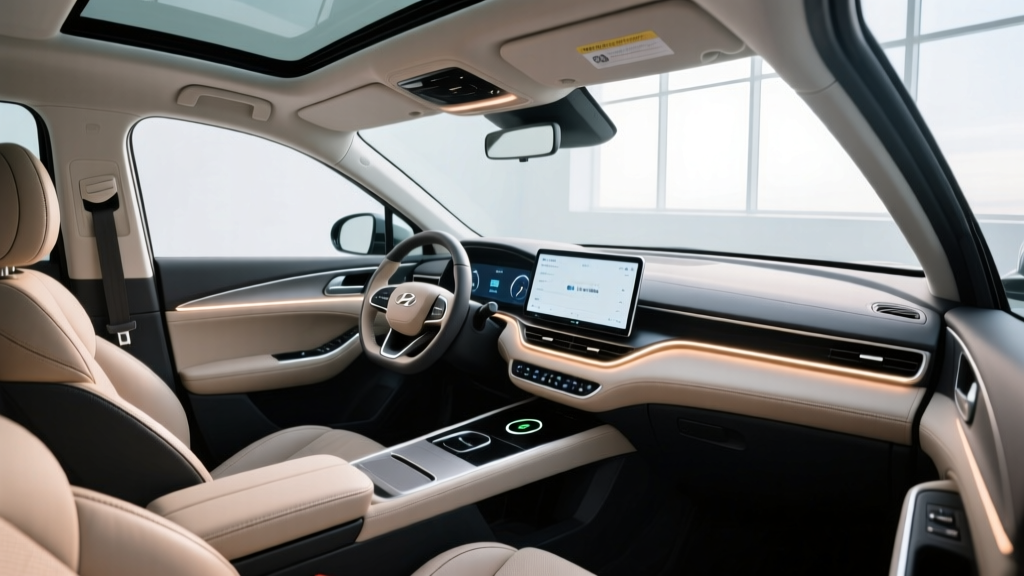
The refreshed Model Y (internally dubbed "Juniper") carries over the core powertrain architecture that made it America's best-selling EV while addressing some of the build-quality complaints that dragged Tesla's reliability score downward. The 2026 model adds a revised interior with ventilated seats, ambient lighting, power-folding second row, and a rear touchscreen — changes aimed directly at the fit-and-finish criticisms CR survey respondents cited most often.
But the powertrain story remains strong: excellent efficiency, access to the largest fast-charging network in North America, and over-the-air updates that continue to add features post-purchase. Whether the reliability improvements in the Juniper refresh are enough to move the needle in next year's CR study remains to be seen.
| Spec | Value |
|---|---|
| EPA Range | 320 miles |
| Battery (usable) | 78.1 kWh, NMC chemistry |
| Drivetrain | Dual-motor AWD |
| Horsepower | 384 hp (combined) |
| 0–60 mph | 4.8 seconds |
| Peak DC Fast Charge | 250 kW (CCS via adapter or native NACS) |
| 10–80% DC Charge Time | ~25 minutes |
| Level 2 Home Charging | 11.5 kW (~44 mi/hr) |
| EPA Efficiency | 111 MPGe combined / 29 kWh/100mi |
| Cargo Volume | 30.2 cu ft (rear seats up) / 72.1 cu ft (folded) |
| Frunk | 4.1 cu ft |
| Rear Legroom | 41.6 in |
| Battery Warranty | 8 years / 120,000 miles |
| Base MSRP | $44,990 (before destination) |
Range and Efficiency: EPA vs. the Real World
The 2026 Model Y Long Range AWD carries an EPA-estimated 320 miles of range. That number is competitive within the midsize electric SUV segment — the Hyundai Ioniq 5 posts 311 miles, the Ford Mustang Mach-E Extended Range AWD hits 290 miles — but EPA stickers don't tell the whole story.
EPA: 320 miles. Expect ~270–290 miles on highway road trips at 70–75 mph in mild weather. In sub-freezing winter conditions (20°F and below), plan for ~220–250 miles of usable range before needing to charge. The Model Y's heat pump helps, but cold-soak and cabin heating still draw 15–25% from the pack. City driving with frequent regen recovers closer to the EPA sticker or slightly above.
Tesla's efficiency remains a benchmark. At 29 kWh per 100 miles combined, the Model Y extracts more miles per kilowatt-hour than nearly every competing electric SUV. That efficiency translates directly to lower charging costs and less time at the plug — a practical advantage that compounds over years of ownership. According to fueleconomy.gov, the Model Y's combined MPGe of 111 outpaces the Mach-E (101 MPGe) and Ioniq 5 AWD (110 MPGe).
Charging Speed: DC Fast, Level 2, and the Supercharger Advantage
Charging is where the Tesla ecosystem continues to separate itself from the pack — not just in speed, but in infrastructure reliability.
| Charging Level | Power | Speed | Notes |
|---|---|---|---|
| Level 1 (120V) | ~1.4 kW | ~4–5 mi/hr | Emergency/trickle only |
| Level 2 (240V, 48A) | 11.5 kW | ~44 mi/hr | Full charge in ~7.5 hours |
| DC Fast (V3 Supercharger) | Peak 250 kW | 10–80% in ~25 min | Taper above 80% SoC |
| DC Fast (V4 Supercharger) | Peak 250 kW (vehicle-limited) | 10–80% in ~25 min | V4 stall hardware exceeds vehicle max |
| Non-Tesla DC (Electrify America, etc.) | Up to 250 kW via NACS | Varies by station | Native NACS port on 2026 models |
The Model Y's 250 kW peak DC charge rate isn't the fastest in the segment — Hyundai/Kia's E-GMP platform peaks at 350 kW on 800V architecture — but Tesla's charge curve is remarkably flat through the mid-range. Where some competitors spike to a headline number and taper sharply, the Model Y sustains near-peak power through roughly 50% SoC before gradually stepping down. The result: real-world 10–80% times are competitive with vehicles boasting higher peak numbers.
The bigger advantage is the Supercharger network. With over 6,500 stations and 65,000+ connectors in North America, Tesla owners experience dramatically fewer dead-station or broken-charger incidents than drivers relying on third-party networks. The 2026 Model Y uses a native NACS charge port, and while competing networks are adding NACS cables, CCS-adapter compatibility ensures backward access during the transition.
Performance and Driving Dynamics
The dual-motor AWD powertrain delivers 384 combined horsepower and a 4.8-second 0–60 mph time. That's brisk enough to merge confidently at any speed and satisfying in a way that makes gas-powered SUV comparisons feel antiquated. The instant torque delivery means real-world acceleration often feels quicker than the numbers suggest.
Ride quality on the Juniper refresh is noticeably improved. Tesla retuned the suspension and added acoustic glass, addressing two of the most common complaints from 2023–2024 owners. The result is a quieter, more compliant ride that still handles with the low center of gravity inherent to a skateboard battery platform. Steering remains quick and precise, though some drivers will find it overly assisted compared to the feedback-heavy steering in a BMW iX.
Regenerative braking is strong and consistent, enabling true one-pedal driving in most conditions. Tesla removed the driver-adjustable regen setting several model years ago, which still frustrates some new EV adopters who prefer a coasting mode.
Tax Credit, Pricing, and What You'll Actually Pay
The 2026 Model Y Long Range AWD starts at $44,990 (plus $1,390 destination). The Performance trim steps up to $48,990. Both fall under the IRS §30D MSRP cap of $80,000 for SUVs, making them potentially eligible for the full $7,500 federal tax credit — but eligibility is not automatic.
| Trim | MSRP (incl. dest.) | After $7,500 Credit | Effective Price |
|---|---|---|---|
| Long Range AWD | $46,380 | −$7,500 | $38,880* |
| Performance AWD | $50,380 | −$7,500 | $42,880* |
*Effective price assumes buyer meets all §30D requirements. Does not include state/local incentives or FSD/Autopilot add-ons.
- Income caps: AGI ≤ $150,000 (single), ≤ $225,000 (head of household), ≤ $300,000 (joint)
- MSRP cap: ≤ $80,000 for SUVs (Model Y qualifies)
- Battery sourcing: Must meet critical minerals and battery component requirements per IRS rules — verify current-year compliance at IRS.gov clean vehicle list
- Point-of-sale transfer: Eligible buyers can apply the $7,500 as an instant discount at the dealer, reducing the purchase price directly
- VIN verification: Confirm your specific vehicle's eligibility before signing — sourcing rules can change mid-year
As of early 2026, the Model Y appears on the IRS's list of qualifying vehicles, but battery component and critical mineral sourcing rules have tightened since the Inflation Reduction Act's phase-in. Always verify your specific VIN against the current IRS list before relying on the credit. Consult a tax professional if your situation involves AMT exposure or unusual income circumstances.
Interior, Tech, and the Reliability Question
The Juniper interior refresh directly targets the build-quality complaints that contributed to Tesla's last-place reliability ranking. The 2026 cabin features:
- 15.4-inch front touchscreen (slightly larger than prior generation)
- 8-inch rear touchscreen for passengers
- Ventilated front seats (previously a frequent omission vs. competitors)
- Power-folding second-row seats
- Ambient lighting strip across the dashboard
- Improved acoustic laminated glass on all windows
- Updated materials with soft-touch surfaces replacing hard plastics on door uppers
On the tech front, Tesla's infotainment remains the industry benchmark for responsiveness and integration. Navigation with real-time Supercharger routing, over-the-air updates that add features quarterly, and a mobile app with remote climate/preconditioning control set the standard competitors are still chasing.
However, the minimalist approach continues to polarize. There are no physical buttons for climate, mirror adjustment, or glovebox release — everything routes through the touchscreen. For reliability purposes, this means fewer mechanical switches to break, but it also means a single screen failure disables most vehicle controls.
Tesla Autopilot and FSD (Supervised) are SAE Level 2 driver-assistance systems. The driver must remain fully engaged, hands on or near the wheel, and eyes on the road at all times. Despite the "Full Self-Driving" branding, Tesla's system does not meet SAE Level 3 or Level 4 autonomy. Only services like Waymo operate at Level 4 in geofenced areas. Treat FSD as an advanced cruise-and-lane-keep system — nothing more.
What Consumer Reports' Reliability Score Actually Measures
Understanding why Tesla scored last in Consumer Reports' long-term reliability study requires looking at what CR's survey actually captures. The predicted reliability score aggregates owner-reported problems across 20 trouble areas, including:
- Build quality (panel gaps, paint defects, trim rattles)
- Climate system performance and noise
- Infotainment screen responsiveness and failures
- Suspension and steering components
- Drive motor and battery issues
- Door handles, window seals, and glass
- Electrical system glitches
Tesla's low score is driven disproportionately by body integrity, paint, and interior trim complaints — not by catastrophic powertrain failures. The electric drive units and battery packs have proven remarkably durable in high-mileage examples, with many Model S and Model 3 vehicles exceeding 150,000 miles on original drivetrains.
The nuance matters: CR's methodology weights a squeaky dashboard panel the same as a failed motor. For many buyers, a rattle is an annoyance; a dead powertrain is a crisis. Tesla's powertrain reliability is solid — it's the surrounding sheet metal, trim, and electronics integration that drags the score down.
The 2026 Juniper refresh addresses several of these specific trouble areas with updated interior materials, improved assembly processes at the Fremont and Austin plants, and redesigned climate system components. Whether these changes will materially improve next year's CR prediction won't be clear until sufficient owner data accumulates.
Warranty Coverage and Long-Term Battery Outlook
| Coverage Area | Term |
|---|---|
| Basic Vehicle | 4 years / 50,000 miles |
| Battery & Drive Unit | 8 years / 120,000 miles (70% minimum capacity retention) |
| Roadside Assistance | 4 years / 50,000 miles |
The 8-year/120,000-mile battery warranty guarantees at least 70% capacity retention — meaning Tesla will repair or replace the pack if it degrades below that threshold within the warranty period. In practice, Tesla's NMC packs in the Model Y have shown degradation curves of roughly 5–8% loss over the first 50,000 miles, then flattening to approximately 1–2% per year thereafter. High-mileage data from fleet operators suggests most Model Y packs will retain 80–85% capacity at 150,000 miles under normal use.
The 4-year/50,000-mile basic warranty is shorter than Hyundai's 5-year/60,000-mile bumper-to-bumper coverage, which is worth noting given the build-quality concerns flagged by Consumer Reports. If a trim piece rattles or a window seal leaks at 55,000 miles, you're paying out of pocket.
Pros, Cons, and Who Should Buy the Model Y
- Class-leading efficiency (29 kWh/100mi)
- Access to Supercharger network — most reliable in North America
- Spacious cargo area (72.1 cu ft with seats folded)
- Strong real-world range with 320 mi EPA
- Over-the-air updates add features continuously
- Qualifies for $7,500 federal tax credit (verify VIN)
- Improved ride quality and cabin quietness in Juniper refresh
- Last-place Consumer Reports predicted reliability
- 250 kW peak DC charge rate trails 800V competitors
- No physical buttons — everything through the touchscreen
- Basic warranty shorter than Hyundai/Kia (4yr vs 5yr)
- FSD (Supervised) costs extra and remains Level 2 only
- Rear visibility limited without camera reliance
- Build-quality inconsistency still reported by some owners
- Daily commuters who can charge at home and want minimal fuel costs
- Families needing 72+ cu ft of cargo space with five-passenger seating
- Road-trip enthusiasts who value Supercharger network coverage over peak charge speed
- Tech-forward buyers who prefer OTA updates and app integration over traditional dealership service
Consider alternatives if: You prioritize proven build quality (look at Hyundai Ioniq 5 or BMW iX), need 350 kW charging capability, or require hands-free Level 2+ driving on highways (GM's Super Cruise on the Cadillac Lyriq offers eyes-off capability on mapped roads).
Frequently Asked Questions
What is the real-world range of the 2026 Tesla Model Y?
The EPA rates it at 320 miles. In real-world highway driving at 70–75 mph in mild weather, expect 270–290 miles. In cold weather (below 20°F), plan for 220–250 miles. City driving with regenerative braking often returns numbers close to or slightly above the EPA sticker.
How fast does the Model Y charge at home and on the road?
At home on a Level 2 (240V, 48A) connection, the Model Y charges at 11.5 kW, adding roughly 44 miles of range per hour — a full charge takes about 7.5 hours. On a V3 or V4 Supercharger, it peaks at 250 kW DC and charges from 10% to 80% in approximately 25 minutes. Charging slows significantly above 80% SoC to protect battery health.
How much does the 2026 Model Y cost after the federal tax credit?
The Long Range AWD starts at $46,380 including destination. With the full $7,500 §30D credit applied at point of sale, the effective price drops to approximately $38,880. Eligibility depends on buyer income (≤$300,000 joint AGI), vehicle MSRP (under $80,000 SUV cap), and current battery-sourcing compliance. Always verify your VIN on the IRS qualifying vehicle list before purchase.
Is the Model Y worth buying despite Tesla's last-place reliability score?
It depends on what you prioritize. The reliability score is driven heavily by cosmetic and trim complaints — panel gaps, paint imperfections, interior rattles — rather than powertrain failures. The electric motors and battery have proven durable. If you value charging infrastructure, efficiency, cargo space, and tech integration above flawless build quality, the Model Y remains compelling. If fit-and-finish is a top priority, test-drive the Hyundai Ioniq 5 or Kia EV6 alongside it.
Does the 2026 Model Y qualify for the $7,500 federal EV tax credit?
As of early 2026, yes — the Model Y appears on the IRS list of qualifying clean vehicles. However, eligibility depends on your specific VIN meeting current battery component and critical mineral sourcing requirements, your adjusted gross income falling below IRS caps, and the vehicle's MSRP staying under the $80,000 SUV threshold. Rules can change mid-year, so verify at IRS.gov before committing.
How does the Model Y compare to the Hyundai Ioniq 5 and Ford Mustang Mach-E?
The Model Y leads in efficiency (29 kWh/100mi vs. 30–32 for competitors), real-world charging network access, and cargo volume. The Ioniq 5 charges faster at 800V stations (350 kW peak, 10–80% in ~18 min) and has a longer basic warranty (5yr/60k). The Mach-E offers a more traditional interior layout with physical controls. All three are strong choices — the decision hinges on whether you prioritize charging ecosystem (Tesla), charge speed and warranty (Hyundai), or conventional ergonomics (Ford).