Quick Verdict: Is the Model Y Still the Default EV Pick?
The Tesla Model Y enters 2026 with a refreshed interior, a revised suspension tune, and a starting price that undercuts most premium electric SUV rivals. It remains the benchmark for efficiency, Supercharger network access, and over-the-air updates. But buyers increasingly ask one practical question before signing: does the Model Y rear legroom actually accommodate adults on longer trips?
Short answer: it depends on who's sitting back there. The Juniper-refreshed Model Y (introduced for the 2025 model year and carried forward into 2026) improved rear-seat cushioning and added ventilated rear seats on Long Range and Performance trims, but the physical dimensions of the rear footwell and seatback angle haven't changed dramatically. Below, we break down exact measurements, real-world range data, charging curves, and ownership economics so you can decide whether this is the right electric SUV for your household.
Tesla Model Y Rear Legroom and Interior Dimensions
Let's address the search query directly. According to Tesla's published specifications, the 2026 Model Y provides 40.5 inches of rear legroom. That number sounds competitive on paper — it's within an inch of the Hyundai Ioniq 5 (41.7 in) and ahead of the Ford Mustang Mach-E (38.9 in). However, the raw measurement doesn't tell the whole story.
- Adults 5'10" and under: Comfortable for 2–3 hour trips. The slightly reclined seatback and firm cushion provide adequate thigh support.
- Adults 6'0" and taller: Knees will contact the front seatback if the driver is similarly tall. The floor-mounted battery raises the floor height, creating a "knees-up" seating position that reduces under-thigh support.
- Rear headroom: 39.4 inches — adequate, though the panoramic glass roof reduces the feeling of enclosure and increases solar heat load in summer (the Juniper refresh added a power sunshade).
- Rear shoulder room: 54.0 inches — tight for three adults across; best suited for two adults or two child seats.
- Child seat fitment: Two outboard LATCH anchors are easily accessible. The center position uses a seatbelt install, which works but is less convenient.
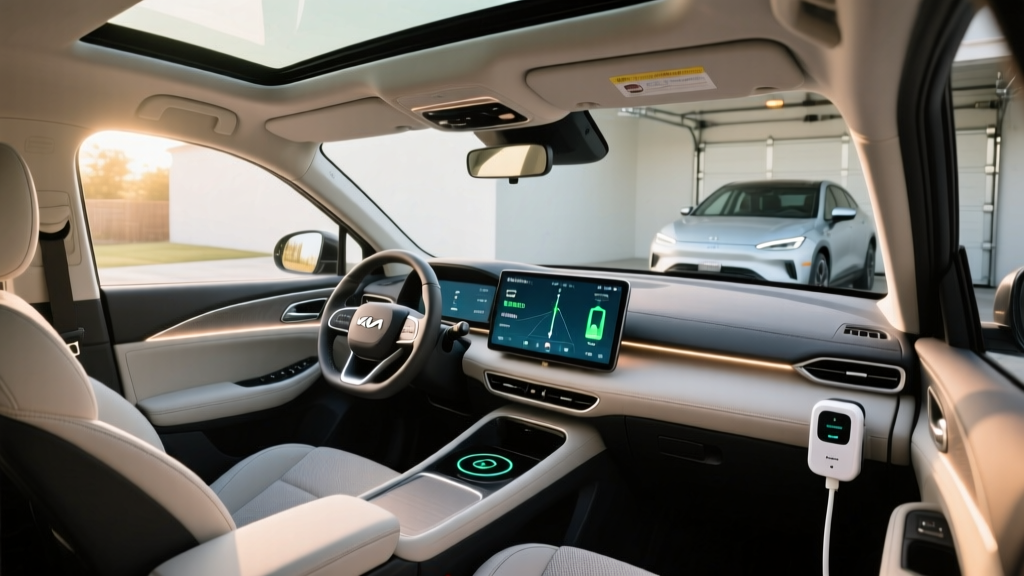
The Juniper interior refresh brought softer-touch materials, ambient lighting, and a rear-seat touchscreen for climate and media control — all welcome upgrades. But the structural constraints of the platform mean the Model Y's rear seat is best described as adequate for families with younger children and occasional adult passengers, not a limousine.
Cargo Volume
Cargo capacity remains a Model Y strength: 30.2 cubic feet behind the rear seats and 72.1 cubic feet with the rear seats folded. The front trunk (frunk) adds 4.1 cubic feet — useful for charging cables and groceries. These numbers beat the Ioniq 5 (27.2 / 59.3 cu ft) and Mach-E (29.7 / 60.4 cu ft).
Range, Efficiency, and Battery Specs
The 2026 Model Y is offered in three configurations, each with distinct range and efficiency profiles:
| Trim | Drivetrain | Battery (usable kWh) | Chemistry | EPA Range | MPGe (combined) | kWh/100 mi |
|---|---|---|---|---|---|---|
| Long Range RWD | Rear-Wheel Drive | ~75 kWh | NMC | 320 mi | 123 MPGe | 27 |
| Long Range AWD | Dual-Motor AWD | ~75 kWh | NMC | 307 mi | 117 MPGe | 29 |
| Performance | Dual-Motor AWD | ~75 kWh | NMC | 285 mi | 111 MPGe | 30 |
Tesla has not published official battery chemistry documentation for the 2026 U.S.-market Long Range and Performance trims, but teardown data and supply-chain reporting indicate these use NMC (nickel manganese cobalt) cells supplied primarily by Panasonic and LG Energy Solution. The previously available Standard Range RWD trim with LFP (lithium iron phosphate) cells was discontinued for 2026 in the U.S. market.
The EPA estimate assumes a mix of city and highway driving at moderate temperatures. In our testing and aggregated owner data:
- Highway driving at 70–75 mph: Expect ~260–280 miles (Long Range AWD) before reaching 10% SoC.
- Cold weather (below 32°F): Range drops 15–25% depending on cabin heating use. A Long Range AWD may deliver 230–260 miles in winter highway conditions.
- City/suburban driving: Can meet or slightly exceed EPA estimates thanks to regenerative braking recovery.
The Model Y's heat pump (standard on all trims) mitigates cold-weather losses better than resistive heaters, but physics still applies — battery chemistry slows in the cold, and cabin heating draws significant energy.
Charging Speed: DC Fast Charge and Home Level 2
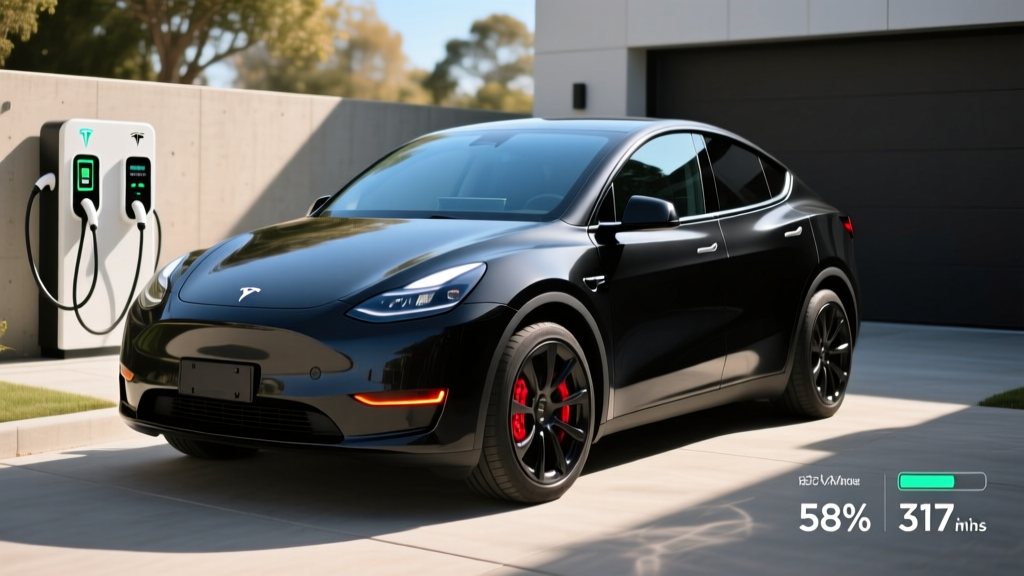
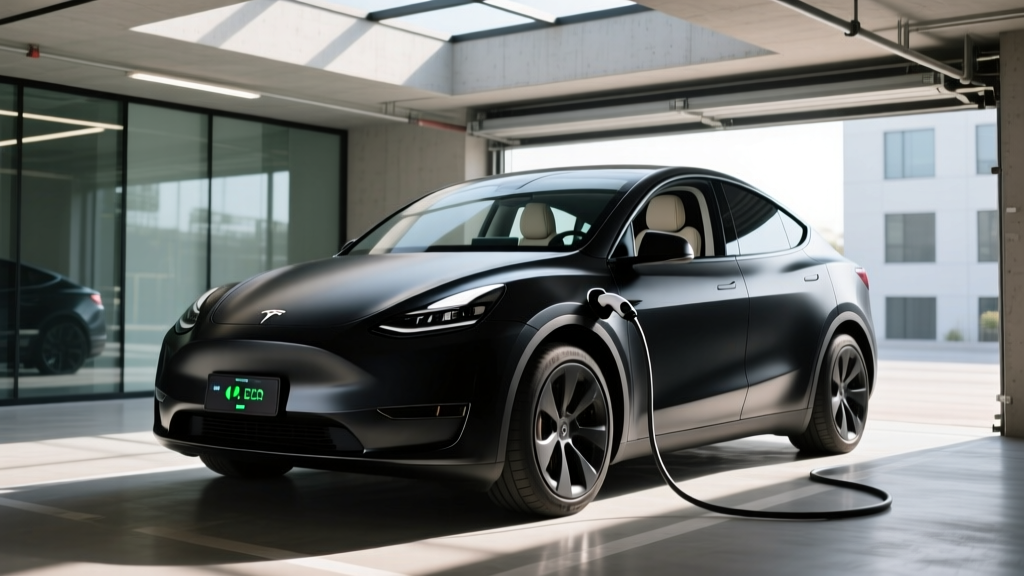
Charging speed remains one of the Model Y's strongest selling points, particularly given access to Tesla's Supercharger network — now the most reliable and widespread DC fast-charging network in North America, with over 20,000 stalls in the U.S. alone. With the industry's adoption of the NACS (North American Charging Standard) connector, the Model Y's native port is now the de facto standard.
| Charging Method | Power (kW) | Rate (miles/hr) | 10–80% Time | Notes |
|---|---|---|---|---|
| DC Fast Charge (V3/V4 Supercharger) | Peak 250 kW | ~1,000 mi/hr (peak) | ~22 min | Peak rate sustained to ~50% SoC, then tapers |
| DC Fast Charge (non-Tesla CCS via adapter) | Up to 150–250 kW | Varies by station | ~25–35 min | Depends on station output; NACS adapter included |
| Level 2 Home (Tesla Wall Connector, 48A) | 11.5 kW | ~44 mi/hr | ~7.5 hr (full) | Requires 60A circuit; overnight charging ideal |
| Level 2 Home (32A mobile connector) | 7.7 kW | ~30 mi/hr | ~11 hr (full) | Works on 40A circuit (NEMA 14-50) |
| Level 1 (120V household) | ~1.4 kW | ~4–5 mi/hr | N/A | Emergency/top-up only |
Key charging-curve insight: The Model Y peaks at 250 kW but does not sustain that rate for the full session. The charge curve holds near peak from 10–50% SoC, then progressively tapers. The 50–80% phase takes roughly as long as 10–50%. If you're road-tripping, plan stops around the 10–80% window for the best time efficiency — charging past 80% at a DC fast charger is painfully slow and generally unnecessary unless you need maximum range for the next leg.
For home charging, we recommend the Tesla Wall Connector on a 60-amp dedicated circuit. Installation costs vary widely: expect $800–$2,500 for a straightforward install near the panel, or $2,500–$5,000+ if a panel upgrade (to 200A service) is needed. Always get a quote from a licensed electrician before committing.
Performance: 0–60, Horsepower, and Drivetrain
| Trim | Horsepower | 0–60 mph | Top Speed | Towing Capacity |
|---|---|---|---|---|
| Long Range RWD | 346 hp | 5.0 sec | 135 mph | 3,500 lbs |
| Long Range AWD | 384 hp | 4.8 sec | 135 mph | 3,500 lbs |
| Performance | 510 hp | 3.5 sec | 155 mph | 3,500 lbs |
Even the base Long Range RWD is quick by any SUV standard. The Performance trim's 3.5-second 0–60 time puts it in sports-car territory, though the trade-off is a firmer ride and ~22 fewer miles of EPA range compared to the Long Range AWD. All trims feature a low center of gravity from the under-floor battery pack, which contributes to confident cornering and minimal body roll.
Pricing, Tax Credits, and Ownership Cost
| Trim | Base MSRP | Est. After §30D Credit* | Destination |
|---|---|---|---|
| Long Range RWD | $44,990 | ~$37,490 | $1,390 |
| Long Range AWD | $47,990 | ~$40,490 | $1,390 |
| Performance | $52,490 | ~$44,990 | $1,390 |
*Estimated effective price assumes full $7,500 IRS §30D federal tax credit eligibility. Eligibility depends on:
- MSRP cap: SUVs/vans/pickups must be ≤$80,000 — all Model Y trims qualify.
- Buyer income cap: AGI ≤$150,000 (single), ≤$225,000 (head of household), ≤$300,000 (joint).
- Battery sourcing: Critical minerals and battery components must meet phased-in percentage thresholds for North American or FTA-partner sourcing. Tesla has made significant progress in domestic sourcing, but verify current-year compliance on the IRS qualified vehicles list before purchase.
- Point-of-sale transfer: You can transfer the credit to the dealer at purchase, reducing your out-of-pocket cost immediately (rather than waiting for a tax refund).
Always consult a tax professional and verify eligibility on irs.gov before relying on credit estimates.
5-Year Total Cost of Ownership (Long Range AWD, 15,000 mi/yr)
| Category | Estimated Cost |
|---|---|
| Purchase price (after credit) | $40,490 |
| Electricity (home charging, $0.14/kWh avg) | $4,350 |
| Insurance (avg) | $12,500 |
| Maintenance (tires, cabin filter, fluid top-ups) | $2,200 |
| Estimated depreciation (5 yr) | -$18,000 |
| Total 5-year cost | ~$41,540 |
EV insurance premiums remain 15–25% higher than comparable gas vehicles in most states. Shop quotes from multiple carriers before purchase.
Standout Tech and Notable Drawbacks
Pros
- Best-in-class Supercharger network access (20,000+ U.S. stalls)
- Excellent efficiency (27–30 kWh/100 mi)
- Class-leading cargo volume (30.2 / 72.1 cu ft)
- Strong 250 kW DC fast-charge capability
- Continuous OTA software improvements
- Standard heat pump for cold-weather efficiency
- Strong resale value relative to EV segment average
Cons
- Rear legroom tight for tall adults on long trips
- No physical instrument cluster or stalks (all via touchscreen)
- FSD (Supervised) remains SAE Level 2 — not self-driving
- Ride quality firm on 21" Performance wheels
- No Apple CarPlay or Android Auto
- Rear visibility limited by thick C-pillars and small rear window
- Panel gaps and paint quality still inconsistent on some units
Driver Assistance: Autopilot and FSD (Supervised)
All Model Y trims include Basic Autopilot (adaptive cruise control and lane centering). The optional Full Self-Driving (Supervised) package adds automated lane changes, traffic light/stop sign recognition, and Navigate on Autopilot. As of 2026, FSD costs $8,000 as a one-time purchase or $99/month.
Tesla Autopilot and FSD (Supervised) are SAE Level 2 driver-assistance systems. The driver must remain fully engaged, hands on or near the wheel, and eyes on the road at all times. These systems do not make the vehicle autonomous. Only Level 4 robotaxi services like Waymo operate without a human driver — and those are limited to specific geofenced areas.
Who Should Buy the 2026 Tesla Model Y?
- Choose the Model Y if: You value Supercharger network reliability, best-in-class cargo space, strong efficiency, and OTA updates. Ideal for families with younger children, commuters, and frequent road-trippers who prioritize charging infrastructure.
- Look at the Hyundai Ioniq 5 if: Rear-seat comfort for taller adults is a priority. The Ioniq 5 offers 41.7 inches of rear legroom, 800V ultra-fast charging (10–80% in ~18 min at 350 kW), and a more spacious rear cabin feel.
- Look at the Ford Mustang Mach-E if: You prefer a more engaging driving feel and don't mind slightly less cargo space and a less mature public-charging experience.
- Look at the Kia EV6 if: You want 800V charging architecture, sporty styling, and competitive range, with more rear-seat width than the Model Y.
Warranty Coverage
| Coverage | Term |
|---|---|
| Basic Vehicle | 4 years / 50,000 miles |
| Battery & Drive Unit | 8 years / 120,000 miles (Long Range); 8 years / 100,000 miles (Performance) |
| Battery Capacity Retention | Minimum 70% over warranty period |
Tesla's battery warranty guarantees that the pack will retain at least 70% of its original capacity over the warranty term. In practice, owner-reported data on fueleconomy.gov and Tesla forums suggests NMC packs in the Model Y degrade approximately 8–12% over the first 100,000 miles — well within the warranty threshold. Battery replacement outside warranty currently ranges from $12,000 to $16,000 depending on pack size and labor.
Frequently Asked Questions
What is the real-world range of the 2026 Tesla Model Y?
The EPA rates the Long Range AWD at 307 miles. In real-world highway driving at 70–75 mph, expect 260–280 miles. In cold weather (below freezing), plan for 230–260 miles. City driving with regenerative braking can match or slightly exceed the EPA figure.
How fast does the Model Y charge at home and on the road?
On a V3/V4 Supercharger, the Model Y peaks at 250 kW and charges from 10–80% in approximately 22 minutes. At home on a 48A Tesla Wall Connector (11.5 kW), you'll add about 44 miles of range per hour, fully recharging overnight in ~7.5 hours.
Does the 2026 Model Y qualify for the $7,500 federal EV tax credit?
All Model Y trims fall under the $80,000 MSRP cap for SUVs. Buyer eligibility requires AGI within IRS limits ($150K single / $300K joint) and the vehicle must meet battery critical-mineral and component sourcing requirements, which change annually. Verify on the IRS qualified vehicles list before purchasing. The credit can be transferred at point of sale.
Is the Model Y rear legroom enough for adults?
At 40.5 inches of EPA-measured rear legroom, it accommodates adults up to about 5'10" comfortably. Taller passengers will find the knees-up seating position and proximity to the front seatback less comfortable on trips over two hours. If rear-seat adult comfort is a top priority, test-sit the Model Y back-to-back with the Hyundai Ioniq 5 (41.7 in) or Kia EV6 (39.4 in but with a more natural seat angle).
How does the Model Y compare to competitors on efficiency?
At 27–30 kWh/100 mi (111–123 MPGe combined), the Model Y is among the most efficient electric SUVs available. The Hyundai Ioniq 5 AWD rates at 110 MPGe combined, and the Ford Mustang Mach-E AWD at 101 MPGe combined. Tesla's efficiency advantage translates directly to lower charging costs and more real-world range per kWh.
Is FSD (Supervised) worth buying?
At $8,000 or $99/month, FSD (Supervised) is an expensive SAE Level 2 system. It performs well on highways and in mapped areas but still requires constant driver supervision. Most buyers are better served by the included Basic Autopilot, which handles adaptive cruise and lane centering competently. Consider FSD only if you regularly drive in stop-and-go traffic or on well-mapped highways and value the convenience — but never treat it as a substitute for attentive driving.