The Tesla Model Y remains the most popular Tesla model by a wide margin, and for good reason. It occupies the sweet spot where crossover utility, long range, fast charging, and access to the Supercharger network converge into a package that works for commuters and road-trippers alike. But popularity doesn't automatically mean it's the right EV for you. This review dissects the 2026 Tesla Model Y with the exact numbers, real-world caveats, and ownership economics you need to decide.
Why the Model Y Dominates Tesla's Lineup
The Model Y accounts for the majority of Tesla's global deliveries year after year. It shares the same platform DNA as the Model 3 sedan but adds hatchback cargo versatility, higher seating position, and optional third-row seating. For buyers cross-shopping the Hyundai Ioniq 5, Ford Mustang Mach-E, or Kia EV6, the Model Y's combination of efficiency and Supercharger infrastructure access remains a formidable draw.
For 2026, Tesla continues to offer the Model Y in Long Range AWD and Performance trims, with the base rear-wheel-drive variant available in select markets. The Juniper refresh introduced a quieter cabin, redesigned interior lighting, rear-seat ventilation, and a refreshed front and rear fascia — addressing many of the comfort complaints that plagued the pre-2025 model.
Range, Battery, and Real-World Efficiency
| Spec | Long Range AWD | Performance |
|---|---|---|
| EPA Range | 310 miles | 285 miles |
| Battery (usable) | ~75 kWh, NMC | ~75 kWh, NMC |
| Drivetrain | Dual-Motor AWD | Dual-Motor AWD |
| Horsepower | ~384 hp | ~456 hp |
| 0–60 mph | 4.8 sec | 3.5 sec |
| EPA Efficiency | 111 MPGe (28 kWh/100mi) | 103 MPGe (31 kWh/100mi) |
| Max DC Fast Charge | 250 kW | 250 kW |
| 10–80% DC Time | ~27 min | ~27 min |
| Level 2 Home Charge | 11.5 kW (~44 mi/hr) | 11.5 kW (~44 mi/hr) |
| Cargo (rear seats up) | 30.2 cu ft | 30.2 cu ft |
| Cargo (rear seats folded) | 72.1 cu ft | 72.1 cu ft |
| Rear Legroom | 41.6 in | 41.6 in |
| Battery Warranty | 8 yr / 120,000 mi | 8 yr / 120,000 mi |
| Base MSRP | $47,990 | $52,990 |
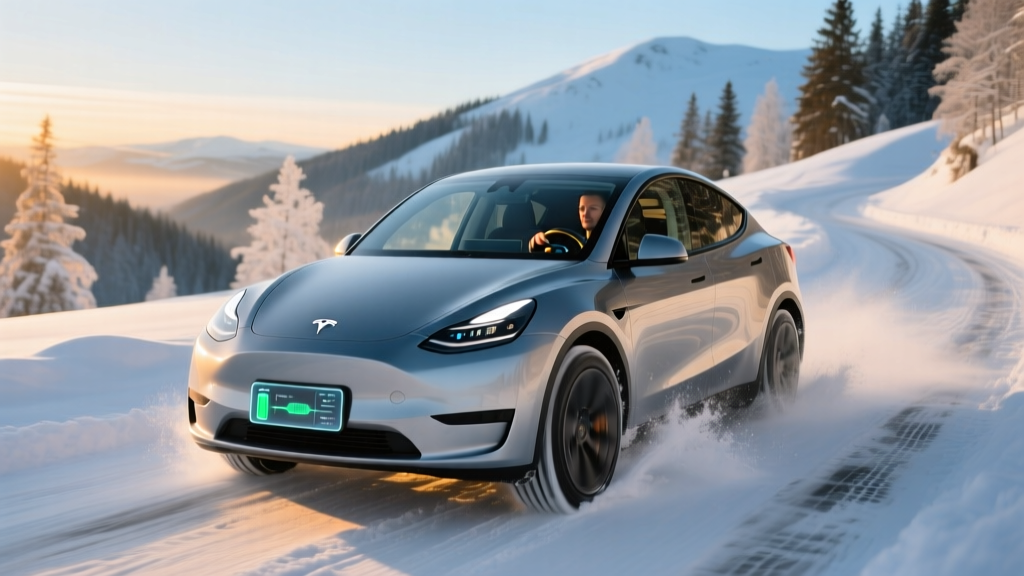
The EPA rates the Model Y Long Range AWD at 310 miles. In real-world highway driving at 70–75 mph, expect approximately 250–275 miles depending on temperature, elevation, and wind. In cold weather (below 32°F), range can drop an additional 15–30% due to battery resistance and cabin heating demands — potentially yielding as little as 200–220 miles on a full charge in deep winter conditions. City driving with regenerative braking can match or slightly exceed the EPA figure.
The Model Y's NMC (nickel manganese cobalt) battery chemistry prioritizes energy density over the LFP (lithium iron phosphate) chemistry found in some standard-range Tesla vehicles. NMC gives you more miles per kilogram but degrades slightly faster over time. Tesla recommends charging NMC batteries to 80% for daily use and 100% only before long trips — a practice that meaningfully extends long-term battery health.
According to fueleconomy.gov, the Long Range AWD achieves 111 MPGe combined (28 kWh per 100 miles), making it one of the most efficient AWD crossovers in its class. The Performance trim drops to 103 MPGe due to stickier tires, sport tuning, and a more aggressive powertrain calibration.
Charging Speed: DC Fast and Home Level 2
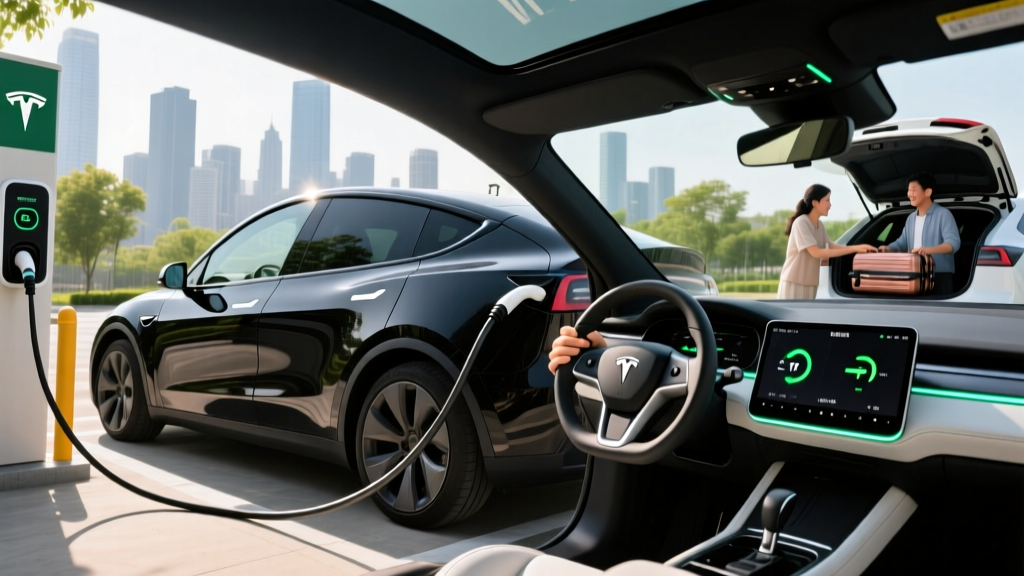
Charging speed is where the Model Y's Supercharger network advantage becomes tangible. The vehicle peaks at 250 kW on V3 Superchargers and compatible CCS/NACS DC fast chargers. However, like all EVs, it doesn't sustain peak power throughout the session.
| Charging Level | Power | Miles Added per Hour | Notes |
|---|---|---|---|
| Level 1 (120V outlet) | ~1.4 kW | ~3–5 mi/hr | Emergency/trickle only |
| Level 2 (240V, Wall Connector) | 11.5 kW | ~44 mi/hr | Full charge in ~7 hrs |
| DC Fast (V3 Supercharger) | Peak 250 kW | ~162 mi in 15 min | Tapers above 60% SoC |
| DC Fast (10–80%) | Avg ~110 kW sustained | — | ~27 minutes total |
Understanding the charge curve: The Model Y pulls its maximum 250 kW only when the battery is warm (preconditioned) and between roughly 10–35% state of charge. From 35–60%, expect around 150–170 kW. Above 60%, the rate tapers significantly to protect cell longevity, dropping below 50 kW past 80%. This is why Tesla's navigation system automatically preconditions the battery when a Supercharger is your destination — arriving with a cold battery can cut peak charge rates in half.
For home charging, Tesla's Gen 3 Wall Connector on a 60-amp circuit delivers the full 11.5 kW (48 amps continuous), replenishing a depleted battery in roughly 7 hours. Most owners who charge overnight never visit a public charger for daily needs. A licensed electrician will typically need to install a NEMA 14-60 outlet or hardwire the Wall Connector — budget $500–$2,000 for installation depending on your panel capacity and run distance.
Pricing, Trims, and Federal Tax Credit Eligibility
The 2026 Tesla Model Y Long Range AWD starts at $47,990 (including destination), while the Performance trim begins at $52,990. Both trims fall under the IRS §30D federal tax credit MSRP cap of $80,000 for SUVs, but eligibility is far from automatic.
| Trim | Base MSRP | Federal Credit (§30D) | Effective Price (if eligible) |
|---|---|---|---|
| Long Range AWD | $47,990 | Up to $7,500 | ~$40,490 |
| Performance | $52,990 | Up to $7,500 | ~$45,490 |
Here's what determines whether you actually receive the credit, per IRS guidelines:
- Income caps: Modified adjusted gross income (MAGI) must not exceed $300,000 for joint filers, $225,000 for heads of household, or $150,000 for single filers.
- MSRP cap: The vehicle's manufacturer-suggested retail price must be ≤ $80,000 for SUVs (both Model Y trims qualify).
- Battery sourcing: A percentage of critical minerals and battery components must be sourced from the U.S. or free-trade-agreement partners. This requirement has tightened annually, and eligibility can shift mid-year. Tesla provides a credit-eligibility indicator on its checkout page.
- Point-of-sale transfer: As of 2024, buyers can transfer the credit to the dealer at purchase, reducing the upfront cost rather than waiting for a tax refund. Tesla supports this at delivery.
Important: Battery-sourcing requirements are subject to change. Always verify current eligibility on fueleconomy.gov before ordering, as a vehicle that qualified in January may not qualify in June of the same year. Consult a tax professional for your specific situation.
Tech, Driver Assistance, and Interior
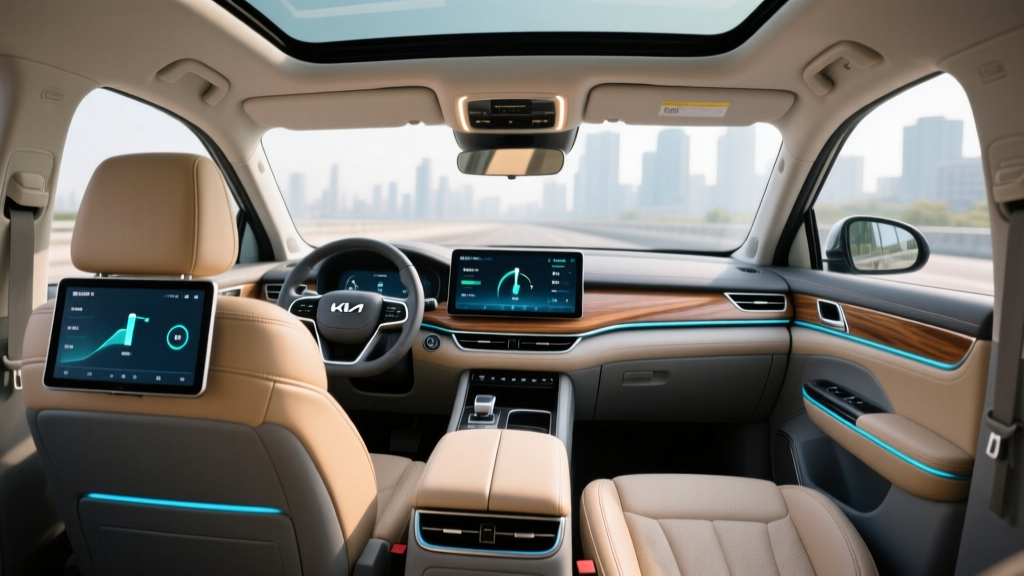
The Model Y's 15.4-inch center touchscreen controls virtually every vehicle function — climate, mirrors, glovebox, and drive settings. The Juniper refresh added a rear 8-inch screen for passengers, ambient lighting, ventilated front seats, and acoustic glass that noticeably reduces road noise compared to pre-2025 models.
Autopilot and Full Self-Driving (FSD): Every Model Y ships with basic Autopilot (traffic-aware cruise control and lane centering). The FSD (Supervised) package, currently priced at $8,000 or $99/month, adds automatic lane changes, navigate-on-autopilot, traffic light recognition, and city-street routing.
Tesla Autopilot and FSD (Supervised) are SAE Level 2 driver-assistance systems. The driver must remain fully attentive, keep hands on the wheel, and be prepared to take over at any moment. These systems are not self-driving. Only Level 4 services like Waymo operate without a human driver in defined areas.
The infotainment system supports Netflix, YouTube, Spotify, and arcade games while parked. Notably, Apple CarPlay and Android Auto are not supported — Tesla's proprietary system is the only interface. This is a dealbreaker for some buyers accustomed to phone-mirroring their navigation and music.
Who the Model Y Suits Best
The Model Y is engineered for a specific buyer profile, and it excels when your needs align:
- Daily commuters with home charging who want minimal operating costs (~$0.04–$0.08 per mile on residential electricity vs. $0.12–$0.18 for gas).
- Small families needing car-seat-friendly rear doors and 30+ cu ft of cargo space without stepping up to a larger, less efficient vehicle.
- Road-trip enthusiasts who value Supercharger network reliability (20+ minute charging stops every 2–3 hours).
- Tech-forward buyers comfortable with touchscreen-centric controls and over-the-air updates.
It's a weaker fit for those who need to tow more than 3,500 lbs, require third-row seating for adults (the optional third row fits only small children), or prefer physical buttons and Apple CarPlay integration.
Pros
- Best-in-class efficiency (28 kWh/100mi for AWD crossover)
- Supercharger network: 60,000+ stalls globally, high reliability
- 310-mile EPA range covers most road-trip segments comfortably
- Strong cargo versatility (72 cu ft with seats folded)
- Over-the-air updates add features post-purchase
- Low operating cost vs. gas crossover competitors
Cons
- No Apple CarPlay or Android Auto support
- Touchscreen-only controls frustrate some drivers
- NMC battery requires 80% daily charge limit discipline
- FSD (Supervised) is expensive and still Level 2
- Ride quality firm on 20-inch wheels
- Insurance premiums run 15–30% higher than comparable gas crossovers
Model Y vs. Key Competitors
The crossover EV segment is crowded. Here's how the Model Y stacks up on the metrics that matter:
| Metric | Tesla Model Y LR | Hyundai Ioniq 5 | Ford Mustang Mach-E ER | Kia EV6 GT-Line |
|---|---|---|---|---|
| EPA Range | 310 mi | 310 mi | 305 mi | 310 mi |
| Peak DC Charge | 250 kW | 350 kW | 150 kW | 350 kW |
| 10–80% DC Time | ~27 min | ~18 min | ~45 min | ~18 min |
| Cargo (seats up) | 30.2 cu ft | 27.2 cu ft | 29.7 cu ft | 24.4 cu ft |
| Starting MSRP | $47,990 | $46,950 | $48,995 | $49,900 |
| Charging Network | Supercharger (native) | NACS (Supercharger access) | NACS (Supercharger access) | NACS (Supercharger access) |
The Ioniq 5 and EV6 charge faster on paper (350 kW peak on 800V architecture), but Tesla's Supercharger network still delivers the most consistent real-world experience in terms of stall availability and plug-and-charge simplicity. Hyundai and Kia now have NACS ports granting Supercharger access, narrowing Tesla's infrastructure moat.
Frequently Asked Questions
What is the real-world range of the Tesla Model Y?
The EPA rates the Long Range AWD at 310 miles. In real-world highway driving at 70–75 mph, expect 250–275 miles. In cold weather below freezing, range can drop to 200–220 miles. City driving with regenerative braking can match or slightly exceed the EPA number.
How fast does the Model Y charge at home and on the road?
On a Level 2 home charger (11.5 kW), the Model Y adds approximately 44 miles of range per hour, fully charging in about 7 hours. On a V3 Supercharger, it peaks at 250 kW and charges from 10–80% in approximately 27 minutes, though charge speed tapers significantly above 60% state of charge.
How much does the Model Y cost after the federal tax credit?
If you qualify for the full $7,500 §30D credit, the Long Range AWD drops from $47,990 to approximately $40,490. Eligibility depends on your income (≤$300K joint, ≤$150K single), the vehicle's battery-sourcing compliance, and MSRP caps. Always verify on fueleconomy.gov before purchasing, as sourcing rules change.
Is the Tesla Model Y worth buying vs. the Ioniq 5 or Mach-E?
The Model Y offers the best cargo space (30.2 cu ft seats up) and the most mature Supercharger network experience. The Ioniq 5 and EV6 charge faster (18 min 10–80% on 350 kW chargers). The Mach-E has fallen behind on charging speed. If you road-trip frequently and value infrastructure reliability, the Model Y retains an edge. If you prioritize fastest possible charging stops and CarPlay support, the Ioniq 5 is compelling.
Does the Model Y qualify for the $7,500 federal EV tax credit?
Both the Long Range and Performance trims fall under the $80,000 MSRP cap for SUVs. However, you must also meet income limits ($150K single / $300K joint) and the vehicle must satisfy critical-mineral and battery-component sourcing requirements that tighten annually. Tesla indicates credit eligibility on its order page, and you can transfer the credit at point of sale. Confirm current status at irs.gov.
What's the battery warranty on the Model Y?
Tesla covers the Model Y's battery and drive unit for 8 years or 120,000 miles (whichever comes first), with a minimum 70% capacity retention guarantee over that period. Real-world data from high-mileage owners suggests NMC degradation typically levels off at 8–12% loss after 100,000 miles when following the 80% daily charge recommendation.
Is Tesla's FSD actually self-driving?
No. FSD (Supervised) is an SAE Level 2 driver-assistance system. You must remain fully attentive, keep your hands on the wheel, and be prepared to intervene at any time. It can navigate city streets, handle traffic lights, and change lanes on highways, but it is not autonomous. Tesla's naming has drawn criticism from NHTSA and safety advocates for potentially overstating capability.
Final Verdict: Still the Default EV Crossover
The 2026 Tesla Model Y earns its status as the most popular Tesla model through a combination of efficiency, practicality, and infrastructure that no single competitor has fully matched. Its 310-mile EPA range, 250 kW fast-charging capability, and 30+ cu ft of cargo space make it the default answer for "which EV should I buy?" — provided you accept the touchscreen-only interface, forgo Apple CarPlay, and commit to NMC battery care discipline.
For buyers who can charge at home and whose road trips align with Supercharger spacing, the Model Y Long Range AWD at roughly $40,500 after the federal credit (if eligible) remains the crossover EV to beat. If you prioritize ultra-fast charging over network reliability, test-drive the Ioniq 5 or EV6 before committing. Either way, the Model Y's dominance of the segment is no accident — it's the product of getting the fundamentals right.