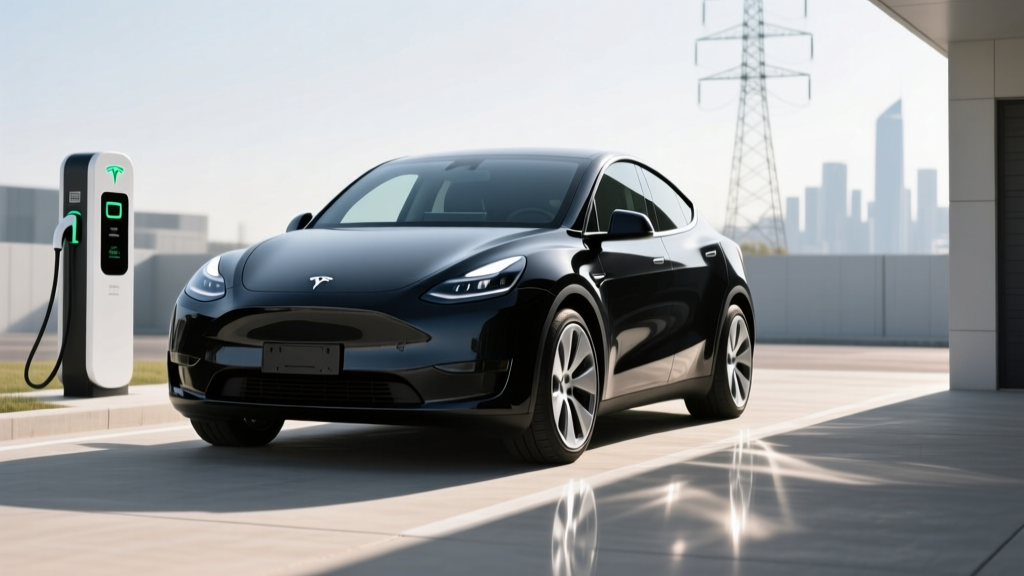
News that a key Tesla Model Y program manager has departed the company has sent ripples through EV forums and investor circles alike. For shoppers eyeing a 2026 Model Y, the headline raises an immediate question: does leadership turnover change the vehicle sitting on the lot today? The short answer is no — the current-generation Model Y (internally dubbed "Juniper") remains Tesla's best-selling EV globally, with EPA-rated range up to 320 miles, a starting price around $44,990, and access to the most mature Supercharger network in North America. What follows is a data-driven review of the 2026 Model Y to help you decide whether to buy now or wait for whatever comes next.
Why the Tesla Model Y Program Manager Exit Matters (And Why It Doesn't)
Program managers at Tesla oversee the lifecycle of a vehicle from pre-production through mid-cycle refreshes and cost-reduction engineering. When a senior PM exits, it can signal upcoming changes in manufacturing processes, supply chain shifts, or simply normal career rotation. Tesla has not announced any delay or cancellation of the current Model Y lineup, and production continues at Gigafactory Texas and Gigafactory Shanghai for global markets.
For buyers, the practical takeaway is straightforward: the 2026 Model Y you can order today reflects the Juniper refresh that debuted in early 2025, featuring a revised exterior, ventilated front seats, ambient lighting, a rear touchscreen for passengers, and improved suspension tuning. Any future refresh — potentially a "Model Y Long Range Plus" or structural battery pack update — would be announced separately and is not currently available for purchase.
2026 Tesla Model Y Specifications at a Glance
| Spec | Long Range AWD | Performance AWD | Rear-Wheel Drive (Std Range) |
|---|---|---|---|
| EPA Range | 320 mi | 295 mi | 260 mi |
| Battery (Usable, Est.) | ~75 kWh (NMC) | ~75 kWh (NMC) | ~60 kWh (LFP) |
| Drivetrain | Dual-Motor AWD | Dual-Motor AWD | RWD |
| 0-60 mph | 4.8 sec | 3.5 sec | 6.6 sec |
| Horsepower | 384 hp | 456 hp | 295 hp |
| MPGe (Combined) | 122 MPGe | 111 MPGe | 128 MPGe |
| kWh/100 mi | 28 kWh | 30 kWh | 26 kWh |
| Base MSRP | $48,990 | $52,990 | $44,990 |
Charging Speed: DC Fast Charge and Home Level 2
The 2026 Model Y supports the North American Charging Standard (NACS) natively — no adapter needed for Tesla Superchargers or the growing number of NACS-equipped third-party networks like Electrify America and ChargePoint.
| Charging Level | Power / Rate | Speed / Time |
|---|---|---|
| DC Fast Charge (Peak) | 250 kW | 10–80% in ~25 min |
| DC Fast Charge (Sustained Avg) | ~160 kW | 10–80% real-world ~28–32 min |
| Level 2 (Home, 48A / 11.5 kW) | 11.5 kW | ~44 mi/hr added |
| Level 2 (Mobile Connector, 32A) | 7.7 kW | ~30 mi/hr added |
| Level 1 (120V, 12A) | 1.4 kW | ~5 mi/hr added |
Peak 250 kW is achieved only between approximately 10–30% state of charge (SoC) on a V3 Supercharger with a preconditioned battery. Above 50%, the charge curve tapers significantly — expect roughly 60–80 kW from 50–80%. This means total 10–80% time is closer to 28–32 minutes in real-world conditions, not the often-cited "15 minutes" marketing figure.
For home charging, a 48-amp Wall Connector on a 60-amp circuit adds roughly 44 miles per hour of charging, fully replenishing the Long Range in about 7–8 hours overnight. Installation typically costs $500–$2,000 depending on panel proximity and local permitting (Tesla Wall Connector details). If your home has a 200-amp electrical panel with spare capacity, installation is straightforward; older 100-amp panels may require an upgrade ($1,500–$3,500).
Pricing, Trims, and Federal Tax Credit Eligibility
As of the 2026 model year, the Model Y is offered in three configurations:
- Rear-Wheel Drive (Standard Range): $44,990 MSRP
- Long Range AWD: $48,990 MSRP
- Performance AWD: $52,990 MSRP
All trims fall under the IRS §30D MSRP cap of $80,000 for SUVs, making them potentially eligible for the up-to-$7,500 federal tax credit. However, eligibility depends on multiple factors that change frequently:
- Buyer income caps: AGI ≤ $150,000 (single), $225,000 (head of household), $300,000 (joint)
- Battery sourcing requirements: Critical minerals and battery components must meet phased-in percentage thresholds from US/FTA countries
- Point-of-sale transfer: The credit can be applied at purchase to reduce the effective price, rather than claimed on your tax return
As of early 2026, the Model Y Long Range AWD typically qualifies for $3,750–$7,500 depending on the specific battery cell sourcing in your vehicle's production batch. Tesla's website and the IRS's official Clean Vehicle Credits page should be checked at time of purchase, as component sourcing can shift quarter to quarter.
MSRP: $48,990
Estimated §30D credit: $3,750–$7,500
Effective price after credit: $41,490–$45,240
Destination fee: $1,390 (add to both figures)
Interior, Cargo, and Tech Features
The Juniper-refreshed Model Y interior is noticeably quieter than pre-2025 versions, with acoustic glass and revised door seals reducing highway noise by an estimated 2–3 dB. Front seats are now ventilated (previously a common complaint), and rear passengers get an 8-inch touchscreen for climate and media control.
Cargo volume remains a strong suit:
- Behind second row: 30.2 cu ft
- Second row folded: 72.1 cu ft
- Front trunk (frunk): 4.1 cu ft
- Rear legroom: 41.6 inches
- Front headroom: 41.0 inches
The 15.4-inch center touchscreen runs Tesla's latest software with native integration for trip planning, Supercharger routing, and battery preconditioning. Autopilot (basic lane-keeping and adaptive cruise) is standard. Full Self-Driving (Supervised) remains an $8,000 add-on or $99/month subscription — and it is critical to understand this is SAE Level 2 driver assistance, not autonomous driving. You must remain attentive with hands on the wheel at all times.
Warranty and Battery Longevity
Tesla's warranty coverage for the 2026 Model Y:
- Basic vehicle: 4 years / 50,000 miles
- Battery & drive unit (Long Range/Performance): 8 years / 120,000 miles, whichever comes first, with minimum 70% capacity retention
- Battery & drive unit (RWD/LFP): 8 years / 100,000 miles, minimum 70% retention
The LFP (lithium iron phosphate) battery in the RWD model trades some energy density for longer cycle life and the ability to charge to 100% regularly without accelerated degradation — a practical advantage for daily commuters. The NMC (nickel manganese cobalt) packs in Long Range and Performance trims offer more range but benefit from daily charging limits of 80–90% for optimal longevity.
Real-world degradation data from Tesla's fleet suggests approximately 10–12% capacity loss over 150,000 miles for NMC packs and 8–10% for LFP, based on aggregated fleet data published in Tesla's annual impact report. Out-of-warranty battery replacement currently costs $12,000–$16,000 depending on the pack, though this is rarely needed within the first decade of ownership.
Pros, Cons, and Who Should Buy
- Access to 6,000+ Tesla Superchargers — the most reliable DC fast-charging network in the US
- Class-leading cargo volume (72.1 cu ft) for a compact EV SUV
- Over-the-air updates continue to add features years after purchase
- Strong resale value relative to non-Tesla EVs
- LFP option (RWD) allows daily 100% charging without degradation concerns
- No Apple CarPlay or Android Auto — Tesla-only infotainment ecosystem
- FSD (Supervised) remains Level 2 despite the "self-driving" name — $8,000 for what competitors offer for $1,500–$2,500
- Ride quality, while improved, is still firmer than rivals like the Hyundai Ioniq 5 or Kia EV6
- Rear visibility is limited; relies heavily on cameras
- Tax credit amount varies by production batch — not guaranteed at $7,500
Best for: Families and commuters who prioritize Supercharger network access, cargo versatility, and software-driven features. The Long Range AWD suits road-trippers covering 300+ miles between stops. The RWD/LFP model is ideal for daily commuters under 150 miles round-trip who can charge at home every night.
Consider alternatives if: You need Apple CarPlay (Hyundai Ioniq 5, Ford Mustang Mach-E), prefer a softer ride (Kia EV6), or need 3-row seating (Kia EV9, Tesla Model X).
2026 Tesla Model Y FAQ
What is the real-world range of the 2026 Tesla Model Y?
The Long Range AWD is EPA-rated at 320 miles, but expect 270–290 miles on highway trips at 75 mph and 225–255 miles in sub-freezing temperatures. The RWD model delivers approximately 220–240 real-world highway miles from its 260-mile EPA rating.
How fast does the Model Y charge at home and on road trips?
At a V3 Supercharger, the Long Range peaks at 250 kW and charges 10–80% in roughly 28–32 minutes accounting for taper. At home on a 48-amp Level 2 Wall Connector, it adds ~44 miles per hour, fully charging overnight in 7–8 hours.
Does the 2026 Model Y qualify for the $7,500 federal EV tax credit?
It may qualify for $3,750–$7,500 depending on battery component sourcing in your specific vehicle, plus your income must fall under IRS §30D caps ($150K single / $300K joint). Check the IRS Clean Vehicle Credits page and Tesla's order page at time of purchase for current eligibility.
Is the Model Y worth buying vs the Hyundai Ioniq 5 or Ford Mustang Mach-E?
The Model Y wins on Supercharger access, cargo space, and software integration. The Ioniq 5 offers faster 10–80% charging (~18 min at 350 kW), Apple CarPlay, and a more comfortable ride. The Mach-E offers CarPlay and a more traditional interior. If Supercharger reliability is your priority, the Model Y remains the default choice.
Will the program manager exit delay future Model Y updates?
There is no indication from Tesla that any announced update or refresh has been delayed. The current Juniper-generation Model Y is in full production. Any future variant would be announced through official Tesla channels and is not currently available for order.
What battery chemistry does the Model Y use?
The RWD (Standard Range) uses an LFP (lithium iron phosphate) battery — heavier but longer-lasting and safe for daily 100% charges. The Long Range and Performance trims use NMC (nickel manganese cobalt) for higher energy density, best kept at 80–90% for daily use.