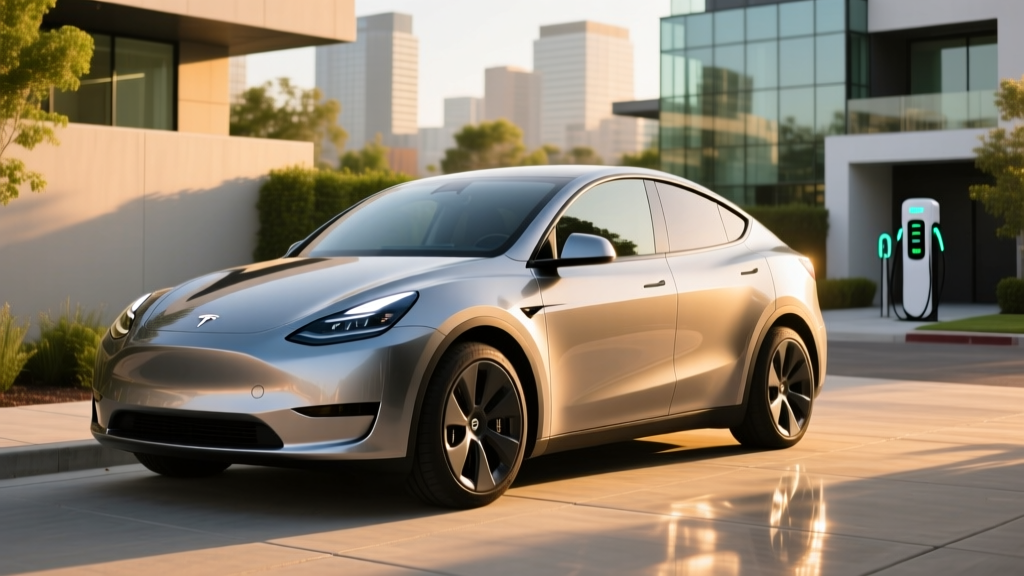
The Tesla Model Y in 2026: Pricing Context and Current Position
The Tesla Model Y has undergone one of the most volatile pricing trajectories in automotive history. From its 2020 launch at $52,990 for a Long Range AWD to today's 2026 lineup starting at $44,990, the crossover's sticker price has swung by over $15,000 in either direction depending on the quarter. Understanding this pricing history is essential for buyers evaluating whether a 2026 Model Y represents genuine value or if waiting for the next price adjustment makes sense.
Tesla's direct-to-consumer model means prices change without traditional model-year fanfare. A buyer who purchased in early 2023 paid roughly $65,990 for a Long Range — nearly $21,000 more than the same trim costs today after Tesla's aggressive 2023–2024 cuts and subsequent stabilization. This article maps that journey, then grounds the analysis in the 2026 Model Y's real-world specs, charging performance, and ownership economics.
Tesla Model Y Pricing History: Year-by-Year Breakdown
| Year | Trim | Launch MSRP | Year-End / Adjusted MSRP | Key Pricing Event |
|---|---|---|---|---|
| 2020 | Long Range AWD | $52,990 | $49,990 | Launch; Performance variant at $60,990 |
| 2021 | Long Range AWD | $49,990 | $58,990 | Multiple price hikes; supply constraints |
| 2022 | Long Range AWD | $58,990 | $65,990 | Peak pricing; waitlists over 6 months |
| 2023 | Long Range AWD | $65,990 | $47,740 | Massive Jan 2023 price cut (~$13,000 drop) |
| 2024 | Long Range AWD | $48,990 | $47,990 | Stabilization; Juniper refresh announced |
| 2025 | Long Range AWD (Juniper) | $46,990 | $45,990 | Refreshed interior/exterior; HW5 computer |
| 2026 | Long Range AWD | $44,990 | $44,990 (current) | Further $1,000 cut; competitive pressure |
The 2023 price correction was the defining moment. Tesla slashed prices across its lineup in January 2023, partly to qualify more vehicles for the revised IRS §30D federal tax credit and partly to defend market share against the Hyundai Ioniq 5, Ford Mustang Mach-E, and incoming Rivian R2. The Model Y Long Range dropped from $65,990 to roughly $52,990 overnight, then continued falling through 2024–2025.
For 2026, the base Rear-Wheel Drive starts at $39,990, the Long Range AWD at $44,990, and the Performance AWD at $49,990 — all before destination fees ($1,390) and any incentives.
2026 Tesla Model Y: Full Spec Sheet
| Specification | RWD | Long Range AWD | Performance AWD |
|---|---|---|---|
| EPA Range | 310 mi | 340 mi | 300 mi |
| Battery (usable) | 60 kWh (LFP) | 78 kWh (NMC) | 78 kWh (NMC) |
| Drivetrain | Rear-Wheel Drive | Dual-Motor AWD | Dual-Motor AWD |
| Horsepower | 295 hp | 384 hp | 456 hp |
| 0–60 mph | 6.5 sec | 4.8 sec | 3.5 sec |
| Max DC Fast Charge | 170 kW | 250 kW | 250 kW |
| 10–80% DC Time | ~28 min | ~22 min | ~22 min |
| Level 2 Home Charge | 32 mi/hr (11.5 kW) | 44 mi/hr (11.5 kW) | 44 mi/hr (11.5 kW) |
| MPGe (combined) | 133 MPGe | 122 MPGe | 115 MPGe |
| Efficiency | 25 kWh/100 mi | 28 kWh/100 mi | 30 kWh/100 mi |
| Base MSRP | $39,990 | $44,990 | $49,990 |
| Cargo (behind 2nd row) | 76 cu ft (seats folded); 30 cu ft (seats up) | ||
| Front Legroom | 41.8 in | ||
| Rear Legroom | 38.4 in | ||
| Battery Warranty | 8 yr / 120,000 mi (Long Range/Perf); 8 yr / 100,000 mi (RWD) | ||
Data sourced from fueleconomy.gov and Tesla's official 2026 specifications page.
Real-World Range: What the EPA Sticker Doesn't Tell You
EPA rated: 340 miles
Real-world highway (70–75 mph, moderate temps): ~280–300 miles
Real-world cold weather (below 32°F, highway): ~220–250 miles
Real-world city/mixed (mild temps, regen active): ~310–330 miles
The 2026 Model Y Long Range AWD carries a 78 kWh usable NMC battery. Tesla's thermal management system is among the best in the industry, using a heat pump as standard to reduce cold-weather cabin heating draw. However, NMC chemistry loses roughly 15–20% accessible capacity in sub-freezing conditions, and highway speeds above 70 mph increase aerodynamic drag exponentially.
The RWD variant uses a 60 kWh LFP (lithium iron phosphate) battery. LFP cells are heavier and less energy-dense, which is why the RWD's range is lower despite being more efficient per mile. The trade-off: LFP batteries degrade more slowly over time and can be charged to 100% daily without accelerating wear — a significant advantage for commuters who charge at home nightly.
Charging Performance: DC Fast, Level 2, and the Charge Curve Reality
| Charging Level | Power / Rate | Miles Added per Hour | Notes |
|---|---|---|---|
| Level 1 (120V household) | 1.4 kW | ~4–5 mi/hr | Emergency/trickle only; 60+ hrs for full charge |
| Level 2 (240V home, 48A) | 11.5 kW | 32–44 mi/hr | Full charge overnight in ~7–9 hours |
| DC Fast (Long Range/Perf) | 250 kW peak | ~162 mi in 15 min | Peak sustained to ~50% SoC, then tapers |
| DC Fast (RWD) | 170 kW peak | ~120 mi in 15 min | LFP chemistry limits peak charge rate |
The headline 250 kW figure on Long Range and Performance trims is a peak, not a sustained rate. In real-world testing, the Model Y holds approximately 220–250 kW from 10% to roughly 45% State of Charge, then tapers to ~150 kW through 65%, and drops below 80 kW above 80%. The 10–80% time of ~22 minutes assumes a V3 or V4 Supercharger with battery preconditioning active — navigating to a Supercharger in the car's navigation triggers this automatically.
The RWD's LFP battery caps at 170 kW. If your routine involves frequent road trips, the Long Range's faster charging and larger battery make a meaningful difference: on a 600-mile drive, the LR requires roughly two 20-minute stops versus three 25-minute stops in the RWD.
For home charging, a 48-amp Level 2 wall connector on a 60-amp circuit delivers the full 11.5 kW, adding roughly 44 miles per hour of charging on AWD models. Expect to pay $800–$1,500 for a licensed electrician to install a NEMA 14-50 outlet or hardwired Wall Connector, depending on panel proximity and whether a service upgrade is needed.
Federal Tax Credit and Total Cost After Incentives
- MSRP cap: SUVs/crossovers must be ≤$80,000 — all Model Y trims qualify ✓
- Income cap: AGI ≤$150,000 (single) / ≤$300,000 (joint) / ≤$225,000 (head of household) ✓
- Battery sourcing: Critical minerals and battery component requirements phase in annually; the Model Y's US-assembled battery pack has met sourcing thresholds since late 2024 ✓
- Point-of-sale transfer: Eligible buyers can apply the credit as an immediate price reduction at delivery, not a tax-year refund
- Credit amount: Up to $7,500 if both critical-mineral AND battery-component requirements are met; partial $3,750 if only one is satisfied
Verify current eligibility at irs.gov before purchasing — sourcing rules tighten annually.
| Trim | MSRP | Destination | Max §30D Credit | Effective Price (if eligible) |
|---|---|---|---|---|
| RWD | $39,990 | $1,390 | –$7,500 | $33,880 |
| Long Range AWD | $44,990 | $1,390 | –$7,500 | $38,880 |
| Performance AWD | $49,990 | $1,390 | –$7,500 | $43,880 |
At $33,880 effective for the RWD, the Model Y undercuts nearly every competing electric crossover on price-per-mile-of-range. However, buyers earning above the AGI thresholds receive no federal credit, making the Long Range's out-of-pocket cost $46,380 — still competitive, but narrowing the gap against the Hyundai Ioniq 5 ($42,500 base) and Chevrolet Equinox EV ($33,600 base).
Tech, Interior, and Driver Assistance
The 2026 Model Y (post-Juniper refresh) features a 15.4-inch center touchscreen running Tesla's latest infotainment OS, a rear 8-inch passenger display, ventilated front seats, ambient lighting, and power-folding second-row seats. The minimalist interior has improved material quality over pre-2025 models, with soft-touch surfaces replacing the hard plastics critics flagged in earlier years.
Autopilot and FSD (Supervised): Every Model Y ships with basic Autopilot (traffic-aware cruise control + lane centering). Full Self-Driving (Supervised) remains an $8,000 option or $99/month subscription. FSD adds automatic lane changes, traffic-light recognition, and city-street navigation — but it is SAE Level 2, meaning the driver must remain fully engaged with hands on or near the wheel and eyes on the road at all times. Tesla's naming is aspirational; this is not autonomous driving.
Pros, Cons, and Who Should Buy the 2026 Model Y
Pros
- Best-in-class Supercharger network access (20,000+ stalls in North America)
- Industry-leading efficiency: 25–30 kWh/100 mi depending on trim
- Over-the-air updates continuously add features
- LFP battery on RWD allows daily 100% charging with minimal degradation
- Strong resale value relative to non-Tesla EVs
- 76 cu ft cargo space with seats folded — practical for families
- Heat pump standard — reduces cold-weather range loss vs. resistive heating
Cons
- No Apple CarPlay or Android Auto — Tesla's ecosystem is closed
- Ride quality is firm; road noise noticeable on coarse pavement
- Panel gaps and paint quality still inconsistent on some deliveries
- FSD ($8,000) remains Level 2 — expensive for what it delivers
- Service center wait times can exceed 2 weeks in metro areas
- Insurance premiums 15–30% higher than comparable gas crossovers
- Single-screen interface requires menu diving for climate/seat controls
Best for: Tech-forward commuters and young families who can charge at home, want Supercharger access for road trips, and value software-driven features. The Long Range AWD at $44,990 is the sweet spot — 340 EPA miles, dual-motor traction, and the fastest charging in the lineup.
Consider alternatives if: You need Apple CarPlay, prefer a traditional dealership service experience, drive in areas with sparse Supercharger coverage, or want a softer, quieter ride (the Hyundai Ioniq 5 and Kia EV6 are notably quieter on highway).
Frequently Asked Questions
What is the real-world range of the 2026 Tesla Model Y?
The Long Range AWD is EPA-rated at 340 miles. Expect 280–300 miles at highway speeds in mild weather, 220–250 miles in cold conditions below freezing, and 310–330 miles in city/mixed driving where regenerative braking recovers energy. The RWD's 310-mile EPA rating translates to roughly 250–270 miles highway and 200–220 miles in cold weather.
How fast does the Model Y charge at home and on the road?
On a 250 kW V3/V4 Supercharger, the Long Range and Performance trims charge from 10–80% in approximately 22 minutes, though the rate tapers significantly above 80%. At home on a 48-amp Level 2 charger, expect 32–44 miles of range added per hour, fully replenishing the battery overnight in 7–9 hours. The RWD's LFP battery peaks at 170 kW DC, adding roughly 120 miles in 15 minutes.
Does the 2026 Model Y qualify for the $7,500 federal tax credit?
As of 2026, the Model Y qualifies for the full $7,500 §30D credit for buyers meeting IRS income caps (≤$150K single / ≤$300K joint). The vehicle's MSRP is well under the $80,000 SUV cap, and Tesla's US battery assembly meets current critical-mineral and component sourcing thresholds. The credit can be applied at point of sale as an immediate price reduction. Always verify current rules at irs.gov, as sourcing requirements tighten annually.
Is the Model Y still worth buying vs. competitors in 2026?
The Model Y remains the benchmark for efficiency, charging infrastructure access, and software integration. Against the Hyundai Ioniq 5 (slightly more comfortable, 800V charging, CarPlay support), Kia EV6 (sportier handling, similar range), and Ford Mustang Mach-E (more traditional interior), the Model Y wins on Supercharger network reliability and resale value. It loses on ride comfort, infotainment openness, and service accessibility. If home charging and Supercharger proximity are available to you, the Model Y Long Range at $44,990 (or $38,880 after credit) is a compelling default choice.
What is the battery warranty on the 2026 Model Y?
Tesla covers the Long Range and Performance battery and drive unit for 8 years or 120,000 miles, whichever comes first, with a minimum 70% capacity retention guarantee. The RWD's LFP battery is covered for 8 years or 100,000 miles under the same retention threshold. Real-world degradation data from Tesla's fleet suggests most Model Y batteries retain 85–90% capacity at 100,000 miles, with LFP packs showing even slower fade curves.