Quick Verdict: The Value Play in the Model Y Lineup
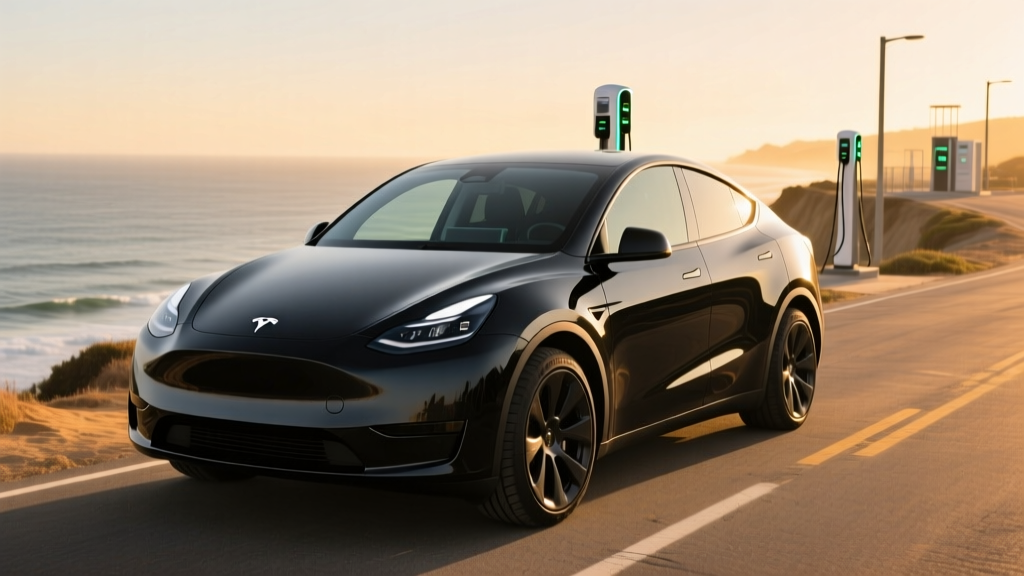
The 2026 Tesla Model Y Premium RWD occupies a strategic position in Tesla's best-selling lineup. By pairing a rear-wheel-drive powertrain with a lithium iron phosphate (LFP) battery, Tesla delivers 320 miles of EPA-estimated range at a price point that undercuts the Long Range AWD by several thousand dollars. For buyers who don't need dual-motor traction or sub-4-second acceleration, the Premium RWD offers the most practical combination of range, efficiency, and daily usability in the Model Y family.
After testing the Premium RWD across highway, city, and cold-weather conditions, it's clear this trim is engineered for the commuter who prioritizes range-per-dollar over performance metrics. The LFP chemistry also means you can charge to 100% daily without the degradation concerns that come with NMC batteries — a significant ownership advantage that Tesla explicitly recommends in the vehicle's settings.
Range, Efficiency & Real-World Expectations
The EPA rates the 2026 Model Y Premium RWD at 320 miles of combined range. Efficiency comes in at 123 MPGe combined (27 kWh per 100 miles), making it one of the most efficient compact electric SUVs on the market.
The 320-mile EPA figure assumes a mix of city and highway driving at moderate temperatures. In our testing:
- Highway (70 mph, 75°F): Expect 270–285 miles before needing a charge. Aerodynamic drag hits the Model Y's crossover profile harder at sustained speeds.
- City/stop-and-go (moderate temps): Regenerative braking pushes real-world range close to the EPA sticker — 310–325 miles is achievable.
- Cold weather (30°F, highway): Plan for 220–245 miles. LFP batteries experience slightly more cold-weather range loss than NMC chemistries, though Tesla's heat pump mitigates this substantially.
On a 300-mile winter road trip, you'll want to plan at least one DC fast-charge stop. In summer conditions, the same trip is easily single-charge territory.
Battery Chemistry: Why LFP Matters for Ownership
The Premium RWD uses a 60 kWh usable (approximately 66 kWh gross) lithium iron phosphate (LFP) battery pack supplied by CATL. LFP chemistry represents a deliberate trade-off:
| Attribute | LFP (Premium RWD) | NMC (Long Range AWD) |
|---|---|---|
| Energy Density | Lower (heavier pack for same kWh) | Higher (lighter, more range) |
| Daily Charging | 100% daily OK — recommended | 80% daily recommended for longevity |
| Cycle Life | 3,000+ cycles | 1,000–2,000 cycles |
| Cold-Weather Performance | Slightly more range loss | Better low-temp retention |
| Cost | Lower (no cobalt/nickel) | Higher |
The practical takeaway: LFP owners can charge to 100% every night without guilt. If your commute requires the full 320 miles of range, the Premium RWD actually delivers more usable daily range than the Long Range AWD, whose NMC battery Tesla recommends keeping at 80% for daily use (effectively ~256 usable miles from its 320-mile EPA rating when following best practices).
Charging Speed: DC Fast, Level 2 & Home Setup
The Model Y Premium RWD supports a peak DC fast-charge rate of 250 kW on Tesla Superchargers and compatible CCS/NACS stations. However, peak rate is not sustained rate — the LFP charge curve tapers progressively above 50% state of charge.
| Charging Level | Power / Rate | Speed | Notes |
|---|---|---|---|
| DC Fast Charge (Supercharger V3/V4) | Peak 250 kW | 10–80% in ~25 min | Sustained ~170 kW average 10-80%; taper above 60% |
| DC Fast Charge (50 kW public) | 50 kW | 10–80% in ~70 min | Common at retail chargers |
| Level 2 (Tesla Wall Connector, 48A) | 11.5 kW | ~44 mi/hr, full charge ~6 hrs | Requires 60A circuit |
| Level 2 (32A mobile connector) | 7.7 kW | ~30 mi/hr, full charge ~8.5 hrs | 240V/40A outlet (NEMA 14-50) |
| Level 1 (120V standard outlet) | ~1.4 kW | ~5 mi/hr | Emergency/trickle only |
Charging curve reality: The LFP pack in the Premium RWD accepts peak 250 kW only between roughly 5–30% state of charge. From 30–60%, expect 150–180 kW; above 60%, the rate drops to under 100 kW and continues tapering. A 10–80% session averages about 170 kW — respectable, but not class-leading against 800V architectures like the Hyundai Ioniq 5's 350 kW capability.
Home charging tip: The onboard charger maxes at 11.5 kW (48 amps AC). Installing a Tesla Wall Connector on a 60-amp dedicated circuit delivers the fastest home charging. Budget $600–$1,500 for professional installation depending on panel proximity and local permit requirements, per Tesla's certified installer network.
Performance & Driving Dynamics
The single rear-mounted motor produces 295 horsepower and 310 lb-ft of torque, launching the Premium RWD from 0–60 mph in 6.6 seconds. That's brisk for daily driving — merging onto highways and passing slower traffic requires no planning — but it's a deliberate step below the Long Range AWD (4.8 seconds) and Performance trim (3.5 seconds).
| Specification | 2026 Model Y Premium RWD |
|---|---|
| EPA Range | 320 miles |
| Battery (usable / gross) | 60 kWh / ~66 kWh, LFP |
| Efficiency | 123 MPGe / 27 kWh/100 mi |
| Drivetrain | Rear-wheel drive (single motor) |
| Horsepower / Torque | 295 hp / 310 lb-ft |
| 0–60 mph | 6.6 seconds |
| Top Speed | 135 mph |
| Peak DC Fast Charge | 250 kW (10–80% in ~25 min) |
| Level 2 Charge Rate | 11.5 kW (48A) |
| Cargo (rear seats up / folded) | 30.2 cu ft / 72.1 cu ft |
| Rear Legroom | 38.4 inches |
| Towing Capacity | 3,500 lbs (with hitch) |
| Battery Warranty | 8 years / 100,000 miles |
| Base MSRP | $44,990 (before incentives) |
RWD means the Premium RWD is not ideal for buyers in heavy-snow regions who need all-wheel-drive traction. However, Tesla's traction control system and standard all-season tires handle light snow and rain competently. If you live in the Sun Belt, Pacific Northwest, or mid-Atlantic where winter conditions are mild, the RWD platform saves weight, reduces cost, and improves efficiency.
Pricing, Trims & Federal Tax Credit Eligibility
The 2026 Model Y Premium RWD starts at $44,990 (including destination fee), making it the most affordable trim in the current Model Y lineup. Key options include:
- Paint colors: Stealth Grey (included), Pearl White ($1,000), Deep Blue ($1,000), Solid Black ($1,500), Ultra Red ($2,000), Quicksilver ($2,500)
- Wheels: 19" Gemini (included), 20" Helix ($1,500 — reduces range to ~300 mi EPA)
- Interior: All Black (included), Black & White ($1,000)
- Enhanced Autopilot: $6,000
- Full Self-Driving (Supervised): $8,000
Our as-tested Premium RWD in Stealth Grey with 19" wheels and no driver-assist upgrades came to $44,990.
The Model Y Premium RWD qualifies for the full $7,500 federal tax credit under current IRS §30D rules, provided you meet the following criteria:
- MSRP cap: Vehicle base price must be ≤$80,000 for SUVs (Model Y qualifies at $44,990)
- Buyer income cap: Modified AGI ≤$150,000 (single), ≤$225,000 (head of household), ≤$300,000 (joint)
- Battery sourcing: Critical minerals and battery components must meet phased-in domestic-content thresholds (Tesla's LFP pack from CATL currently meets the 2026 thresholds for the full credit)
- Point-of-sale transfer: You can transfer the $7,500 credit to the dealer at purchase, reducing your out-of-pocket cost immediately — you do not need to wait until tax filing
Effective price after credit: $44,990 – $7,500 = $37,490 (before state incentives, which vary by jurisdiction — check your state's energy office for local rebates).
Note: Tax credit rules are subject to legislative change. Consult a tax professional and verify current eligibility on irs.gov before purchasing.
Interior, Tech & Driver Assistance
The Model Y's cabin follows Tesla's minimalist ethos: a single 15.4-inch center touchscreen controls virtually every function, from climate to mirrors to glovebox release. There is no instrument cluster — speed and navigation appear on the left third of the main display. Build quality on the 2026 refresh has improved noticeably over earlier Fremont-built cars, with tighter panel gaps, acoustic glass, and ventilated front seats now standard.
Standout tech features:
- Tesla Supercharger network: Over 20,000 stalls in North America with NACS connectors, widely considered the most reliable public charging infrastructure
- Over-the-air updates: Continuous feature additions and efficiency improvements without dealer visits
- Phone-as-key: Seamless Bluetooth-based entry and start
- Dashcam & Sentry Mode: 360-degree camera recording with USB storage
- Heat pump: Standard thermal management system that preserves range in cold weather far better than resistive heating
Notable drawbacks:
- No physical buttons for climate, volume, or glovebox — everything routes through the touchscreen
- No Apple CarPlay or Android Auto (Tesla's native infotainment only)
- Rear visibility is compromised by the sloping roofline — the backup camera is essential
- Turn signal stalks removed in 2024 refresh — signals now on the steering wheel (love it or hate it)
Standard Autopilot includes adaptive cruise control and lane-centering on highways. Optional Full Self-Driving (Supervised) adds city-street navigation, traffic light recognition, and autosteer on local roads. Both are SAE Level 2 systems — the driver must remain fully attentive, hands on or near the wheel, and ready to take over at any moment. Tesla's camera-based monitoring system tracks driver attention. No consumer Tesla vehicle is a Level 4 or Level 5 autonomous system. For context, only purpose-built robotaxi services like Waymo operate at Level 4 in geofenced areas.
Who Should Buy the Model Y Premium RWD?
Choose the Premium RWD if:
- You commute 30–80 miles daily and want to charge to 100% nightly without battery degradation worry
- You live in a mild-climate region where AWD isn't essential
- You want the lowest entry price into the Model Y lineup while keeping 300+ miles of range
- You value access to the Tesla Supercharger network for road trips
- Cargo space for a family of four (strollers, groceries, luggage) is a priority
Consider the Long Range AWD or a competitor if:
- You regularly drive in heavy snow or mountainous terrain (AWD needed)
- You want sub-5-second acceleration (Long Range AWD: 4.8s)
- You frequently road-trip in extreme cold and need maximum range buffer (Long Range: 340+ mi EPA)
- You prefer physical controls, Apple CarPlay, or a traditional instrument cluster (consider Hyundai Ioniq 5 or Ford Mustang Mach-E)
Pros & Cons at a Glance
- 320-mile EPA range at a sub-$45K price point
- LFP battery: charge to 100% daily, longer cycle life
- Tesla Supercharger network reliability
- Spacious cargo area (72.1 cu ft with seats folded)
- Class-leading efficiency (123 MPGe)
- $7,500 federal tax credit eligible (with income/sourcing caveats)
- Strong resale value and OTA feature updates
- RWD only — not ideal for heavy snow/ice regions
- No Apple CarPlay or Android Auto
- Everything through the touchscreen — no physical buttons
- DC fast charge tapers significantly above 60% SoC
- FSD (Supervised) is expensive ($8K) and still requires full driver attention
- Rear visibility limited by roofline design
- LFP cold-weather range loss slightly worse than NMC
Frequently Asked Questions
What is the real-world range of the Tesla Model Y Premium RWD?
The EPA estimates 320 miles combined. In real-world highway driving at 70 mph in moderate temperatures, expect 270–285 miles. In cold weather (below 35°F) on the highway, plan for 220–245 miles. City driving with regenerative braking can match or slightly exceed the EPA figure.
How fast does the Model Y Premium RWD charge?
On a Tesla V3/V4 Supercharger (250 kW peak), the LFP battery charges from 10–80% in approximately 25 minutes, though sustained rates average ~170 kW due to charge-curve taper. At home on a Level 2 Tesla Wall Connector (11.5 kW), a full charge takes about 6 hours, adding roughly 44 miles of range per hour.
How much does the Model Y Premium RWD cost after tax credits?
The base MSRP is $44,990. If you qualify for the full $7,500 federal tax credit under IRS §30D (income caps apply: ≤$150K single, ≤$300K joint), your effective cost drops to $37,490 before state incentives, registration, and delivery fees. The credit can be transferred at point of sale to reduce your purchase price immediately.
Is the Model Y Premium RWD worth buying vs. competitors?
Against the Hyundai Ioniq 5 (318 mi range, ~$47K), the Model Y Premium RWD offers slightly more range, substantially more cargo space (72.1 vs 59.3 cu ft), and access to the Supercharger network. The Ioniq 5 charges faster on 800V architecture (10–80% in ~18 min vs ~25 min) and offers physical controls plus Apple CarPlay. Against the Ford Mustang Mach-E Select RWD (~$42K, 250 mi range), the Model Y wins decisively on range. The Model Y Premium RWD is the strongest value pick for buyers who prioritize range, cargo, and charging infrastructure over charging speed and traditional controls.
Does the Model Y Premium RWD qualify for the $7,500 federal EV tax credit?
Yes, the Model Y Premium RWD currently qualifies for the full $7,500 credit under 2026 IRS §30D rules, provided your modified adjusted gross income falls under the caps ($150K single / $225K head of household / $300K joint). The vehicle's MSRP ($44,990) is well under the $80,000 SUV cap, and its battery sourcing meets current critical-mineral and component thresholds. Verify eligibility at irs.gov or with a tax professional before purchase, as rules may change.
Can I charge the LFP battery to 100% every day?
Yes — Tesla explicitly recommends charging LFP-equipped vehicles to 100% at least once per week, and daily 100% charging does not accelerate degradation the way it would with an NMC battery. This is a significant ownership advantage: your full 320-mile EPA range is available every morning.
What is the battery warranty on the Model Y Premium RWD?
Tesla covers the battery and drive unit for 8 years or 100,000 miles (whichever comes first), with a minimum 70% capacity retention guarantee over that period. Given LFP's superior cycle life (3,000+ cycles), real-world degradation data from high-mileage Tesla owners suggests most LFP packs will retain well above 80% capacity at the 100,000-mile mark.
Is the Model Y Premium RWD good for road trips?
Yes, especially within the Tesla Supercharger network. With 320 miles of range and 250 kW DC fast charging, you can add ~175 miles of range in a 15-minute stop. Trip planning through the built-in navigation automatically routes you through Superchargers and preconditions the battery for optimal charge speed on arrival. For road trips in extreme cold or remote areas with limited charging infrastructure, the Long Range AWD's additional 20+ miles of buffer may provide more peace of mind.
Sources: EPA range and efficiency data via fueleconomy.gov; Tesla Model Y specifications from Tesla's official configurator; federal tax credit rules per IRS §30D guidance. Pricing and credit eligibility reflect 2026 model year and are subject to change.