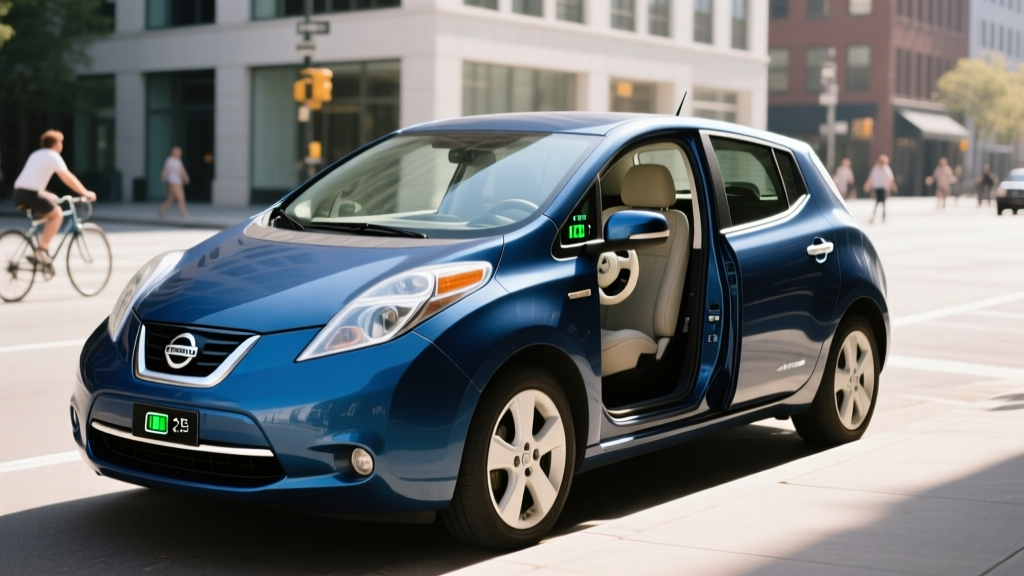
The 2015 Nissan Leaf was one of the best-selling electric vehicles of its era, and nearly a decade later, thousands of these cars are still on the road — many available on the used market for well under $8,000. But buying a 10-year-old EV raises a specific set of questions that don't apply to used gas cars. The battery is the powertrain, and its health determines whether you're getting a reliable daily commuter or an expensive paperweight.
This guide examines 2015 Nissan Leaf reliability from the perspective that matters most for used-EV buyers: battery degradation data, real-world range you can actually count on, charging limitations, and total ownership costs. If you're considering a first-generation Leaf as a budget EV entry point, here's everything you need to know before handing over cash.
2015 Nissan Leaf: Core Specifications at a Glance
| Specification | Value |
|---|---|
| EPA Range (new) | 84 miles (24 kWh battery) |
| Battery Capacity | 24 kWh (usable ~22 kWh), NMC lithium-ion |
| Motor Output | 80 kW (107 hp), 187 lb-ft torque |
| 0-60 mph | ~11.5 seconds |
| Drivetrain | FWD, single-speed reduction gear |
| MPGe (combined) | 114 MPGe (29 kWh/100 mi) |
| DC Fast Charge (CHAdeMO) | Up to ~50 kW peak |
| Level 2 Charge Rate | 6.6 kW (onboard charger) |
| Cargo Volume | 24.0 cu ft (rear seats up), 30.0 cu ft (folded) |
| Rear Legroom | 33.5 inches |
| Curb Weight | ~3,295 lbs |
| Original MSRP (base S trim) | $29,010 (before federal credit) |
| Battery Warranty (original) | 8 years / 100,000 miles (capacity loss coverage) |
The 2015 model year was a carryover from the 2013 refresh, which upgraded the onboard charger from 3.3 kW to 6.6 kW — a meaningful improvement for Level 2 home charging. The battery chemistry is manganese-oxide-based NMC (lithium manganese oxide, or LMO, in Nissan's specific formulation), which was common in early Japanese-market EVs but has different degradation characteristics than modern NMC or LFP packs.
Battery Degradation and Long-Term Reliability
Battery health is the single most important factor in 2015 Nissan Leaf reliability. Unlike a gas car where you worry about transmission or engine wear, the Leaf's electric motor and single-speed gearbox are essentially bulletproof. The battery is where longevity risk concentrates.
The 12-Bar Health Indicator System
Nissan provides a battery capacity indicator on the dashboard: 12 horizontal bars displayed to the right of the instrument cluster. A brand-new Leaf showed 12 bars. Each lost bar represents roughly 6.25% of original capacity degradation. This is your first and most critical inspection tool when evaluating a used 2015 Leaf.
Based on aggregated owner data from platforms like LeafSpy (a third-party OBD2 app that reads detailed battery telemetry), here's what 2015 Leaf batteries typically show in 2026:
- High-mileage examples (80,000+ miles, warm climates): 8-10 bars remaining (~65-85% State of Health)
- Moderate-use examples (40,000-70,000 miles, temperate climates): 10-11 bars (~80-90% SoH)
- Low-mileage, garage-kept examples: 11-12 bars (~88-95% SoH)
- Hot-climate cars with frequent DC fast charging: As low as 7-8 bars (~55-65% SoH)
Why Heat Is the Leaf's Biggest Enemy
The 2015 Leaf uses passive air cooling for its battery pack — no liquid thermal management system. This is the car's most significant engineering limitation and the primary reason degradation varies so widely by geography. A Leaf in Phoenix, Arizona, that sat in 110°F parking lots and relied on CHAdeMO fast charging will show dramatically more degradation than an identical car in Portland, Oregon, that charged overnight in a garage.
Nissan's original battery warranty covered capacity loss below 9 bars (roughly 75% SoH) within 8 years or 100,000 miles. As of 2026, most 2015 Leafs have aged out of this warranty window — meaning any battery replacement is an out-of-pocket expense. A refurbished 24 kWh replacement battery from Nissan typically runs $6,500-$8,500 installed, while third-party refurbishment shops may offer it for $4,000-$6,000.
Charging Speed: The Leaf's Practical Limitations
Understanding the 2015 Leaf's charging profile is essential for determining whether it fits your lifestyle. This was designed as a home-charge-and-commute vehicle, and its charging hardware reflects that era's priorities.
| Charging Level | Power | Time (Empty to Full / 10-80%) | Practical Notes |
|---|---|---|---|
| Level 1 (120V household) | ~1.4 kW | ~21 hours (full) | Emergency/trickle only; adds ~4 mi/hr |
| Level 2 (240V, 6.6 kW onboard) | 6.6 kW | ~4.5 hours (full) | Ideal for overnight home charging; adds ~22 mi/hr |
| DC Fast (CHAdeMO) | Up to ~50 kW peak | ~30 min (10-80%) | CHAdeMO connector; network shrinking in US |
The CHAdeMO Problem in 2026
The 2015 Leaf uses the CHAdeMO DC fast-charging standard, which was competitive in 2015 but has been effectively abandoned in the North American market. Tesla's NACS connector and the CCS1 standard have won the infrastructure war. Major networks like Electrify America and EVgo have either stopped expanding CHAdeMO stalls or removed them entirely during station upgrades.
This doesn't make the Leaf unusable — most Leaf owners charge at home overnight, which is how the car was designed to be used. But if you're relying on public DC fast charging for road trips or apartment living without home charging access, the CHAdeMO connector is a serious and worsening limitation. You'll need to use apps like PlugShare to verify CHAdeMO availability along your routes.
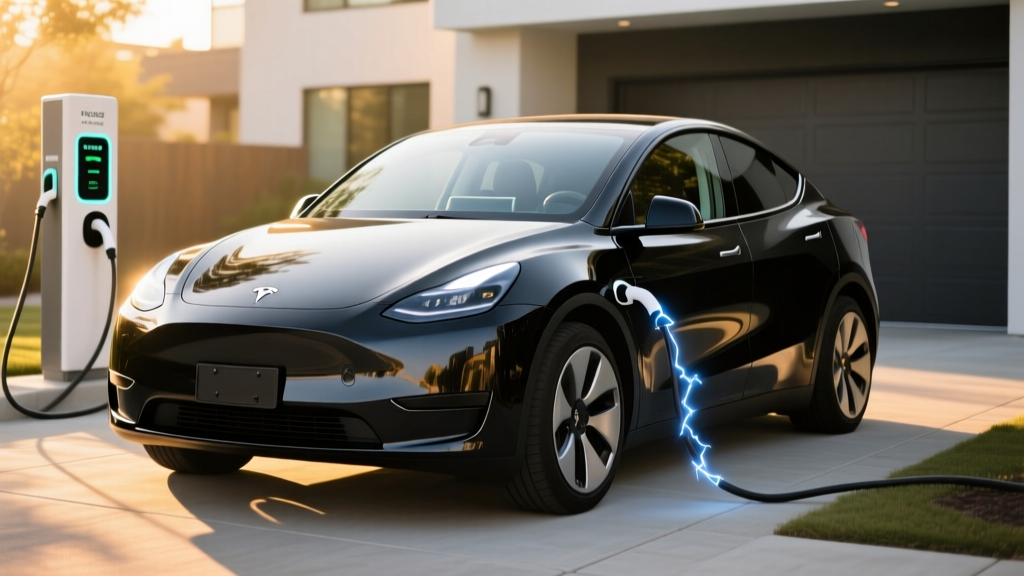
Home Charging Setup
The 6.6 kW onboard charger in the 2015 Leaf (standard on SV and SL trims; the base S trim had 3.3 kW — verify which you're buying) means a full charge from empty takes about 4.5 hours on a 240V Level 2 station. For a daily commute of 30-40 miles round trip, plugging in overnight on Level 2 will more than replenish your daily use.
If you're installing a home Level 2 charger, expect to spend $500-$2,000 on the station itself and $500-$2,500 on electrical work (240V circuit installation), depending on your panel capacity and distance from the breaker box to your parking spot. A licensed electrician should evaluate your panel — some older homes may need a panel upgrade ($1,500-$3,000) to support a dedicated 40A circuit. Always get a professional assessment rather than guessing at your home's electrical capacity.
Performance, Efficiency, and Daily Drivability
The 2015 Leaf's 80 kW (107 hp) AC synchronous motor delivers 187 lb-ft of torque from zero RPM, which makes it feel peppier around town than its 11.5-second 0-60 time suggests. City driving is where this car shines — it's quiet, smooth, and the instant torque makes merging and stoplight acceleration perfectly adequate.
Efficiency is a strong point. The EPA rated the 2015 Leaf at 114 MPGe combined (124 city / 101 highway), which translates to roughly 29 kWh per 100 miles. According to fueleconomy.gov, this makes it one of the more efficient EVs of its era. At the 2026 national average electricity rate of ~$0.17/kWh, that's approximately $4.93 per 100 miles of driving — roughly one-quarter the fuel cost of a comparable 30 MPG gas car at $3.50/gallon.
One-pedal driving via the "B mode" shifter position increases regenerative braking aggressiveness, though it doesn't come to a complete stop like modern EVs with full one-pedal capability. You'll still use the friction brakes for final stopping, but brake pad wear is minimal — many Leaf owners report original brake pads at 80,000+ miles.
What the 2015 Leaf Does NOT Do Well
Highway comfort is mediocre. The Leaf is softly sprung and the narrow low-rolling-resistance tires (215/50R17) provide limited grip. Crosswinds and semi-truck buffeting are noticeable at 70+ mph. The top speed is electronically limited to ~90 mph. This car was engineered for 35-55 mph suburban and urban commuting, and it shows when you push it beyond that envelope.
Technology, Interior, and Safety Features
The 2015 Leaf's interior reflects its budget-EV positioning. Materials are hard plastics throughout, though build quality is generally solid — Nissan's assembly in Smyrna, Tennessee, produced these with consistent panel gaps and durable switchgear.
Infotainment and Connectivity
- 5-inch color touchscreen (SV/SL trims; base S had a 4.3-inch display)
- Navigation with EV-specific routing and charging station locator (SL trim)
- Bluetooth hands-free phone and audio streaming
- USB port (single, front)
- No Apple CarPlay or Android Auto (these weren't available in 2015)
- Around View Monitor (360° camera, SL trim) — surprisingly useful for parking
Driver Assistance
The 2015 Leaf predates modern ADAS suites. You get:
- Standard ABS, traction control, stability control
- Six airbags (front, side, curtain)
- No automatic emergency braking, lane-keeping assist, or adaptive cruise control
- Backup camera (standard on all trims — a 2015 federal mandate)
According to NHTSA, the 2015 Leaf earned a 4-star overall safety rating (out of 5), with 4 stars in frontal crash and 5 stars in side crash testing. The IIHS gave it a "Good" rating in moderate overlap front and side impact tests, though it was not tested in the more rigorous small overlap front evaluation that became standard later.
Used Pricing and Total Cost of Ownership
As of early 2026, used 2015 Nissan Leaf pricing falls in a narrow band depending on mileage, battery health, and trim:
| Trim | Mileage Range | Battery Health | Typical Price |
|---|---|---|---|
| S (base) | 60,000-90,000 mi | 8-10 bars | $4,500-$6,000 |
| SV (mid) | 40,000-70,000 mi | 10-11 bars | $6,000-$8,000 |
| SL (top) | 30,000-60,000 mi | 10-12 bars | $7,500-$10,000 |
Tax Credit Reality for Used EVs
The federal used EV tax credit (IRS §25E, separate from the new-vehicle §30D credit) offers up to $4,000 or 30% of the sale price, whichever is less, for qualified used electric vehicles purchased from a licensed dealer. For a 2015 Leaf selling for $6,000, the credit would be $1,800 (30% of $6,000). For a $5,000 example, it would be $1,500.
Key eligibility requirements under current IRS rules:
- Sale price must be $25,000 or less (easily met by any 2015 Leaf)
- Buyer income caps: $75,000 single / $112,500 head of household / $150,000 joint filers (modified AGI)
- Vehicle must be at least 2 model years old (met)
- Must purchase from a licensed dealer — private-party sales do not qualify
- Credit can only be claimed once per VIN (verify it hasn't been claimed on a prior resale)
- You must have tax liability to claim it — it is non-refundable (though point-of-sale transfer at the dealer may be available)
Always verify current rules at irs.gov and consult a tax professional before counting on credit eligibility. Rules can change, and individual tax situations vary.
5-Year Ownership Cost Estimate
Here's what owning a 2015 Leaf actually costs over 5 years, assuming 8,000 miles/year (commuter use) and a $6,500 purchase price:
| Category | Estimated Cost |
|---|---|
| Purchase price (after used EV credit) | ~$4,700 (assuming $1,800 credit applied) |
| Electricity (home charging, 40,000 mi total) | ~$1,960 |
| Insurance (5 years, average) | ~$4,500-$6,000 |
| Maintenance (tires, cabin filter, brake fluid) | ~$800-$1,200 |
| Potential battery replacement | $0-$8,500 (only if SoH drops critically) |
| Total (without battery replacement) | ~$12,000-$13,900 |
For comparison, a similarly priced used gas car (say a 2015 Honda Fit at ~$7,000) would cost roughly $5,000-$6,000 in fuel alone over the same period, plus more in maintenance (oil changes, spark plugs, transmission fluid, exhaust). The Leaf's operating cost advantage is significant — if the battery holds up.
2015 Nissan Leaf: Pros and Cons for Used Buyers
Pros
- Extremely low purchase price ($4,500-$10,000)
- Cheap to operate — ~$0.05/mile in electricity
- Minimal maintenance (no oil, spark plugs, or exhaust)
- Smooth, quiet, torque-rich city driving
- Hatchback practicality (24 cu ft cargo)
- Federal used EV tax credit eligible
- Strong parts availability and simple mechanics
Cons
- Short real-world range (50-70 mi depending on battery health/weather)
- Passive air-cooled battery — heat accelerates degradation
- CHAdeMO fast-charging standard is dying in the US
- No modern driver-assistance features
- No Apple CarPlay / Android Auto
- Out-of-warranty battery replacement is expensive ($4,000-$8,500)
- Highway comfort and top speed are limited
- Original battery warranty has expired for most examples
Who Should Buy a Used 2015 Leaf — and Who Shouldn't
Choose the 2015 Leaf If:
- You need a dedicated city commuter with a round trip under 50 miles
- You have home charging access (garage, driveway, or dedicated outlet)
- You live in a temperate climate (Pacific Northwest, coastal California, Southeast — not extreme heat or extreme cold)
- You want the lowest possible EV entry price
- This will be a second car — you have a gas/hybrid vehicle for longer trips
- You can verify battery health before purchase (via LeafSpy or dealer battery report)
Skip the 2015 Leaf If:
- Your daily commute exceeds 50 miles round trip
- You live in an apartment without charging access
- You need a primary/only vehicle for a household
- You live in extreme heat (Arizona, Texas summers) or extreme cold (Minnesota, North Dakota winters)
- You regularly drive highways at 70+ mph
- You can't afford a potential $4,000-$8,500 battery replacement down the line
Key Competitors to Consider
If the 2015 Leaf's limitations give you pause, here are used EV alternatives in a similar price range (as of 2026):
- 2015-2017 Volkswagen e-Golf: Slightly more range (83 mi EPA), better build quality, CCS fast charging. Similar price range. Also air-cooled battery.
- 2016-2018 Chevrolet Bolt EV (used): 238 miles EPA range, liquid-cooled 60 kWh battery, CCS charging. Significantly more capable but typically $10,000-$14,000 used. Much better long-term battery outlook.
- 2017-2019 Nissan Leaf (second generation): 151 miles EPA (40 kWh battery), improved styling, ProPilot Assist available. Typically $9,000-$14,000. Still passively cooled but a meaningful upgrade.
- Used PHEV alternative (Toyota Prius Prime): If range anxiety is a concern, a plug-in hybrid gives you 25 miles of electric commuting plus unlimited gas range. Higher fuel cost but zero range risk.
Frequently Asked Questions
What is the real-world range of a used 2015 Nissan Leaf?
A 2015 Leaf originally rated at 84 miles EPA will typically deliver 65-70 miles of real-world range at ~80% battery health (common for a 10-year-old example). In cold weather, expect 50-55 miles. Highway driving at 70+ mph reduces range further. Always check the battery bar indicator and, ideally, use LeafSpy to read actual State of Health before purchasing.
How fast does the 2015 Leaf charge?
On a Level 2 (240V) home charger at 6.6 kW, a full charge takes about 4.5 hours. On a CHAdeMO DC fast charger, you can go from roughly 10% to 80% in about 30 minutes at up to ~50 kW peak. However, CHAdeMO infrastructure is shrinking in the US, making home charging the primary refueling strategy for most owners.
Does the 2015 Nissan Leaf qualify for any tax credit?
Not the new-vehicle §30D credit — that's only for new purchases. However, the federal used EV credit (§25E) offers up to $4,000 or 30% of the sale price (whichever is less) when purchased from a licensed dealer, subject to buyer income caps ($75K single / $150K joint). A $6,000 Leaf would yield a ~$1,800 credit. Verify current rules at irs.gov.
Is the 2015 Leaf reliable overall?
The drivetrain (motor, inverter, gearbox) is extremely reliable — these components rarely fail. The main reliability variable is battery degradation, which ranges from mild to severe depending on climate, charging habits, and mileage. A well-maintained Leaf in a temperate climate with 10-11 bars showing is generally a solid, low-cost commuter. A heat-battered example with 7-8 bars is a risky purchase unless you're budgeting for a battery replacement.
What should I check before buying a used 2015 Leaf?
First, check the 12-bar battery capacity indicator on the dash — you want 10 bars minimum. Second, buy or borrow a LeafSpy-compatible OBD2 dongle to read the actual State of Health percentage and cell voltage variance. Third, verify whether the car has the 6.6 kW onboard charger (SV/SL trims) or the slower 3.3 kW charger (base S trim). Fourth, check for any open recalls on nhtsa.gov. Finally, confirm the title is clean and the car hasn't been in a major accident that could have damaged the battery pack underneath the floor.
How much does a battery replacement cost?
A Nissan-refurbished 24 kWh battery pack typically costs $6,500-$8,500 installed at a dealership. Independent EV shops may offer refurbished packs for $4,000-$6,000. Some owners have sourced salvaged packs from wrecked Leafs for $2,000-$3,500, but installation still requires a qualified technician. Factor this potential cost into your purchase decision — it can double your total investment in the car.