Tesla Model Y Performance: Range, Charging, and Bi-Directional Power
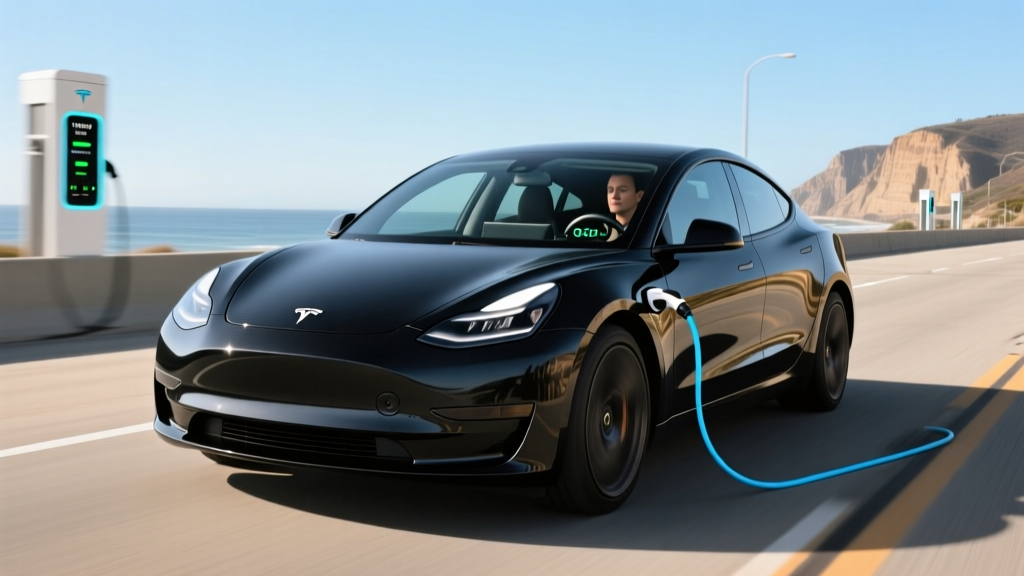
The 2026 Tesla Model Y Performance remains the benchmark for high-output electric crossovers, pairing dual-motor all-wheel drive with a usable 75 kWh battery pack. While its 277-mile EPA range is modest for the class, its sustained 250 kW DC fast-charging capability and sub-3.5-second 0-60 mph acceleration keep it competitive. For 2026, Tesla continues to refine its thermal management system, though bi-directional features like Vehicle-to-Load (V2L) and Vehicle-to-Home (V2H) remain limited compared to Hyundai/Kia's E-GMP platform offerings.
Real-World Range and Efficiency
Real-World Expectation: 230-250 miles highway at 70 mph; 200-220 miles in sub-freezing temperatures
The Model Y Performance's NMC (nickel-manganese-cobalt) lithium-ion battery delivers 75 kWh of usable capacity. In mixed driving, expect 240-260 miles before needing a charge. Highway efficiency drops to 3.0-3.2 kWh/mile at sustained speeds, while city regen-heavy driving can stretch range to 260+ miles. Cold weather (below 32°F) reduces range by 15-25% due to battery heating demands and cabin climate load. The standard heat pump mitigates some loss but doesn't eliminate it.
Efficiency: 117 MPGe combined (29 kWh/100 miles) per fueleconomy.gov
Charging Speed: DC Fast and Level 2
| Charging Method | Peak Power | 10-80% Time | Miles Added/Hour |
|---|---|---|---|
| DC Fast Charge (Tesla Supercharger V3/V4) | 250 kW | ~18-22 minutes | N/A (session-based) |
| Level 2 Home (48A Wall Connector) | 11.5 kW | ~7-8 hours (0-100%) | ~32 miles/hour |
| Level 1 (120V outlet) | 1.4 kW | ~50+ hours (0-100%) | ~3-4 miles/hour |
The Model Y Performance peaks at 250 kW on V3/V4 Superchargers, but sustained rates average 150-180 kW across the 10-80% window due to taper above 60% state of charge. Preconditioning the battery (via navigation to a Supercharger) is essential for optimal charge curves. Level 2 home charging at 48 amps adds roughly 32 miles per hour, fully replenishing overnight. Note: kW is power (charge rate); kWh is energy (battery capacity)—never confuse the two.
Performance and Drivetrain
| Spec | Value |
|---|---|
| 0-60 mph | 3.5 seconds |
| Horsepower | 456 hp (combined) |
| Drivetrain | Dual-motor AWD |
| Top Speed | 155 mph (electronically limited) |
| Towing Capacity | 3,500 lbs (with hitch) |
The dual-motor setup delivers instant torque to all four wheels, with a rear-biased torque split for sporty handling. Acceleration is relentless, and the low center of gravity (battery pack underfloor) minimizes body roll. Regenerative braking is aggressive but adjustable via the touchscreen. One-pedal driving is possible but not as seamless as some competitors.
V2L and V2H: What Tesla Actually Offers in 2026
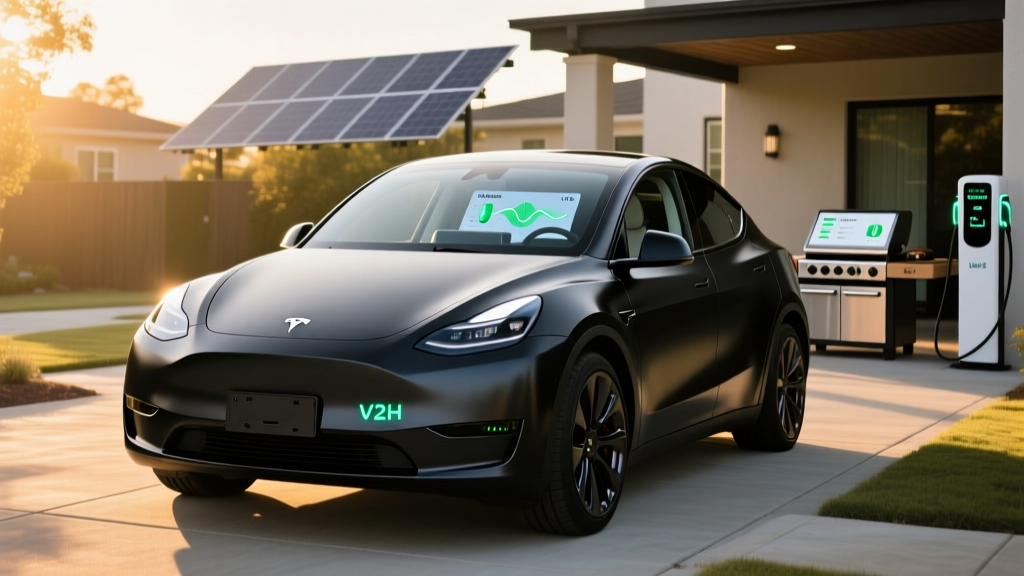
Unlike the Hyundai Ioniq 5 or Ford F-150 Lightning, the 2026 Model Y Performance does not support native Vehicle-to-Load (V2L) or Vehicle-to-Home (V2H) bi-directional charging. Tesla's architecture lacks the onboard inverter hardware required to export AC power to external devices or home panels. While Tesla has hinted at future bi-directional capabilities (notably for Cybertruck), the Model Y lineup remains charge-only.
If V2L/V2H is a priority—powering tools at a job site, running appliances during outages, or feeding solar back to the grid—consider the Ioniq 5 (V2L via adapter), F-150 Lightning (V2H with Ford Charge Station Pro), or Rivian R1S (V2L accessory). Tesla owners needing backup power must rely on separate systems like Powerwall.
Pricing, Tax Credits, and Ownership Costs
| Trim | Base MSRP | Est. Federal Credit | Net Price (if eligible) |
|---|---|---|---|
| Model Y Performance AWD | $52,490 | Up to $7,500 | ~$44,990 |
Federal Tax Credit Eligibility (§30D): The Model Y Performance qualifies for the full $7,500 credit if you meet all 2026 IRS requirements:
- MSRP Cap: Vehicle must be under $80,000 (Model Y qualifies)
- Income Limits: AGI ≤ $150,000 (single), $225,000 (head of household), $300,000 (joint)
- Battery Sourcing: Critical minerals and battery components must meet phased-in percentages (Tesla sources from approved suppliers, but verify VIN eligibility at irs.gov)
- Point-of-Sale Transfer: You can apply the credit at purchase, reducing out-of-pocket cost
State incentives vary—check your local DMV or energy office. Insurance premiums run 15-25% higher than gas equivalents due to repair costs and parts pricing.
Cargo, Passenger Space, and Practicality
- Cargo Volume: 30.2 cu ft (rear seats up), 72.1 cu ft (rear seats folded)
- Front Legroom: 41.8 inches
- Rear Legroom: 37.4 inches
- Frunk: 4.1 cu ft (front trunk)
- Seating: 5 passengers standard (optional 7-seat deletes frunk, adds third row)
The Model Y's hatchback design maximizes utility, and the flat load floor accommodates bulky items. Rear seat comfort is adequate for adults on short trips but firm for long hauls. The panoramic glass roof creates an airy cabin but contributes to heat soak in summer—window tint is a common aftermarket fix.
Tech, Driver Assists, and Drawbacks
Standout Features:
- 15-inch touchscreen with responsive UI and over-the-air updates
- Autopilot (Level 2 driver-assist) standard; FSD (Supervised) optional at $8,000 or $99/month
- Sentry Mode dashcam recording and remote climate control via app
- Supercharger network access (most reliable public charging in the U.S.)
Notable Drawbacks:
- No V2L/V2H bi-directional power
- Firm ride quality, especially on 21-inch Überturbine wheels
- No physical buttons—everything via touchscreen (wipers, glovebox, mirrors)
- Limited service center availability in rural areas
Who Should Buy the Model Y Performance?
Best For: Tech-savvy commuters, small families, and road-trippers who prioritize acceleration, Supercharger access, and minimal maintenance. Ideal if you have home Level 2 charging and value over-the-air feature updates.
Look Elsewhere If: You need V2L/V2H for job-site power or home backup, prefer a softer ride, want physical controls, or lack reliable home charging access. The Ioniq 5, EV6, or F-150 Lightning may better serve those use cases.
Frequently Asked Questions
What is the real-world range of the Tesla Model Y Performance?
Expect 230-250 miles on highway trips at 70 mph, and 200-220 miles in freezing weather. The EPA sticker says 277 miles, but real-world conditions (speed, temperature, terrain) reduce that by 10-25%.
How fast does it charge at home and on the road?
DC fast charging peaks at 250 kW, delivering 10-80% in ~18-22 minutes. Home Level 2 (48A) adds ~32 miles per hour, fully charging in 7-8 hours. Level 1 (120V) is impractical for daily use.
How much does it cost after tax credits?
Base MSRP is $52,490. If you qualify for the full $7,500 federal credit (income and sourcing rules apply), net cost drops to ~$44,990. State incentives may reduce this further.
Does it have V2L or V2H to power my home or tools?
No. The 2026 Model Y Performance does not support bi-directional charging. If V2L/V2H is essential, consider Hyundai Ioniq 5, Ford F-150 Lightning, or Rivian R1S.
Is it worth buying vs. the Hyundai Ioniq 5 or Ford Mustang Mach-E?
The Model Y wins on Supercharger network reliability, acceleration, and software. The Ioniq 5 offers V2L, faster 800V charging (350 kW peak), and a more comfortable ride. The Mach-E GT is cheaper but has less range and slower charging. Test-drive all three.
What's the battery warranty?
Tesla covers the battery and drive unit for 8 years or 120,000 miles, whichever comes first, with a 70% capacity retention threshold. Degradation is typically 10-15% over 100,000 miles based on owner data.
Pros
- Sub-3.5-second 0-60 mph acceleration
- 250 kW DC fast charging with Supercharger access
- Spacious cargo area (72.1 cu ft max)
- Over-the-air updates add features post-purchase
- Strong resale value
Cons
- No V2L/V2H bi-directional power
- Firm ride on 21-inch wheels
- Touchscreen-only controls frustrate some drivers
- Real-world range falls short of EPA estimate
- Insurance premiums 15-25% higher than gas cars