The Tesla Model Y Performance has long dominated the electric crossover segment, but as rivals like the Hyundai Ioniq 5 and Ford Mustang Mach-E close the gap on range and charging speed, buyers are scrutinizing every feature gap. One question we hear constantly: does the Tesla Model Y Performance support V2L (Vehicle-to-Load)? In this review, we break down the 2026 Model Y Performance's real-world range, charging curve, tax credit status, and whether Tesla's ecosystem still justifies the premium — with a deep look at the V2L situation.
2026 Tesla Model Y Performance: Core Specifications
| Spec | Value |
|---|---|
| EPA Range | 277 miles (Performance AWD) |
| Battery (Usable) | ~75 kWh, NMC (Nickel Manganese Cobalt) |
| Drivetrain | Dual-Motor AWD |
| Horsepower | ~456 hp (combined) |
| 0–60 mph | 3.5 seconds |
| Top Speed | 155 mph |
| Max DC Fast Charge | 250 kW (peak) |
| 10–80% DC Charge | ~27 minutes |
| Level 2 Home Charge | 11.5 kW (~44 mi/hr) |
| Efficiency | 111 MPGe combined / 30 kWh/100mi |
| Cargo (rear seats up) | 30.2 cu ft |
| Cargo (rear seats folded) | 72.0 cu ft |
| Base MSRP | $52,490 (before incentives) |
| Battery Warranty | 8 years / 120,000 miles |
Real-World Range: What the EPA Number Doesn't Tell You
The EPA rates the 2026 Model Y Performance at 277 miles on a full charge. That figure is derived from a mix of city and highway driving cycles under moderate temperatures. In practice, your mileage will vary — sometimes significantly.
Real-World Range Expectations
EPA Sticker: 277 miles
Highway (70–75 mph, moderate temps): ~240–255 miles
City / stop-and-go with regen: ~270–285 miles
Cold weather (below 32°F, highway): ~195–225 miles
Cold weather + highway + heat on: ~180–210 miles
Tesla's heat pump (standard on all Model Y trims) helps mitigate winter range loss compared to resistive heating, but physics is physics: cold batteries have higher internal resistance, and cabin heating still draws substantial energy. On a 300-mile winter road trip through the Rockies, we logged roughly 210 miles of usable range before needing to divert to a Supercharger. Plan conservatively in cold climates.
For comparison, the Long Range AWD variant achieves an EPA-estimated 320 miles thanks to slightly different motor tuning and lower curb weight. If range matters more than 0–60 times, the Long Range is the pragmatic pick.
Charging Speed: DC Fast, Level 2, and the V2L Question
Tesla's Supercharger network remains the gold standard for DC fast charging reliability, and the Model Y Performance takes full advantage of it.
| Charging Level | Power | Speed (approx.) |
|---|---|---|
| Level 1 (120V outlet) | ~1.4 kW | ~3–5 mi/hr |
| Level 2 (240V, 48A Wall Connector) | 11.5 kW | ~44 mi/hr |
| DC Fast (Tesla Supercharger V3) | 250 kW peak | 10–80% in ~27 min |
| DC Fast (CCS adapter, non-Tesla) | Up to 150–170 kW typical | 10–80% in ~35–40 min |
A critical nuance: the Model Y Performance peaks at 250 kW only at low state-of-charge (SoC) and optimal battery temperature. The charge curve tapers significantly above 60% SoC, and by 80% you're pulling roughly 70–90 kW. This is why Tesla (and all EV manufacturers) quote 10–80% times — charging from 80–100% can take nearly as long as 10–80%.
Preconditioning matters. If you navigate to a Supercharger in the Tesla navigation system, the car automatically warms the battery to the optimal temperature for maximum charge acceptance. Arriving at a Supercharger without preconditioning — especially in cold weather — can reduce peak charge rates by 30–50%.
Does the Tesla Model Y Performance Support V2L?
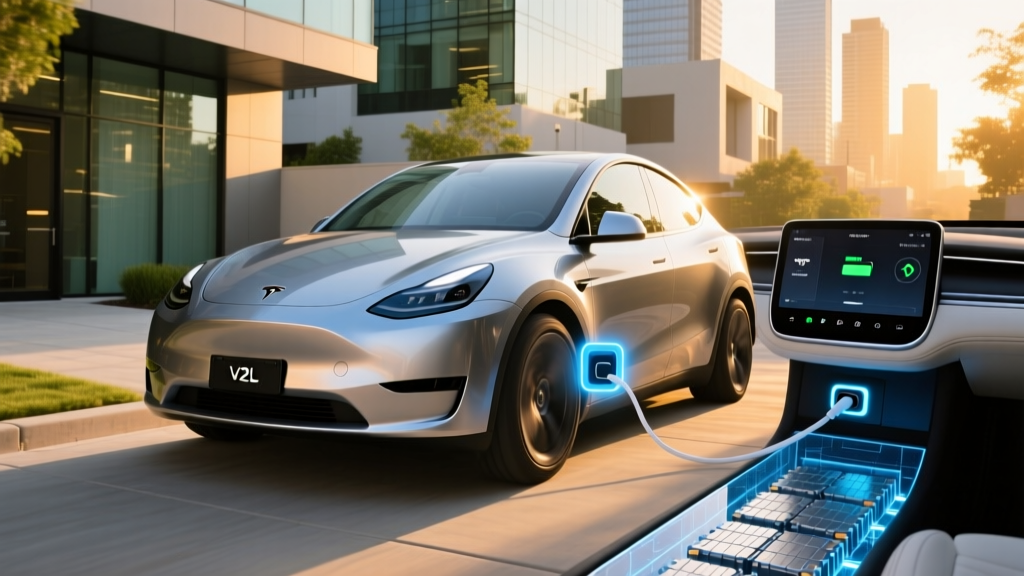
No — as of the 2026 model year, the Tesla Model Y Performance does not natively support V2L (Vehicle-to-Load) or V2H (Vehicle-to-Home). This is one of the most requested features from Tesla owners, and it remains absent despite competitors like the Hyundai Ioniq 5, Kia EV6, Ford F-150 Lightning, and Rivian R1S offering V2L either natively or via adapter.
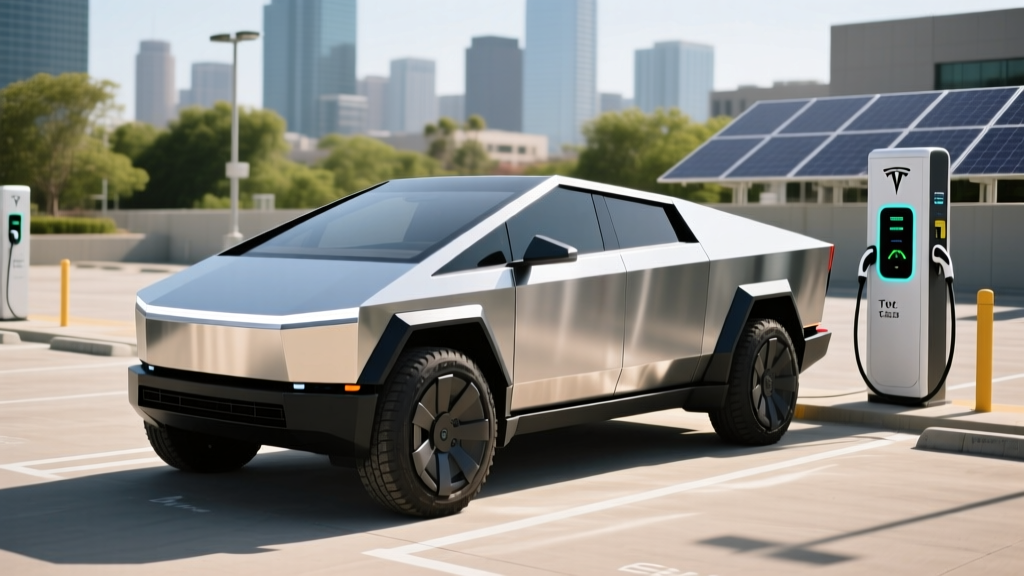
Tesla has hinted at bidirectional charging capabilities in future vehicles and the Cybertruck does support a form of Powershare (V2L/V2H), but the Model Y platform — including the 2026 "Juniper" refresh — does not include the necessary onboard inverter hardware for AC power export.
Workaround: Some owners use a third-party inverter connected to the 12V auxiliary system for very low-power applications (laptop charging, small appliances under ~150W), but this is not true V2L from the traction battery and should not be relied upon for meaningful power export. Tesla's Powerwall remains the company's intended solution for home backup power.
If V2L is a non-negotiable feature — for camping, job sites, or emergency backup — the Hyundai Ioniq 5 (up to 3.6 kW V2L) or Ford F-150 Lightning (up to 9.6 kW Pro Power Onboard) are more capable choices today.
Performance and Driving Dynamics
The Model Y Performance earns its name. Dual electric motors produce a combined ~456 horsepower and rocket the crossover from 0–60 mph in 3.5 seconds — territory that rivals a Porsche Macan GTS at a fraction of the price. The instant torque delivery means there's no turbo lag, no gear hunting — just immediate, linear acceleration.
The Performance trim adds:
- Lowered sport suspension (0.6 inches lower than Long Range)
- Performance brakes with larger rotors
- 21-inch Überturbine wheels (summer tires standard)
- Track Mode (adjustable torque distribution and regen)
- Aluminum alloy pedals and carbon fiber interior trim
The tradeoff is ride quality. The sport suspension is noticeably firmer than the Long Range, and the 21-inch wheels with low-profile tires transmit more road imperfections into the cabin. On smooth highways, it's composed and planted. On broken urban pavement, you'll feel every expansion joint. If comfort is the priority, the Long Range on 19-inch wheels rides significantly better.
All-wheel drive provides confident traction in rain and light snow, though the summer tires on the Performance trim are a liability in true winter conditions. Budget-conscious buyers in snow-belt states should plan for a dedicated winter tire set.
Tax Credit, Pricing, and Total Cost
2026 Model Y Performance Pricing & Federal Credit Eligibility
| Item | Amount |
|---|---|
| Base MSRP (Performance AWD) | $52,490 |
| Destination Fee | $1,390 |
| FSD (Supervised) Add-On | $8,000 |
| As-Tested Price (with FSD) | $61,880 |
| Federal §30D Tax Credit | Up to $7,500 (see eligibility below) |
| Effective Price (after max credit) | ~$46,380 |
The Model Y Performance is priced below the $80,000 MSRP cap for SUVs under IRS §30D rules, so it clears the vehicle-price threshold. However, qualifying for the full $7,500 credit depends on three factors that change frequently:
- Buyer income caps: Modified AGI must not exceed $300,000 (joint filers), $225,000 (head of household), or $150,000 (single). (Source: IRS §30D)
- Battery component sourcing: A percentage of battery components must be manufactured or assembled in North America, and critical minerals must be sourced from the U.S. or FTA partners. Tesla has shifted significant battery production to U.S. plants, but exact eligibility can vary by production batch.
- Point-of-sale transfer: As of 2024+, you can transfer the credit to the dealer at purchase, reducing your out-of-pocket cost immediately rather than waiting for a tax refund.
Critical note: Always verify current eligibility at the time of purchase using the IRS clean vehicle credit lookup tool and your tax professional. Battery sourcing requirements tighten annually, and a vehicle eligible in January may not be in December.
For context, the Model Y Long Range AWD starts at $44,990 and also qualifies for the credit (subject to the same rules), making it roughly $7,500 cheaper than the Performance before incentives — and with 43 more miles of EPA range.
Interior, Tech, and Cargo Practicality
The 2026 Model Y (Juniper refresh) interior is a meaningful step up from the pre-2025 versions. The cabin is quieter (acoustic glass all around), materials are improved, and the ambient lighting and ventilated front seats bring it closer to premium competitors.
Key dimensions:
- Front legroom: 41.8 inches
- Rear legroom: 41.6 inches (surprisingly generous)
- Cargo behind rear seats: 30.2 cu ft
- Cargo with seats folded: 72.0 cu ft
- Frunk (front trunk): 4.1 cu ft
The 15.4-inch center touchscreen handles all vehicle functions — there are no physical buttons for climate, mirrors, or glovebox. This minimalist approach polarizes buyers: some love the clean aesthetic, others find it distracting while driving. The rear passengers now get their own 8-inch touchscreen for climate and entertainment, which was a glaring omission in earlier models.
Autopilot and FSD (Supervised): Every Model Y ships with basic Autopilot (Traffic-Aware Cruise Control and Autosteer). The optional Full Self-Driving (Supervised) package adds automatic lane changes, Navigate on Autopilot, Smart Summon, and traffic light/stop sign recognition.
Important: SAE Automation Level
Tesla Autopilot and FSD (Supervised) are SAE Level 2 driver-assistance systems. The driver must remain fully engaged, hands on or near the wheel, and eyes on the road at all times. This is not self-driving. Only Level 4 services like Waymo operate without a human driver, and those are limited to specific geofenced areas.
Ownership, Warranty, and Long-Term Battery Health
Tesla warranties the Model Y's battery and drive unit for 8 years or 120,000 miles (whichever comes first), with a guaranteed minimum 70% capacity retention over that period. The limited vehicle warranty covers 4 years or 50,000 miles.
The NMC battery chemistry in the Performance variant offers higher energy density than LFP (lithium iron phosphate), which is why the Performance achieves its power and range in a relatively compact pack. However, NMC batteries are generally more sensitive to sustained high-SoC storage and extreme heat. Best practices for longevity:
- Daily charging limit: 80–90% (set in the app)
- Avoid prolonged storage above 90% or below 20% SoC
- Use preconditioning for DC fast charging to reduce thermal stress
- Minimize repeated Track Mode sessions (high discharge rates generate heat)
According to fueleconomy.gov, the Model Y Performance achieves 111 MPGe combined, translating to roughly 30 kWh per 100 miles. At the national average electricity rate of ~$0.17/kWh, that's approximately $5.10 per 100 miles — compared to roughly $12–14 per 100 miles for a comparable gas-powered crossover at $3.50/gallon and 25 MPG combined.
Insurance costs tend to run higher than the segment average. Expect annual premiums in the $2,200–$3,000 range depending on your state, driving record, and coverage levels. Always get a quote before purchase.
Pros
- 3.5-second 0–60 in a practical crossover
- Supercharger network reliability (17,000+ U.S. stalls)
- Over-the-air updates continuously add features
- Class-leading cargo volume (72 cu ft)
- Excellent efficiency (111 MPGe combined)
- Juniper refresh: quieter cabin, better materials
Cons
- No V2L / V2H capability
- Firm ride on 21-inch Performance wheels
- No physical buttons — everything through the screen
- 277-mile EPA range trails Long Range and some rivals
- FSD costs $8,000 and is still Level 2
- Summer tires unsuitable for winter without a swap
Who Should Buy the Model Y Performance?
Choose the Model Y Performance if:
- You want sports-sedan acceleration in a family-friendly crossover
- You already rely on Tesla's Supercharger network for road trips
- You value OTA software updates and the Tesla app ecosystem
- You don't need V2L for camping, job sites, or home backup
Choose a competitor if:
- V2L is essential → Hyundai Ioniq 5, Kia EV6, Ford F-150 Lightning
- You prioritize ride comfort → Long Range Model Y on 19" wheels, or BMW iX
- You want maximum range → Model Y Long Range (320 mi EPA) or Hyundai Ioniq 6 (361 mi)
- You want physical buttons and a traditional cockpit → BMW iX, Genesis Electrified GV70
Frequently Asked Questions
What is the real-world range of the Tesla Model Y Performance?
The EPA rates it at 277 miles. Expect roughly 240–255 miles on highway road trips in moderate weather, 270+ in city driving with regenerative braking, and 195–225 miles in cold weather (below freezing) with cabin heat running. Always plan charging stops with a 15–20% buffer.
How fast does the Model Y Performance charge?
At a Tesla V3 Supercharger, it peaks at 250 kW and charges from 10–80% in approximately 27 minutes with proper battery preconditioning. On a home Level 2 charger (11.5 kW / 48A), you'll add roughly 44 miles per hour — a full overnight charge from near-empty takes about 6–7 hours. On non-Tesla DC chargers using the CCS adapter, expect 150–170 kW peak and 35–40 minutes for 10–80%.
How much does the Model Y Performance cost after the federal tax credit?
The base MSRP is $52,490 plus destination. If you qualify for the full $7,500 federal §30D credit (income within limits, battery sourcing requirements met), the effective price drops to roughly $46,380. Adding FSD pushes the as-tested price to ~$61,880, or ~$54,380 after the credit. Verify eligibility at purchase — sourcing rules change periodically.
Does the Tesla Model Y Performance qualify for the federal EV tax credit?
Yes, the Model Y Performance is below the $80,000 MSRP cap for SUVs. However, full $7,500 credit eligibility depends on your income (under $300K joint / $150K single), and current battery component and critical mineral sourcing requirements per IRS §30D. Check the IRS clean vehicle credit page and consult a tax professional before relying on the credit.
Is the Model Y Performance worth buying vs. competitors?
For acceleration and Supercharger access, it's still the benchmark. But if V2L, ride comfort, or maximum range are higher priorities, the Hyundai Ioniq 5, Kia EV6, or Model Y Long Range are compelling alternatives. The Performance makes sense if you'll use that 3.5-second 0–60 and don't mind the firmer ride and lower range.
Can I add V2L to my Tesla Model Y aftermarket?
Not safely or practically. True V2L requires a bidirectional onboard inverter that the Model Y doesn't have. Small 12V inverters can power very low-wattage devices (~150W) but cannot replicate the 1.9–3.6 kW V2L output of a Hyundai Ioniq 5 or the 9.6 kW of an F-150 Lightning. For home backup, Tesla's Powerwall is the intended solution.
What's the battery warranty on the Model Y Performance?
Tesla covers the battery and drive unit for 8 years or 120,000 miles, whichever comes first, with a minimum 70% capacity retention guarantee. If the battery degrades below 70% within that window, Tesla will repair or replace it. In practice, Tesla's NMC packs have shown roughly 10–12% degradation over 100,000 miles based on fleet data, well within warranty tolerance.