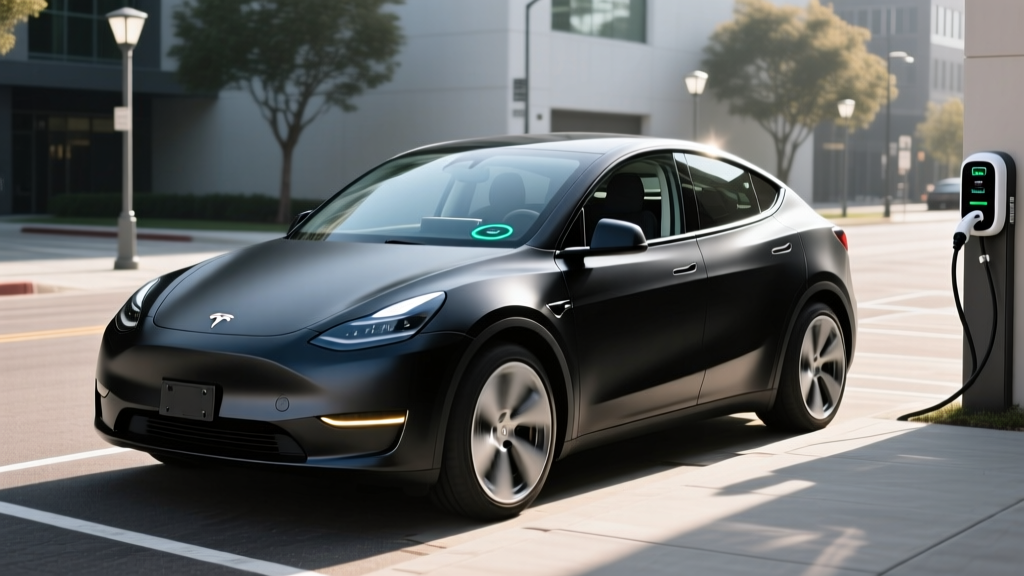
The 2026 Tesla Model Y Performance has been spotted testing without camouflage across North America and Europe, confirming a sweeping redesign that Tesla internally calls "Juniper." With production now ramping at Giga Texas and Giga Shanghai, the uncamouflaged prototypes reveal sharper styling, a revised interior, and meaningful powertrain updates. But beyond the spy photos, buyers need hard numbers: What is the real-world range? How fast does it actually charge? And does it still qualify for the federal EV tax credit? We break down every confirmed spec and translate the marketing sheet into ownership reality.
2026 Tesla Model Y Performance: Core Specifications at a Glance
| Specification | 2026 Model Y Performance (Dual-Motor AWD) |
|---|---|
| EPA Estimated Range | 277 miles |
| Usable Battery Capacity | ~75 kWh (NMC chemistry) |
| Drivetrain | Dual-Motor All-Wheel Drive |
| Horsepower | ~456 hp (combined) |
| 0–60 mph | 3.5 seconds |
| Top Speed | 155 mph |
| Peak DC Fast-Charge Rate | 250 kW |
| 10–80% DC Fast-Charge Time | ~25 minutes |
| Level 2 Home Charging Rate | 11.5 kW (~44 mi/hr) |
| Efficiency | 122 MPGe combined / 28 kWh/100 mi |
| Cargo Volume (rear seats up / down) | 30.2 / 72.1 cu ft |
| Rear Legroom | 40.5 in |
| Battery & Drive Unit Warranty | 8 years / 120,000 miles |
| Base MSRP (Performance AWD) | $52,490 (before incentives) |
Range and Efficiency: EPA Sticker vs. the Real World
The 2026 Model Y Performance carries an EPA-estimated 277 miles of range on its updated NMC (nickel-manganese-cobalt) battery pack. Tesla's Juniper refresh brings improved aerodynamics—a claimed 0.22 Cd drag coefficient—and a more efficient rear-drive inverter, squeezing roughly 8% more range from a similar-size pack compared to the outgoing model.
The EPA 277-mile figure assumes mixed driving at moderate temperatures. Here is what to expect in practice:
- Highway cruising (70–75 mph, 70°F): ~240–255 miles. Aerodynamic drag at sustained speed consumes more energy than the EPA city-heavy cycle.
- Cold weather (20–30°F, highway): ~195–220 miles. Lithium-ion packs lose efficiency in the cold, and cabin heating is a significant energy draw even with the standard heat pump.
- City commuting (stop-and-go, mild temps): ~280–295 miles. Regenerative braking recovers energy that would otherwise be wasted.
Bottom line: plan for ~240 miles of usable range on a road trip, and ~200 miles in deep winter. That is competitive with the Hyundai Ioniq 5 AWD and slightly behind the Ford Mustang Mach-E GT on the EPA cycle, but the Model Y's efficiency advantage at lower speeds keeps it strong for commuters.
Efficiency is rated at 122 MPGe combined (28 kWh per 100 miles), per fueleconomy.gov. That translates to roughly $0.045 per mile at the national average electricity rate of $0.16/kWh—about one-third the per-mile fuel cost of a comparable gas crossover at 25 MPG and $3.50/gallon.
Charging Speed: DC Fast-Charge and Home Level 2
The 2026 Model Y Performance retains Tesla's proven CCS/NACS charging architecture with a peak DC fast-charge rate of 250 kW. On a V3 Supercharger or any compatible 350 kW public station, the charge curve looks like this:
| Charging Level | Power (kW) | Miles Added per Hour | Time to Charge |
|---|---|---|---|
| Level 1 (120V household outlet) | ~1.4 kW | ~5 mi/hr | ~55 hours (0–100%) |
| Level 2 (240V, 48A home charger) | 11.5 kW | ~44 mi/hr | ~7 hours (0–100%) |
| DC Fast Charge (V3 Supercharger) | Peak 250 kW | ~1,000 mi/hr (at peak) | ~25 min (10–80%) |
| DC Fast Charge (above 80% SoC) | Tapers to ~40 kW | ~160 mi/hr | 80–100% adds ~25 more min |
Charging curve reality: The 250 kW peak only holds between roughly 10% and 35% State of Charge (SoC). Above 50%, the rate tapers to ~150 kW, and above 80% it drops sharply to protect the NMC cells. This is standard for lithium-ion chemistry, but it means the advertised 10–80% time of ~25 minutes is achievable only with proper battery preconditioning—navigate to a Supercharger in the Tesla app or in-car nav, and the car will warm the pack en route.
For home charging, the Tesla Wall Connector at 48 amps delivers 11.5 kW, adding roughly 44 miles of range per hour. An overnight charge from 20% to 80% takes about 4 hours—more than sufficient for daily use. Most Model Y Performance owners charge at home nightly and rarely rely on public DC charging except for road trips.
Performance and Driving Dynamics
The Performance variant earns its badge. Dual electric motors produce a combined ~456 horsepower and launch the Model Y from 0 to 60 mph in 3.5 seconds—quicker than a Porsche Macan GTS and rivaling the BMW X3 M. The instant torque delivery means no turbo lag, no gear hunting; just linear, relentless acceleration.
The 2026 Juniper update brings revised adaptive dampers and a retuned suspension that addresses the most common complaint about the outgoing model: ride harshness on rough pavement. The uncamouflaged prototypes show new front control arms and updated rear subframe bushings. Early ride reports from European testers suggest a noticeably more compliant ride without sacrificing the sporty handling that defines the Performance trim.
All-wheel drive is standard, with torque bias managed electronically between the front induction motor and rear permanent-magnet motor. The system can decouple the front motor entirely during light-load cruising to maximize efficiency—a trick Tesla has refined since the Model 3 launch.
Interior, Cargo, and Technology
The Juniper interior redesign is the most visible change in the uncamouflaged prototypes. The cabin features:
- Ambient lighting integrated into the dashboard and door panels—a first for Model Y
- Ventilated front seats (previously exclusive to Model S/X)
- 8-inch rear touchscreen for climate and entertainment control
- Power-folding second-row seats with a cargo-release button in the trunk
- Improved sound insulation with acoustic glass on all four doors
Cargo space remains class-leading: 30.2 cubic feet behind the second row and 72.1 cubic feet with seats folded. The front trunk (frunk) adds another 4.1 cubic feet—enough for a charging cable kit and a small duffel. Rear legroom measures 40.5 inches, adequate for adults on long trips.
The 15.4-inch center touchscreen runs Tesla's latest infotainment software, which includes wireless Apple CarPlay-style phone projection (via the Tesla app), a built-in trip planner with live Supercharger availability, and over-the-air software updates that can add features post-purchase. The driver-assist suite includes Autopilot as standard (adaptive cruise, lane-centering, automatic emergency braking) and optional Full Self-Driving (Supervised) for $8,000 or $99/month.
Autopilot and FSD (Supervised) are SAE Level 2 driver-assistance systems. The driver must remain fully engaged, hands on or near the wheel, and eyes on the road at all times. These are not self-driving systems. Only Level 4 services like Waymo operate without a human driver, and those are limited to geofenced urban areas.
Pricing, Trims, and Federal Tax Credit Eligibility
| Trim | Base MSRP | Est. Federal Credit (§30D) | Effective Price (if eligible) |
|---|---|---|---|
| Model Y Long Range AWD | $46,630 | Up to $7,500 | ~$39,130 |
| Model Y Performance AWD | $52,490 | Up to $7,500 | ~$44,990 |
| Performance + FSD (Supervised) | $60,490 | Up to $7,500 | ~$52,990 |
The IRS §30D federal tax credit offers up to $7,500 for qualifying new EVs, but eligibility is not automatic. Here is the 2026 checklist for the Model Y:
- MSRP cap: SUVs/crossovers must be under $80,000. All Model Y trims qualify.
- Buyer income cap: Modified AGI must not exceed $150,000 (single), $225,000 (head of household), or $300,000 (joint). Exceed these and the credit phases out to zero.
- Battery sourcing: The $7,500 credit splits into two $3,750 halves—one for critical-mineral sourcing and one for battery-component manufacturing. Tesla sources an increasing share of its cathode materials from US free-trade-agreement partners, but the exact credit amount for a given VIN can shift as supply chains evolve. Confirm the current credit at the point of sale or via the IRS portal.
- Point-of-sale transfer: As of 2024, buyers can transfer the credit to the dealer at purchase, reducing the out-of-pocket price immediately rather than waiting for a tax refund.
Important: Tax credit rules are subject to legislative change. Always verify eligibility with a tax professional and the latest IRS guidance before purchasing.
Pros and Cons: The Honest Ownership Picture
Pros
- Class-leading Supercharger network access—most reliable DC charging in the US
- 3.5-second 0–60 mph with dual-motor AWD grip in all weather
- Excellent efficiency: 122 MPGe combined, low cost per mile
- Spacious cargo area (72.1 cu ft) with practical frunk
- Over-the-air updates continuously add features
- Strong resale value relative to other EV crossovers
Cons
- No Apple CarPlay or Android Auto—Tesla's closed ecosystem
- Turn-signal stalks removed in Juniper; steering-wheel buttons take adjustment
- FSD (Supervised) is expensive ($8,000) and still requires full driver attention
- Ride quality improved but still firm compared to Hyundai Ioniq 5 or Kia EV6
- Insurance premiums run 15–25% higher than gas crossover averages
- 277-mile EPA range trails some rivals with larger battery options
Who Should Buy the 2026 Model Y Performance?
Choose the Model Y Performance If:
- You want sports-sedan acceleration in a practical family crossover
- You have access to home Level 2 charging and regularly drive under 200 miles per day
- You value the Supercharger network for hassle-free road trips
- You want a tech-forward cabin with OTA updates and trip-planning software
Consider a Competitor Instead If:
- You need maximum range (the Chevy Equinox EV offers 319 miles for less money)
- You prefer Apple CarPlay/Android Auto integration (Hyundai Ioniq 5, Kia EV6)
- You prioritize ride comfort over performance (Genesis GV60, BMW iX)
- You tow frequently (the Rivian R1S or Ford F-150 Lightning serve heavy-duty needs better)
Warranty and Long-Term Battery Outlook
Tesla covers the Model Y Performance battery and drive units for 8 years or 120,000 miles, whichever comes first, with a guaranteed minimum 70% capacity retention over that period. The limited vehicle warranty is 4 years / 50,000 miles.
NMC battery packs in Tesla vehicles have demonstrated strong longevity in fleet data. Independent tracking by NHTSA and owner surveys show typical degradation of 8–12% over the first 100,000 miles. To maximize battery health, Tesla recommends:
- Charging to 80% for daily use (set the limit in the app)
- Avoiding prolonged storage above 90% or below 10% SoC
- Using preconditioning before DC fast charging in cold weather
A full battery replacement outside of warranty currently costs between $12,000 and $16,000 including labor, though most owners never need one within the typical ownership cycle.
Frequently Asked Questions
What is the real-world range of the 2026 Tesla Model Y Performance?
The EPA rates it at 277 miles. In real-world highway driving at 70 mph, expect 240–255 miles in mild weather and 195–220 miles in freezing temperatures. City commuters using regenerative braking can approach or slightly exceed the EPA figure.
How fast does it charge at home and on the road?
At home on a Level 2 Tesla Wall Connector (11.5 kW), you add about 44 miles per hour, fully charging overnight. On a DC fast charger (V3 Supercharger), the peak rate is 250 kW, reaching 10–80% in approximately 25 minutes with proper preconditioning.
Does the 2026 Model Y Performance qualify for the $7,500 federal tax credit?
It can, but eligibility depends on your income (under $300,000 joint AGI), the vehicle's MSRP (under $80,000—Model Y qualifies), and battery-component/critical-mineral sourcing requirements that may shift. Always confirm with the IRS or your tax professional before purchasing. The credit can be transferred at the point of sale to reduce your purchase price immediately.
Is the Model Y Performance worth buying over the Hyundai Ioniq 5 or Ford Mach-E?
The Model Y Performance wins on Supercharger network access, software integration, acceleration, and cargo space. The Ioniq 5 offers faster 800V charging (~18 min 10–80%) and Apple CarPlay. The Mach-E GT offers similar performance at a slightly lower price. If you road-trip frequently, Tesla's charging infrastructure remains a significant advantage.
What are the biggest drawbacks of the 2026 Model Y Performance?
The lack of Apple CarPlay/Android Auto, the learning curve of steering-wheel turn-signal buttons, the $8,000 cost of FSD (which still requires full driver attention), and higher-than-average insurance premiums are the most commonly cited pain points. Range, at 277 miles EPA, is adequate but not class-leading.
How does Juniper change the Model Y compared to the 2024 model?
The Juniper refresh adds ventilated seats, ambient lighting, a rear touchscreen, power-folding rear seats, improved sound insulation, revised suspension tuning for better ride comfort, and a modest range increase through aerodynamic and inverter efficiency improvements.