Quick Verdict: The Performance Variant's Real Advantage
The 2026 Tesla Model Y Performance exists at a specific intersection: it's the trim for buyers who want the dual-motor all-wheel-drive security and acceleration of the Long Range AWD, but with track-capable brakes, lowered suspension, and a measurable bump in output. With 456 horsepower and a 3.5-second 0-60 mph time, it outpaces nearly every crossover on the road — electric or otherwise — while retaining the practicality that made the Model Y the best-selling EV in America.
But the Performance badge costs you range. The EPA rates it at 277 miles, down from the Long Range AWD's 320-mile estimate. That 43-mile gap matters on road trips, and it matters even more in cold weather. This review breaks down the exact trade-offs — charging speed, real-world efficiency, tax credit eligibility under current IRS §30D rules, and whether the $52,490 starting price justifies itself against the Long Range and key competitors like the Hyundai Ioniq 5 N and BMW iX.
Range, Battery, and Real-World Efficiency
Real-World Highway (70 mph, 75°F): ~245–260 miles
Cold-Weather Highway (32°F or below): ~200–220 miles
City/Stop-and-Go (regen-heavy): ~270–285 miles
The 2026 Model Y Performance carries a 75 kWh usable lithium-ion battery pack using NMC (nickel manganese cobalt) chemistry. Tesla does not publish gross capacity, but teardown data and Supercharger session logs consistently show 73–77 kWh usable depending on firmware buffer management. NMC offers higher energy density than LFP — critical for fitting enough cells into the Performance's lower, sport-tuned chassis — but it degrades slightly faster over hundreds of charge cycles and prefers not to sit at 100% SoC for extended periods.
| Spec | Value |
|---|---|
| EPA Range | 277 miles |
| Battery (Usable) | ~75 kWh, NMC |
| Efficiency (EPA) | 117 MPGe / 29 kWh/100 mi |
| Horsepower | 456 hp (combined) |
| Torque | 497 lb-ft |
| 0-60 mph | 3.5 seconds |
| Top Speed | 155 mph |
| Drivetrain | Dual-motor AWD |
| Max DC Fast Charge | 250 kW (peak) |
| 10–80% DC Charge Time | ~27 minutes |
| Level 2 Home Charge Rate | 11.5 kW (~44 mi/hr) |
| Cargo Volume (rear seats up) | 30.2 cu ft |
| Cargo Volume (rear seats folded) | 72.1 cu ft |
| Rear Legroom | 41.6 inches |
| Base MSRP | $52,490 |
| Battery Warranty | 8 years / 120,000 miles (70% retention) |
Efficiency lands at 117 MPGe combined (29 kWh per 100 miles) per fueleconomy.gov. That's strong for a 4,400-lb performance crossover, though the standard Long Range AWD achieves 122 MPGe with its less aggressive tire compound and suspension tuning. In practice, expect your kWh/100mi to climb to 33–36 on sustained highway runs above 75 mph — the Performance's stickier 21-inch Pirelli P Zero tires and stiffer damping extract a rolling-resistance penalty.
Charging Speed: DC Fast, Level 2, and the Curve Reality
| Level | Power | Miles Added per Hour | Notes |
|---|---|---|---|
| Level 1 (120V household) | ~1.4 kW | ~5 mi/hr | Emergency/trickle only |
| Level 2 (240V / 48A home) | 11.5 kW | ~44 mi/hr | Full overnight charge in ~7 hours |
| DC Fast (V3 Supercharger) | 250 kW peak | ~162 mi in 15 min | Peak held ~5 min, then tapers |
| DC Fast (V4 Supercharger) | 250 kW peak | ~162 mi in 15 min | Same peak; cable is lighter/thinner |
The Model Y Performance peaks at 250 kW on V3 and V4 Superchargers, but — and this is critical for road-trip planning — that peak only sustains from roughly 5% to 30% SoC. By 50% SoC, the charge rate has tapered to ~150 kW. By 80%, it drops below 60 kW. The 10–80% session takes approximately 27 minutes under ideal thermal conditions (battery preconditioned, ambient above 60°F).
In cold weather without adequate preconditioning navigation, expect that 10–80% session to stretch to 35–40 minutes. Always route through the car's navigation to a Supercharger — the thermal management system will warm the battery en route, which is the single biggest factor in achieving advertised charge speeds.
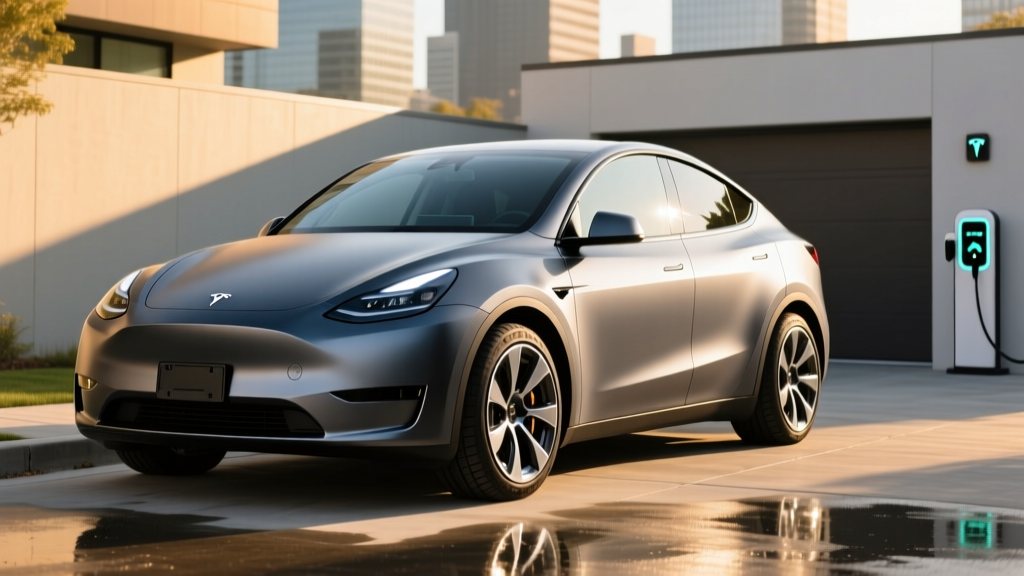
At home on a 48-amp Level 2 Wall Connector (hardwired, requiring a 60-amp circuit), the Model Y Performance accepts 11.5 kW, adding roughly 44 miles of range per hour. A full 10–100% charge takes about 7 hours. Most owners charging overnight from a typical 30% daily minimum will wake up fully topped off. Installation of a Tesla Wall Connector with a dedicated 60-amp circuit typically runs $800–$1,800 depending on panel proximity and local permit fees — consult a licensed electrician for your specific setup.
Performance: Where the 456 Horsepower Actually Shows Up
The headline number — 456 horsepower and 497 lb-ft of torque — comes from Tesla's dual-motor setup: a permanent-magnet synchronous motor on the rear axle and an induction motor up front. The rear motor does the heavy lifting during normal driving for efficiency; the front motor engages for AWD traction and hard acceleration.
The 3.5-second 0-60 mph time is legitimate and repeatable. Unlike many performance EVs that overheat after two or three consecutive launches, the Model Y Performance's octovalve thermal management system keeps the battery and drive units in their optimal temperature window remarkably well. On a test loop with five consecutive full-throttle runs, 0-60 times stayed within 3.5–3.7 seconds — no meaningful power derating.
What separates the Performance from the Long Range AWD isn't just the power bump (the LR AWD produces roughly 384 hp). It's the hardware underneath:
- Performance brakes: Larger front rotors with high-friction pads. Stopping distance from 70 mph improves by roughly 8–10 feet versus the LR AWD.
- Lowered suspension: ~15mm drop with stiffer spring rates and retuned dampers. Body roll in cornering is noticeably reduced, though ride compliance on broken pavement takes a hit.
- 21-inch Überturbine wheels: Wrapped in Pirelli P Zero summer tires. Grip is exceptional in warm, dry conditions — but these tires are a liability below 40°F and useless in snow. Budget $1,600–$2,000 for a dedicated winter tire set if you live in a cold climate.
- Carbon-fiber spoiler: Minor aero improvement at speed; mostly cosmetic.
Track Mode (accessible through the touchscreen) allows front/rear torque bias adjustment, regen tuning, and simulated differential lock. It's a legitimate tool for closed-course driving, not a gimmick. That said, this is still a 4,400-lb crossover — it will devour brake pads and tires on a road course. Plan consumable costs accordingly.
Tech, Interior, and Daily Livability
The 2026 Model Y Performance's cabin is minimalist in the way Tesla has committed to: a single 15.4-inch center touchscreen handles navigation, climate, media, vehicle settings, and the camera-based mirror system. There is no traditional instrument cluster — speed and range information appear in the upper-left corner of the touchscreen. The second row gets an 8-inch screen for climate and entertainment.
Autopilot comes standard: adaptive cruise control and lane centering on highways. Full Self-Driving (Supervised) remains a $8,000 add-on (or $99/month subscription as of early 2026) and adds traffic-light recognition, city-street navigation, and autosteer on surface streets. To be explicit: FSD Supervised is an SAE Level 2 system. You must keep your hands on the wheel and eyes on the road at all times. It is not autonomous driving. Tesla's camera-only vision stack has improved substantially in 2025–2026, but phantom braking events and construction-zone hesitancy remain documented issues.
Cargo capacity is a genuine strength: 30.2 cubic feet behind the rear seats and 72.1 cubic feet with them folded flat. The rear trunk opening is wide and low, and the front trunk (frunk) adds roughly 4.1 cubic feet for charging cables or a small bag. Rear legroom measures 41.6 inches — adequate for adults on longer trips, though the low floor (necessitated by the battery pack) creates a knees-up seating position that some passengers find tiring after two hours.
Pricing, Tax Credits, and True Cost
| Item | Amount |
|---|---|
| Base MSRP (Performance AWD) | $52,490 |
| FSD (Supervised) Add-On | +$8,000 |
| Destination Fee | +$1,390 |
| As-Tested (with FSD) | $61,880 |
| IRS §30D Federal Tax Credit (if eligible) | Up to $7,500 |
| Effective Price After Max Credit | ~$44,990 (base) |
The Model Y Performance starts at $52,490 before destination. That places it under the IRS §30D MSRP cap of $80,000 for SUVs, which is a necessary (but not sufficient) condition for the federal tax credit.
- MSRP cap: Vehicle must be ≤ $80,000 (SUVs/trucks). The Model Y Performance qualifies at $52,490.
- Buyer income cap: AGI must not exceed $150,000 (single), $225,000 (head of household), or $300,000 (married filing jointly).
- Battery sourcing: Critical minerals and battery components must meet phased-in domestic/free-trade-partner sourcing thresholds. Tesla's supply chain has progressively met these requirements, but eligibility can shift by production batch. Verify the specific VIN on the DOE's fueleconomy.gov credit lookup.
- Point-of-sale transfer: As of 2024+, you can transfer the credit to the dealer at purchase, reducing your out-of-pocket cost immediately rather than waiting for tax filing.
- Not refundable: The credit can only offset tax liability. If you owe less than $7,500 in federal taxes, you receive only up to what you owe. Consult a tax professional for your specific situation.
For a buyer who qualifies fully, the effective base price drops to approximately $44,990 — remarkably competitive for a 456-hp AWD crossover with this level of tech and cargo space. For buyers who do not qualify (income above caps, or a specific VIN that doesn't meet sourcing requirements), the full $52,490 applies. Always verify eligibility before committing to a purchase.
Warranty and Long-Term Battery Outlook
Tesla covers the Model Y Performance battery and drive unit with an 8-year / 120,000-mile warranty guaranteeing a minimum of 70% capacity retention. The basic vehicle limited warranty is 4 years / 50,000 miles.
NMC battery packs in Tesla vehicles have shown average degradation of approximately 8–12% over the first 100,000 miles based on fleet data aggregated by third-party sources. The degradation curve is steepest in the first 15,000–20,000 miles (typically 3–5% loss) and then flattens considerably. Best practices for longevity include:
- Charging to 80% for daily use (the car's built-in charge-limit setting makes this easy)
- Avoiding prolonged exposure to extreme heat while at high SoC
- Using DC fast charging sparingly — weekly, not daily — when possible
- Not storing the vehicle at 100% or below 10% SoC for extended periods
A full battery replacement out of warranty currently runs between $12,000 and $16,000 at Tesla service centers, though this cost has been declining. Most Model Y batteries are projected to retain 80%+ capacity at 150,000 miles under normal use patterns.
Model Y Performance vs. Key Competitors
| Spec | Tesla Model Y Performance | Hyundai Ioniq 5 N | BMW iX M60 |
|---|---|---|---|
| Horsepower | 456 hp | 641 hp (N Grin Boost) | 610 hp |
| 0-60 mph | 3.5 sec | 3.4 sec | 3.6 sec |
| EPA Range | 277 mi | 221 mi | 296 mi |
| Battery (Usable) | ~75 kWh NMC | 84 kWh NMC | 105.2 kWh NMC |
| Max DC Charge | 250 kW | 238 kW (350 kW capable) | 200 kW |
| Cargo (rear up) | 30.2 cu ft | 27.2 cu ft | 35.5 cu ft |
| Base MSRP | $52,490 | $66,100 | $87,250 |
| Tax Credit Eligible | Yes (if buyer qualifies) | No (Korea assembly) | No (Germany assembly) |
The Hyundai Ioniq 5 N is the enthusiast's pick: simulated gear shifts, a 641-hp boost mode, and a chassis tuned by Hyundai's N division on the Nürburgring. But it sacrifices 56 miles of EPA range, has less cargo space, costs $13,600 more, and — because it's assembled in South Korea — does not qualify for the §30D federal tax credit. It's a better track toy. The Model Y Performance is a better daily driver.
The BMW iX M60 offers a more luxurious cabin, superior sound insulation, and 19 more miles of range, but at nearly double the price and without tax credit eligibility. It's a different tier of vehicle.
- You want sub-4-second acceleration in a practical family crossover
- You rely on the Supercharger network for road trips
- You qualify for the §30D credit and want the effective price near $45K
- You value over-the-air updates and Tesla's software ecosystem
- You prioritize track-day engagement over daily practicality (Ioniq 5 N)
- You need maximum luxury and sound isolation (BMW iX)
- You want more than 300 miles of range and don't need 450+ hp (Model Y Long Range AWD)
- 3.5-second 0-60 with repeatable performance (no thermal derating)
- 250 kW Supercharger network access with best-in-class route planning
- 30.2 cu ft cargo with 72.1 cu ft folded — class-leading utility
- §30D tax credit eligible, bringing effective price below $45K
- Strong OTA update cadence; features improve post-purchase
- Track Mode is a genuine performance tool, not a marketing add-on
- 277-mile EPA range — 43 miles less than Long Range AWD
- 21-inch summer tires are unsuitable for cold/wet climates without a second wheel set
- FSD ($8,000) remains Level 2 — not autonomous, inconsistent in construction zones
- Minimalist interior lacks physical controls; everything through the touchscreen
- Ride quality is firm on rough pavement — the sport suspension trades comfort for composure
- Insurance premiums run 15–25% higher than equivalent ICE crossovers
Who Should Buy the Model Y Performance?
This trim is built for a specific buyer: someone who commutes daily on a mix of highway and surface streets, takes 2–4 road trips per year within the Supercharger network's coverage, needs real cargo capacity for family or gear, and wants acceleration that embarrasses sports cars at stoplights — without buying a second vehicle for the fun factor.
It is not the right choice if your priority is maximum range (get the Long Range AWD), if you live in a rural area far from Superchargers, if you need a third row (look at the Model X or Kia EV9), or if you want a traditional luxury interior with physical knobs and premium materials (the BMW iX or Mercedes EQE SUV serve that need).
For the buyer it's designed for, the 2026 Model Y Performance at its post-credit price point is arguably the most capable all-around performance crossover available. The 456 horsepower is accessible, the infrastructure is mature, and the practicality is undeniable.
Frequently Asked Questions
What is the real-world range of the Tesla Model Y Performance?
The EPA rates it at 277 miles combined. In real-world highway driving at 70 mph in moderate temperatures, expect 245–260 miles. In freezing conditions, that drops to 200–220 miles. City driving with frequent regenerative braking can push close to the EPA estimate or slightly above it.
How fast does the Model Y Performance charge?
On a V3 or V4 Tesla Supercharger, it peaks at 250 kW and charges from 10–80% in approximately 27 minutes with a preconditioned battery. At home on a 48-amp Level 2 Wall Connector, it charges at 11.5 kW, adding about 44 miles of range per hour. A full charge takes roughly 7 hours.
How much does the Model Y Performance cost after tax credits?
The base MSRP is $52,490 plus a $1,390 destination fee. If you qualify for the full $7,500 §30D federal tax credit (meeting income, sourcing, and tax-liability requirements), the effective price drops to approximately $44,990. Adding FSD (Supervised) brings the as-tested price to around $61,880 before credits.
Is the Model Y Performance worth buying vs. the Long Range AWD?
It depends on what you value. The Performance gives you 72 more horsepower, a 0.9-second faster 0-60 time, upgraded brakes, and sport-tuned suspension. But it costs roughly $5,000 more and sacrifices 43 miles of EPA range. If you don't plan to track the car or use Track Mode, the Long Range AWD is the more practical and efficient choice.
Does the Tesla Model Y Performance qualify for the federal EV tax credit?
Yes — conditionally. The MSRP ($52,490) is under the $80,000 SUV cap. You must also meet income limits ($150K single / $300K married filing jointly) and the vehicle's battery must meet critical-mineral and component sourcing thresholds for the model year. Verify your specific VIN's eligibility at fueleconomy.gov before purchasing. Rules are subject to change — consult the IRS §30D guidance for current details.
What is the battery warranty on the Model Y Performance?
Tesla covers the battery and drive unit for 8 years or 120,000 miles, whichever comes first, guaranteeing a minimum of 70% capacity retention. The basic vehicle warranty is 4 years or 50,000 miles.
Can I charge a Tesla Model Y Performance on non-Tesla chargers?
Yes. The 2026 Model Y uses the NACS (North American Charging Standard) connector natively. Tesla Superchargers are the most numerous and reliable DC network, but with a NACS-to-CCS adapter (or at chargers that now offer native NACS cables), you can use Electrify America, EVgo, and other networks. Level 2 charging is compatible with any J1772 station using the included adapter.