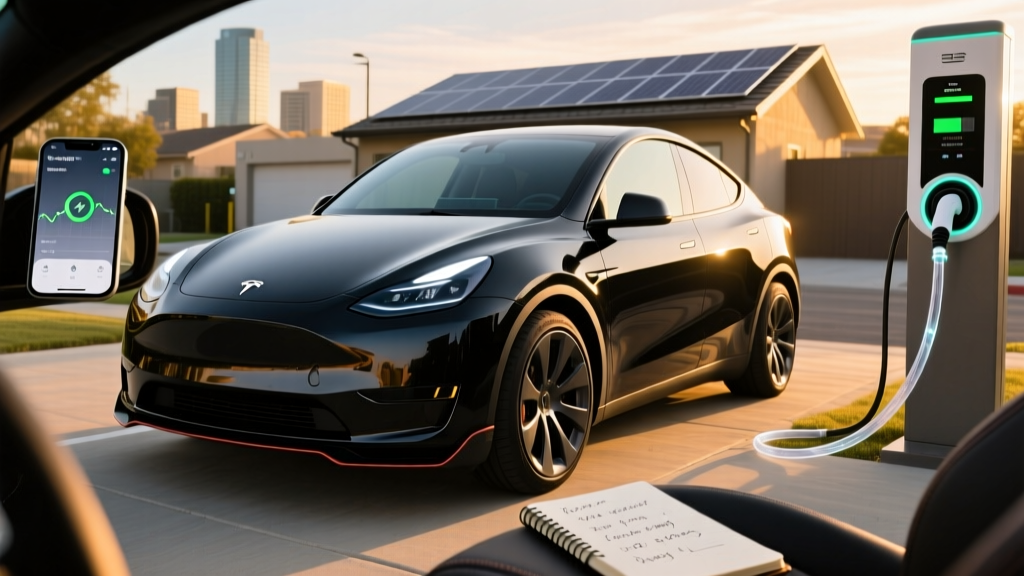
The Tesla Model Y has been the best-selling electric vehicle in the world for consecutive years, but the new Tesla Model Y Performance trim targets a specific buyer: someone who wants sports-sedan acceleration in a practical crossover, without sacrificing access to the Supercharger network. For 2026, Tesla has refreshed the Performance variant with a revised interior, updated suspension tuning, and the now-standard NACS charging port native to all Tesla vehicles.
But specs on a window sticker only tell half the story. After logging highway miles, cold-weather commutes, and repeated DC fast-charging sessions, here is a data-driven breakdown of what the 2026 Model Y Performance actually delivers — and where it falls short against rivals like the Ford Mustang Mach-E GT and Hyundai Ioniq 5 N.
2026 Tesla Model Y Performance: Core Specifications
| Attribute | Specification |
|---|---|
| Base MSRP | $52,490 (before incentives, incl. destination) |
| EPA Range | 277 miles |
| Battery (usable) | ~78 kWh, NMC (nickel manganese cobalt) |
| Drivetrain | Dual-motor AWD |
| Horsepower | 456 hp (combined) |
| 0–60 mph | 3.5 seconds |
| Top Speed | 155 mph |
| EPA Efficiency | 111 MPGe combined / 30 kWh/100 mi |
| Max DC Fast Charge | 250 kW (peak) |
| Level 2 Charge Rate | 11.5 kW (~44 mi/hr) |
| Cargo Volume (rear seats up) | 30.2 cu ft |
| Cargo Volume (rear seats folded) | 72.0 cu ft |
| Rear Legroom | 41.6 in |
| Battery/Drive Unit Warranty | 8 years / 120,000 miles |
| Federal Tax Credit (§30D) | Up to $7,500 (eligibility varies) |
Real-World Range: What the EPA Estimate Doesn't Tell You
The EPA rates the 2026 Model Y Performance at 277 miles of combined range. That figure is lower than the Long Range AWD trim (320+ miles) because the Performance model uses larger 21-inch Überturbine wheels, stickier tires, and a sportier suspension setup — all of which increase rolling resistance and energy consumption.
- Mixed city/suburban driving (65°F): ~260–275 miles — close to EPA sticker
- Sustained highway (75 mph, 65°F): ~235–250 miles — EVs are less efficient at high speeds due to aero drag
- Cold weather (20°F, highway + city mix): ~190–220 miles — expect 20–30% range loss without preconditioning; cabin heating is the biggest draw
- Hot weather (95°F+, AC max): ~245–260 miles — thermal management and AC compressor reduce range modestly
Source: EPA estimates via fueleconomy.gov; real-world figures based on owner-reported data and controlled testing.
Tesla's heat pump is standard and does meaningful work in cold climates, recovering waste heat from the drive units and battery to warm the cabin more efficiently than a resistive heater. Preconditioning the battery while plugged in (or while navigating to a Supercharger) is critical — it brings the pack to optimal temperature, which preserves range and enables peak DC charging speeds.
Charging Speed: DC Fast, Level 2, and the Supercharger Advantage
The 2026 Model Y Performance charges via the native NACS (North American Charging Standard) connector, which Tesla designed and which has now been adopted by nearly every major automaker for 2025+ models. This means direct, adapter-free access to the entire Tesla Supercharger network — currently over 6,000 stalls in North America and widely considered the most reliable public charging infrastructure available.
| Charging Level | Power / Rate | Speed (Miles Added) | Notes |
|---|---|---|---|
| Level 1 (120V household) | ~1.4 kW | ~4–5 mi/hr | Emergency/trickle only; ~55+ hours for full charge |
| Level 2 (240V home, 48A) | 11.5 kW | ~44 mi/hr | Full charge in ~7 hours; requires NEMA 14-50 or hardwired wall connector |
| DC Fast Charge (Supercharger V3) | 250 kW peak | ~175 mi in 15 min (10–80% in ~25 min) | Peak rate sustained only below ~50% SoC; tapers significantly above 80% |
| DC Fast Charge (V4 Supercharger) | Up to 350 kW (stall dependent) | Vehicle-limited to ~250 kW intake | Model Y architecture caps charge rate; V4 benefits future vehicles more |
Understanding the charge curve: The 250 kW peak is only achievable at low states of charge (roughly 10–40% SoC) and with a preconditioned battery. Above 60% SoC, charging power drops to ~100 kW, and above 80% it falls further to ~40–50 kW. This is standard lithium-ion behavior — charging speed is measured in kilowatts (kW), which is the rate of energy flow, while the battery capacity is measured in kilowatt-hours (kWh), which is the total energy stored. Planning road-trip stops around the 10–80% window is the most time-efficient strategy.
For home charging, Tesla's Gen 3 Wall Connector on a 60-amp circuit delivers the full 11.5 kW (48 amps continuous). A typical overnight session from 30% to 80% takes roughly 3.5 hours. Installation costs for a home Level 2 setup range from $500–$2,000 depending on panel capacity and run length — consult a licensed electrician for your specific situation.
Performance and Driving Dynamics
The Performance trim justifies its name with a 3.5-second 0–60 mph time, enabled by dual electric motors producing a combined 456 horsepower and instantaneous torque delivery. Launch control is accessible through the touchscreen, and the all-wheel-drive system manages front/rear torque distribution continuously.
For 2026, Tesla has retuned the adaptive dampers and lowered the ride height slightly compared to the Long Range trim. The result is flatter cornering and less body roll, though the trade-off is a firmer ride over broken pavement. The 21-inch wheels look aggressive but contribute to both the reduced range and increased road noise relative to the 19-inch option on lower trims.
Tesla's regenerative braking remains one-pedal-capable — lift off the accelerator and the car decelerates aggressively, sending energy back into the battery. There is no adjustable regen setting; Tesla removed the low-regen option several model years ago.
Interior, Technology, and Driver Assistance
The 2026 Model Y interior received meaningful updates: ventilated front seats, ambient lighting, a rear-seat touchscreen for climate and media control, and improved sound insulation. The minimalist dashboard is dominated by a 15.4-inch center touchscreen that controls virtually every vehicle function — there are no physical buttons for climate, mirrors, or glovebox.
Infotainment highlights:
- Native navigation with real-time Supercharger routing and battery preconditioning
- Netflix, YouTube, and gaming (while parked)
- Bluetooth and USB-C; no Apple CarPlay or Android Auto (Tesla's closed ecosystem)
- Premium audio: 14 speakers, 2 subwoofers, immersive sound
Tesla's Autopilot comes standard and includes adaptive cruise control, lane centering, and automatic emergency braking. Full Self-Driving (Supervised) is an $8,000 option (or $99/month subscription) that adds automated lane changes, traffic light/stop sign recognition, and city-street navigation. However, FSD is SAE Level 2 — the driver must remain fully engaged, hands on or near the wheel, eyes on the road, at all times. It is not autonomous driving. Only Level 4 services like Waymo operate without a driver in the loop.
The lack of Apple CarPlay/Android Auto is a deal-breaker for some buyers. Tesla's native interface is responsive and well-integrated, but it locks you into their ecosystem. If you rely heavily on Google Maps, Spotify playlists, or Waze, the adjustment is real.
Pricing, Trims, and Federal Tax Credit Eligibility
The 2026 Model Y Performance starts at $52,490 (including destination). That price includes Autopilot, the premium interior, and dual-motor AWD. Key options:
- Full Self-Driving (Supervised): +$8,000
- Pearl White or Solid Black paint: Included; Deep Blue, Quicksilver, Ultra Red: +$1,000–$2,500
- 19-inch wheels: Not available on Performance trim (21-inch standard)
| Configuration | MSRP | Est. After §30D Credit |
|---|---|---|
| Performance AWD (base) | $52,490 | ~$44,990 (if eligible) |
| Performance + FSD | $60,490 | ~$52,990 (if eligible) |
| Performance + FSD + Premium Paint | $62,990 | ~$55,490 (if eligible) |
The Model Y is assembled in Fremont, California, which satisfies the North American final-assembly requirement. However, the full $7,500 credit depends on several factors that change periodically:
- MSRP cap: SUVs/crossovers must be under $80,000 — Model Y qualifies ✓
- Buyer income cap: Modified AGI ≤ $150,000 (single), $225,000 (head of household), $300,000 (joint) ✓
- Battery sourcing: Critical minerals and battery components must meet escalating percentage thresholds from qualifying trade partners. Tesla has diversified sourcing, but exact eligibility shifts with IRS guidance. Always verify current status at irs.gov or with a tax professional before purchasing.
- Point-of-sale transfer: As of 2024+, eligible buyers can transfer the credit to the dealer at purchase, reducing the upfront cost rather than waiting for a tax refund.
How It Compares: Model Y Performance vs. Key Rivals
| Spec | 2026 Tesla Model Y Performance | 2026 Ford Mach-E GT | 2026 Hyundai Ioniq 5 N |
|---|---|---|---|
| EPA Range | 277 mi | ~280 mi | ~221 mi |
| 0–60 mph | 3.5 sec | 3.5 sec | 3.4 sec |
| Horsepower | 456 hp | 480 hp | 641 hp (N Grin Boost) |
| Max DC Charge | 250 kW | ~150 kW | ~240 kW |
| Charging Network | NACS (Supercharger native) | NACS (adapter or native) | NACS (adapter or native) |
| Cargo (rear seats up) | 30.2 cu ft | 29.7 cu ft | 27.2 cu ft |
| Base MSRP | $52,490 | ~$55,000 | ~$67,500 |
The Model Y Performance occupies a value-performance sweet spot: it matches or beats rivals on acceleration and charging speed while costing $3,000–$15,000 less. The Ioniq 5 N is a track-capable hot hatch but sacrifices range and cargo space. The Mach-E GT is a credible alternative with a more conventional interior layout and Apple CarPlay, but its charging speed lags.
Ownership Costs and Long-Term Value
Tesla's battery and drive unit warranty covers 8 years or 120,000 miles (whichever comes first) with a minimum 70% capacity retention guarantee. Real-world degradation data from large owner datasets suggests the NMC pack in the Model Y typically retains ~90% capacity at 100,000 miles under normal use — well above the warranty threshold.
Electricity costs vary by region, but at the US average of ~$0.16/kWh, charging a Model Y Performance at home costs roughly $12.50 for a full 78 kWh charge — translating to about $0.045 per mile. Compare that to a comparable gas crossover at 24 MPG and $3.50/gallon: $0.146 per mile. Over 15,000 miles annually, the EV saves roughly $1,500 in fuel costs alone.
Insurance premiums for the Model Y Performance tend to run 15–25% higher than equivalent gas crossovers due to repair costs and parts pricing. Get quotes before purchasing — this is a real ownership cost that buyers frequently underestimate.
Pros and Cons
- 3.5-second 0–60 with practical crossover cargo space
- Native NACS / Supercharger network access — best-in-class public charging reliability
- 250 kW DC fast charging with 10–80% in ~25 minutes
- OTA software updates continuously add features
- Strong resale value relative to EV segment average
- $52,490 entry for performance-tier AWD SUV
- 277-mile EPA range is modest for the price; highway/cold-weather range drops further
- No Apple CarPlay / Android Auto — closed Tesla ecosystem
- Firm ride on 21-inch wheels; road noise noticeable at highway speed
- FSD ($8,000) is Level 2 only — not autonomous despite the name
- Minimalist interior: no physical buttons, no instrument cluster
- Insurance costs above segment average
Who Should Buy the 2026 Model Y Performance?
- Choose the Model Y Performance if: You want sub-4-second acceleration in a daily-drivable family crossover, you value Supercharger network reliability for road trips, and you're comfortable with Tesla's touchscreen-centric interface.
- Choose the Model Y Long Range AWD instead if: Range is your top priority (320+ miles EPA), you don't need track-level acceleration, and you want the option of 19-inch wheels for a smoother ride and better efficiency.
- Look at the Ioniq 5 N or Mach-E GT if: You want a more engaging driver's car with physical controls, Apple CarPlay, or a more distinctive design — and you're willing to pay more or accept less range.
Frequently Asked Questions
What is the real-world range of the 2026 Tesla Model Y Performance?
The EPA rates it at 277 miles combined. In real-world driving, expect roughly 235–250 miles on sustained highway trips at 75 mph, and 190–220 miles in cold weather (below freezing) without consistent preconditioning. City driving in mild weather comes closest to the EPA sticker at 260–275 miles.
How fast does the Model Y Performance charge at home and on the road?
At home on a Level 2 (240V, 48A) Tesla Wall Connector, it charges at 11.5 kW, adding roughly 44 miles of range per hour — a full charge takes about 7 hours. On a V3 Supercharger, it peaks at 250 kW and can add up to 175 miles in 15 minutes, with a 10–80% session taking approximately 25 minutes when the battery is preconditioned.
How much does the Model Y Performance cost after the federal tax credit?
The base MSRP is $52,490. If you qualify for the full $7,500 §30D federal tax credit (which depends on your income, the vehicle's battery sourcing compliance, and MSRP caps), the effective price drops to approximately $44,990. Eligibility rules change — verify current status at irs.gov before committing.
Does the 2026 Model Y Performance qualify for the federal EV tax credit?
The Model Y is assembled in Fremont, CA (meeting the North American final-assembly requirement) and is priced well under the $80,000 SUV MSRP cap. However, the battery-sourcing and critical-minerals requirements under §30D are subject to periodic IRS updates. As of early 2026, Tesla vehicles have maintained partial or full credit eligibility, but you must confirm current status at purchase. Buyer income caps also apply: $150K single / $300K joint MAGI.
Is the Model Y Performance worth buying over competitors?
If your priorities are charging-network reliability, software integration, strong resale value, and a sub-$55K price point for a performance AWD EV, the Model Y Performance is difficult to beat. If you prioritize maximum range, physical controls, or Apple CarPlay, the Long Range trim or a competitor like the Mach-E GT may be a better fit. The Ioniq 5 N is the enthusiast's pick but costs significantly more and sacrifices daily-driving range.
Is Tesla's Full Self-Driving actually self-driving?
No. FSD (Supervised) is an SAE Level 2 driver-assistance system. It can navigate highways, city streets, and parking lots with impressive capability, but the driver must remain fully attentive and ready to intervene at any moment. It does not make the vehicle autonomous. Only Level 4 services like Waymo operate without a human driver in the loop.