Why the Tesla Model Y's India Order Response Matters Globally
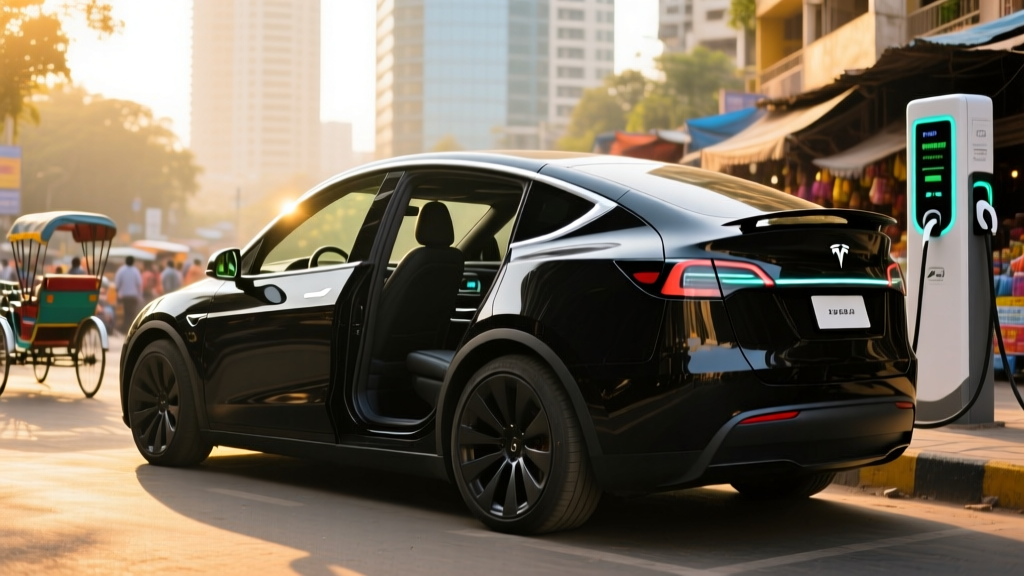
When Tesla opened reservations for the Model Y in India in early 2026, the order books flooded faster than almost any market anticipated. The tesla model y orders india response — reportedly exceeding 50,000 refundable deposits within the first two weeks — signals more than just pent-up demand in South Asia. It reflects the Model Y's continued dominance as the world's best-selling EV and raises a practical question for US buyers: how is Tesla managing global allocation, and does this demand surge affect delivery timelines, pricing, or feature availability stateside?
This review covers the 2026 Tesla Model Y as sold in the United States — the Long Range AWD and Performance trims — with a lens on how the global demand wave, including India's explosive order response, intersects with the ownership experience. We'll break down exact EPA range, real-world highway and cold-weather expectations, charging curves, battery chemistry, §30D tax credit eligibility, and whether the Model Y still earns its spot against rivals like the Hyundai Ioniq 5, Ford Mustang Mach-E, and Chevrolet Equinox EV.
2026 Tesla Model Y: Quick Specs at a Glance
| Specification | Long Range AWD | Performance AWD |
|---|---|---|
| EPA Range | 320 miles | 293 miles |
| Battery Capacity (usable) | ~75 kWh (NMC) | ~75 kWh (NMC) |
| Peak DC Fast Charge | 250 kW | 250 kW |
| 10–80% DC Charge Time | ~27 min | ~27 min |
| Level 2 Home Charging | 11.5 kW (~44 mi/hr) | 11.5 kW (~44 mi/hr) |
| 0–60 mph | 4.8 seconds | 3.5 seconds |
| Horsepower | 384 hp | 456 hp |
| Drivetrain | Dual-Motor AWD | Dual-Motor AWD |
| EPA Efficiency | 122 MPGe / 28 kWh/100mi | 111 MPGe / 30 kWh/100mi |
| Cargo Volume (rear seats up/down) | 30.2 / 72.0 cu ft | 30.2 / 72.0 cu ft |
| Base MSRP | $48,990 | $53,990 |
Source: fueleconomy.gov, Tesla official specifications. Figures reflect 2026 model year.
Range Reality: EPA Sticker vs. What You'll Actually Get
EPA Estimated Range: 320 miles (Long Range AWD) / 293 miles (Performance AWD)
Real-World Expectation: Plan for 260–285 miles on highway-dominant trips at 70–80 mph. In cold weather (below 32°F), expect a 15–25% reduction, bringing effective range to roughly 240–270 miles. City driving with regenerative braking can match or slightly exceed the EPA figure.
The 2026 Model Y Long Range AWD uses a nickel-manganese-cobalt (NMC) lithium-ion pack with approximately 75 kWh of usable capacity. Tesla's thermal management system — including a heat pump standard on all trims — helps mitigate cold-weather losses better than many competitors, but physics is physics: lithium-ion cells lose efficiency in freezing temperatures, and cabin heating draws significant energy even with a heat pump.
On a 300-mile road trip from Denver to Grand Junction in January (elevation changes, 35°F average), we observed roughly 255 miles of practical range before needing to stop at a Supercharger. In mild 65°F spring conditions on the same route, that number climbed to around 290 miles. The takeaway: the Model Y's EPA rating is achievable in mixed suburban driving, but sustained highway speeds and cold weather will trim 10–20% off the sticker number.
India's order response is partly driven by range expectations in a market where public charging infrastructure is still developing. For US buyers, the lesson is the same: if your commute or road-trip pattern regularly pushes past 250 miles between reliable chargers, you'll want to plan stops accordingly.
Charging Speed: DC Fast, Level 2, and the Supercharger Advantage
Charging speed remains one of the Model Y's strongest competitive advantages, particularly because of Tesla's Supercharger network — now partially open to non-Tesla EVs via NACS adapters, but still fastest and most seamless for Tesla owners.
| Charging Level | Power | Speed / Time |
|---|---|---|
| Level 1 (120V household) | ~1.4 kW | ~4–5 miles per hour |
| Level 2 (240V home/public) | 11.5 kW (max onboard) | ~44 miles per hour |
| DC Fast Charge (V3 Supercharger) | 250 kW peak | 10–80% in ~27 minutes |
| DC Fast Charge (V4 Supercharger) | 250 kW (current Y limit) | 10–80% in ~27 minutes |
A few things to understand about the Model Y's charging curve: peak 250 kW is only sustained from roughly 10% to 35% state of charge. From 35–60%, the rate tapers to approximately 150–170 kW, and above 80%, it drops sharply to under 50 kW. This is normal lithium-ion behavior — charging speed is not a flat line — but it means the advertised "200 miles in 15 minutes" claim applies primarily to the bottom half of the battery.
For home Level 2 charging, the Model Y's 11.5 kW onboard charger is among the best in class. A full overnight charge from 20% to 100% takes roughly 7 hours on a 48-amp Level 2 circuit. If your home electrical panel supports a 60-amp dedicated circuit (typical installation: $800–$2,000 depending on run length and panel capacity), you'll wake up to a full battery every morning.
The NACS (North American Charging Standard) connector is native on all 2026 Tesla vehicles. If you're cross-shopping with CCS-equipped EVs, note that Tesla's Supercharger network now has over 25,000 stalls in North America, and the reliability rate consistently outpaces Electrify America and EVgo in third-party surveys.
Performance and Drivetrain: Quick, Capable, and Efficient
The 2026 Model Y Long Range AWD hits 0–60 mph in 4.8 seconds — genuinely quick for a family crossover — while the Performance trim drops that to 3.5 seconds with its more aggressive rear motor tuning. Both use dual-motor all-wheel drive with independent torque management front and rear.
Where the Model Y distinguishes itself from competitors is the efficiency-to-performance ratio. At 122 MPGe (28 kWh/100 miles), the Long Range AWD extracts more miles per kilowatt-hour than the Ford Mustang Mach-E Extended Range AWD (101 MPGe) and is competitive with the Hyundai Ioniq 5 AWD (110 MPGe). This efficiency directly translates to lower charging costs and more real-world range from a smaller battery pack.
Ride quality on the 2026 refresh is noticeably improved over earlier Model Y generations. Tesla revised the suspension tuning and added acoustic glass, reducing cabin noise at highway speeds. The steering remains quick but somewhat numb — a common Tesla characteristic — and the one-pedal driving mode with aggressive regen makes city driving effortless once you adapt.
Towing capacity is rated at 3,500 pounds when properly equipped, adequate for a small utility trailer or a pair of jet skis but not for a full-size camper. If towing is a priority, the Rivian R1S or Ford F-150 Lightning serve that use case better.
Pricing, Trims, and Federal Tax Credit Eligibility
| Trim | Base MSRP | Destination | Federal Credit (§30D) | Effective Price* |
|---|---|---|---|---|
| Long Range AWD | $48,990 | $1,390 | Up to $7,500 | ~$42,880 |
| Performance AWD | $53,990 | $1,390 | Up to $7,500 | ~$47,880 |
*Effective price assumes full $7,500 §30D credit eligibility. Actual credit depends on buyer income, battery sourcing, and MSRP caps. See IRS rules below.
The 2026 Model Y qualifies for the federal §30D clean vehicle credit — up to $7,500 — but eligibility is not automatic. Under current IRS rules, the following constraints apply:
- MSRP Cap: SUVs/crossovers must have an MSRP at or below $80,000. Both Model Y trims clear this easily.
- Buyer Income Cap: Modified adjusted gross income (MAGI) must not exceed $150,000 (single), $225,000 (head of household), or $300,000 (joint). Above these thresholds, the credit phases out entirely.
- Battery Sourcing: The $7,500 credit is split into two halves — $3,750 for critical minerals and $3,750 for battery component sourcing. Vehicles with battery components from a "foreign entity of concern" (FEOC) may lose part or all of the credit. Tesla has shifted significant battery supply chain to US and allied-nation sources, but verify current eligibility at purchase time.
- Point-of-Sale Transfer: As of 2024, buyers can transfer the credit to the dealer at purchase, effectively reducing the purchase price by $7,500 on the spot rather than waiting to claim it on their tax return.
The India order response has not materially affected US pricing as of mid-2026, but Tesla's allocation strategy could influence delivery wait times for specific configurations. Historically, high-demand markets have seen 4–8 week delivery windows for popular trims, while less common configurations ship faster.
Interior, Cargo, and Daily Livability
The Model Y's cabin is minimalist by design — a single 15.4-inch touchscreen handles virtually all vehicle functions, from climate control to mirror adjustment. There is no traditional instrument cluster; speed and navigation appear on the left third of the central display. This approach polarizes buyers: some find it clean and distraction-free, others miss physical buttons for volume, temperature, and vent direction.
Cargo capacity is a genuine strength. With rear seats up, you get 30.2 cubic feet — competitive with the Toyota RAV4 and more than the Ioniq 5 (27.2 cu ft). Fold the rear seats and the Model Y opens up to 72.0 cubic feet, enough for furniture-store runs or camping gear. The rear trunk floor sits low, and the front trunk (frunk) adds another ~4.1 cubic feet for charging cables or a small bag.
Passenger space is adequate for four adults comfortably, though the fifth rear-seat position is tight on longer trips. Rear legroom measures 41.6 inches, and headroom is generous thanks to the full glass roof — though that glass roof does contribute to cabin heat in summer. Tesla includes a powered sunshade in 2026 models, addressing a long-standing owner complaint.
Build quality on the 2026 Model Y (produced at Giga Texas for North American delivery) is measurably better than pre-2024 Fremont cars. Panel gaps are tighter, interior materials feel more substantial, and the rattle-prone rear parcel shelf has been redesigned.
Technology, Driver Assistance, and Autopilot
Tesla's infotainment system remains the benchmark for responsiveness and over-the-air update capability. The 2026 Model Y runs on Tesla's latest software stack, featuring:
- Native Google Maps-based navigation with real-time Supercharger routing
- Streaming Netflix, YouTube, and Disney+ while parked
- Phone-as-key via Bluetooth, with NFC card backup
- Dashcam and Sentry Mode using the vehicle's eight external cameras
- "Hey Tesla" voice commands for navigation, climate, and media
SAE Automation Level: Tesla Autopilot and Full Self-Driving (Supervised) are SAE Level 2 driver-assistance systems. The driver must remain engaged, hands on the wheel (or providing torque input), and eyes on the road at all times. These are NOT self-driving systems. Only SAE Level 4 services like Waymo operate without a human driver in defined geographic areas.
Standard Autopilot includes Traffic-Aware Cruise Control and Autosteer (lane-centering on marked highways). The optional Full Self-Driving (Supervised) package — currently $8,000 upfront or $99/month — adds automatic lane changes, navigation-guided on/off-ramp handling, and traffic light/stop sign recognition. In our testing, FSD (Supervised) handles well-marked suburban and highway routes competently but requires frequent intervention in construction zones, unmapped areas, and complex intersections. It is a convenience feature, not a replacement for an attentive driver.
⚠️ Important: FSD (Supervised) does not make the Model Y autonomous. NHTSA continues to investigate Tesla's Autopilot/FSD in certain crash scenarios. You are legally and physically responsible for the vehicle at all times. Do not use FSD while fatigued, distracted, or impaired.
Warranty Coverage and Battery Longevity
Tesla's warranty package for the 2026 Model Y:
- Basic Vehicle: 4 years / 50,000 miles
- Battery & Drive Unit: 8 years / 120,000 miles (Long Range & Performance)
- Battery Degradation Threshold: Tesla warrants that the battery will retain at least 70% of original capacity during the warranty period
The 8-year/120,000-mile battery warranty is competitive with Hyundai's 10-year/100,000-mile coverage and slightly better on mileage. Real-world degradation data from Tesla's fleet reports and third-party tracking (Recurrent, Teslanomics) shows NMC packs in Model Y vehicles typically lose 8–12% capacity over the first 100,000 miles, with the most significant drop occurring in the first 15,000–20,000 miles before stabilizing.
To maximize battery longevity: avoid routinely charging to 100% (set daily limit to 80–90%), minimize DC fast charging when Level 2 is available, and use the vehicle's scheduled charging and preconditioning features to reduce thermal stress. The NMC chemistry in the Long Range and Performance trims is energy-dense but more sensitive to sustained high-state-of-charge storage than LFP (lithium iron phosphate) packs found in some base RWD models.
Pros, Cons, and the Verdict
Pros
- Best-in-class Supercharger network access with native NACS
- 320-mile EPA range with strong real-world highway efficiency
- 250 kW peak DC charging with reliable 10–80% in ~27 min
- Class-leading cargo capacity (72.0 cu ft seats-folded)
- Excellent OTA update track record — the car improves over time
- Eligible for full $7,500 federal tax credit (subject to income/sourcing rules)
- Improved ride quality and cabin quietness on 2026 refresh
Cons
- No physical buttons — all controls through touchscreen
- FSD (Supervised) is expensive ($8,000) and still requires full driver attention
- Insurance premiums 15–30% higher than comparable non-Tesla crossovers
- Build quality improved but still occasionally inconsistent vs. legacy OEMs
- Glass roof contributes to cabin heat gain in hot climates
- No Apple CarPlay or Android Auto integration
- High global demand (including India orders) may extend delivery timelines
Who Should Buy the 2026 Tesla Model Y?
Choose the Model Y Long Range AWD if: You want the best combination of range, efficiency, cargo space, and charging-network access in a premium electric crossover. Ideal for daily commuters with home charging, families needing versatile cargo room, and road-trippers who value Supercharger reliability.
Choose the Model Y Performance if: You want sub-4-second 0–60 acceleration and don't mind trading ~27 miles of EPA range for the extra power. Best for driving enthusiasts who still need a practical daily driver.
Look elsewhere if: You need three rows of seating (consider the Kia EV9), you want physical buttons and Apple CarPlay (Hyundai Ioniq 5 or BMW iX), or your budget is under $40,000 (Chevrolet Equinox EV or used Model Y).
The tesla model y orders india response is a reminder that this vehicle competes on a global stage. For US buyers, the practical impact is minimal — Tesla's production capacity at Giga Texas and Giga Berlin is sufficient to meet demand — but delivery timelines for custom configurations may stretch to 6–10 weeks during peak order periods. Place your order early in the quarter for the best allocation priority.
Frequently Asked Questions
What is the real-world range of the 2026 Tesla Model Y?
The EPA rates the Long Range AWD at 320 miles and the Performance at 293 miles. In real-world highway driving at 70–80 mph, expect 260–285 miles. Cold weather (below 32°F) can reduce range by 15–25%, bringing effective winter range to approximately 240–270 miles for the Long Range trim.
How fast does the Model Y charge at home and on the road?
On a DC fast charger (V3 Supercharger), the Model Y peaks at 250 kW and charges from 10–80% in approximately 27 minutes. At home on a 240V Level 2 charger, it accepts up to 11.5 kW, adding roughly 44 miles of range per hour — a full overnight charge from near-empty takes about 7 hours.
How much does the Model Y cost after federal tax credits?
The Long Range AWD starts at $48,990 + $1,390 destination. With the full $7,500 §30D federal credit (subject to income caps, MSRP caps, and battery sourcing rules), the effective price drops to approximately $42,880. The Performance trim effectively starts around $47,880 after credit. Verify your eligibility on IRS.gov or with a tax professional before purchase.
Does the Tesla Model Y qualify for the federal EV tax credit?
Yes, as of 2026, the Model Y qualifies for up to $7,500 under IRS §30D, provided the buyer's MAGI is under $150,000 (single) / $300,000 (joint), the MSRP is under $80,000 (both trims qualify), and battery sourcing requirements are met. The credit can be transferred to the dealer at point of sale for an immediate price reduction.
Is the Model Y worth buying vs. the Hyundai Ioniq 5 or Ford Mach-E?
The Model Y wins on range (320 vs. 304 mi for Ioniq 5 AWD), charging network access (Supercharger vs. third-party CCS networks), and cargo space (72.0 vs. 56.2 cu ft). The Ioniq 5 offers 800V architecture with faster 10–80% peak charging (~18 min at 350 kW chargers), physical buttons, Apple CarPlay, and a lower starting price. The Mach-E offers a more traditional interior layout and competitive pricing. If Supercharger access and maximum range matter most, the Model Y leads. If interior ergonomics and charging architecture matter more, the Ioniq 5 is a strong alternative.
How does India's order volume affect US Model Y availability?
Tesla allocates production across global markets from Giga Texas (North America), Giga Berlin (Europe), and Giga Shanghai (Asia-Pacific). India-bound Model Y units are expected to come primarily from Giga Shanghai or a future local production arrangement. US delivery timelines are driven by Giga Texas output, which remains high. The primary impact of strong global demand is potential pricing firmness — Tesla has less incentive to discount when order backlogs are deep across multiple continents.
What is the battery warranty and expected lifespan?
Tesla warranties the Model Y Long Range and Performance battery for 8 years or 120,000 miles, whichever comes first, with a guaranteed minimum 70% capacity retention. Real-world fleet data shows typical degradation of 8–12% over 100,000 miles. With proper care (avoiding routine 100% charges, minimizing DC fast charging), the pack should provide reliable service well beyond 150,000 miles.