The Tesla Model Y is the best-selling electric vehicle in America for good reason: strong range, access to the Supercharger network, and practical crossover utility. But search forums and YouTube, and you'll find a growing community of owners asking a different question — what happens when the pavement ends? The Tesla Model Y off-road proposition is more nuanced than a simple yes or no. It's not a body-on-frame truck, but with dual-motor all-wheel drive, decent ground clearance, and a surprisingly capable traction-control system, it handles light-to-moderate trails better than most buyers expect. Here's exactly what it can do, what it can't, and the full spec breakdown you need before pointing one down a fire road.
What "Off-Road" Actually Means for the Model Y
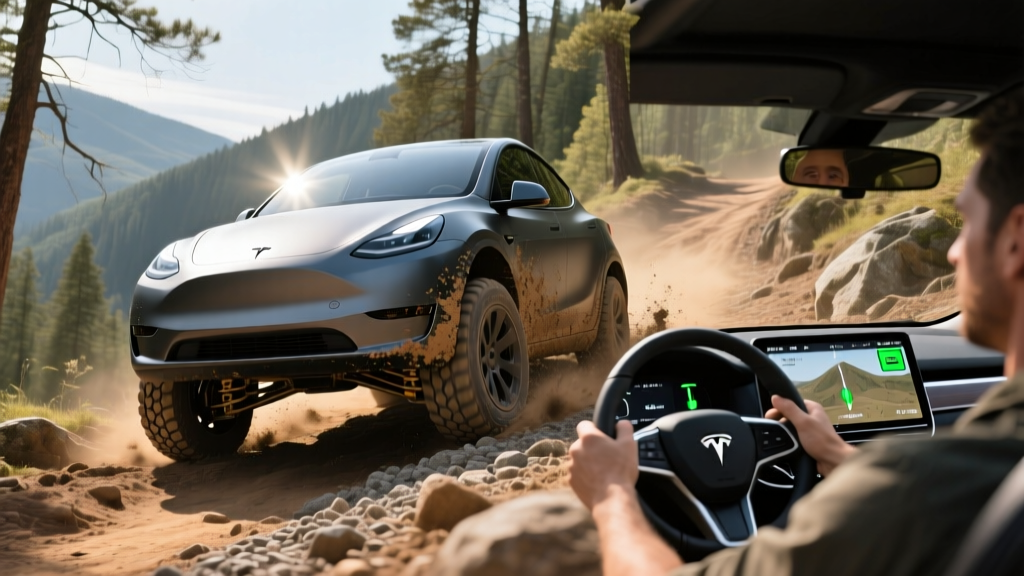
Let's set expectations early. The Model Y is a unibody electric crossover with no low-range transfer case, no locking differentials, and no dedicated off-road drive mode. Tesla does not market it as an off-roader, and you won't find skid plates or tow hooks from the factory. When owners talk about taking the Model Y off-road, they're describing:
- Forest service and fire roads — graded dirt and gravel, moderate ruts
- Campground access roads — grass, mud, light sand
- Snow-covered mountain passes — where AWD traction matters most
- Light rock crawling — low-speed boulder fields (the Model Y's limit)
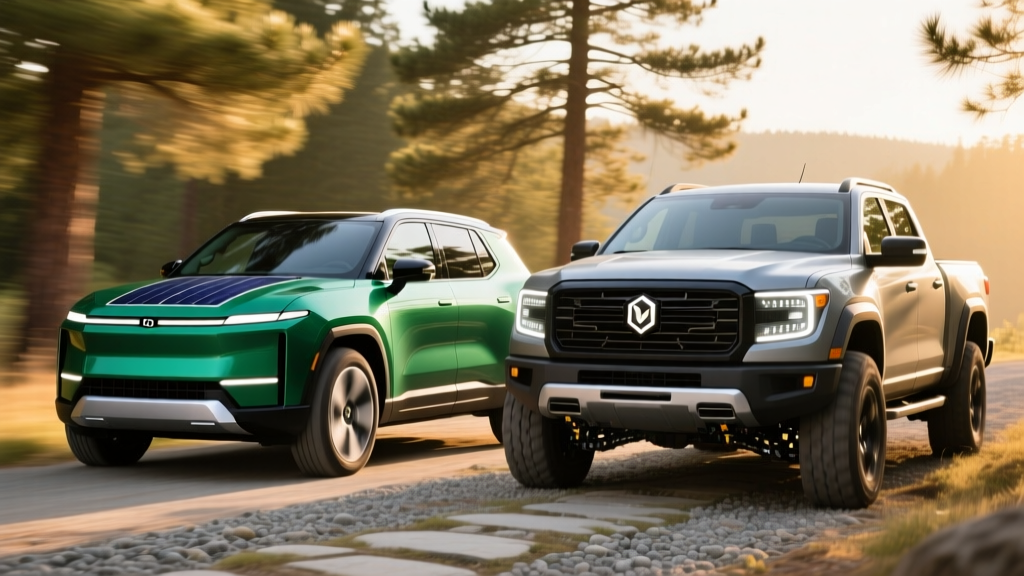
For this use case — what the overlanding community calls "soft-roading" — the Model Y Long Range AWD is genuinely competent. For anything requiring serious articulation, deep mud, or rock-crawling clearance, you want a Rivian R1S, a Ford Bronco, or a purpose-built platform.
Range, Battery, and Efficiency: The Off-Road Penalty
| Spec | Value |
|---|---|
| EPA Range | 320 miles |
| Battery Capacity (usable) | ~75 kWh, NMC chemistry |
| EPA Efficiency | 122 MPGe combined / 28 kWh/100 mi |
| Drivetrain | Dual-motor AWD |
| Horsepower | 384 hp combined |
| 0–60 mph | 4.8 seconds |
| Ground Clearance | 6.6 inches |
| Cargo Volume (rear seats up) | 30.2 cu ft (76.2 cu ft folded) |
| Battery Warranty | 8 years / 120,000 miles (70% retention) |
| Base MSRP | $44,990 (before incentives) |
The Long Range AWD uses an NMC (nickel manganese cobalt) battery pack, which offers higher energy density than the LFP chemistry found in the base RWD model. That density matters for range on the trail. The trade-off: Tesla recommends daily charging to 80% for NMC packs (100% only for trips), whereas LFP packs can sit at 100% without degradation concerns.
Charging Speed: Getting Back to Civilization
| Charging Method | Max Power | Speed / Time |
|---|---|---|
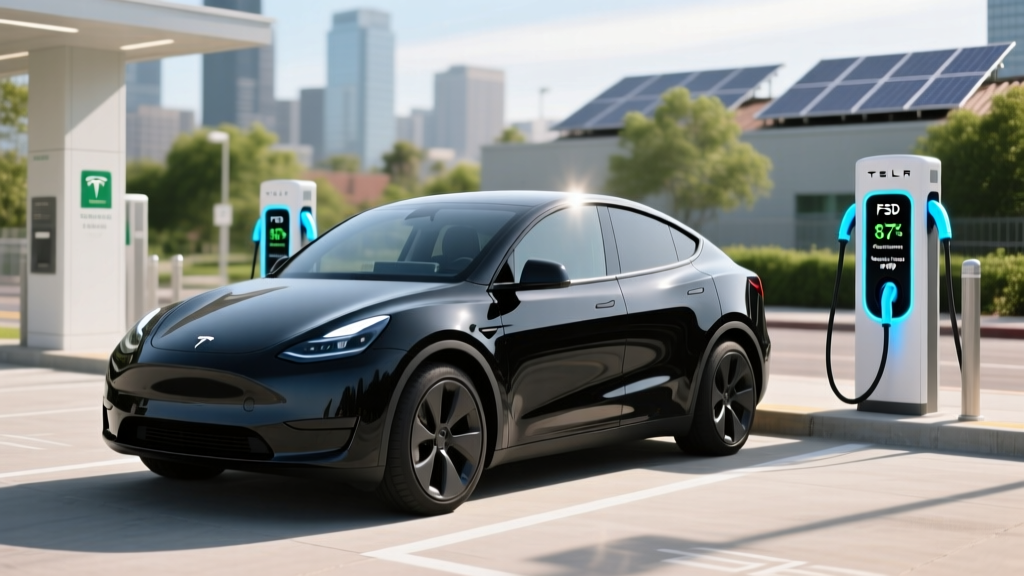
| DC Fast Charge (Supercharger V3/V4) | 250 kW peak | 10–80% in ~25 min |
| DC Fast Charge (CCS adapter, 3rd-party) | ~170 kW typical | 10–80% in ~35 min |
| Level 2 Home (Tesla Wall Connector, 48A) | 11.5 kW | ~37 miles per hour / ~8 hr full charge |
| Level 2 Home (32A mobile connector) | 7.7 kW | ~25 miles per hour |
| Level 1 (120V standard outlet) | ~1.4 kW | ~4 miles per hour |
The Model Y's charging curve is well-characterized: it pulls peak 250 kW from roughly 10–35% state of charge, then tapers through 150 kW, 100 kW, and finally under 50 kW as it approaches 80%. That 10–80% time of ~25 minutes on a V3 Supercharger is one of the fastest in the segment, and it's the primary reason the Supercharger network remains a decisive advantage for adventure-bound Tesla owners. Most remote trailheads in the American West are within 30–60 miles of a Supercharger station, a claim few competing EV networks can match.
For off-road trip planning, the key insight is preconditioning. When you navigate to a Supercharger in the Tesla infotainment system, the car preheats the battery to optimal charging temperature, which can shave 5–10 minutes off your charge session — especially important in cold weather when a cold-soaked battery may otherwise accept only 50–80 kW until it warms up.
Off-Road Capability: Traction, Clearance, and Real Limits
The dual-motor AWD system is the Model Y's strongest off-road asset. Each axle has its own motor, and Tesla's traction-control software can independently modulate torque to each wheel faster than any mechanical system. On loose gravel, wet grass, and packed snow, the Model Y claws forward with composure that surprises first-time drivers. In NHTSA testing, the AWD system contributes to strong stability-control ratings.
However, three hard limits define where the Model Y stops being capable:
1. Ground clearance: 6.6 inches. This is the single biggest constraint. A Subaru Outback has 8.7 inches; a Ford Bronco Sport has 8.8. On trails with embedded rocks, deep ruts, or high approach/departure angles, the Model Y's front air dam and rear diffuser will scrape. Owners who run the Model Y on trails commonly report scuffed bumper covers and damaged underbody panels.
2. No underbody protection. The battery pack is structurally integrated into the floor, protected by a steel and aluminum sandwich — but Tesla does not fit dedicated skid plates for the motor housings, suspension components, or cooling lines. A sharp rock strike at speed can cause expensive damage. Aftermarket skid-plate kits from companies like EV Skid Plates and Unplugged Performance exist, typically running $800–$1,500 installed.
3. Tire limitations. The factory all-season tires (typically Michelin Pilot Sport All-Season or Hankook Ventus S1 evo3) are road-biased performance rubber. On wet rocks, mud, or loose sand, they lose grip quickly. The single most impactful off-road upgrade for a Model Y is swapping to an all-terrain tire like the Falken Wildpeak A/T Trail or BFGoodrich All-Terrain T/A KO3 in the OEM 19-inch or 20-inch size. Expect a 5–10 mile reduction in EPA range from the added rolling resistance, but a dramatic improvement in trail traction.
Pricing, Tax Credits, and the Real Cost
| Trim | MSRP | Est. After §30D Credit |
|---|---|---|
| Long Range AWD | $44,990 | ~$37,490* |
| Performance AWD | $48,990 | ~$41,490* |
*Tax credit eligibility is not guaranteed. Under IRS §30D rules, the full $7,500 credit requires:
- MSRP cap: SUVs/crossovers must be priced at or below $80,000 (both Model Y trims qualify)
- Buyer income cap: AGI ≤ $150,000 single / $225,000 head of household / $300,000 joint
- Battery sourcing: Critical minerals and battery components must meet phased-in domestic/FTE-sourcing thresholds (Tesla's Fremont and Austin-built Model Y has generally met these requirements, but confirm VIN eligibility at fueleconomy.gov before purchase)
- Point-of-sale transfer: You can apply the credit as a price reduction at the dealer, reducing your out-of-pocket cost immediately
Rules and sourcing compliance can shift by model year and production batch. Always verify with your tax professional and the IRS portal before finalizing a purchase.
Interior, Cargo, and Adventure Practicality
The Model Y's cargo area is one of its strongest selling points for outdoor use. With 30.2 cubic feet behind the rear seats and 76.2 cubic feet with seats folded, it swallows camping gear, mountain bikes (front wheel removed), and rooftop-tent hardware with room to spare. The front trunk (frunk) adds another 4.1 cu ft for dirty gear, recovery equipment, or a portable air compressor.
Legroom is generous: 41.8 inches front, 37.7 inches rear — enough for adults on long drives to trailheads. The panoramic glass roof gives an airy feel but adds solar heat gain; Tesla's included tint helps, but many owners add an aftermarket sunshade for summer camping.
For camping specifically, the Model Y supports Camp Mode, which keeps climate control and USB power running overnight while you sleep on a mattress in the back. Tesla's energy consumption in Camp Mode is roughly 1–2% battery per hour in mild weather (more in cold), meaning an 8-hour sleep uses roughly 10–15% of the battery. There's no vehicle-to-load (V2L) outlet from the factory, so powering external appliances requires an aftermarket inverter connected to the 12V system — a limitation compared to the Hyundai Ioniq 5 or Ford F-150 Lightning, which offer native V2L.
Tech, Autopilot, and Trail Navigation
The 15.4-inch center touchscreen runs Tesla's latest software, including integrated trip planning that factors in Supercharger stops, elevation changes, and weather — critical for off-road route planning. The navigation system can route to GPS coordinates (not just street addresses), which is useful for finding trailheads from AllTrails or Gaia GPS waypoints.
One notable tech gap: the Model Y lacks a 360-degree camera system, which is invaluable for spotting rocks and ruts near the wheels. You're relying on the forward camera view and your own sightlines. Aftermarket camera kits exist but require third-party installation.
Pros
- Dual-motor AWD traction excels on gravel, snow, and mud
- 320-mile EPA range covers most day-trip trail loops without charging
- Supercharger network reaches remote areas competitors can't match
- 76.2 cu ft cargo volume fits full camping and biking setups
- Camp Mode enables comfortable car-camping with climate control
- Low center of gravity (battery floor) reduces rollover risk on uneven terrain
Cons
- 6.6 inches of ground clearance limits rut and rock capability
- No factory skid plates — underbody vulnerable to rock strikes
- Factory all-season tires are inadequate for serious off-road traction
- No V2L outlet for external appliances or tools
- No 360-degree camera for wheel-level obstacle spotting
- Off-road driving significantly reduces range (up to 40% penalty)
- Aftermarket off-road mods may affect warranty coverage
Model Y Off-Road vs. the Competition
If off-road capability is a primary use case, here's how the Model Y stacks up:
- Rivian R1S: 14.9 inches of ground clearance (max), quad-motor torque vectoring, true off-road modes, but starts at ~$75,000 and is far larger.
- Subaru Solterra: 8.3 inches of clearance, X-MODE off-road software, but only 222 miles of EPA range — a dealbreaker for remote trails.
- Ford Mustang Mach-E: Similar clearance to Model Y, no dedicated off-road mode, and limited DC fast-charge reliability compared to Tesla.
- Hyundai Ioniq 5: 6.1 inches of clearance (lower than Model Y), but offers V2L and 800V ultra-fast charging.
The Model Y occupies a "good enough" middle ground: not a serious off-roader, but more capable than most EVs and far better supported by charging infrastructure in remote areas.
Who Should Take the Model Y Off-Road?
Choose the Model Y for off-road use if:
- Your trails are graded fire roads, forest service roads, or campground access
- You prioritize range and charging infrastructure over extreme capability
- You want a daily driver that can double as a weekend adventure vehicle
- You're willing to invest in all-terrain tires and aftermarket skid plates
Look elsewhere if:
- You need more than 7 inches of ground clearance for rock crawling or deep ruts
- You regularly drive in deep mud, sand dunes, or water crossings
- You need V2L for job-site power or remote appliance use
- Off-road performance is your primary vehicle requirement, not a secondary one
Frequently Asked Questions
What is the real-world range of the Tesla Model Y off-road?
On paved highways at 70 mph, expect 265–285 miles from the 320-mile EPA rating. On dirt trails with climbing, soft surfaces, and low-speed high-torque driving, consumption rises sharply — plan for 185–215 miles of effective range. Cold weather (below 30°F) can reduce that further by 15–25%.
How fast does the Model Y charge on the road?
At a Tesla V3 Supercharger, the Model Y peaks at 250 kW and charges from 10–80% in approximately 25 minutes. On third-party CCS networks using the included NACS-to-CCS adapter (or native CCS on older models), expect peak rates around 170 kW and 10–80% in roughly 35 minutes. At home on a Level 2 Tesla Wall Connector (48A/11.5 kW), a full charge takes about 8 hours.
Does the Tesla Model Y qualify for the $7,500 federal EV tax credit?
As of 2025, the Model Y Long Range AWD and Performance generally qualify for the full $7,500 §30D credit, provided the buyer meets income caps ($300,000 joint / $150,000 single), the vehicle MSRP is under $80,000 (both trims qualify), and the battery meets current-year critical-mineral and component sourcing requirements. Eligibility can vary by VIN and production date — always verify at fueleconomy.gov and with a tax professional before purchasing.
Is the Model Y worth buying for off-road use vs. competitors?
If off-road driving is a secondary use case — weekend fire roads, snowy mountain passes, campground access — the Model Y is one of the best EV choices available, thanks to its range, AWD traction, and unmatched Supercharger access in remote areas. If you need serious trail capability (rock crawling, deep mud, high-clearance obstacles), the Rivian R1S or a non-EV platform like the Ford Bronco is a better fit.
What modifications make the Model Y better off-road?
The three most impactful upgrades are: (1) all-terrain tires in the factory size (Falken Wildpeak A/T Trail or similar), (2) aftermarket skid plates for the front motor and rear subframe ($800–$1,500), and (3) a portable air compressor for airing down tires on soft surfaces. Suspension lifts are available from aftermarket companies but may affect Tesla's warranty and Autopilot calibration.
Can the Model Y tow a small trailer on trails?
The Model Y is rated to tow up to 3,500 pounds on paved roads. Towing on unpaved surfaces is not officially supported by Tesla and significantly reduces range (expect a 40–50% range penalty with a loaded trailer). Light utility trailers for hauling bikes or kayaks to a trailhead are practical; towing a camper trailer deep into the backcountry is not advisable.