Quick Verdict: The Efficiency Benchmark in Compact Electric SUVs
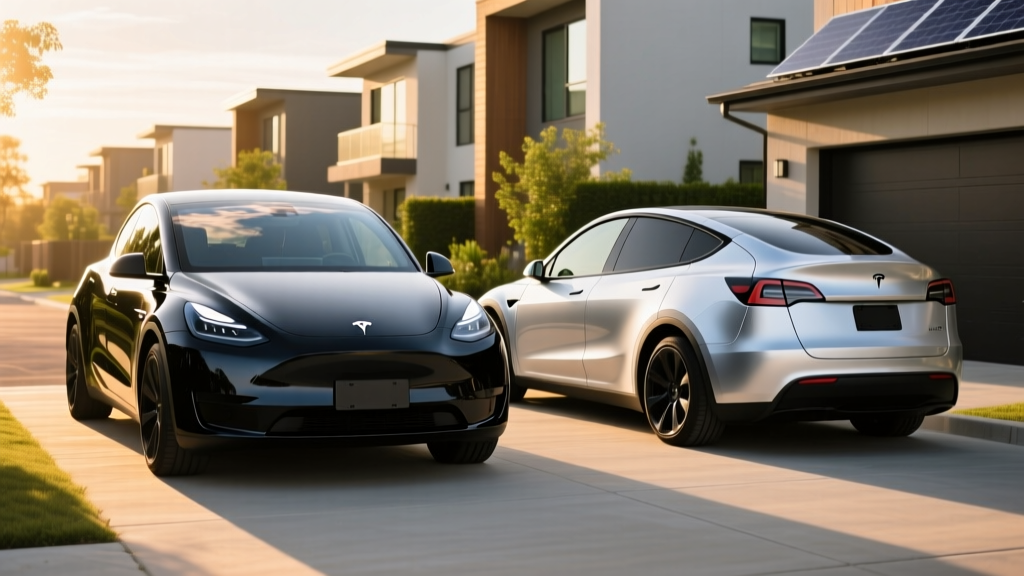
The 2026 Tesla Model Y remains the compact electric SUV to beat on efficiency. With an EPA-estimated 122 MPGe combined on the Long Range AWD trim and up to 320 miles of range, it extracts more miles per kilowatt-hour than nearly every rival in its class. After a significant 2025 refresh that brought interior refinements, improved suspension tuning, and a revised battery pack, the Model Y continues to dominate sales charts — and for good reason. But efficiency stickers don't always translate to real-world miles. Below, we unpack every number that matters: MPGe, actual highway range, DC fast-charging curves, home charging costs, and the exact federal tax credit math for 2026 buyers.
| Spec | Long Range AWD | Performance AWD | Rear-Wheel Drive |
|---|---|---|---|
| EPA Range | 320 mi | 295 mi | 300 mi |
| MPGe (City / Hwy / Combined) | 127 / 117 / 122 | 115 / 106 / 111 | 130 / 118 / 124 |
| kWh per 100 mi | 28 | 30 | 27 |
| Battery (usable, chemistry) | ~75 kWh, NMC | ~75 kWh, NMC | ~60 kWh, LFP |
| Peak DC Fast Charge | 250 kW | 250 kW | 170 kW |
| 10–80% DCFC Time | ~25 min | ~25 min | ~30 min |
| Level 2 Home Charge (kW) | 11.5 kW (44 mi/hr) | 11.5 kW (44 mi/hr) | 11.5 kW (44 mi/hr) |
| 0–60 mph | 4.8 sec | 3.5 sec | 6.6 sec |
| Horsepower | 384 hp | 456 hp | 295 hp |
| Drivetrain | Dual-Motor AWD | Dual-Motor AWD | RWD |
| Base MSRP | $48,990 | $53,990 | $44,990 |
Sources: EPA fueleconomy.gov, Tesla.com. Pricing reflects 2026 model-year MSRP before destination or incentives.
MPGe Explained: What 122 MPGe Actually Means for Your Electricity Bill
MPGe — miles per gallon equivalent — is the EPA's way of translating electric efficiency into a metric gas-car buyers recognize. One gallon of gasoline contains about 33.7 kWh of energy, so a rating of 122 MPGe means the Model Y Long Range AWD travels the same distance on 33.7 kWh of electricity that a 122-MPG gas car would travel on one gallon of fuel.
For real-world cost math, the more useful figure is kWh per 100 miles. The Long Range AWD consumes 28 kWh per 100 miles. At the U.S. residential average electricity rate of roughly $0.17/kWh (EIA, early 2026), that works out to $4.76 per 100 miles, or about $0.048 per mile. Compare that to a 28-MPG gas crossover at $3.40/gallon: $12.14 per 100 miles. Home charging the Model Y costs roughly 60% less per mile than fueling a comparable gas SUV.
Public DC fast charging changes the equation. Tesla Superchargers average around $0.30–$0.40/kWh depending on region and time of day. At $0.35/kWh, the Long Range costs $9.80 per 100 miles on the road — still cheaper than gas in most states, but the gap narrows. If you rely exclusively on public charging, the savings advantage drops significantly.
Real-World Range vs. the EPA Sticker
Real-World Expectation: ~260–285 miles highway (70–75 mph, moderate temps); ~220–250 miles in sub-freezing winter conditions; up to ~310 miles in mixed city/suburban driving with regen braking.
The EPA test cycle blends city and highway driving with climate control at moderate temperatures. In practice, the Model Y Long Range delivers its best range at lower speeds with frequent regenerative braking opportunities — think stop-and-go suburban commuting. On a flat 70-mph highway run at 72°F, expect roughly 270–285 miles before hitting 10% State of Charge (SoC).
Cold weather is the biggest range killer. At 20°F with cabin heat running, the heat pump helps (Tesla has used a highly efficient heat pump since the 2021 refresh), but you'll still see a 15–25% reduction. That 320-mile sticker becomes roughly 240–260 miles in winter highway driving. Preconditioning the battery while plugged in — a feature Tesla handles automatically when you set a departure time or navigate to a Supercharger — mitigates some of this loss and is critical for maximizing DC fast-charge speeds in cold weather.
The RWD trim's LFP (lithium iron phosphate) battery is worth noting. LFP chemistry tolerates regular 100% charging without the degradation concerns of NMC packs. Tesla recommends daily charging to 100% for LFP-equipped vehicles, effectively giving RWD owners the full 300-mile usable capacity every day. The trade-off: LFP packs are heavier and less energy-dense, which is why the RWD has a smaller total battery (~60 kWh) and slightly lower performance figures.
Charging Speed: Supercharger Network and Home Level 2
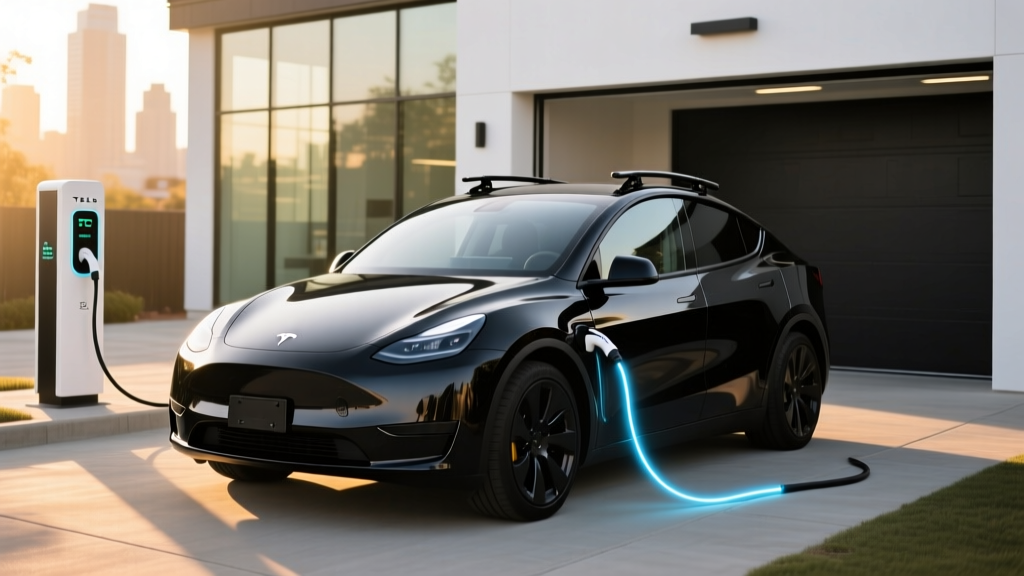
Charging speed is where the Model Y's maturity shows. Tesla's Supercharger network — now open to other brands via NACS adoption — remains the most reliable DC fast-charging infrastructure in the U.S., with uptime consistently above 95%.
| Charging Level | Power (kW) | Speed (mi/hr added) | Notes |
|---|---|---|---|
| Level 1 (120V household) | ~1.4 kW | ~3–4 mi/hr | Emergency/top-up only; ~90 hrs for full charge |
| Level 2 (240V home, 48A circuit) | 11.5 kW | ~44 mi/hr | Full charge in ~7 hrs (Long Range); recommended daily method |
| Level 2 (public, 40A) | 9.6 kW | ~37 mi/hr | Common at destination chargers, workplaces |
| DC Fast (Supercharger V3/V4) | Peak 250 kW | Up to ~1,000 mi/hr (peak) | 10–80% in ~25 min; tapers sharply above 80% |
| DC Fast (RWD trim) | Peak 170 kW | Up to ~680 mi/hr (peak) | 10–80% in ~30 min; LFP chemistry charges more linearly |
Understanding the charge curve: The 250 kW peak applies only between roughly 10–30% SoC on the Long Range and Performance trims. From 30–60%, speed tapers to around 150–180 kW. From 60–80%, expect 80–110 kW. Above 80%, charging slows dramatically to protect battery health — often below 40 kW. This is why Tesla (and most EV makers) quote 10–80% times rather than 0–100%. For road trips, the practical strategy is to charge from ~15% to ~70% at each stop (~20 minutes), which covers roughly 175 miles of highway driving in the Long Range.
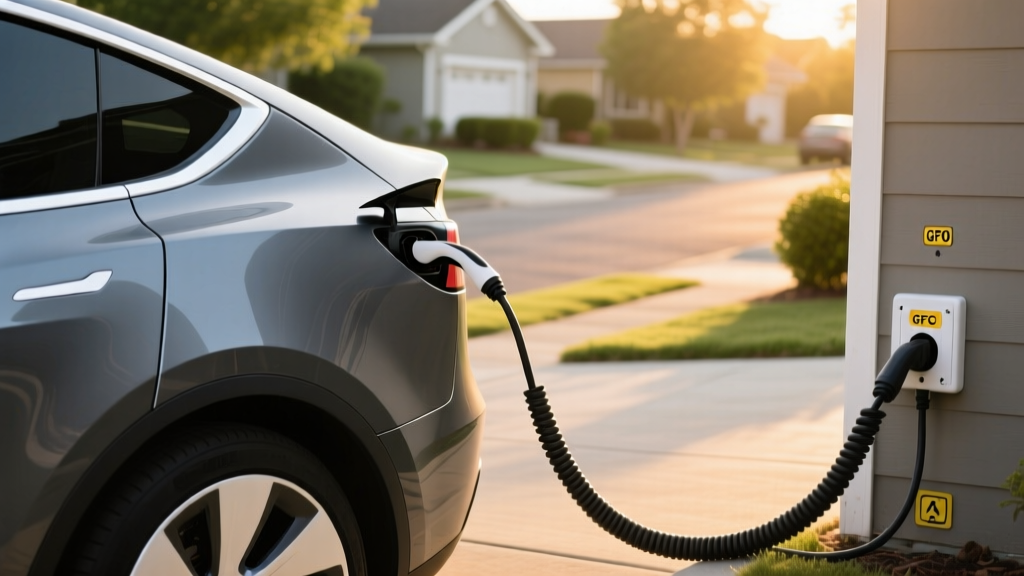
For home charging, a Wall Connector on a 60-amp circuit (48 amps continuous) delivers the full 11.5 kW. Most owners plug in nightly and wake to a full battery. Installation costs vary widely — expect $500–$1,500 for a straightforward install near the panel, or $2,000–$4,000+ if your home needs a panel upgrade to support a 60-amp circuit. Always get a quote from a licensed electrician before committing.
Performance, Interior Space, and Daily Practicality
The Model Y's dual-motor AWD powertrain delivers 384 hp in the Long Range, good for a 4.8-second 0–60 mph time — brisk for a family SUV. The Performance trim drops that to 3.5 seconds with 456 hp, though the ride is noticeably firmer. The RWD trim at 6.6 seconds is adequate for commuting but won't impress at on-ramps.
Interior dimensions make the Model Y a practical family hauler:
- Cargo (rear seats up): 30.2 cu ft
- Cargo (rear seats folded): 72.1 cu ft
- Front cargo (frunk): 4.1 cu ft
- Rear legroom: 41.6 inches
- Front headroom: 41.0 inches
- Seating: 5 standard; optional 7-seat layout available (third row best for small children)
The 2025-refreshed interior brought improved materials, ventilated front seats, ambient lighting, and a rear-seat touchscreen. The minimalist single-screen approach still polarizes — there are no physical buttons for climate or mirrors, and everything routes through the 15.4-inch center display. Whether that's a pro or con depends on your tolerance for touchscreen-only controls.
Driver Assistance: Autopilot and FSD (Supervised)
Standard Autopilot includes adaptive cruise control and lane-centering on highways. The optional Full Self-Driving (Supervised) package ($8,000 or $99/month as of early 2026) adds automated lane changes, navigation-on-autopilot, traffic light/stop sign recognition, and city street steering. FSD has improved markedly, but it still requires constant supervision and can make unexpected decisions in construction zones, unmapped areas, or complex intersections. Think of it as an advanced driver assist, not a chauffeur.
Pricing, Trims, and Federal Tax Credit Eligibility
The 2026 Model Y lineup spans three trims. Here's the pricing and credit picture:
| Trim | Base MSRP | Destination | Est. After §30D Credit | §30D Eligible? |
|---|---|---|---|---|
| Rear-Wheel Drive | $44,990 | $1,390 | ~$38,600 (if eligible) | Yes — qualifies under MSRP cap; battery sourcing and buyer income must verify |
| Long Range AWD | $48,990 | $1,390 | ~$42,600 (if eligible) | Yes — qualifies under MSRP cap; verify sourcing + income |
| Performance AWD | $53,990 | $1,390 | ~$47,600 (if eligible) | Yes — under $80,000 SUV cap; verify sourcing + income |
- MSRP cap: Vehicle must be under $80,000 for SUVs (all Model Y trims qualify)
- Buyer income cap: Adjusted gross income ≤ $150,000 (single), $225,000 (head of household), $300,000 (joint)
- Battery sourcing: Critical minerals and battery components must meet phased-in domestic/free-trade-partner thresholds (percentages increase annually through 2029)
- Point-of-sale transfer: Eligible buyers can apply the credit as a down-payment reduction at purchase rather than waiting for tax filing
- Final assembly: Must occur in North America (Model Y assembled in Fremont, CA and Austin, TX — qualifies)
Battery-sourcing rules tighten each year. Always verify current-year eligibility on IRS.gov and consult a tax professional before relying on the credit in your purchase decision.
How the Model Y Stacks Up Against Key Competitors
The compact electric SUV segment has matured considerably. Here's how the Model Y Long Range compares to three primary rivals on the metrics buyers actually research:
| Metric | Tesla Model Y LR AWD | Ford Mustang Mach-E ER AWD | Hyundai Ioniq 5 AWD | Kia EV6 AWD |
|---|---|---|---|---|
| EPA Range | 320 mi | 312 mi | 290 mi | 282 mi |
| MPGe (combined) | 122 | 101 | 110 | 117 |
| Peak DCFC (kW) | 250 kW | 150 kW | 233 kW | 233 kW |
| 10–80% DCFC | ~25 min | ~38 min | ~18 min | ~18 min |
| 0–60 mph | 4.8 sec | 5.1 sec | 5.1 sec | 5.0 sec |
| Cargo (seats up) | 30.2 cu ft | 29.7 cu ft | 27.2 cu ft | 24.4 cu ft |
| Base MSRP (AWD) | $48,990 | $51,995 | $50,100 | $49,900 |
| Charging Network | Supercharger (native NACS) | NACS adapter / Supercharger access | NACS adapter / Supercharger access | NACS adapter / Supercharger access |
The Ioniq 5 and EV6 charge faster (10–80% in ~18 minutes thanks to 800V architecture), but the Model Y leads in range, MPGe, cargo space, and direct Supercharger integration. The Mach-E trails on efficiency and DCFC speed. For buyers prioritizing road-trip convenience and the lowest cost per mile, the Model Y's combination is difficult to beat. For those who value the quickest charging stops and more conventional interior controls, the Ioniq 5 makes a strong case.
Warranty, Longevity, and Ownership Costs
Tesla's warranty coverage is competitive but not class-leading:
- Basic vehicle warranty: 4 years / 50,000 miles
- Battery and drive unit warranty: 8 years / 120,000 miles (Long Range, Performance); 8 years / 100,000 miles (RWD)
- Battery degradation threshold: Tesla warrants that the battery will retain at least 70% of its original capacity during the warranty period
Real-world degradation data from fleet aggregators like Recurrent and Tesla's own impact reports suggest Model Y NMC packs lose roughly 10–12% capacity over the first 100,000 miles, with the steepest drop in the first 15,000–20,000 miles before leveling off. LFP packs in the RWD model show slower long-term degradation and tolerate frequent 100% charges better, though they start with less total capacity.
Insurance costs remain a pain point. Model Y premiums average 15–25% higher than comparable gas SUVs, driven by repair costs for aluminum body panels and the integrated battery structure. Get quotes before purchasing — in some states, annual premiums can exceed $2,400 for a clean-record driver.
Pros and Cons
- Best-in-class MPGe (122 combined LR AWD) and lowest kWh/100mi in segment
- Supercharger network — most reliable DC fast-charging in the U.S.
- Spacious cargo area (30.2 cu ft) with practical frunk
- Strong 0–60 performance across all trims
- Over-the-air updates continuously add features
- Strong resale value relative to most EVs
- Point-of-sale tax credit transfer simplifies purchase
- Touchscreen-only controls frustrate some drivers (no physical buttons)
- Ride quality on Performance trim is firm over rough pavement
- Insurance premiums run 15–25% above gas SUV averages
- FSD (Supervised) is expensive ($8,000) and still requires full driver attention
- DCFC peak of 250 kW trails 800V rivals (Ioniq 5/EV6 at ~233 kW but faster 10–80% curve)
- Optional 7-seat third row is very tight — only suitable for small children
- Panel upgrade may be needed for home Level 2 installation in older homes
Who Should Buy the 2026 Tesla Model Y?
- You want the lowest cost-per-mile in the compact electric SUV segment (28 kWh/100mi on LR AWD)
- Road-trip charging reliability is your top priority (Supercharger network)
- You need maximum cargo space for a family (30.2 cu ft, 72.1 cu ft folded)
- You can charge at home most nights (where the real savings materialize)
- You value over-the-air feature updates and a mature software ecosystem
- Fastest possible DC charging stops matter most (Ioniq 5 / EV6 with 800V architecture)
- You prefer physical buttons and a traditional instrument cluster
- You want a more comfortable ride on rough roads (Mach-E or Ioniq 5 are softer)
- Your budget is tight and you don't qualify for the §30D credit (effective price jumps ~$7,500)
Frequently Asked Questions
What is the real-world range of the Tesla Model Y?
The EPA rates the 2026 Model Y Long Range AWD at 320 miles. In real-world highway driving at 70–75 mph in moderate temperatures, expect 260–285 miles. In sub-freezing winter conditions, plan for 220–250 miles. City driving with regenerative braking can approach or slightly exceed the EPA number.
How fast does the Model Y charge at home and on the road?
On a home Level 2 charger (11.5 kW / 48 amps), the Long Range adds about 44 miles per hour and fully charges in roughly 7 hours. On a Tesla Supercharger (V3/V4), it peaks at 250 kW and charges from 10–80% in approximately 25 minutes, though the charge curve tapers significantly above 60% SoC. The RWD trim peaks at 170 kW on DCFC.
How much does the Model Y cost after the federal tax credit?
If you qualify for the full $7,500 §30D credit and apply it at point of sale, the Long Range AWD drops from $48,990 to approximately $41,490 (before destination). The RWD trim drops to roughly $37,490. Eligibility depends on your income, the vehicle's battery-sourcing compliance, and MSRP caps — always verify on fueleconomy.gov and IRS.gov before purchasing.
Does the 2026 Tesla Model Y qualify for the federal EV tax credit?
All three trims fall under the $80,000 SUV MSRP cap, and final assembly occurs in the U.S. (Fremont, CA and Austin, TX). Eligibility then depends on buyer income limits ($150K single / $300K joint), battery critical-mineral and component sourcing thresholds (which tighten annually), and your tax liability. The credit can be transferred at point of sale as a purchase-price reduction. Consult a tax professional for your specific situation.
Is the Model Y worth buying over the Ioniq 5 or Mach-E?
If MPGe, range, cargo space, and Supercharger access top your list, the Model Y is the strongest all-around package. The Hyundai Ioniq 5 charges faster (10–80% in ~18 minutes) and has a more conventional interior, but offers less range (290 mi AWD) and cargo room. The Mach-E is a compelling driver's car but trails on efficiency and charging speed. Test-drive all three — the right answer depends on your priorities.
What is the battery warranty on the Model Y?
Tesla covers the battery and drive unit for 8 years or 120,000 miles on the Long Range and Performance trims, and 8 years or 100,000 miles on the RWD. The warranty guarantees at least 70% capacity retention during the coverage period. Out-of-warranty battery replacement costs are estimated between $12,000 and $16,000 depending on the pack, though most Model Y batteries are projected to outlast 200,000 miles before dropping below 70% capacity based on current fleet data.
Is Tesla Autopilot or FSD self-driving?
No. Both Autopilot and Full Self-Driving (Supervised) are SAE Level 2 driver-assistance systems. The driver must keep hands on the wheel, eyes on the road, and remain prepared to take over at any moment. FSD adds more automated features (lane changes, city street steering, traffic light recognition) but does not remove driver responsibility. Only Level 4 robotaxi services like Waymo operate without a human driver, and only in geofenced areas.
Specs and pricing reflect the 2026 model year as published by Tesla and the EPA. Federal tax credit rules under IRS §30D are subject to change. Always confirm current eligibility at IRS.gov and verify vehicle specifications at Tesla.com before purchasing.