Search forums, Reddit threads, and EV gossip sites long enough, and you'll eventually hit a recurring question: Is Tesla building a smaller, cheaper Model Y Mini? The idea is tantalizing — a more compact, more affordable Tesla crossover that slots below the Model Y in price and size, aimed squarely at urban buyers and first-time EV shoppers.
But as of early 2026, Tesla has not officially announced a vehicle called the "Model Y Mini." What exists are rumors, patent filings, supply-chain whispers, and Elon Musk's characteristically vague comments about a "next-generation" smaller Tesla platform. This article separates what's confirmed from what's speculation, projects likely specifications based on Tesla's current engineering trajectory, and helps you decide whether waiting makes sense — or whether the current Model Y (or a rival) is the smarter buy right now.
What the "Tesla Model Y Mini" Actually Refers To
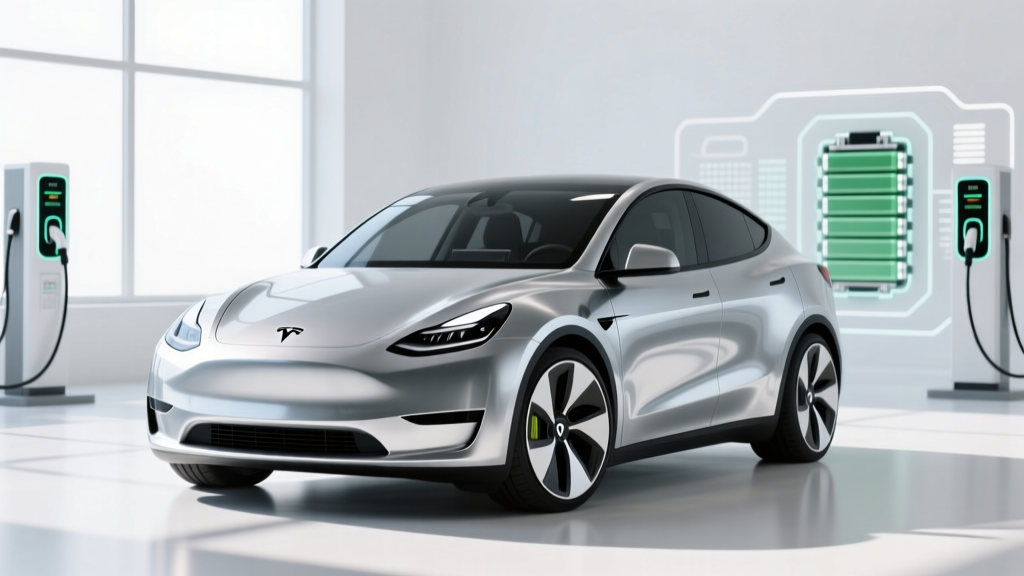
The term "Tesla Model Y Mini" is not an official Tesla product name. It's a community and media shorthand for Tesla's long-rumored next-generation compact vehicle — sometimes referred to internally (according to various reports) as the "Redwood" project or simply the "$25,000 Tesla." The concept: a subcompact electric crossover or hatchback built on a new, smaller, cheaper-to-produce platform that leverages Tesla's unboxed manufacturing process.
Tesla CEO Elon Musk has referenced a smaller, more affordable Tesla vehicle at various points, most notably during the 2023 Investor Day where Tesla outlined its next-generation platform aimed at halving production costs. However, Tesla's product timelines are notoriously fluid. The Cybertruck, Roadster, and original Semi all experienced multi-year delays. Any projected launch date for a compact Tesla should be treated with significant skepticism until the company begins taking concrete orders.
Projected Specs: What a Smaller Tesla Crossover Could Look Like
If Tesla does produce a compact crossover positioned below the Model Y, we can make educated projections based on the company's current battery technology, the upcoming 4680 cell production ramp, and the competitive landscape. The table below represents a speculative but data-informed estimate — not official figures.
| Specification | Projected Estimate | Current Model Y Long Range (for comparison) |
|---|---|---|
| EPA Range (est.) | 250–300 miles | 320 miles (EPA) |
| Battery Capacity | ~55–65 kWh (usable) | ~75 kWh (usable) |
| Battery Chemistry | LFP (lithium iron phosphate) likely for base trim | NMC (nickel manganese cobalt) |
| Drivetrain | Rear-wheel drive (base); AWD optional | Dual-motor AWD |
| 0–60 mph | ~5.5–6.5 seconds (RWD) | 4.8 seconds |
| Horsepower | ~250–300 hp | 384 hp |
| DC Fast Charge (peak) | ~170–200 kW (projected) | 250 kW |
| 10–80% Charge Time | ~25–30 minutes (projected) | ~27 minutes (at V3 Supercharger) |
| Level 2 Home Charging | ~11.5 kW / ~37 mi/hr | 11.5 kW / ~44 mi/hr |
| Length (est.) | ~170–175 inches | 187 inches |
| Cargo Volume (est.) | ~25–30 cu ft (behind rear seats) | 30.2 cu ft (behind rear seats) |
| Base MSRP (target) | ~$25,000–$30,000 | $44,990 (Long Range AWD) |
| Warranty (battery) | 8 years / 100,000 miles (expected) | 8 years / 120,000 miles |
Several notes on these projections:
- LFP chemistry is almost certain for the base trim. Tesla already uses LFP batteries in the Model 3 RWD and Model Y RWD built at Giga Texas. LFP offers lower energy density (hence slightly shorter range for a given pack size) but is cheaper to produce, contains no cobalt or nickel, and tolerates daily 100% charging without the degradation concerns of NMC chemistry.
- Range of 250–300 miles is achievable with a ~60 kWh LFP pack in a lighter, more aerodynamic compact vehicle. For context, the Chevrolet Equinox EV achieves 319 miles EPA with an ~85 kWh pack — but it's a larger, heavier vehicle. Tesla's efficiency advantage (typically 3.5–4.0 mi/kWh vs. competitors' 2.8–3.3 mi/kWh) means fewer kWh are needed per mile.
- Charging speed will likely be more modest than the Model Y's 250 kW peak. LFP cells charge slower than NMC at the high end, and a smaller battery means less thermal mass to manage. Expect a flatter but lower charge curve — possibly 170–200 kW peak, tapering significantly above 80%.
Why Tesla Might Build It — and Why It Might Not
The Case For a Compact Tesla
The global EV market is shifting toward affordability. In China, the BYD Atto 3 and Dolphin dominate the compact EV segment at prices well under $30,000 (USD equivalent). In Europe, the Volvo EX30 and Renault 5 E-Tech are capturing buyers who want premium badges at approachable prices. In the U.S., the Chevrolet Equinox EV and Hyundai Kona Electric are filling the gap Tesla currently leaves wide open: the $25,000–$35,000 electric crossover segment.
Tesla's average transaction price remains above $50,000, which limits its addressable market. A smaller, cheaper vehicle would unlock millions of potential first-time EV buyers — particularly younger demographics and urban renters who don't need the cargo space of a Model Y.
The Case Against
Tesla's profit margins, while still industry-leading among EV makers, have compressed significantly since 2022 due to aggressive price cuts on the Model 3 and Model Y. Introducing a $25,000 vehicle with acceptable margins requires the "unboxed" manufacturing process to work at scale — a bet that hasn't been proven in production yet. There's also the risk of cannibalizing Model Y sales, which remain Tesla's volume leader globally.
Additionally, Tesla's recent strategic pivot toward robotaxi development (the "Cybercab" concept) has consumed significant engineering resources. Musk has suggested the next-gen platform may prioritize autonomous robotaxi applications over a conventional consumer compact car. This ambiguity makes any launch timeline highly uncertain.
How It Would Compare to Today's Compact EVs
Even without official specs, we can position a hypothetical Tesla compact crossover against the current competition to understand the market dynamics:
| Vehicle | EPA Range | Battery (kWh) | 0–60 mph | Base MSRP | DC Fast Charge (peak kW) |
|---|---|---|---|---|---|
| Tesla Compact (projected) | ~250–300 mi | ~55–65 | ~5.5–6.5s | ~$25,000–$30,000 | ~170–200 |
| Chevrolet Equinox EV (2026) | 319 mi | ~85 | ~7.0s | $33,600 | 150 kW |
| Hyundai Kona Electric (2026) | 261 mi | 64.8 | ~7.3s | $32,975 | 100 kW |
| Volvo EX30 (2026) | 265 mi | 69 | ~5.1s | $36,950 | 153 kW |
| Kia EV5 (2026, if US-bound) | ~280 mi (est.) | ~65 | TBD | ~$35,000 (est.) | TBD |
The critical question isn't whether a compact Tesla would be competitive on specs — it almost certainly would be, given Tesla's efficiency and Supercharger network advantage. The question is whether Tesla can produce it at a price point that undercuts the Equinox EV and Kona Electric while maintaining acceptable margins. That's an engineering and manufacturing challenge, not a product-design challenge.
Should You Wait or Buy Now?
This is the practical question most searchers are actually asking. Here's a decision framework based on your situation:
- You're not in a rush to buy — realistically, even an optimistic timeline puts deliveries no earlier than late 2027 or 2028.
- Your budget is firmly under $35,000 and you want access to the Tesla Supercharger network natively (though NACS adoption by other brands is rapidly closing this gap).
- You primarily drive in urban or suburban environments where 250 miles of range is more than sufficient.
- You want Tesla's software ecosystem and over-the-air update track record.
- You need a vehicle within the next 6–12 months.
- You want proven reliability data, IIHS/NHTSA safety ratings, and established dealer service networks.
- You qualify for the federal EV tax credit under IRS §30D on a currently eligible vehicle (the Equinox EV, for example, qualifies for up to $7,500 depending on your income, the vehicle's MSRP, and battery-sourcing requirements).
- You value features Tesla doesn't offer: Apple CarPlay/Android Auto, physical controls, heads-up displays, or traditional dealer service experiences.
Tax Credit and Pricing Considerations
If a compact Tesla launches at ~$25,000–$30,000, it would fall well under the IRS §30D MSRP cap of $80,000 for SUVs/crossovers (or $55,000 for sedans, depending on how the vehicle is classified). However, the full $7,500 credit depends on multiple factors that change frequently:
- Buyer income caps: Modified adjusted gross income (MAGI) must not exceed $150,000 (single), $225,000 (head of household), or $300,000 (joint filing).
- Battery sourcing requirements: Increasing percentages of critical minerals and battery components must be sourced from the U.S. or free-trade-agreement countries. These thresholds tighten annually.
- Foreign entity of concern (FEOC) restrictions: Battery components and critical minerals cannot be sourced from FEOC entities (primarily targeting Chinese supply chains).
- Point-of-sale transfer: As of 2024, buyers can transfer the credit to the dealer at purchase, reducing the upfront cost rather than waiting for a tax refund.
Given Tesla's vertical integration and push toward domestic battery production (including LFP cells from CATL's licensed production and Tesla's own 4680 lines), a U.S.-built compact Tesla could plausibly qualify for the full or partial credit at launch — but this is highly dependent on the specific battery supply chain at time of production. Always verify current eligibility at fueleconomy.gov before making a purchase decision.
The Bottom Line
The "Tesla Model Y Mini" remains a compelling rumor backed by legitimate strategic logic but zero confirmed product details. Tesla has strong incentives to build a compact, affordable EV — but also faces real manufacturing, margin, and prioritization challenges that make timing deeply uncertain.
If you're shopping for a compact electric crossover today, the market already offers strong options: the Chevrolet Equinox EV leads on range and tax-credit eligibility, the Hyundai Kona Electric offers value and practicality, and the Volvo EX30 delivers premium feel and quick acceleration. None of these require you to gamble on a product timeline that Tesla has not committed to.
That said, if your purchase window is flexible and you're specifically invested in the Tesla ecosystem — Supercharger access, software, Autopilot — keeping a watchful eye on Tesla's next-gen platform announcements is worthwhile. Just don't put your life on hold waiting for a car that may not arrive until the end of the decade.
Frequently Asked Questions
Does the Tesla Model Y Mini exist?
No. As of early 2026, Tesla has not officially announced, revealed, or opened orders for a vehicle called the "Model Y Mini" or any compact crossover below the Model Y. The term refers to a rumored next-generation smaller Tesla vehicle that has been discussed in media and investor circles but has no confirmed production date.
When might a smaller Tesla crossover be available?
Industry analysts have projected potential production starts as early as late 2026 or 2027, but Tesla's product timelines are historically unreliable. The Cybertruck was announced in 2019 and didn't begin deliveries until late 2023. Any date should be treated as speculative until Tesla confirms it officially.
How much would a compact Tesla cost?
Tesla has referenced a target price of approximately $25,000 for its next-generation platform vehicle. However, actual MSRP at launch could be higher depending on configuration, options, and market conditions. Current Model Y pricing starts around $44,990 for the Long Range AWD trim, so a significant price gap would need to be bridged.
Would a smaller Tesla qualify for the federal EV tax credit?
Likely yes on MSRP grounds (well under the $80,000 SUV cap), but full credit eligibility depends on battery-sourcing rules, buyer income, and FEOC restrictions at time of sale. These rules change frequently — check IRS §30D guidelines and fueleconomy.gov for the latest.
What's the best compact EV to buy right now instead of waiting?
The Chevrolet Equinox EV offers the best combination of range (319 mi EPA), tax-credit eligibility, and price (starting ~$33,600). The Hyundai Kona Electric is a strong value pick at ~$32,975 with 261 miles of range. The Volvo EX30 is the premium option at ~$36,950 with 265 miles and brisk 5.1-second 0–60 acceleration. All three are available now with established dealer networks and safety ratings.