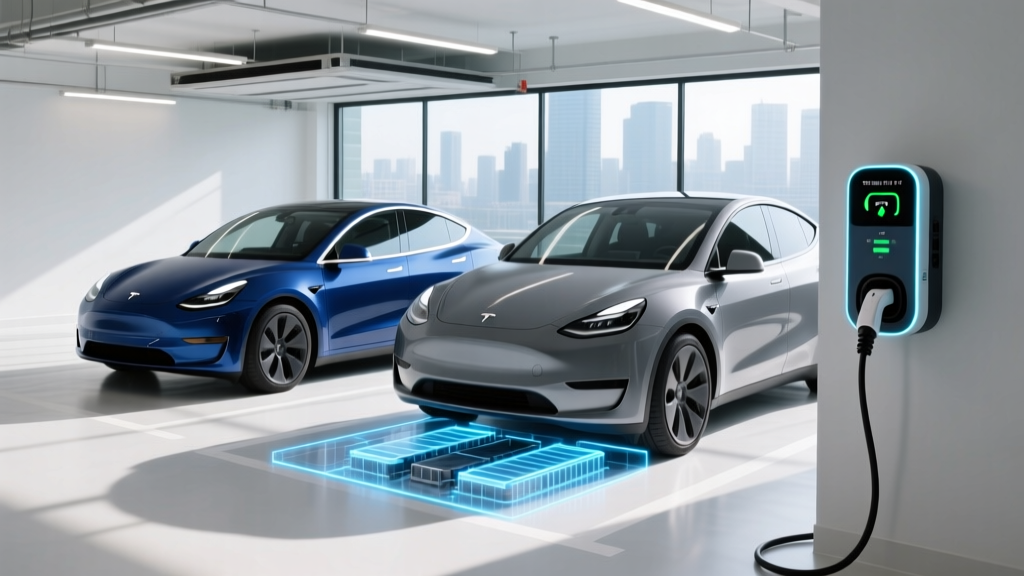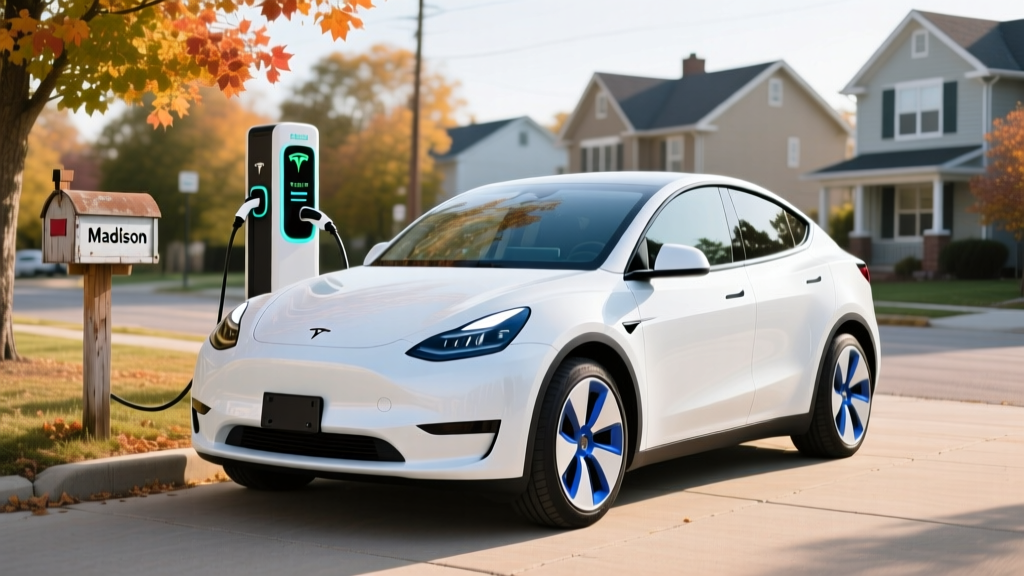
If you live in Madison, Wisconsin, and you're researching a Tesla, you're likely weighing one core question above all others: how does a Tesla actually perform in real Wisconsin winters? With January averages hovering around 16°F and stretches of sub-zero wind chill along the I-90 corridor, EV range loss isn't a theoretical concern—it's a daily reality. This review breaks down the 2026 Tesla Model Y Long Range AWD with the precision and cold-weather honesty Madison drivers need before signing a purchase agreement.
We'll cover real-world range (not just the EPA sticker), charging infrastructure in Dane County, the refreshed Model Y's updated specs, federal tax credit eligibility under current IRS §30D rules, and whether this SUV is the right call versus the Hyundai Ioniq 5, Ford Mustang Mach-E, and Chevrolet Equinox EV for Wisconsin ownership.
2026 Tesla Model Y Long Range AWD: Spec Snapshot
| Spec | 2026 Model Y Long Range AWD |
|---|---|
| EPA Range | 320 miles |
| Battery Capacity | ~78 kWh usable (NMC) |
| Drivetrain | Dual-motor AWD |
| Horsepower | 384 hp combined |
| 0-60 mph | 4.8 seconds |
| Max DC Fast Charge | 250 kW peak (V3 Supercharger) |
| 10-80% DC Charge Time | ~27 minutes |
| Level 2 Home Charge Rate | 11.5 kW (~44 mi/hr) |
| MPGe (Combined) | 117 MPGe |
| Efficiency | 28 kWh/100 mi |
| Cargo Volume (rear seats up) | 30.2 cu ft |
| Cargo Volume (rear seats folded) | 72.1 cu ft |
| Base MSRP | $44,990 |
| As-Tested (w/ FSD, red paint) | ~$54,490 |
| Battery Warranty | 8 years / 120,000 miles (70% retention) |
| Basic Vehicle Warranty | 4 years / 50,000 miles |
Real-World Range: What Madison Winters Actually Do to 320 Miles
Real-World Expectation (Madison, WI):
• Summer mixed driving: ~290-310 miles
• Highway at 70 mph (summer): ~265-280 miles
• Winter mixed driving (20-30°F): ~220-250 miles
• Deep cold below 10°F with cabin heat: ~190-220 miles
Key Factor: The Model Y Long Range uses a heat pump (standard since 2021), which reduces winter range loss compared to resistive heating, but expect 25-35% reduction in January conditions.
The EPA's 320-mile figure is derived from controlled laboratory cycles that don't reflect Interstate 94 at 75 mph in February. According to fueleconomy.gov, the Model Y Long Range AWD achieves 117 MPGe combined, but real-world efficiency depends heavily on temperature, speed, and terrain.
For Madison commuters, here's what matters: a daily round-trip of 40 miles (say, from Sun Prairie to the Capitol or Fitchburg to UW campus) leaves you with comfortable buffer even in deep January cold. You'll charge at home overnight and rarely think about range. But a winter road trip to the Twin Cities (roughly 270 miles one-way via I-94) will require a Supercharger stop—plan for one in Wisconsin Dells or Tomah.
The Model Y's heat pump is a critical advantage here. Unlike resistive cabin heaters that can pull 3-5 kW continuously, Tesla's heat pump operates at roughly 1-2 kW in typical winter conditions, preserving more energy for propulsion. Preconditioning the battery while plugged in (via the Tesla app's scheduled departure feature) further reduces cold-weather range loss by warming the battery pack before you drive.
Charging Speed: DC Fast Charging and Home Level 2 Setup
Charging speed is where Tesla still holds a structural advantage in Wisconsin. The Model Y Long Range peaks at 250 kW on V3 Superchargers, though the charge curve tapers significantly above 60% state of charge. Here's what that looks like in practice:
| Charging Method | Power (kW) | Speed (mi/hr added) | Notes |
|---|---|---|---|
| Tesla V3 Supercharger (DC) | 250 kW peak | ~1,000 mi/hr at peak | 10-80% in ~27 min; tapers above 60% |
| Tesla V4 Supercharger (DC) | Up to 350 kW | Not yet widely deployed in WI | Future rollout expected |
| Non-Tesla DC Fast (CCS w/ adapter) | Up to 150-250 kW | Varies | Requires Tesla CCS adapter (included) |
| Tesla Wall Connector (Level 2, 48A) | 11.5 kW | ~44 mi/hr | Requires 60A circuit; full charge ~7-8 hrs |
| Generic Level 2 (32A) | 7.7 kW | ~30 mi/hr | Common for ChargePoint/HomeFlex |
| Level 1 (120V outlet) | ~1.4 kW | ~3-5 mi/hr | Emergency/trickle only |
For Madison homeowners, a Tesla Wall Connector on a 60-amp dedicated circuit is the gold standard. Expect to pay $1,200-$2,500 for professional installation by a licensed electrician in Dane County, depending on your panel's proximity to the garage and whether a panel upgrade (to 200A service) is needed. Older Madison homes near the isthmus with 100-amp panels may face $2,000-$4,000 in additional upgrade costs.
On public charging, Madison is well-served. Tesla Superchargers are located at the West Towne Mall area, East Towne Mall, and along the Beltline. For non-Tesla DC fast charging, Electrify America and ChargePoint stations are available at select Kwik Trip and Target locations. The included CCS adapter lets you use these networks, though Tesla's Supercharger network remains the most reliable option for road trips across the upper Midwest.
Performance and Driving Dynamics in Wisconsin Conditions
The dual-motor AWD system in the Model Y Long Range delivers 384 horsepower and a 4.8-second 0-60 mph time. More relevant for Wisconsin drivers is the instant torque vectoring: the car can shift power between front and rear motors in milliseconds, providing confident traction on East Washington Avenue ice or the winding stretches of County Highway M.
The low center of gravity (battery pack mounted under the floor) gives the Model Y surprisingly composed handling for a crossover SUV. In our experience with Model Y variants across multiple model years, the 2026 refresh has improved ride quality with revised damping—addressing one of the most common complaints about earlier models, which could feel firm over Madison's frost-heave-damaged roads.
Regenerative braking deserves special mention for winter driving. Tesla's one-pedal driving mode provides aggressive deceleration when you lift off the accelerator, which can cause wheel slip on icy surfaces. Tesla allows you to reduce regen strength in the settings, and we recommend doing so during winter months for smoother, more predictable deceleration on snow-covered roads.
Pricing, Trims, and Federal Tax Credit Eligibility
The 2026 Tesla Model Y is available in several configurations:
| Trim | MSRP | Est. After §30D Credit | §30D Eligible? |
|---|---|---|---|
| Long Range AWD | $44,990 | ~$37,490 | Yes (if sourcing rules met) |
| Performance AWD | $48,990 | ~$41,490 | Yes (if sourcing rules met) |
| Long Range AWD w/ 7-seat | $47,490 | ~$39,990 | Yes (if sourcing rules met) |
Critical tax credit caveats for 2026: The federal §30D Clean Vehicle Credit offers up to $7,500, but eligibility depends on several factors that change periodically. Under current IRS rules:
- MSRP Cap: SUVs must be under $80,000 — the Model Y qualifies easily
- Buyer Income Cap: Modified AGI must not exceed $150,000 (single), $225,000 (head of household), or $300,000 (joint filing)
- Battery Sourcing: Critical minerals and battery components must meet escalating domestic-content thresholds — Tesla's US-built batteries (from Nevada and Texas gigafactories) have generally qualified, but verify current-year sourcing compliance at purchase
- Point-of-Sale Transfer: As of 2024, buyers can transfer the credit to the dealer at purchase, reducing the upfront price rather than waiting for a tax refund
The Model Y's MSRP is well below the $80,000 SUV cap, making it one of the easier vehicles to qualify for. However, always confirm eligibility with your tax professional and check the latest DOE fueleconomy.gov tax credit listings before purchasing, as battery-sourcing rules tighten annually.
Interior, Tech, and the Tesla Ecosystem
The 2026 Model Y refresh carries forward the minimalist interior philosophy: a single 15.4-inch center touchscreen controls virtually everything, from climate to mirrors to glove box. There is no traditional instrument cluster—speed and navigation appear on the main screen. The rear passengers get an 8-inch screen for climate and entertainment.
Standout tech features include:
- Autopilot (standard): SAE Level 2 driver assistance with adaptive cruise control and lane-keeping. The driver must remain fully engaged—this is not self-driving.
- Full Self-Driving Supervised ($8,000 option): Adds automatic lane changes, Navigate on Autopilot, and traffic light recognition. Still Level 2—hands on wheel, eyes on road, always.
- Over-the-air updates: Tesla regularly pushes software improvements, from efficiency tweaks to new features, without a dealership visit.
- Sentry Mode and Dashcam: Built-in cameras record incidents while parked—a useful feature in crowded Madison parking structures.
- Dog Mode / Camp Mode: Maintains cabin climate for pets or enables overnight camping with HVAC running off the battery.
Tesla's Autopilot and FSD (Supervised) are SAE Level 2 systems. The driver must maintain full attention, keep hands on the steering wheel, and be prepared to take over instantly. NHTSA continues to investigate Autopilot-related incidents. Do not treat these systems as autonomous—they are driver-assistance features that reduce fatigue on long highway stretches, nothing more.
Drawbacks worth noting: the lack of physical buttons frustrates some drivers, especially when adjusting climate or wipers while driving. Visibility out the rear is compromised by the sloping roofline. And while build quality has improved significantly from the 2020-2022 era, panel gaps and paint imperfections still appear occasionally—inspect your delivery thoroughly.
Cargo, Passenger Space, and Practicality
For families and Costco-run households, the Model Y delivers:
- Cargo behind rear seats: 30.2 cu ft (competitive with a mid-size SUV)
- Cargo with rear seats folded: 72.1 cu ft (near-flat load floor, suitable for furniture or camping gear)
- Front trunk (frunk): 4.1 cu ft (useful for groceries or charging cables)
- Rear legroom: 38.7 inches (adequate for adults, generous for children)
- Towing capacity: 3,500 lbs (suitable for a small utility trailer or bike rack, not a boat)
The optional third-row seat (7-seat configuration) is best suited for children only—adults will find it cramped on anything beyond a short trip across town.
Pros and Cons: The Honest Madison, WI Verdict
Pros
- Extensive Supercharger network across Wisconsin and the upper Midwest
- Heat pump preserves winter range better than most competitors
- Dual-motor AWD handles ice and snow confidently
- Class-leading efficiency (28 kWh/100 mi)
- Strong §30D tax credit eligibility (verify at purchase)
- Over-the-air updates keep the car current for years
- Low operating cost: ~$0.04-$0.06/mile on Madison Gas & Electric residential rates
Cons
- 30-35% range loss in deep Wisconsin winter cold
- Minimalist interior lacks physical controls (polarizing)
- Rear visibility compromised by roofline design
- FSD is an $8,000 option that remains Level 2, not autonomous
- Service center wait times in Madison can stretch weeks for body work
- No Apple CarPlay or Android Auto integration
Model Y vs. Key Competitors for Wisconsin Buyers
Madison EV shoppers should cross-shop these alternatives:
Hyundai Ioniq 5 Long Range AWD: 290 miles EPA, 350 kW peak charging (faster than the Model Y on compatible chargers), more physical controls, and a more spacious rear seat. However, the Ioniq 5 lacks access to the Supercharger network without an adapter, and Hyundai's public charging reliability is less proven in rural Wisconsin.
Ford Mustang Mach-E Extended Range AWD: 305 miles EPA, comfortable ride quality, and Ford dealerships in Madison provide familiar service access. Charging speed tops out at 150 kW—slower than the Model Y—and real-world winter efficiency trails Tesla's heat pump system.
Chevrolet Equinox EV RS AWD: Starting around $41,000 with 307 miles EPA range. Excellent value proposition and qualifies for the full §30D credit. However, DC fast charging peaks at 150 kW, and the Ultium platform is newer with less long-term reliability data.
Choose the Tesla Model Y if:
- You prioritize Supercharger access for road trips across the Midwest
- You want the best cold-weather efficiency via Tesla's heat pump
- You value OTA software updates and the Tesla ecosystem
- You can install a Level 2 charger at home
Look elsewhere if:
- You want physical climate controls and a traditional instrument cluster
- You need the fastest possible DC charging (Ioniq 5 at 350 kW)
- You want dealership service familiarity (Ford/Chevy/Hyundai)
- Apple CarPlay is non-negotiable for you
Frequently Asked Questions
What is the real-world range of the Tesla Model Y in a Madison winter?
Expect roughly 220-250 miles of mixed driving range in typical Madison winter conditions (20-30°F). During extreme cold snaps below 10°F, plan for 190-220 miles. Preconditioning while plugged in and using seat heaters instead of cabin heat can recover 10-15 miles of range.
How fast does the Model Y charge at home and on the road?
On a Tesla Wall Connector (11.5 kW, 48A Level 2), you'll add roughly 44 miles of range per hour—a full overnight charge from 20% to 100% takes about 7-8 hours. On a V3 Supercharger at 250 kW peak, the 10-80% charge takes approximately 27 minutes, though charging slows significantly above 60% SoC.
Does the 2026 Tesla Model Y qualify for the $7,500 federal tax credit?
The Model Y Long Range AWD at $44,990 MSRP is well under the $80,000 SUV cap and has historically qualified for the full $7,500 under §30D. However, eligibility depends on your income (AGI caps apply), battery critical-mineral sourcing compliance for the current year, and whether you've already claimed the credit on another vehicle. Always verify with a tax professional and the IRS before purchase.
Is the Tesla Model Y worth buying over the Ioniq 5 or Mach-E in Wisconsin?
For Madison drivers who road-trip regularly and want the most reliable public charging network, the Model Y's Supercharger access and heat pump efficiency give it an edge. If you primarily drive locally and value physical controls, faster peak charging, or CarPlay, the Ioniq 5 is a strong alternative. The Mach-E appeals to those who prefer traditional dealership service.
How long will the Model Y battery last, and what does replacement cost?
Tesla warranties the battery for 8 years or 120,000 miles, whichever comes first, with a guaranteed minimum 70% capacity retention. Real-world degradation data from Tesla's fleet suggests most Model Y batteries retain 85-90% capacity at 100,000 miles. A full battery replacement out of warranty currently costs approximately $12,000-$16,000, though this is rarely needed within the first decade of ownership.
Can I charge a Tesla at non-Tesla chargers in Madison?
Yes. Tesla includes a CCS adapter with new vehicles, allowing you to use Electrify America, ChargePoint, and other CCS-equipped DC fast chargers. For Level 2 public charging, the standard J1772 adapter (included) works with virtually all public Level 2 stations in the Madison area, including those at libraries, parking garages, and shopping centers.
Is Tesla's Autopilot or FSD actually self-driving?
No. Both Autopilot (standard) and Full Self-Driving Supervised ($8,000 option) are SAE Level 2 driver-assistance systems. You must keep your hands on the wheel and your eyes on the road at all times. These systems reduce highway driving fatigue but do not replace the driver. True self-driving (Level 4) is currently only available in limited robotaxi services like Waymo, which does not operate in Wisconsin.
The 2026 Tesla Model Y Long Range AWD remains a compelling choice for Madison, WI drivers who can charge at home and want proven cold-weather capability with the Midwest's most robust fast-charging network. The winter range penalty is real—budget 30% off the EPA sticker in January—but the heat pump, dual-motor traction, and Supercharger infrastructure make it one of the most practical EVs for life in Dane County. Verify your §30D eligibility, install a proper Level 2 home charger, and the Model Y delivers a compelling ownership experience even when the temperature drops well below zero.