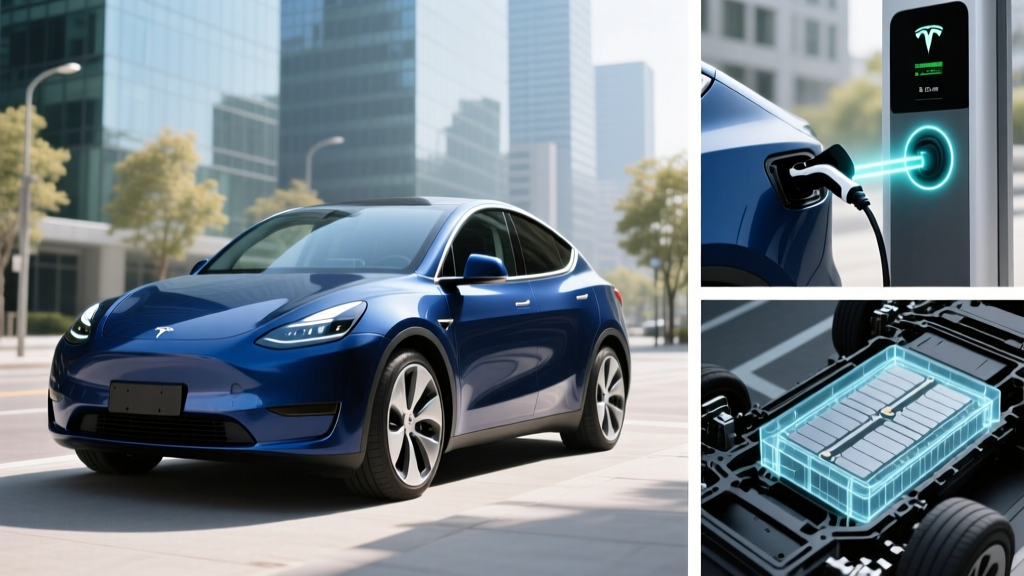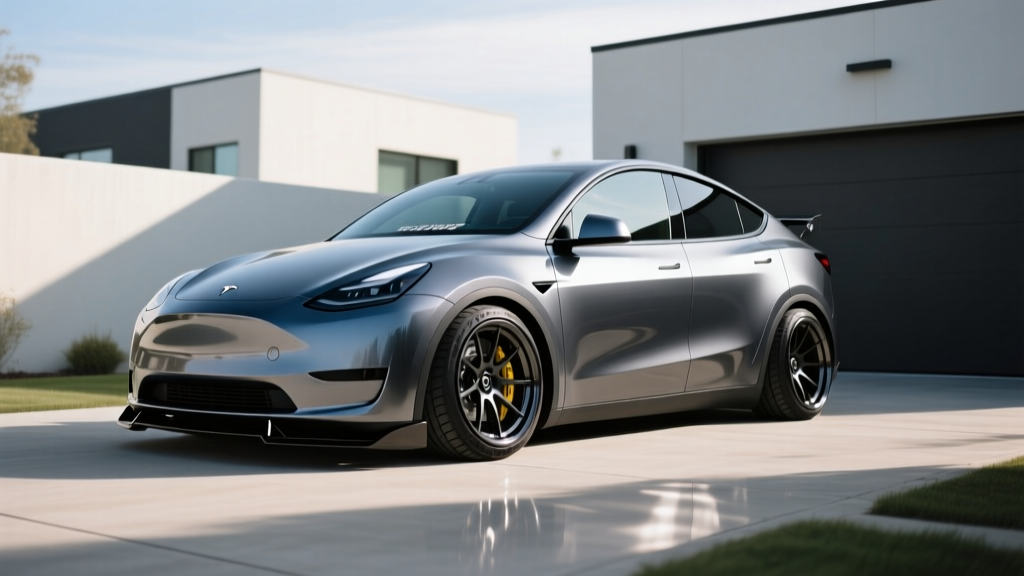
Tesla owners have long sought a sportier stance, and the search for a Model Y lowered setup has only grown as the 2025-2026 Juniper refresh brings sharper styling to Tesla's best-selling crossover. But dropping an EV's ride height isn't just an aesthetic choice — it alters aerodynamics, suspension geometry, range, and even warranty coverage. This review covers the 2026 Tesla Model Y in its factory form, then digs into what actually happens when you lower it.
2026 Tesla Model Y: The Baseline Specs
Before modifying anything, you need to know what you're starting with. The current Juniper-generation Model Y (refreshed for 2025 and carried into 2026) is available in Long Range AWD and Performance trims in the U.S. The Standard Range RWD was discontinued after the 2024 model year.
| Spec | Long Range AWD | Performance AWD |
|---|---|---|
| EPA Range | 320 miles | 298 miles |
| Battery (usable) | ~75 kWh (NMC) | ~75 kWh (NMC) |
| Drivetrain | Dual Motor AWD | Dual Motor AWD |
| Horsepower | 384 hp | 456 hp |
| 0–60 mph | 4.8 sec | 3.5 sec |
| Max DC Fast Charge | 250 kW | 250 kW |
| 10–80% DC Charge | ~25 min | ~25 min |
| Level 2 Charge Rate | 11.5 kW (~44 mi/hr) | 11.5 kW (~44 mi/hr) |
| MPGe (combined) | 111 MPGe | 104 MPGe |
| Efficiency | 28 kWh/100 mi | 30 kWh/100 mi |
| Cargo (rear seats up) | 30.2 cu ft | 30.2 cu ft |
| Cargo (rear seats folded) | 72.1 cu ft | 72.1 cu ft |
| Rear Legroom | 41.6 in | 41.6 in |
| Base MSRP | $44,990 | $49,990 |
| Battery Warranty | 8 yr / 120,000 mi | 8 yr / 120,000 mi |
| Basic Warranty | 4 yr / 50,000 mi | 4 yr / 50,000 mi |
The Juniper update brought a revised interior with ambient lighting, ventilated front seats, a rear touchscreen, and a slightly more compliant factory suspension tune. However, the Model Y still rides higher and softer than a sports sedan — which is exactly why owners pursue lowering.
Real-World Range: What the EPA Number Doesn't Tell You
EPA Range: 320 mi (Long Range AWD) / 298 mi (Performance)
Real-World Expectation: ~260–280 mi on highway road trips at 70–75 mph; ~200–230 mi in sustained sub-30°F cold weather; ~290–310 mi in city/suburban driving with regen.
The EPA combined cycle blends city and highway driving. On long highway runs at 75 mph, the Model Y Long Range typically delivers 260–280 miles before you need to stop. Cold weather is the bigger penalty: LFP chemistry isn't used here (the Long Range uses NMC), but even NMC packs lose 20–30% range in deep winter due to cabin heating and reduced battery efficiency. The Juniper's standard heat pump helps mitigate this compared to older Model Ys, but physics still wins.
For a thorough breakdown of range and efficiency, see the EPA's fueleconomy.gov listing for the Model Y.
Charging Speed: DC Fast and Home Level 2
The 2026 Model Y retains Tesla's 250 kW peak DC fast-charge capability on V3 Superchargers. Here's how the charge curve actually behaves:
| Level | Power / Rate | What You Get |
|---|---|---|
| Level 1 (120V) | ~1.4 kW | ~4–5 mi/hr — emergency trickle only |
| Level 2 (240V home) | 11.5 kW (48A) | ~44 mi/hr — full charge in ~7 hr |
| DC Fast (V3 Supercharger) | Peak 250 kW | 10–80% in ~25 min; tapers sharply above 80% |
| DC Fast (V4 Supercharger) | Up to 250 kW* | Same curve; V4 cabinet supports higher power but Model Y is capped at 250 kW |
*The Model Y's onboard charge architecture limits it to ~250 kW peak even on higher-capacity V4 stalls.
The charge curve matters: you'll see 250 kW only briefly at low state of charge (around 10–20% SoC). By 50% SoC, power tapers to roughly 150 kW, and above 80% it drops below 60 kW. This is why Tesla recommends charging to 80% at Superchargers — the last 20% can take as long as the first 60%.
At home, preconditioning isn't necessary for Level 2 (the battery warms sufficiently at 11.5 kW). But for DC fast charging, navigate to the Supercharger in the car's nav to trigger battery preconditioning — this can cut your 10–80% time by 5–10 minutes in cold weather.
Lowering the Model Y: Methods, Costs, and Range Impact
Now to the core question: what happens when you lower a 2026 Model Y? There are three common approaches, each with different trade-offs.
Lowering Springs (Most Common)
Brands like Eibach, H&R, and Mountain Pass Performance offer lowering springs that drop the Model Y roughly 1.0–1.5 inches. Cost: $300–$600 for the springs, plus $400–$800 for professional installation and a mandatory alignment.
Range impact: Minimal. A lower ride height can reduce the frontal area and underbody turbulence slightly, but the effect is typically within 1–2% — meaning you might gain 3–5 miles of EPA range or lose a similar amount depending on the spring rate and resulting alignment. The change is essentially negligible for daily driving.
Coilover Suspension
Adjustable coilovers (KW, Bilstein, Mountain Pass Performance) allow ride height and damping adjustment. Cost: $1,500–$3,500 plus installation. These are the choice for track-day enthusiasts or owners who want tunable ride quality.
Range impact: Similar to lowering springs — within 1–2%. However, stiffer damping can increase rolling resistance slightly if the tire contact patch changes under load. Expect no more than a 5-mile swing either direction.
Air Suspension (Aftermarket)
Aftermarket air suspension kits (Bag Riders, AccuAir) let you adjust ride height on the fly. Cost: $3,000–$5,000+ plus complex installation. These add weight (compressor, tank, lines) and introduce maintenance risk.
Range impact: The added 40–80 lbs of hardware and continuous compressor draw can reduce range by 1–3%. More importantly, the weight penalty affects efficiency in stop-and-go driving where it matters most.
The Alignment Factor
This is the hidden variable most owners overlook. Lowering changes camber and toe angles. If you don't get a precision alignment afterward (and not all shops know how to align a lowered EV properly), uneven tire wear and increased rolling resistance can cost you 3–5% range — that's 10–15 miles on a Long Range. Budget for a $150–$250 alignment immediately after any suspension modification.
Warranty Implications: What Lowering Voids
This is the most critical section for any owner considering a Model Y lowered build. Tesla's warranty language is clear: modifications that cause or contribute to a failure are not covered.
- Suspension components: Lowering springs or coilovers will void warranty coverage on control arms, bushings, ball joints, and strut mounts if Tesla determines the modification accelerated wear.
- Drive unit / battery: Generally unaffected by suspension changes. Tesla cannot deny a battery warranty claim because you installed lowering springs — the Magnuson-Moss Warranty Act protects you here.
- Tires: Altered camber from lowering accelerates inner-edge tire wear. Tesla's tire warranty (from the tire manufacturer) will not cover uneven wear from modified geometry.
- ADAS calibration: Lowering changes the vehicle's pitch angle, which can affect Autopilot camera calibration. You may need a recalibration at a Tesla Service Center ($100–$200).
For full warranty terms, reference Tesla's official warranty documentation.
Pricing, Tax Credits, and Total Cost
| Trim | Base MSRP | As-Tested (typical) | §30D Credit Eligible? |
|---|---|---|---|
| Long Range AWD | $44,990 | $47,000–$50,000 | Up to $7,500* |
| Performance AWD | $49,990 | $52,000–$55,000 | Up to $7,500* |
*The IRS §30D clean vehicle credit has strict requirements for 2026:
- MSRP cap: SUVs/crossovers must have an MSRP ≤ $80,000 (Model Y qualifies).
- Buyer income cap: AGI ≤ $150,000 (single) / $225,000 (head of household) / $300,000 (joint).
- Battery sourcing: Critical minerals and battery components must meet escalating domestic-sourcing thresholds. Tesla's U.S.-built LFP and NMC packs have largely met these, but verify at the point of sale — eligibility can change mid-year.
- Point-of-sale transfer: You can transfer the credit to the dealer at purchase, reducing your out-of-pocket cost immediately rather than waiting for tax filing.
Add $1,000–$2,500 for a typical lowering setup (springs + install + alignment) on top of the vehicle price.
Who Should Lower Their Model Y — and Who Shouldn't
Lower your Model Y if:
- You prioritize visual stance and a slightly firmer, flatter cornering feel
- You drive primarily on well-maintained roads
- You accept the suspension warranty trade-off
- You'll invest in a proper alignment immediately
Keep stock suspension if:
- You regularly encounter potholes, speed bumps, or rough roads
- You rely on ground clearance for driveways, snow, or parking structures
- You want zero risk of warranty disputes on suspension components
- You tow (the Model Y is rated for 3,500 lbs; lowering reduces approach/departure angles)
Pros and Cons of a Lowered Model Y
Pros
- Aggressive, sportier stance that matches the Juniper's sharper design
- Marginally lower center of gravity — flatter cornering with quality coilovers
- Range impact is negligible with lowering springs (1–2% at most)
- Wide aftermarket support: Eibach, H&R, MPP, KW, and more
- Does not affect battery/drive-unit warranty under Magnuson-Moss
Cons
- Voids warranty on suspension components (control arms, bushings, mounts)
- Reduced ground clearance — scraping risk on steep driveways and speed bumps
- Ride quality degrades on rough roads, especially with stiff coilovers
- Alignment-sensitive: improper alignment costs range and eats tires
- May require Autopilot camera recalibration ($100–$200)
- Resale value impact — some buyers avoid modified EVs
How It Compares: Model Y vs. Key Rivals (Stock Form)
If you're cross-shopping before committing to a lowered build, here's how the stock Model Y stacks up against its main competitors in the 2026 model year:
| Spec | Tesla Model Y LR AWD | Hyundai Ioniq 5 Long Range | Ford Mustang Mach-E Ext. Range |
|---|---|---|---|
| EPA Range | 320 mi | 318 mi | 312 mi |
| Max DC Charge | 250 kW | 238 kW | 150 kW |
| 10–80% Time | ~25 min | ~26 min | ~38 min |
| 0–60 mph | 4.8 sec | 5.1 sec | 5.2 sec |
| Base MSRP | $44,990 | $46,500 | $45,995 |
| Cargo (rear up) | 30.2 cu ft | 27.2 cu ft | 29.7 cu ft |
The Model Y leads in cargo space and Supercharger network access. The Ioniq 5 offers 800V architecture (faster charging at compatible stalls) and a more comfortable stock ride. The Mach-E trails in DC charging speed but offers a carlike driving position that some buyers prefer — and it's less commonly lowered, so aftermarket support is thinner.
Frequently Asked Questions
How much does it cost to lower a Tesla Model Y?
Lowering springs cost $300–$600 plus $400–$800 installation and $150–$250 alignment, totaling roughly $850–$1,650. Coilovers run $1,500–$3,500 plus $600–$1,200 installation and alignment, totaling $2,250–$4,950.
Does lowering a Model Y reduce its range?
The range impact is minimal — typically 1–2% with lowering springs (3–6 miles on a 320-mile pack). Improper alignment after lowering is a bigger risk, potentially costing 3–5% range from increased rolling resistance. Air suspension adds weight and can reduce range by 1–3%.
Will lowering my Model Y void the warranty?
It voids warranty coverage on suspension components (bushings, control arms, strut mounts) if Tesla attributes failure to the modification. The battery and drive-unit warranties are protected under the Magnuson-Moss Warranty Act — Tesla must prove the modification caused the failure to deny a claim.
Does the 2026 Model Y qualify for the $7,500 federal tax credit?
The Model Y qualifies in principle — its MSRP is under the $80,000 SUV cap, and Tesla's battery sourcing has generally met §30D requirements. However, buyer income limits apply ($150K single / $300K joint), and sourcing rules can shift. Always verify eligibility at point of sale using the IRS's current guidance.
Can I still use Autopilot after lowering my Model Y?
Yes, but lowering changes the vehicle's pitch, which can shift camera angles. You may notice Autopilot behaving differently (lane centering drift, phantom braking). A recalibration at a Tesla Service Center ($100–$200) is strongly recommended after any ride-height change.
Is a lowered Model Y worth it vs. buying a Performance model instead?
The Performance trim already includes a sport-tuned suspension that sits slightly lower and firmer than the Long Range. If your primary goal is handling and stance, the Performance trim plus mild lowering springs is the cleanest path. If you want the Long Range's extra range and just want the look, lowering springs are a reasonable $1,000–$1,500 modification.