Quick Verdict: The Benchmark Compact Electric SUV Gets Stretched
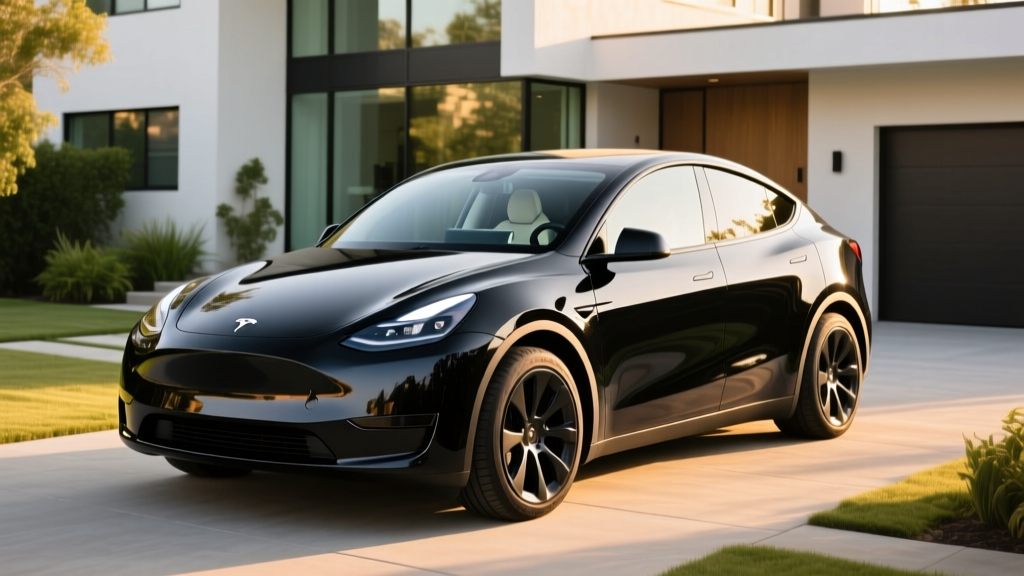
The Tesla Model Y Long Wheelbase — officially sold as the Model Y Long Range AWD — remains Tesla's highest-volume vehicle for good reason. With an EPA-estimated 320 miles of range, dual-motor all-wheel drive, and access to the Supercharger network, it occupies the exact intersection of practicality and performance that most EV buyers seek. For 2026, the refreshed "Juniper" generation brings a quieter cabin, ventilated seats, ambient lighting, and a rear touchscreen, addressing many of the previous generation's comfort complaints. But with competition from the Hyundai Ioniq 5, Ford Mustang Mach-E, and Kia EV6 intensifying, the Model Y Long Range must earn its position on data — not brand loyalty alone.
Range, Battery & Real-World Efficiency
| Spec | Value |
|---|---|
| EPA Range | 320 miles |
| Battery (usable) | ~75 kWh (NMC chemistry) |
| Efficiency | 117 MPGe combined / 28 kWh/100 mi |
| Drivetrain | Dual-motor AWD |
| 0–60 mph | 4.8 seconds |
| Horsepower | ~384 hp combined |
| Max DC Fast Charge | 250 kW (peak) |
| 10–80% DC Time | ~25 minutes |
| Level 2 Charge Rate | 11.5 kW (~44 mi/hr) |
| Base MSRP | $44,990 (before incentives) |
| Battery Warranty | 8 years / 120,000 miles |
EPA sticker: 320 miles
Highway (70 mph, 75°F): Expect ~270–290 miles. Tesla's aero-efficient shape helps, but sustained high speeds consume more energy than city driving with regenerative braking.
Cold weather (30°F, mixed driving): Expect ~220–260 miles. The Juniper heat pump is a significant improvement over older resistance heating, but cold batteries and cabin heating still reduce usable range by 15–30%.
City/commuter (with regen): 300–320 miles is achievable — you may even slightly exceed the EPA estimate in stop-and-go traffic.
The Long Range AWD uses an NMC (nickel manganese cobalt) battery pack, which offers higher energy density than LFP (lithium iron phosphate) chemistry found in the RWD Standard Range model. The trade-off: NMC cells benefit from keeping daily charge limits around 80–90% to maximize longevity, whereas LFP packs can be charged to 100% daily without accelerated degradation. For most owners, setting the charge limit to 90% and preconditioning before fast charging is the optimal routine.
At 28 kWh per 100 miles, the Model Y Long Range is among the most efficient electric SUVs in its class, according to fueleconomy.gov. That translates to roughly $0.04–$0.06 per mile on residential electricity (at $0.16/kWh national average), versus $0.12–$0.15/mile for a comparable gas-powered SUV at $3.50/gallon.
Charging Speed: DC Fast, Level 2 & Home Setup
| Level | Power | Miles Added per Hour | Notes |
|---|---|---|---|
| Level 1 (120V) | ~1.4 kW | ~3–5 mi/hr | Emergency/trickle only |
| Level 2 (240V, 48A) | 11.5 kW | ~44 mi/hr | Full overnight charge (~7 hrs) |
| DC Fast (V3 Supercharger) | 250 kW peak | ~1,000+ mi/hr (peak) | 10–80% in ~25 min |
The Model Y Long Range supports a peak DC fast-charge rate of 250 kW on Tesla V3 Superchargers. In practice, you'll see the charge curve peak near 250 kW up to roughly 40% state of charge (SoC), then taper progressively. The 10–80% session takes approximately 25 minutes under ideal conditions (battery preconditioned via navigation routing to a Supercharger). Above 80%, charging slows dramatically — a 80–100% top-off can add another 20+ minutes. This is standard behavior for NMC cells to protect battery health.
For home charging, the onboard charger accepts up to 11.5 kW (48 amps on a 60-amp circuit). A Tesla Wall Connector or any J1772/NACS-compatible Level 2 unit will fully replenish the battery in roughly 7 hours. If your home has a 200-amp electrical panel with spare capacity, expect installation costs of $500–$1,500 for a licensed electrician to run a 240V/60A circuit. Older homes with 100-amp panels may require a panel upgrade ($1,500–$3,000) before adding a dedicated EV circuit.
With the 2025+ transition to the NACS (North American Charging Standard) connector as the industry norm, the Model Y's native plug now works at an expanding number of non-Tesla DC fast chargers — including Electrify America and EVgo stations that have added NACS cables. Tesla owners also retain access to the Supercharger network, which consistently scores highest in reliability surveys.
Performance, Ride & Handling
The dual-motor AWD powertrain delivers approximately 384 horsepower and a 4.8-second 0–60 mph time. That's genuinely quick for a family SUV — enough to merge confidently onto any highway and overtake without hesitation. The instant torque delivery that defines EVs makes the Model Y feel even quicker in real-world driving than the numbers suggest.
The Juniper refresh brought meaningful improvements to ride quality. Revised damper tuning, acoustic glass, and additional sound deadening reduce road and wind noise noticeably at highway speeds. The cabin is significantly quieter than the pre-2025 Model Y, though it still falls short of the plush isolation you'd find in a Genesis GV60 or BMW iX. The steering remains precise but heavy — Tesla's sporty tuning preference shows through.
Regenerative braking in the Model Y is aggressive by default, enabling near one-pedal driving in most conditions. The "stop mode" setting brings the car to a complete halt without touching the brake pedal, which reduces brake wear substantially — many Tesla owners report original brake pads lasting 80,000+ miles.
Interior, Cargo & Technology
The 2026 Model Y Long Range seats five (a seven-seat option was discontinued with the Juniper redesign). Rear legroom measures approximately 41.6 inches — generous for the class and a key reason families gravitate toward this model. Front legroom is 41.8 inches.
Cargo volume behind the second row: 30.2 cubic feet. Fold the rear seats and you get 72.1 cubic feet — enough for a full sheet of plywood or serious road-trip gear. The front trunk (frunk) adds another ~4.1 cubic feet for charging cables, groceries, or a carry-on bag.
Technology highlights in the Juniper generation:
- 15.4-inch center touchscreen — handles navigation, climate, media, and vehicle controls (no physical instrument cluster)
- 8-inch rear touchscreen — new for Juniper, lets rear passengers control climate and entertainment
- Ventilated front seats — a long-requested feature finally standard on Long Range
- Ambient lighting — a full-width light bar across the dash, similar to luxury competitors
- Power-folding second row — one-touch cargo expansion
- Tesla app & Sentry Mode — remote climate, vehicle cameras, and security monitoring
The minimalist interior remains polarizing. There are virtually no physical buttons — climate vents, glovebox release, and mirror adjustments all live on the touchscreen. Some buyers love the clean aesthetic; others find it distracting. The absence of Apple CarPlay and Android Auto also frustrates smartphone-dependent users, though Tesla's native navigation and media apps are well-integrated.
Pricing, Trims & Federal Tax Credit Eligibility
| Item | Amount |
|---|---|
| Long Range AWD MSRP | $44,990 |
| Destination fee | $1,390 |
| Performance trim (if available) | ~$48,990 |
| FSD (Supervised) add-on | $8,000 one-time or $99/mo |
| Potential §30D federal credit | Up to $7,500* |
| Effective price (after max credit) | ~$38,880 |
*Federal tax credit eligibility depends on multiple factors. See checklist below. Credit may be applied at point of sale as of 2024+ per IRS §30D rules.
- ✅ Vehicle MSRP cap: SUVs/vans/pickups must be ≤$80,000 — Model Y qualifies
- ⚠️ Buyer income cap: AGI must not exceed $150,000 (single), $225,000 (head of household), or $300,000 (joint filers)
- ⚠️ Battery sourcing: Critical minerals and battery components must meet phased-in domestic/free-trade-agreement sourcing thresholds — verify current-year compliance at purchase, as Tesla's supply chain evolves
- ✅ Final assembly: Must be in North America — Model Y is assembled in Fremont, CA and Austin, TX
- ✅ Point-of-sale transfer: Eligible buyers can apply the credit as an instant rebate at the dealer, reducing the purchase price directly
Consult a tax professional and check IRS.gov for the latest sourcing requirements before purchasing.
Autopilot, FSD & Driver Assistance
Tesla Autopilot and Full Self-Driving (Supervised) are Level 2 driver-assist systems. The driver must remain fully attentive, keep hands on the wheel, and be prepared to take over at any moment. These systems do not make the vehicle autonomous. Only Level 4 services like Waymo operate without a human driver — and those are limited to specific geofenced areas.
Standard Autopilot includes Traffic-Aware Cruise Control and Autosteer (lane centering on marked roads). The optional FSD (Supervised) package ($8,000) adds automatic lane changes, Navigate on Autopilot (highway on/off-ramp handling), Autopark, Summon, and traffic light/stop sign recognition.
In practice, FSD has improved substantially with the end-to-end neural network architecture Tesla deployed through 2024–2025. It handles most suburban and highway scenarios smoothly. However, it still requires active supervision — construction zones, unusual road geometries, and inclement weather can cause disengagements. According to NHTSA, Tesla's Autopilot-related incident data continues to be monitored, and the system's safety record remains a subject of ongoing regulatory scrutiny.
Competing systems like GM's Super Cruise (hands-free on mapped highways) and Ford's BlueCruise offer comparable convenience with more explicit driver-monitoring guardrails. Tesla's approach is the most ambitious but also places the most responsibility on the driver.
Ownership Costs & Warranty
Tesla's warranty coverage for the Model Y Long Range:
- Basic vehicle: 4 years / 50,000 miles
- Battery & drive unit: 8 years / 120,000 miles (minimum 70% capacity retention)
The 8-year/120,000-mile battery warranty is competitive with the industry standard (Hyundai offers 10yr/100,000mi; Ford offers 8yr/100,000mi). Tesla's 70% retention threshold means the battery must retain at least 70% of its original capacity during the warranty period — if it degrades below that, Tesla will repair or replace it.
Five-year total cost of ownership is where the Model Y shines. Based on 15,000 miles/year:
- Electricity (home charging): ~$3,600 over 5 years (at $0.16/kWh)
- Maintenance: Minimal — no oil changes, reduced brake wear, cabin air filter replacement every 2 years (~$150). Estimated ~$600 over 5 years
- Insurance: Higher than average for the class — expect $1,800–$2,800/year depending on location and driving record. Tesla Insurance is available in select states and may offer competitive rates based on real-time driving data
- Tires: EV-specific tires wear faster due to vehicle weight and instant torque. Budget $800–$1,200 for a set of four every 30,000–40,000 miles
Pros, Cons & Who Should Buy
✅ Pros
- 320 miles EPA range — among the best in the compact EV SUV class
- Access to Tesla Supercharger network (highest reliability)
- Spacious rear seat and generous cargo area (72.1 cu ft max)
- Strong efficiency (117 MPGe / 28 kWh/100 mi)
- Juniper refresh: quieter cabin, ventilated seats, rear screen
- Over-the-air updates continuously add features
- Strong resale value relative to most EVs
❌ Cons
- No Apple CarPlay / Android Auto
- Minimalist interior frustrates button-preferring drivers
- Ride quality improved but still firm vs. luxury rivals
- FSD ($8,000) requires supervision — not autonomous
- Insurance costs above class average
- No seven-seat option in the Juniper generation
- Panel upgrade may be needed for home Level 2 charging
- Daily commuters with home charging access who want minimal fuel/maintenance costs
- Small families needing rear-seat space and cargo versatility for strollers, sports gear, and road trips
- Tech-forward buyers who prefer OTA updates, app integration, and a large-screen interface
- Road trippers who value the Supercharger network's coverage and reliability
Consider alternatives if: you want a traditional button-heavy interior, need three rows, prefer Apple CarPlay, or prioritize a luxury-brand badge and dealership experience.
Model Y Long Range vs. Key Competitors
| Spec | Tesla Model Y LR AWD | Hyundai Ioniq 5 (LR AWD) | Ford Mustang Mach-E (ER AWD) |
|---|---|---|---|
| EPA Range | 320 mi | ~290 mi | ~312 mi |
| Max DC Charge | 250 kW | 350 kW (800V) | 150 kW |
| 0–60 mph | 4.8 sec | 5.1 sec | 5.1 sec |
| Base MSRP | $44,990 | ~$49,500 | ~$48,000 |
| CarPlay/Android Auto | No | Yes | Yes |
| Charging Network | Supercharger (NACS) | NACS (Supercharger access) | NACS (Supercharger access) |
The Ioniq 5's 800-volt architecture allows faster peak charging (350 kW vs. Tesla's 250 kW), but real-world 10–80% times are closer than the spec sheet suggests due to charge-curve tapering. The Mach-E offers a more conventional interior with physical controls but trails on charging speed and efficiency. The Model Y's combination of range, price, efficiency, and Supercharger access keeps it at the top of most buyers' shortlists.
Frequently Asked Questions
What is the real-world range of the Tesla Model Y Long Range?
The EPA rates it at 320 miles. In real-world highway driving at 70 mph in moderate temperatures, expect 270–290 miles. In cold weather (below freezing), range drops to approximately 220–260 miles depending on cabin heating use and driving style. City driving with regenerative braking can match or slightly exceed the EPA estimate.
How fast does the Model Y Long Range charge?
On a Tesla V3 Supercharger (250 kW peak), a 10–80% session takes approximately 25 minutes with a preconditioned battery. At home on a 240V/48A Level 2 charger, the car adds about 44 miles of range per hour, fully recharging overnight in roughly 7 hours.
Does the Model Y qualify for the federal EV tax credit?
The Model Y Long Range AWD is eligible for up to $7,500 under IRS §30D, provided you meet income caps ($150K single / $300K joint), the vehicle's battery sourcing meets current-year critical-mineral and component thresholds, and MSRP stays under $80,000 (it does). The credit can be applied at point of sale. Verify sourcing compliance at the time of purchase, as requirements tighten annually.
How much does the Model Y Long Range cost after incentives?
Base MSRP is $44,990 plus $1,390 destination. With the full $7,500 federal credit applied, the effective price drops to approximately $38,880. Additional state and utility incentives may further reduce the cost — check your local programs.
Is the Model Y worth buying vs. the Hyundai Ioniq 5 or Ford Mach-E?
The Model Y wins on range (320 vs. 290–312 mi), efficiency, cargo space, and Supercharger network access. The Ioniq 5 charges faster (350 kW peak) and offers CarPlay. The Mach-E has a more traditional interior. If Supercharger reliability and maximum range are your priorities, the Model Y remains the strongest pick. If you want CarPlay or a more button-heavy cabin, test-drive the Ioniq 5.
What are the biggest pros and cons?
Top pros: 320-mile range, Supercharger access, spacious interior, strong efficiency, continuous OTA improvements. Top cons: no CarPlay/Android Auto, minimalist controls, firm ride vs. luxury rivals, higher insurance costs, FSD requires supervision and costs extra.
Sources: fueleconomy.gov (EPA range & efficiency data), Tesla.com (manufacturer specifications), IRS.gov (§30D tax credit rules). All specs reflect 2026 model-year data available at time of publication. Prices and incentive eligibility subject to change.