Quick Answer: Hyundai's 2026 electric lineup — the Ioniq 5, Ioniq 6, and Kona Electric — covers most buyer needs with EPA ranges from 261 to 361 miles, DC fast charging from 10–80% in roughly 18–43 minutes depending on model, and starting MSRPs between ~$33,000 and ~$42,000. The Ioniq 5 remains the best all-around pick for families needing crossover space and fast charging. The Kona Electric is the value play for commuters who charge at home. The Ioniq 6 is the efficiency king for highway-heavy drivers. All three qualify for at least partial §30D federal tax credits in 2026, though full $7,500 eligibility depends on your income, the vehicle's battery sourcing, and MSRP caps. Before buying, confirm you have reliable Level 2 home charging access — it's the single biggest factor in EV satisfaction.
Hyundai's 2026 Electric Lineup at a Glance
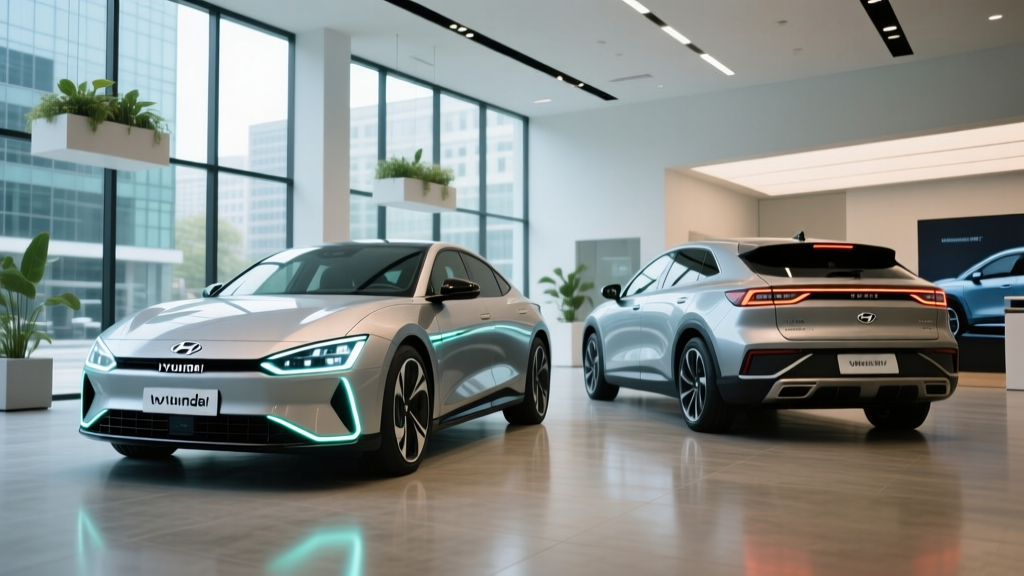
Hyundai sells three battery-electric vehicles in the US for the 2026 model year. Each targets a different buyer profile, and the specs vary meaningfully. Here's the data you need before stepping into a dealership:
| Spec | 2026 Kona Electric | 2026 Ioniq 5 | 2026 Ioniq 6 |
|---|---|---|---|
| Body Style | Subcompact crossover | Compact crossover | Sedan (fastback) |
| Battery (usable) | 64.8 kWh (NMC) | 84.0 kWh (NMC) | 77.4 kWh (NMC) |
| EPA Range (max trim) | 261 mi | 361 mi (RWD Long Range) | 361 mi (SE RWD Long Range) |
| Real-World Highway Range | ~210–230 mi | ~280–310 mi | ~290–320 mi |
| MPGe (combined) | 129 MPGe | 114 MPGe (AWD) / 132 (RWD) | 140 MPGe (SE RWD) |
| Peak DC Fast Charge | ~100 kW (CCS) | ~240 kW (NACS) | ~240 kW (NACS) |
| 10–80% DC Fast Charge | ~43 min | ~18 min | ~18 min |
| Level 2 Charge Rate | ~10.9 kW | ~10.9 kW | ~10.9 kW |
| 0–60 mph | ~7.4 sec | ~4.5 sec (AWD) | ~5.1 sec (AWD) |
| Horsepower | 201 hp | 320 hp (AWD) | 320 hp (AWD) |
| Starting MSRP | ~$32,975 | ~$42,600 | ~$38,650 |
| Battery Warranty | 10 yr / 100,000 mi | 10 yr / 100,000 mi | 10 yr / 100,000 mi |
Key takeaway: The Ioniq 5 and Ioniq 6 both ride on Hyundai's E-GMP platform with 800V architecture, which is why they can peak at ~240 kW on DC fast chargers — roughly 2.4× the peak rate of the Kona Electric's 400V system. If road-tripping is part of your routine, the Ioniq models' charging speed is a meaningful advantage. If you commute locally and charge overnight at home, the Kona's slower DC rate matters far less.
Electric Hyundai vs. Gas and Hybrid: The Cost Reality
Most buyers cross-shopping an electric Hyundai car are comparing it against either a gas-powered Hyundai (Tucson, Elantra) or a hybrid option (Tucson Hybrid, Ioniq Hybrid — discontinued after 2022 but still on the used market). Let's run the numbers over five years and 75,000 miles of mixed driving.
| Cost Factor (5 yr / 75k mi) | Kona Electric SE (~$33k) | Kona Gas AWD SEL (~$30k) | Tucson Hybrid Blue (~$34k) |
|---|---|---|---|
| Purchase Price (MSRP) | $32,975 | $29,950 | $33,950 |
| Est. Federal Tax Credit (§30D) | Up to $3,750–$7,500* | $0 | $0 |
| Net Purchase After Credit | ~$25,475–$29,225 | $29,950 | $33,950 |
| Fuel / Electricity Cost | ~$3,150 (home L2 avg) | ~$9,375 ($3.50/gal, 28 MPG) | ~$6,825 ($3.50/gal, 38 MPG) |
| Maintenance (est.) | ~$1,800 | ~$3,600 | ~$3,200 |
| Insurance (est. avg) | ~$9,500 | ~$7,800 | ~$8,200 |
| 5-Year Total Cost | ~$39,925–$43,675 | ~$50,725 | ~$52,175 |
*Tax credit eligibility under IRS §30D depends on buyer income caps ($150k single / $300k joint), vehicle MSRP limits ($55k cars / $80k SUVs), and battery critical-mineral and component sourcing requirements that tighten annually. The Kona Electric currently qualifies for at least partial credit; verify your specific eligibility at purchase. Point-of-sale transfer is available, reducing your out-of-pocket at the dealer.
The math consistently favors the EV over five years, primarily because home electricity costs roughly $0.12–$0.16/kWh nationally versus $3.50+/gallon for gas. But two caveats matter: insurance runs 15–25% higher on EVs due to repair costs and parts pricing, and if you rely exclusively on public DC fast charging at $0.35–$0.50/kWh, your fuel cost advantage narrows significantly.
Real-World Range: What the EPA Sticker Doesn't Tell You
The EPA range numbers Hyundai publishes are tested under controlled conditions. In daily driving, several factors compress that range:
- Highway driving at 70–80 mph: Expect 15–20% range loss versus the EPA combined figure. The Ioniq 5 RWD's 361-mile EPA rating translates to roughly 290–310 real highway miles at 75 mph in moderate temperatures.
- Cold weather (below 32°F): Battery chemistry slows and cabin heating draws energy. Expect 20–35% range reduction in sustained sub-freezing conditions. The Ioniq 5 and Ioniq 6 include a heat pump (standard on most trims), which mitigates this loss by roughly 10 percentage points compared to resistive heating. The Kona Electric also uses a heat pump on 2026 models.
- Charging curve taper: The ~18-minute 10–80% time for the Ioniq models assumes a 350 kW-capable CCS/NACS station and a preconditioned battery. The charge rate peaks near 240 kW up to roughly 55–60% SoC, then tapers progressively. An 80–100% fill can add another 25–30 minutes. Plan road-trip stops around the 10–80% sweet spot.
- Terrain and towing: Mountain passes and towing (the Ioniq 5 is rated for up to 2,300 lbs with a hitch) will further reduce range. Budget an extra 15–25% consumption buffer on hilly routes.
Real-World Range Cheat Sheet:
- Kona Electric — EPA 261 mi → Expect ~210–230 mi highway, ~175–200 mi in cold weather
- Ioniq 5 RWD LR — EPA 361 mi → Expect ~290–310 mi highway, ~240–280 mi in cold weather
- Ioniq 6 SE RWD LR — EPA 361 mi → Expect ~290–320 mi highway, ~245–285 mi in cold weather
Source: fueleconomy.gov
Charging at Home vs. Public: What You Actually Need
Home Level 2 charging is the foundation of practical EV ownership. Here's what that looks like for Hyundai's electric cars:
Level 1 (120V standard outlet): Adds roughly 3–5 miles of range per hour. Adequate for the Kona Electric if you drive under 40 miles daily and can plug in for 10–12 hours overnight. Painfully slow for the Ioniq 5 or Ioniq 6's larger batteries — a full charge from empty takes 3–4 days.
Level 2 (240V, home wallbox): At ~10.9 kW, all three Hyundais add roughly 30–40 miles of range per hour. A full overnight charge (8–10 hours) refills any of them completely. Installation typically costs $800–$2,500 depending on your electrical panel capacity, run length, and local permit fees. If your panel needs a 200-amp upgrade, add $1,500–$3,000.
DC Fast Charging (public): The Ioniq 5 and Ioniq 6 now ship with the NACS (Tesla-style) connector for 2026, giving them native access to Tesla Superchargers without an adapter. The Kona Electric retains CCS1. Networks like Electrify America, EVgo, and ChargePoint offer 150–350 kW chargers, though real-world reliability varies — plan backup charging stops on road trips.
| Charging Level | Power | Miles Added/Hour | Full Charge Time (Empty to 100%) | Cost per Full Charge |
|---|---|---|---|---|
| Level 1 (120V) | ~1.4 kW | 3–5 mi | 40–70 hours | ~$8–$12 (home) |
| Level 2 (240V home) | ~10.9 kW | 30–40 mi | 7–10 hours | ~$8–$12 (home) |
| DC Fast (public) | 100–240 kW | N/A (session-based) | 18–43 min (10–80%) | ~$25–$50 (varies) |
If you live in an apartment without charging access or park on the street, an EV becomes significantly less convenient. You'll rely on public Level 2 chargers (slower, sometimes occupied or broken) or DC fast chargers (more expensive, not ideal for daily battery health). Be honest about your charging situation before committing.
Tax Credits, Incentives, and What You'll Actually Pay
The federal §30D clean vehicle credit remains the biggest financial lever for EV buyers in 2026, but qualification has become stricter each year since the Inflation Reduction Act. Here's the eligibility checklist for Hyundai's electric cars:
- Buyer income cap: Modified AGI must not exceed $150,000 (single), $225,000 (head of household), or $300,000 (married filing jointly)
- Vehicle MSRP cap: $55,000 for sedans (Ioniq 6), $80,000 for SUVs/crossovers (Ioniq 5, Kona Electric) — all Hyundai EVs fall under these caps at base and mid trims
- Battery component sourcing: Increasing percentages of battery components must be manufactured or assembled in North America — this requirement tightens annually and may affect credit amount
- Critical minerals sourcing: A percentage of critical minerals must be sourced from the US or free-trade-agreement partners — this also tightens yearly
- Point-of-sale transfer: You can transfer the credit to the dealer at purchase, reducing your out-of-pocket price immediately rather than waiting for a tax refund
- Final assembly: Vehicle must undergo final assembly in North America — the Ioniq 5 is built at Hyundai's Metaplant in Georgia; verify Kona Electric and Ioniq 6 assembly location at purchase
The credit amount is split into two halves — $3,750 for meeting the critical-minerals requirement and $3,750 for meeting the battery-component requirement. Depending on current-year sourcing rules, a given Hyundai model may qualify for the full $7,500, a partial $3,750, or potentially $0 if sourcing thresholds aren't met. Always verify at the dealership and cross-reference with the IRS clean vehicle credit page before signing.
Many states and utilities also offer additional rebates — California's CVRP, Colorado's state credit, utility company charging rebates, and HOV lane access perks. These vary by jurisdiction, so check your state's energy office and local utility for current programs.
Common Misconceptions About Electric Hyundai Cars
| Myth | Fact |
|---|---|
| "The battery will need replacing in a few years and cost $20,000." | Hyundai warranties its EV batteries for 10 years/100,000 miles with a capacity retention threshold (typically 70%+). Real-world degradation data from earlier Hyundai EVs shows roughly 10–15% capacity loss over 100,000 miles with normal use. Full replacement is rare and covered under warranty if premature. |
| "EVs are worse in cold weather — they'll leave you stranded." | Range drops 20–35% in sustained freezing temps, but preconditioning (warming the battery while plugged in) recovers much of that loss. With a heat pump and proper planning, Hyundai EVs handle winter commuting reliably. Just budget for the reduced range. |
| "Public charging is always broken or unavailable." | Reliability varies by network. Tesla Superchargers (now accessible to NACS-equipped Ioniq 5 and Ioniq 6) consistently report 95%+ uptime. Electrify America and EVgo have improved but still experience occasional outages. Apps like PlugShare show real-time station status. |
| "I'll save money no matter how I charge." | Home Level 2 charging at ~$0.13/kWh yields massive savings. Exclusive public DC fast charging at $0.35–$0.50/kWh cuts your fuel cost advantage roughly in half versus a fuel-efficient hybrid. Your charging setup determines your economics. |
| "The Ioniq 5 and Ioniq 6 are basically the same car." | They share the E-GMP platform and powertrain options, but the Ioniq 6's lower, sleeker sedan shape gives it a 140 MPGe combined efficiency rating versus the Ioniq 5's 114–132 MPGe. The Ioniq 5 offers more cargo volume (~27 cu ft behind rear seats) versus the Ioniq 6's ~12.3 cu ft trunk. Different tools for different needs. |
Decision Framework: Which Electric Hyundai Fits You?
Choose the Kona Electric if:
- Your budget is under $35,000 before incentives
- You primarily commute under 50 miles round-trip and charge at home
- You want a compact crossover for city parking and tight garages
- Road-tripping more than twice a year is not a priority
Choose the Ioniq 5 if:
- You need crossover cargo space (27 cu ft) for family duty, gear, or dogs
- You road-trip regularly and need ~18-minute 10–80% DC fast charging
- You want AWD availability for snow or mountain driving
- You value V2L (vehicle-to-load) capability for powering devices or camping
Choose the Ioniq 6 if:
- Highway efficiency is your top priority (140 MPGe is among the best in any EV)
- You prefer a sedan's driving dynamics and don't need large cargo volume
- You commute long distances on highways and want to maximize miles per kWh
- You want the same fast-charging speed as the Ioniq 5 in a more aerodynamic package
Don't choose any Hyundai EV if:
- You have no access to home or workplace Level 2 charging and your area has sparse public infrastructure
- You regularly tow heavy loads (the Ioniq 5's 2,300-lb rating is modest; consider a PHEV or larger EV)
- You need three-row seating — Hyundai's Palisade is gas-only as of 2026; the three-row Ioniq 7 is not yet on sale
What First-Time EV Buyers Should Know Before Signing
1. Confirm your home electrical capacity first. Before falling in love with a model, have a licensed electrician assess your panel. A 200-amp panel with space for a 50-amp breaker is ideal for Level 2. Older homes with 100-amp panels may need a costly upgrade ($1,500–$3,000+) or a lower-amperage charger that charges more slowly.
2. Test-charge before you buy. Visit your nearest public fast charger and your likely home charging spot. Understand the plug-in experience, the app ecosystem (Hyundai's Bluelink app handles scheduling and preconditioning), and how long a session takes.
3. Budget for higher insurance. Get an insurance quote on the specific trim before purchase. EV insurance averages 15–25% more than equivalent gas models. Hyundai EVs tend to be moderate in this regard, but quotes vary by driver profile and state.
4. Learn preconditioning. The Ioniq 5 and Ioniq 6 can warm their batteries before you arrive at a DC fast charger — this unlocks the full ~240 kW peak rate. Without preconditioning (especially in cold weather), your charge speed may be cut in half for the first 10–15 minutes. Use the navigation system to route to a charger, and the car will precondition automatically.
5. Understand the warranty. Hyundai's 10-year/100,000-mile battery warranty covers capacity loss below a defined threshold (typically 70% of original capacity). The basic vehicle warranty is 5 years/60,000 miles, and the powertrain warranty is 10 years/100,000 miles. These are among the strongest in the industry, per Hyundai's official warranty page.
Frequently Asked Questions
Can I use Tesla Superchargers with a Hyundai electric car?
For 2026, the Ioniq 5 and Ioniq 6 ship with the NACS connector, which is the Tesla Supercharger plug standard. This means native access to Tesla's Supercharger network without an adapter. The Kona Electric retains the CCS1 connector and would need a NACS-to-CCS adapter (sold separately) for Supercharger access, though adapter compatibility should be verified with Hyundai.
How long does a Hyundai EV battery actually last?
Based on data from earlier-generation Hyundai EVs (Kona Electric, Ioniq Electric), owners report roughly 10–15% capacity degradation over 100,000 miles with typical use patterns. Hyundai warranties the battery at 10 years/100,000 miles with a minimum capacity retention threshold. NMC chemistry in these vehicles degrades more slowly when you avoid routinely charging to 100% or draining to 0% — keeping daily SoC between 20–80% extends longevity.
Is the Ioniq 5 AWD worth the range trade-off?
The Ioniq 5 AWD drops from 361 miles EPA (RWD Long Range) to roughly 290 miles EPA, depending on trim and wheel size. You gain 320 hp, a 4.5-second 0–60, and better traction in rain and snow. If you live in a region with real winters or mountain passes, AWD is worth the ~70-mile range penalty. If you're in a mild climate and prioritize maximum range, stick with RWD.
What happens if the battery needs replacement out of warranty?
Out-of-warranty EV battery replacement currently costs $12,000–$20,000+ depending on the pack. However, complete battery failure is rare — most degradation is gradual capacity loss. Individual module replacement may be possible at lower cost. By the time a 2026 Hyundai EV is out of its 10-year battery warranty, replacement battery costs are expected to decline as the industry scales.
Do Hyundai electric cars qualify for the full $7,500 federal tax credit?
Credit eligibility varies by model, trim, and current-year battery sourcing rules under IRS §30D. Some Hyundai EVs qualify for the full $7,500, others for a partial $3,750, depending on whether they meet both the critical-minerals and battery-component sourcing thresholds. The Ioniq 5, now assembled in Georgia, has improved its North American sourcing profile. Always confirm the exact credit amount with your dealer and a tax professional before purchase — rules tighten annually.