The Verdict: America's Default EV Still Earns Its Spot
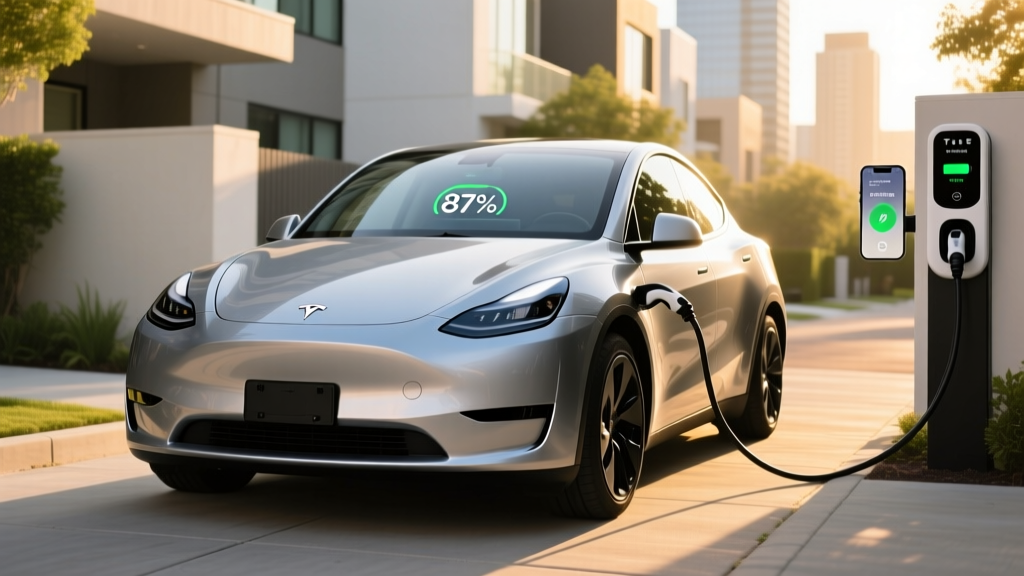
The Tesla Model Y Long Range remains the benchmark against which every compact electric SUV is measured. For 2026, Tesla has refined the Juniper-generation platform with a refreshed interior, improved acoustic glass, and a revised battery pack pushing the EPA range estimate to 320 miles. It isn't the flashiest EV on the market, nor the cheapest, but its combination of Supercharger network access, class-leading efficiency, and practical cargo space makes it the rational default for buyers transitioning from a gas-powered crossover.
This review breaks down the numbers that matter — real-world range, actual charging speeds (not just peak kW), true cost after federal incentives, and the ownership quirks Tesla's configurator won't show you. If you're cross-shopping the Hyundai Ioniq 5, Ford Mustang Mach-E, or Chevrolet Equinox EV, the data below will clarify where the Model Y Long Range wins and where it falls short.
Range, Battery & Efficiency: The Numbers Behind the Sticker
| Specification | Value |
|---|---|
| EPA Estimated Range | 320 miles |
| Battery Capacity (usable) | ~78 kWh |
| Battery Chemistry | NMC (Nickel Manganese Cobalt) |
| Drivetrain | Dual-Motor AWD |
| Horsepower | 384 hp (combined) |
| 0–60 mph | 4.8 seconds |
| EPA Efficiency | 122 MPGe combined / 28 kWh/100 mi |
| Top Speed | 125 mph |
| Towing Capacity | 3,500 lbs (with tow package) |
| Cargo Volume (rear seats up) | 30.2 cu ft |
| Cargo Volume (rear seats folded) | 72.1 cu ft |
| Rear Legroom | 41.6 inches |
| Base MSRP | $44,990 (before destination) |
| Destination Charge | $1,390 |
| Battery & Drive Unit Warranty | 8 years / 120,000 miles |
| Basic Vehicle Warranty | 4 years / 50,000 miles |
The EPA's 320-mile estimate assumes a mix of city and highway driving at moderate temperatures. In our experience and consistent with third-party highway testing, expect 270–290 miles on a flat, 70-mph interstate run in 65–75°F weather. Push speeds to 80 mph or drive into sustained headwinds, and 250 miles is a more realistic planning number.
In cold weather (below 32°F), range loss of 15–25% is typical for NMC chemistry without aggressive preconditioning — plan for 240–270 miles in freezing conditions. The Juniper-generation heat pump helps, but physics still governs lithium-ion cells. Always plan road-trip charging stops around 200–220 miles of usable range in winter to preserve a safety buffer.
The Model Y Long Range uses an NMC (nickel manganese cobalt) pack rather than the LFP (lithium iron phosphate) chemistry found in the base rear-wheel-drive Model Y. The trade-off is deliberate: NMC delivers higher energy density, which translates to more range in the same physical package and better cold-weather performance. The downside is that Tesla recommends daily charging to 80% for NMC longevity, whereas LFP packs tolerate routine 100% charges. For most owners, 80% daily (roughly 256 miles) is more than sufficient for commuting.
Efficiency is where Tesla's engineering advantage shows. At 28 kWh per 100 miles, the Model Y Long Range sips electrons more sparingly than almost any AWD electric SUV in its class. For context, the Hyundai Ioniq 5 AWD consumes roughly 32 kWh/100 mi, and the Ford Mustang Mach-E Extended Range AWD sits around 31 kWh/100 mi. Over 12,000 annual miles, that efficiency gap saves real money at the charger.
Charging Speed: DC Fast, Level 2, and the Curve That Matters
| Charging Level | Max Rate | Speed (approx.) | Notes |
|---|---|---|---|
| DC Fast Charging (Supercharger V3/V4) | 250 kW peak | 10–80% in ~25 min | Peak rate sustained to ~50% SoC; tapers significantly above 80% |
| DC Fast Charging (CCS adapter at third-party stations) | ~170–200 kW typical | 10–80% in ~30–35 min | Depends on station output; Electrify America, EVgo, etc. |
| Level 2 Home (Tesla Wall Connector, 48A) | 11.5 kW | ~37 miles per hour of charging | Requires 60A dedicated circuit; full charge in ~8 hours |
| Level 2 Home (32A mobile connector) | 7.7 kW | ~25 miles per hour of charging | Works on 40A circuit; full charge in ~11 hours |
| Level 1 (120V standard outlet) | ~1.4 kW | ~4–5 miles per hour | Emergency/trickle only; impractical for daily use |
The headline number — 250 kW peak DC fast charging — is real but requires context. The Model Y Long Range sustains its peak charge rate only through roughly 40–50% state of charge. After that, the charge curve tapers progressively: you'll see ~150 kW around 60% SoC, dropping to ~80 kW by 75%, and crawling below 30 kW above 90%. This is normal for NMC packs with active thermal management, but it means the 10–80% time of roughly 25 minutes is the practical metric that matters for road trips, not the peak kW number.
At a Tesla V3 or V4 Supercharger, preconditioning the battery (which the navigation system does automatically when you route to a Supercharger) is essential. Arrive with a cold pack and your peak rate may be cut in half for the first several minutes. In winter, preconditioning can take 15–30 minutes of driving before the battery reaches optimal charging temperature.
For home charging, the Tesla Wall Connector at 48 amps (11.5 kW) is the sweet spot. A full 0–100% charge takes about 8 hours, which means plugging in when you get home and waking up to a full battery every morning. Installation typically requires a licensed electrician to run a 60-amp dedicated circuit — budget $800–$2,000 for the installation depending on your panel proximity and local permit costs. If your electrical panel is at capacity, a panel upgrade ($1,500–$3,000) may be necessary before adding a Level 2 circuit.
Tesla's NACS (North American Charging Standard) connector is now the industry default, with Ford, GM, Rivian, and others adopting it. This means the Model Y Long Range charges natively at Superchargers without an adapter, while also gaining access to a growing number of third-party NACS-equipped stations. A CCS adapter (sold separately, ~$175) unlocks Electrify America, EVgo, and other legacy CCS networks — useful in areas where Supercharger density is lower.
Performance & Driving Dynamics
The dual-motor AWD powertrain produces a combined 384 horsepower and delivers a 4.8-second 0–60 mph time — quick enough to merge confidently onto any freeway and genuinely rapid for a 4,400-pound crossover. Instant torque delivery means the Model Y feels faster than its numbers suggest in city driving, where the gap between electric and internal-combustion acceleration is most pronounced.
Ride quality in the Juniper-generation Model Y has improved meaningfully over the pre-2025 platform. Revised damper tuning and additional sound deadening reduce highway drone and absorb sharp impacts better than earlier iterations. It's still a firm ride by luxury-SUV standards — you'll feel expansion joints and pothole edges — but it's no longer the harsh experience that early Model Y owners complained about.
Regenerative braking remains aggressive and effectively enables one-pedal driving in most scenarios. Tesla removed the user-adjustable regen setting several years ago, so the deceleration rate is fixed. Most owners adapt within a week, but if you're coming from a vehicle with adjustable regen (like a Hyundai or BMW), expect a brief adjustment period.
Handling is competent rather than engaging. The low center of gravity (battery pack under the floor) keeps body roll in check, and the steering is precise, but the Model Y is a crossover optimized for efficiency and space, not canyon carving. For the target buyer — families, commuters, road trippers — the dynamics are entirely appropriate.
Interior, Tech & Driver Assistance
The Juniper interior is a study in minimalism done better than before. The 15.4-inch center touchscreen remains the command hub for climate, navigation, media, and vehicle settings. The 2026 model adds ambient lighting strips, ventilated front seats (previously a frequent complaint), and a rear-seat entertainment screen — all features that were conspicuously absent in earlier Model Y trims.
Build quality continues its slow but real improvement. Panel gaps are tighter, the soft-touch materials have expanded beyond the dashboard, and the acoustic glass noticeably reduces wind noise at highway speeds. It still doesn't match a Genesis Electrified GV70 or BMW iX in perceived luxury, but at $44,990, it doesn't need to.
Autopilot comes standard and includes adaptive cruise control, lane-keeping assist, and automatic emergency braking. It is a competent SAE Level 2 driver-assistance system — meaning the driver must remain fully engaged, hands on or near the wheel, and eyes on the road at all times. Full Self-Driving (Supervised), a $8,000 option (or $99/month subscription), adds automatic lane changes, navigation-guided on/off-ramp transitions, and traffic-light recognition. Despite the name, FSD Supervised is also SAE Level 2 and is not autonomous driving. The driver is responsible for all vehicle operation at all times.
Both Autopilot and FSD (Supervised) are SAE Level 2 systems. They do not replace an attentive driver. NHTSA continues to investigate incidents involving Tesla's driver-assistance systems. You must monitor the road, maintain steering-wheel contact, and be prepared to take over instantly. No Tesla vehicle currently sold is capable of unsupervised autonomous driving.
The infotainment system remains Tesla's proprietary interface — no Apple CarPlay or Android Auto. For some buyers this is a dealbreaker; for others, Tesla's native navigation, Spotify/Apple Music integration, and over-the-air update cadence make it a non-issue. The built-in trip planner with automatic Supercharger routing is genuinely excellent and remains one of Tesla's strongest ownership advantages for road-trip planning.
Pricing, Trims & Federal Tax Credit Eligibility
| Item | Amount |
|---|---|
| Base MSRP (Long Range AWD) | $44,990 |
| Destination Fee | $1,390 |
| Full Self-Driving (Supervised) Option | +$8,000 |
| Premium Interior / Paint / Wheel Upgrades | +$0 – $4,500 |
| As-Tested Price (typical equipped) | ~$48,000 – $54,000 |
| Federal Tax Credit (§30D, if eligible) | Up to $7,500 (point-of-sale or tax return) |
| Effective Price After Max Credit | ~$38,880 (base, before options) |
The Model Y Long Range starts at $44,990 before the $1,390 destination charge. Tesla periodically adjusts pricing, so confirm current figures on the configurator. The Performance trim (3.5-second 0–60, sport suspension) sits higher, typically around $50,000+, and a base RWD model with LFP battery is available at a lower price point for buyers who don't need AWD or maximum range.
Federal Tax Credit (§30D) — Key Eligibility Rules
The Model Y Long Range may qualify for up to $7,500 in federal tax credits under IRS §30D, but eligibility is not automatic. As of 2026, the rules require:
- MSRP Cap: The vehicle's MSRP must not exceed $80,000 for SUVs — the Model Y qualifies easily.
- Buyer Income Cap: Modified adjusted gross income (MAGI) must not exceed $150,000 (single), $225,000 (head of household), or $300,000 (married filing jointly).
- Battery Sourcing: A percentage of critical minerals and battery components must be sourced from the U.S. or free-trade-agreement countries. These thresholds increase annually. Tesla's Fremont and Austin-built Model Y packs have generally met sourcing requirements, but the specific credit amount ($3,750 or $7,500) depends on the current-year sourcing percentages. Check the fueleconomy.gov tax credit lookup for the exact current qualification.
- Point-of-Sale Transfer: As of 2024, buyers can transfer the credit to the dealer at purchase, reducing the upfront price rather than waiting for a tax refund. Tesla supports this at delivery.
- VIN Verification: Confirm your specific vehicle's eligibility on IRS.gov before finalizing your order.
State and local incentives (California CVRP, Colorado state credit, utility rebates) may stack on top of the federal credit. These vary by jurisdiction — check your state energy office and local utility for current programs.
Ownership Costs: What the Sticker Doesn't Tell You
Electricity costs for the Model Y Long Range depend heavily on your local rates and charging habits. At the U.S. residential average of ~$0.17/kWh (per EIA 2025 data), charging 78 kWh from empty costs roughly $13.26. At 28 kWh per 100 miles, your cost per mile at home is approximately $0.048 — compared to $0.12–$0.15/mile for a comparable gas crossover at 25 MPG and $3.50/gallon.
Supercharger pricing varies by location and time of day, typically $0.25–$0.40/kWh. At $0.35/kWh, your road-trip cost per mile rises to roughly $0.098 — still below gasoline for most markets, but the gap narrows.
Insurance remains a notable cost for Tesla owners. Model Y premiums average 15–30% higher than comparable gas crossovers due to repair costs and Tesla's aluminum/composite body structure. Budget $1,800–$2,800 annually depending on your state, driving record, and coverage level. Tesla's own insurance product (available in select states) can sometimes undercut traditional carriers, but availability is limited.
Maintenance is minimal: no oil changes, no spark plugs, no transmission fluid. Cabin air filter replacement (~$50–$80 every 2 years), tire rotation, and windshield washer fluid are the routine costs. Expect brake pads to last 80,000+ miles thanks to regenerative braking handling most deceleration.
Competitor Comparison: Where the Model Y Wins and Loses
The compact electric SUV segment is crowded in 2026. Here's how the Model Y Long Range stacks up against key rivals on the metrics that matter:
| Metric | Tesla Model Y LR | Hyundai Ioniq 5 AWD | Ford Mach-E ER AWD | Chevy Equinox EV RS AWD |
|---|---|---|---|---|
| EPA Range | 320 mi | 290 mi | 305 mi | 307 mi |
| Peak DC Charge | 250 kW | 240 kW | 150 kW | 190 kW |
| 10–80% Time | ~25 min | ~18 min | ~36 min | ~30 min |
| Efficiency (kWh/100mi) | 28 | 32 | 31 | 32 |
| 0–60 mph | 4.8 sec | 5.1 sec | 5.5 sec | 5.9 sec |
| Cargo (seats up, cu ft) | 30.2 | 27.2 | 29.7 | 26.4 |
| Base MSRP | $44,990 | $47,500 | $45,995 | $43,900 |
| Charging Network | NACS native (Supercharger) | NACS (2025+) | NACS (adapter/2025+) | NACS (adapter) |
- Maximum real-world range and efficiency are top priorities
- Supercharger network access matters for your road-trip routes
- You value best-in-class cargo volume for family hauling
- Over-the-air updates and trip-planner integration are important to you
- You want proven, high-volume platform reliability data
- Faster peak DC charging matters (Ioniq 5's 800V architecture charges 10–80% faster)
- You want Apple CarPlay/Android Auto (Hyundai, Ford, Chevy all offer it)
- A more traditional interior layout with physical buttons is preferred
- You need a lower entry price (Equinox EV starts ~$1,000 less)
- You want a more plush, luxury-adjacent ride quality (Ioniq 5, Mach-E)
The Ioniq 5's 800-volt architecture gives it a real charging-speed advantage: 18 minutes 10–80% versus 25 minutes for the Tesla. On a road trip with multiple DC stops, that adds up. However, the Model Y's superior efficiency means fewer stops overall, which often cancels out the per-stop time advantage.
Pros, Cons & Who Should Buy
- Class-leading EPA range (320 mi) and real-world efficiency (28 kWh/100mi)
- Native Supercharger access — the most reliable DC network in North America
- Spacious cargo area (30.2 cu ft) with practical frunk storage
- Strong performance (4.8s 0–60) with dual-motor AWD confidence
- Excellent over-the-air update track record — the car improves post-purchase
- Competitive pricing after $7,500 federal tax credit
- 8-year/120,000-mile battery warranty
- No Apple CarPlay or Android Auto — Tesla-only infotainment
- FSD (Supervised) is expensive ($8,000) and still Level 2, not autonomous
- Insurance premiums 15–30% above segment average
- Firm ride quality vs. some competitors (Ioniq 5, Mach-E)
- NMC battery requires 80% daily charge limit for longevity (vs. 100% for LFP)
- Minimal physical controls — all climate/media via touchscreen
- Repair costs and body-shop availability remain higher than mainstream brands
Daily commuters with home charging who want maximum efficiency and minimal running costs. Families who need cargo space for strollers, groceries, and road-trip luggage. Frequent road trippers who value Supercharger network reliability and Tesla's integrated trip planner. Tech-forward buyers comfortable with a touchscreen-centric interface and OTA-driven feature evolution.
Not ideal for: Buyers who prioritize plush ride comfort, need physical buttons, depend on Apple CarPlay, or want the absolute fastest DC charging times available in the segment.
Frequently Asked Questions
What is the real-world range of the Tesla Model Y Long Range?
The EPA estimates 320 miles. In real-world highway driving at 70 mph in moderate temperatures, expect 270–290 miles. In freezing weather, plan for 240–270 miles. Always build in a 10–15% buffer above your next charging stop to account for terrain, wind, and temperature.
How fast does the Model Y Long Range charge at home and on the road?
At a V3/V4 Supercharger, 10–80% takes roughly 25 minutes at up to 250 kW peak. At home on a 48-amp Level 2 Tesla Wall Connector (11.5 kW), you gain about 37 miles per hour of charging, and a full charge takes ~8 hours overnight. On a standard 120V outlet, expect only 4–5 miles per hour — adequate for emergencies but not daily use.
How much does the Model Y Long Range cost after the federal tax credit?
The base MSRP is $44,990 plus $1,390 destination, totaling $46,380. If you qualify for the full $7,500 federal credit under §30D (subject to income caps, MSRP limits, and battery-sourcing requirements), the effective price drops to approximately $38,880. Options like FSD, premium paint, and larger wheels increase the final cost. Confirm your eligibility at IRS.gov and on fueleconomy.gov.
Does the Tesla Model Y Long Range qualify for the $7,500 federal EV tax credit?
It may, depending on your income, the vehicle's battery-sourcing compliance in the current year, and MSRP (which is well under the $80,000 SUV cap). Tesla's U.S.-built Model Y has generally qualified, but the exact credit amount ($3,750 or $7,500) depends on annual critical-mineral and battery-component thresholds. The credit can be applied at point of sale, reducing your upfront cost. Always verify current eligibility before purchasing.
Is the Model Y Long Range worth buying vs. the Ioniq 5 or Mach-E?
If range, efficiency, cargo space, and Supercharger network access are your top priorities, the Model Y Long Range remains the strongest all-around choice. If faster DC charging (Ioniq 5), Apple CarPlay, or a more traditional interior (Mach-E, Equinox EV) matter more, the competitors are compelling alternatives. Test-drive all three and compare real-world charging infrastructure on your most common road-trip routes.
How long will the Model Y battery last?
Tesla warranties the battery for 8 years or 120,000 miles, whichever comes first, with a guarantee of at least 70% capacity retention. Real-world degradation data from high-mileage Tesla owners suggests NMC packs typically lose 8–12% capacity over the first 100,000 miles, with degradation slowing significantly after the initial break-in period. A full battery replacement outside warranty currently costs $12,000–$16,000 at a Tesla service center, though most owners never need one.
Can I charge a Model Y at non-Tesla charging stations?
Yes. With Tesla's included CCS adapter or the growing number of NACS-equipped third-party stations, you can charge at Electrify America, EVgo, ChargePoint, and other networks. The experience is less seamless than Supercharging (different apps, payment methods, and reliability levels), but it's a viable option where Supercharger coverage is sparse.