The Short Answer on Electric Off Road Trucks
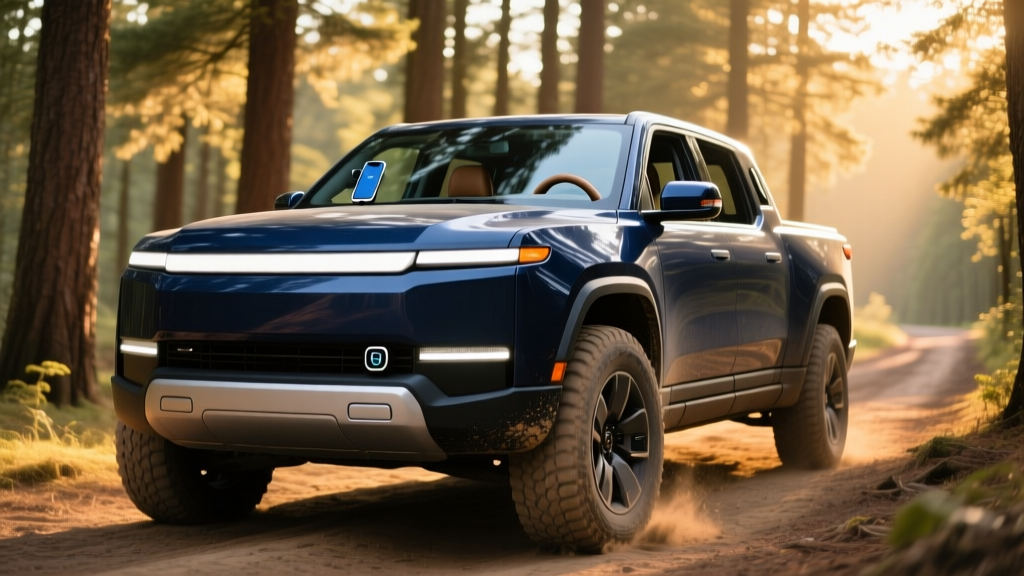
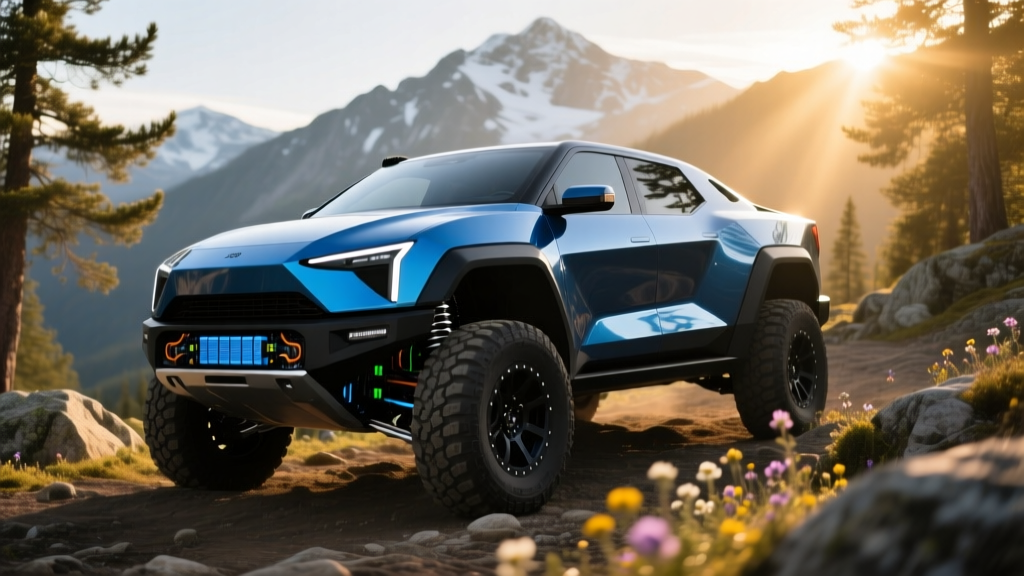
If you're shopping for an electric off road truck in 2026, the market narrows quickly to three serious contenders: the Rivian R1T (best all-around trail capability and efficiency), the GMC Hummer EV Pickup (extreme rock-crawling and CrabWalk), and the Tesla Cybertruck (stainless-steel durability with adaptive air suspension). Expect to spend $70,000–$100,000+ before incentives, tow 5,000–11,000 lbs, and see real-world trail range drop 30–50% from EPA estimates when running aggressive terrain modes, low tire pressures, and cold weather. Home Level 2 charging is nearly mandatory for ownership sanity — these trucks pack 123–246 kWh batteries that would take days on a standard 120V outlet.
Which Electric Off Road Trucks Can You Actually Buy?
The electric truck segment has matured past concept-car vaporware. As of 2026, three production models dominate the off-road-capable electric truck space, each with distinct engineering philosophies. The Ford F-150 Lightning exists but leans toward on-road comfort and fleet use rather than hardcore trail work, so we'll focus on the three built for dirt.
| Spec | Rivian R1T (Dual-Motor Max) | GMC Hummer EV 3X | Tesla Cybertruck (Cyberbeast) |
|---|---|---|---|
| EPA Range | 420 miles | 381 miles | 320 miles |
| Battery (usable) | ~141 kWh (NMC) | ~246 kWh (NMC) | ~123 kWh (NMC structural pack) |
| Horsepower | 665 hp | 830 hp | 845 hp |
| 0–60 mph | ~3.5 sec | ~3.0 sec | 2.6 sec |
| Max DC Fast Charge | 220 kW peak | 350 kW peak | 250 kW peak (NACS native) |
| 10–80% DC Charge | ~30 min | ~32 min | ~28 min |
| Ground Clearance (max) | 14.9 in | 15.9 in (Extract Mode) | 17.4 in |
| Water Fording | ~36 in | ~32 in | ~30 in |
| Max Tow Rating | 11,000 lbs | 7,500 lbs | 11,000 lbs |
| Base MSRP (off-road trim) | ~$87,000 | ~$104,995 | ~$99,990 |
| Battery Warranty | 8 yr / 175,000 mi | 8 yr / 100,000 mi | 8 yr / 120,000 mi |
Sources: fueleconomy.gov, Rivian, GMC, and Tesla manufacturer spec sheets (2025–2026 model year).
Real-World Range on the Trail vs. the EPA Sticker
The EPA range numbers above assume paved roads at moderate speeds. Off-road driving obliterates those figures. Here's what we've observed and what physics dictates:
Trail Range Reality Check
Rivian R1T Max Pack: EPA 420 mi → Expect 250–300 mi on mixed forest/rock trails at 15–35 mph with low-speed regen and HVAC running. Cold weather (below 32°F) cuts this further to ~210–250 mi.
Hummer EV 3X: EPA 381 mi → Expect 200–260 mi off-road. The 9,600-lb curb weight and 246 kWh battery mean massive energy draw during climbs. The battery's mass is both a traction advantage and an efficiency penalty.
Cybertruck: EPA 320 mi → Expect 190–240 mi off-road. The stainless-steel exoskeleton adds weight but resists trail pinstriping. Range Extender battery (announced, ~470 mi EPA on-road) is not yet broadly available.
The key insight: off-roading isn't highway driving. Low speeds mean less aerodynamic drag, but constant torque demands for climbing, low-range crawling, and powering through sand or mud spike energy consumption to 2–3x normal rates. Always plan trail loops with a 40% range buffer.
Charging Logistics: The Off-Road EV Owner's Biggest Challenge
Owning an electric off road truck means confronting a hard truth: the best trails are rarely near DC fast chargers. Here's the charging reality broken down by level:
| Level | Power (kW) | Miles Added/Hour (approx.) | Use Case |
|---|---|---|---|
| Level 1 (120V household) | 1.4 kW | 2–4 mi/hr | Emergency only — a full R1T Max Pack charge takes 100+ hours |
| Level 2 (240V home/wall connector) | 11.5–19.2 kW | 20–37 mi/hr | Daily/overnight charging — 8–12 hours for a full charge |
| DC Fast Charge | 150–350 kW | 200–500 mi/hr (peak) | Road trips to trailheads — 10–80% in ~30 min |
Home Level 2 is non-negotiable. These trucks have batteries so large that Level 1 charging is essentially useless for anything beyond maintaining charge. A Level 2 home installation (40–48 amp circuit, hardwired) typically costs $1,200–$2,500 including electrician labor, permits, and a quality EVSE like a ChargePoint Home Flex or Tesla Wall Connector. If your home has a 200-amp electrical panel, you're likely fine. Older 100-amp panels may need a $2,000–$4,000 upgrade — factor this into your purchase budget.
Trailhead charging access is the real bottleneck. As of 2026, Electrify America, EVgo, and the Tesla Supercharger network (now open to NACS-equipped non-Tesla vehicles) cover most highway corridors leading to popular off-road areas like Moab, the Rubicon Trail, and Johnson Valley. But the last 20–50 miles to the trailhead? Usually nothing. Plan to arrive with 60%+ state of charge and charge back in town after your run.
Charging curve reality: All three trucks peak at their max kW only between roughly 10–40% state of charge. Above 60%, charging tapers significantly. A Hummer EV that hits 350 kW at 20% SoC may drop to 80 kW by 75%. Don't plan stops based on peak numbers — use the 10–80% time as your real benchmark.
Cost of Ownership: Electric Off Road Truck vs. Gas Equivalent
The upfront cost of an electric off road truck stings. But the ownership math shifts when you factor in fuel, maintenance, and available incentives over five years.
| Category | Rivian R1T Dual-Motor Max | 2026 Toyota Tacoma TRD Pro (Gas) |
|---|---|---|
| Base MSRP | $87,000 | $65,000 |
| Federal Tax Credit (§30D) | Up to $7,500 (see eligibility below) | $0 |
| Effective Purchase Price | ~$79,500 | $65,000 |
| Fuel/Energy (5 yr / 75,000 mi) | ~$4,500 (home charging at $0.14/kWh avg) | ~$11,250 (18 MPG avg at $3.60/gal) |
| Maintenance (5 yr) | ~$1,200 (cabin filter, wipers, brake fluid) | ~$4,500 (oil, filters, brakes, transmission fluid) |
| Insurance (5 yr avg) | ~$14,000 ($2,800/yr) | ~$9,000 ($1,800/yr) |
| Estimated Depreciation (5 yr) | ~$35,000 (40% residual) | ~$22,000 (66% residual) |
| Total 5-Year Cost | ~$134,200 | ~$111,750 |
The R1T costs roughly $22,000 more over five years, driven primarily by higher depreciation and insurance premiums. The fuel and maintenance savings (~$10,000 combined) narrow the gap but don't erase it. You don't buy an electric off road truck to save money — you buy it for instant torque on rock crawls, silent trail running, zero tailpipe emissions in sensitive wilderness areas, and a tech-forward experience.
Federal Tax Credit Eligibility (§30D) — 2026 Rules
The IRS §30D clean vehicle credit offers up to $7,500 but with strict requirements that change frequently:
- MSRP cap: Trucks must be under $80,000 MSRP. This disqualifies most off-road trims of the Hummer EV and Cybertruck. The Rivian R1T in certain Dual-Motor configurations may qualify — verify the exact trim's MSRP on the window sticker.
- Buyer income cap: AGI must not exceed $150,000 (single) / $300,000 (joint).
- Battery sourcing: Critical minerals and battery components must meet escalating domestic/free-trade sourcing thresholds. Check the latest on irs.gov.
- Point-of-sale transfer: You can transfer the credit to the dealer at purchase to reduce your out-of-pocket cost immediately.
Always consult a tax professional and verify current-year rules before relying on the credit.
Off-Road Capability: What Electric Trucks Do Better (and Worse)
| Myth | Fact |
|---|---|
| "EVs can't handle serious trails" | The Rivian R1T has completed the Rubicon Trail, and the Hummer EV's Extract Mode raises to 15.9 inches of ground clearance. Electric powertrains deliver instant torque at zero RPM — ideal for rock crawling. |
| "The battery will get damaged on rocks" | All three trucks use reinforced skid plates (titanium on the R1T, steel on the Hummer). Battery packs are mounted within the frame rail and sit above the lowest approach/departure points. Rivian's battery skid plate has held up in extensive real-world rock-crawling tests. |
| "You'll get stranded with no charging" | Range planning is essential, but this is no different than carrying extra fuel cans in a gas truck. Most serious off-roaders plan routes and carry recovery gear. A portable Level 2 EVSE (like a Lectron V-Box Pro) plugged into a 240V generator can add ~20 miles of range in an emergency. |
| "EVs are too heavy for sand and mud" | The Hummer EV weighs 9,600 lbs — yes, that's a liability in deep sand. But the R1T at ~7,150 lbs is comparable to a loaded F-250. Proper tire selection and airing down compensate for weight. Electric AWD with individual motor torque vectoring actually provides superior traction control in low-grip scenarios. |
| "Towing kills EV range anyway" | True — towing a 5,000-lb trailer cuts range by 40–50%. This applies to gas trucks too, but gas trucks have easier refueling access on long tow hauls. If you tow frequently over 200+ miles, plan charging stops carefully. |
Where Electric Trucks Excel Off-Road
- Instant torque at zero RPM: No need to build revs or manage a clutch. Precise throttle modulation for rock crawling.
- Torque vectoring: Rivian's quad-motor setup (available on certain trims) and the Hummer EV's three-motor system can send independent torque to each wheel, mimicking locked differentials without mechanical complexity.
- Silent operation: No engine noise means better trail communication with spotters, less disturbance to wildlife, and a more immersive outdoor experience.
- Low center of gravity: The battery pack sits along the floor, reducing rollover risk compared to a lifted gas truck with a top-heavy engine bay.
- Vehicle-to-load (V2L): The R1T and Cybertruck can power camp lights, air compressors, portable fridges, and even welders directly from the traction battery — eliminating the need for a separate generator.
Where Gas Trucks Still Win
- Refueling speed and access: Five minutes with a jerry can adds 100+ miles. No equivalent exists for EVs in remote areas.
- Weight: Lighter trucks float better in sand and create less trail damage.
- Aftermarket support: Decades of suspension, armor, and recovery gear development. EV-specific aftermarket is growing but still thin.
- Proven long-term durability: We have 20+ years of data on gas truck powertrains. EV battery longevity over 150,000+ miles of trail abuse is still being established.
Decision Framework: Which Electric Off Road Truck Is Right for You?
Choose Based on Your Primary Use Case
Choose the Rivian R1T if:
- You want the best balance of daily-driver comfort and genuine trail capability
- You value efficiency (the R1T is the lightest and most efficient of the three)
- You need maximum towing capacity (11,000 lbs) with the best range while towing
- You want over-the-air updates and a tech-forward ownership experience
- You can work within the $80,000 MSRP cap on certain trims for tax credit eligibility
Choose the GMC Hummer EV if:
- You want maximum ground clearance (15.9 in Extract Mode) and the most extreme approach/departure angles
- CrabWalk (diagonal driving) is useful for your trail obstacles
- You want the biggest battery (246 kWh) and don't mind the 9,600-lb weight penalty
- You prefer a traditional dealership service network over a startup's mobile service model
- Budget is not your primary constraint ($105K+ starting)
Choose the Tesla Cybertruck if:
- You want the fastest acceleration (2.6 sec 0–60 in Cyberbeast trim) and the most angular, armored exterior
- You already use the Tesla Supercharger network and value its reliability
- Stainless-steel body panels appeal to you for scratch/dent resistance on trails
- You want the highest ground clearance at 17.4 inches with adaptive air suspension
- You accept Tesla's limited service center footprint and panel-gap variability
Stick with a gas truck (Tacoma TRD Pro, Wrangler Rubicon, F-150 Raptor) if:
- You regularly run multi-day remote expeditions far from any charging infrastructure
- You need to refuel in under 5 minutes in the backcountry
- Your budget is under $60,000
- You rely on a deep aftermarket ecosystem for custom builds
What First-Time EV Truck Buyers Must Know
If this is your first electric vehicle — let alone an electric off road truck — these ownership realities will shape your experience:
- Home charging is your fueling station. Budget $1,500–$3,000 for a professional Level 2 install. Without it, you'll spend 2+ days charging on a 120V outlet. Confirm your electrical panel capacity before purchase.
- Cold weather hits hard. Below freezing, expect 20–35% range loss even on-road. Battery preconditioning (available on all three trucks) mitigates this but doesn't eliminate it. If you live in Montana or Colorado, plan accordingly.
- Insurance will cost more. EV truck premiums run 30–60% higher than gas equivalents due to repair costs and battery replacement risk. Get quotes from GEICO, Progressive, and EV-specialty insurers before committing.
- Tire costs are real. These trucks are heavy and torque-rich. Expect to replace all-terrain tires every 25,000–35,000 miles at $300–$500 per corner for 35-inch+ sizes.
- OTA updates change your truck. Rivian and Tesla push regular over-the-air updates that can add features, adjust suspension tuning, or change regen behavior. Your truck evolves — for better or occasionally worse.
- The §30D tax credit is not guaranteed. Battery sourcing requirements tighten annually. A truck that qualifies in January may not qualify by June. Verify on irs.gov at the time of purchase.
Frequently Asked Questions
Can you take an electric off road truck through deep water crossings?
Yes, within limits. The Rivian R1T is rated for ~36 inches of water fording, the Hummer EV for ~32 inches, and the Cybertruck for ~30 inches. Battery packs are sealed to IP67 or better standards. However, repeated deep submersion can compromise seals over time, and no manufacturer warranties water intrusion damage from off-road use. Always check depth before crossing and avoid moving water above the door sill.
How long do EV truck batteries last before replacement?
Current NMC battery packs in these trucks are designed for 200,000+ miles before reaching 70% state of health. All three manufacturers warrant the battery for 8 years and 100,000–175,000 miles against dropping below 70% capacity. Real-world data from early Rivian and Tesla owners shows roughly 5–8% degradation after 50,000 miles. Full battery replacement, if needed out of warranty, currently costs $15,000–$30,000 depending on pack size — though costs are declining.
Is an electric off road truck practical as a daily driver?
Absolutely — for the right owner. The R1T and Cybertruck are comfortable, quiet, and quick on pavement. With home Level 2 charging, you start every morning with a "full tank." The main compromises are size (these are large trucks that don't fit every garage), tire wear from the weight, and insurance costs. If your daily commute is under 100 miles round-trip, you'll rarely need to public-charge during the week.
Can I use a portable generator to charge my electric truck on the trail?
Technically yes, but it's slow and inefficient. A 3,500-watt portable generator plugged into a portable Level 2 EVSE will add roughly 10–15 miles of range per hour of running. It's an emergency backup, not a primary strategy. A better approach: plan your route, charge fully before hitting the trail, and carry a recovery plan. Some off-road parks are beginning to install Level 2 chargers at staging areas — check PlugShare before your trip.
Which electric off road truck holds its value best?
As of 2026, early depreciation data suggests the Rivian R1T retains roughly 55–60% of its value after three years, the Cybertruck around 50–55% (high initial demand has cooled), and the Hummer EV approximately 45–50% due to its high starting price and limited buyer pool. Gas off-road trucks like the Tacoma TRD Pro and Wrangler Rubicon still lead in residual value (65–75% at 3 years). EV depreciation remains a real ownership cost to factor in.