What Was Tesla Famous For? The EV That Changed Everything
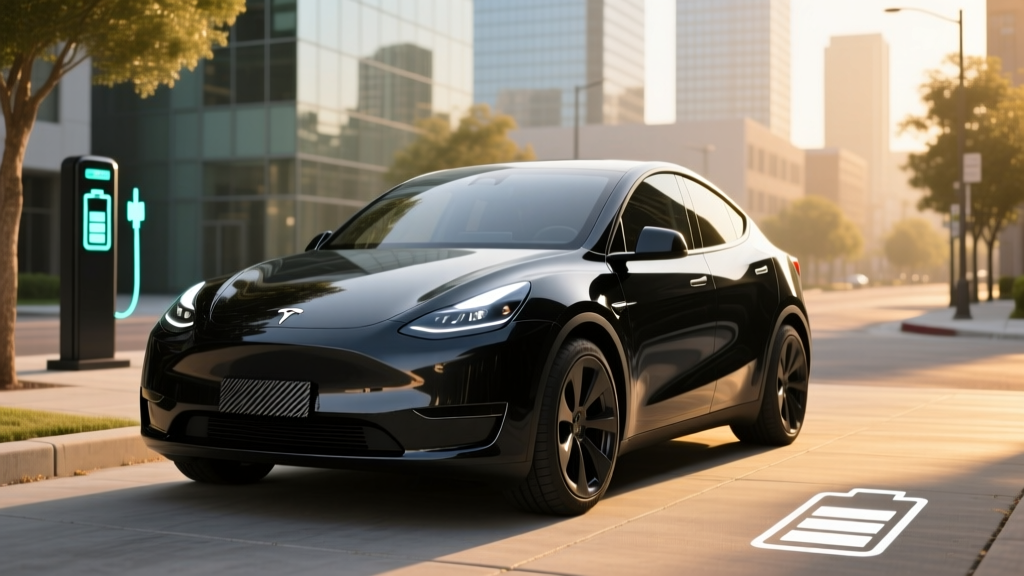
Ask anyone in the automotive industry what was Tesla famous for, and you'll get a cascade of answers: over-the-air software updates, the Supercharger network, vertical integration, and a direct-to-consumer sales model that bypassed traditional dealerships. But more than any single feature, Tesla became famous for making electric vehicles desirable, practical, and fast — starting with the Roadster, scaling with the Model S and Model 3, and ultimately reaching mass-market dominance with the Tesla Model Y.
Now in its 2026 model year — following the significant "Juniper" refresh — the Model Y remains the best-selling EV in the United States and a benchmark against which every new electric crossover is measured. This review examines exactly what the current Model Y delivers in range, charging speed, performance, tech, and value, and whether the vehicle that built Tesla's reputation still earns it in a market crowded with worthy competitors.
| Spec | 2026 Model Y Long Range AWD | 2026 Model Y Performance |
|---|---|---|
| EPA Range | 320 miles | 285 miles |
| Battery (usable) | ~75 kWh, NMC | ~75 kWh, NMC |
| Drivetrain | Dual-Motor AWD | Dual-Motor AWD |
| Horsepower | 384 hp | 456 hp |
| 0–60 mph | 4.8 sec | 3.5 sec |
| Peak DC Fast Charge | 250 kW | 250 kW |
| 10–80% DC Charge | ~25 min | ~25 min |
| Level 2 Home Charge | 11.5 kW (~44 mi/hr) | 11.5 kW (~44 mi/hr) |
| MPGe (combined) | 111 MPGe | 102 MPGe |
| Efficiency | 30 kWh/100 mi | 33 kWh/100 mi |
| Base MSRP | $44,990 | $51,490 |
| Cargo Volume (rear seats up) | 30.2 cu ft | 30.2 cu ft |
| Cargo Volume (rear seats folded) | 72.1 cu ft | 72.1 cu ft |
| Battery Warranty | 8 yr / 120,000 mi | 8 yr / 120,000 mi |
Range and Efficiency: EPA Numbers vs. the Real World
The 2026 Tesla Model Y Long Range AWD carries an EPA-estimated range of 320 miles from its approximately 75 kWh usable NMC (nickel manganese cobalt) battery pack. The Performance trim drops to 285 miles due to its stickier tires, more aggressive tuning, and larger 21-inch wheels.
EPA range is measured on a mixed cycle at moderate temperatures. In real-world driving, expect:
- Highway (70–80 mph, summer): ~270–290 miles — aerodynamic drag dominates at speed
- City / suburban mixed: ~300–315 miles — regen braking recovers energy
- Cold weather (below 32°F): ~220–260 miles — battery resistance increases, cabin heating draws power. Tesla's heat pump mitigates this better than many competitors, but a 20–30% range reduction in deep cold is physics, not a flaw.
- Towing (if equipped, up to 3,500 lbs): ~160–200 miles — expect roughly halved range under load
Source: fueleconomy.gov
Efficiency is where Tesla's engineering reputation shows. At 30 kWh per 100 miles (Long Range), the Model Y remains one of the most efficient electric crossovers on the market, translating to 111 MPGe combined. For context, the Hyundai Ioniq 5 AWD achieves roughly 110 MPGe combined, while the Ford Mustang Mach-E Extended Range AWD sits around 101 MPGe. Tesla's advantage comes from its low drag coefficient, integrated heat pump, and efficient silicon-carbide inverter design.
Charging Speed: DC Fast Charging and Home Setup
One of the original answers to "what was Tesla famous for" was the Supercharger network — and the Model Y's charging hardware continues to leverage it. The 2026 Model Y supports a peak DC fast-charge rate of 250 kW on V3 and V4 Supercharger stalls, as well as on CCS-compatible third-party networks via its native NACS (North American Charging Standard) port.
| Charging Level | Power | Speed (Approx.) | Use Case |
|---|---|---|---|
| Level 1 (120V household) | ~1.4 kW | ~5 mi/hr | Emergency / overnight trickle |
| Level 2 (240V, 48A) | 11.5 kW | ~44 mi/hr | Home daily charging (full in ~7 hr) |
| DC Fast (V3 Supercharger) | Peak 250 kW | ~162 mi in 15 min | Road trips; 10–80% in ~25 min |
| DC Fast (CCS adapter / 350-kW stall) | Peak 250 kW (car-limited) | Same as above | Non-Tesla networks (Electrify America, etc.) |
Understanding the charge curve: The 250 kW figure is a peak, not a sustained rate. The Model Y hits peak charge rate between roughly 10–30% State of Charge (SoC), then progressively tapers. From 50–80%, expect rates closer to 80–120 kW. This is why the 10–80% time is ~25 minutes rather than the ~18 minutes a constant 250 kW would theoretically deliver. Preconditioning the battery (automatic when a Supercharger is set as your navigation destination) is essential to hitting peak rates — arriving at a charger with a cold battery can double your charge time.
For home charging, Tesla's Wall Connector at 48 amps on a 60-amp circuit delivers the full 11.5 kW. A typical overnight session (8 hours) adds roughly 350 miles — more than enough to refill the entire battery. Installation costs for a Level 2 home setup typically range from $500 to $2,000 depending on panel proximity and whether a 200-amp service upgrade is needed (defer to a licensed electrician for your specific situation).
Performance, Drivetrain, and Ride Quality
The 2026 Model Y Long Range AWD uses a dual-motor setup — a permanent-magnet synchronous motor on the rear axle and an induction motor up front — producing 384 horsepower and reaching 60 mph in 4.8 seconds. The Performance variant bumps output to 456 hp with a 3.5-second 0–60 time, aided by a revised adaptive suspension and track-tuned damping introduced with the Juniper refresh.
On the road, the Model Y's instant torque delivery makes it feel quicker than its numbers suggest, particularly in city merging and passing situations. The low center of gravity (battery pack under the floor) keeps body roll minimal through corners. The Juniper refresh significantly improved ride quality — earlier Model Y generations drew criticism for harshness over rough pavement, and the updated suspension tuning, acoustic glass, and additional sound deadening have addressed this substantially.
Regenerative braking remains strong and configurable. Tesla's one-pedal driving mode lets you decelerate to a stop by lifting off the accelerator, recovering energy back into the battery. The stopping feel is among the smoothest in the EV segment.
Interior, Cargo, and Technology
The Juniper interior is a step above its predecessor: ventilated front seats, ambient lighting, a rear-seat touchscreen for climate and media control, and improved material quality throughout. The minimalist design language remains — no physical buttons on the dash, nearly everything runs through the 15.4-inch center touchscreen.
Dimensions that matter:
- Front headroom: 40.7 in
- Rear legroom: 38.0 in (generous for the class)
- Cargo behind rear seats: 30.2 cu ft
- Cargo with rear seats folded: 72.1 cu ft
- Frunk (front trunk): 4.1 cu ft — useful for charging cables or a small bag
The infotainment system remains Tesla's strongest differentiator. Navigation with real-time Supercharger routing, over-the-air updates that add features post-purchase, integrated streaming (Spotify, Netflix at stops), and the Tesla app for remote climate preconditioning and charging monitoring set a standard legacy automakers are still chasing.
Autopilot and FSD (Supervised): Every Model Y includes basic Autopilot (Traffic-Aware Cruise Control and Autosteer). Full Self-Driving (Supervised) is available as a $8,000 option or $99/month subscription. FSD adds automatic lane changes, traffic-light recognition, and Navigate on Autopilot.
Tesla's Autopilot and FSD (Supervised) are SAE Level 2 driver-assistance systems. The driver must remain fully attentive, keep hands on the wheel (or demonstrate attentiveness via the cabin camera), and be prepared to take over instantly. These are not self-driving systems. Level 4 autonomous driving (no driver needed) is currently available only through robotaxi services like Waymo in limited metro areas. See SAE International J3016 for level definitions.
Pricing, Tax Credits, and Total Cost
| Trim | Base MSRP | Destination | Federal Credit (potential) | Effective Price |
|---|---|---|---|---|
| Long Range AWD | $44,990 | $1,390 | Up to $7,500 (§30D) | ~$38,880* |
| Performance AWD | $51,490 | $1,390 | Up to $7,500 (§30D) | ~$45,380* |
*Effective price assumes full §30D credit eligibility. Actual credit depends on battery sourcing, buyer income, and MSRP caps. See IRS rules below.
The 2026 Model Y Long Range AWD starts at $44,990 before destination. Adding FSD (Supervised), a premium interior color, or 20-inch wheels can push an as-tested price above $55,000.
- MSRP cap: SUVs/crossovers must be ≤ $80,000 — Model Y qualifies
- Buyer income cap: Modified AGI ≤ $150,000 (single) / $300,000 (married filing jointly)
- Battery sourcing: Critical minerals and battery components must meet phased-in percentages from US or FTA-partner countries — Tesla's sourcing has improved but verify current-year compliance at IRS.gov
- Point-of-sale transfer: You can transfer the credit to the dealer at purchase, reducing your out-of-pocket cost immediately rather than waiting for a tax refund
- Not refundable: If your tax liability is less than the credit amount, you cannot claim the excess (unless transferred at point of sale)
Always consult a tax professional for your specific situation. Rules are subject to legislative change.
5-Year Ownership Snapshot: At 15,000 miles/year and a national average electricity cost of $0.16/kWh, annual fuel cost for the Long Range AWD is approximately $720. A comparable gasoline crossover at 25 MPG combined and $3.50/gallon would cost roughly $2,100/year in fuel. That's ~$6,900 in fuel savings over five years — before factoring in EV maintenance savings (no oil changes, reduced brake wear from regen). Insurance, however, tends to run 15–25% higher on the Model Y than on equivalent gas crossovers, partially offsetting those gains.
How the Model Y Compares to Key Competitors
The question isn't just what Tesla was famous for — it's whether the Model Y still holds its ground. Here's how it stacks up against its primary 2026 rivals:
| Attribute | Tesla Model Y LR AWD | Hyundai Ioniq 5 AWD | Ford Mach-E ER AWD |
|---|---|---|---|
| EPA Range | 320 mi | 290 mi | 305 mi |
| Peak DC Charge | 250 kW | 350 kW (800V) | 150 kW |
| 10–80% Time | ~25 min | ~18 min | ~38 min |
| 0–60 mph | 4.8 sec | 5.1 sec | 5.1 sec |
| Base MSRP (AWD) | $44,990 | $49,500 | $48,995 |
| Charging Network | Supercharger (native) | NACS adapter / 3rd party | NACS adapter / 3rd party |
| Efficiency (kWh/100mi) | 30 | 31 | 34 |
The Hyundai Ioniq 5's 800-volt architecture gives it a decisive fast-charging advantage — 18 minutes 10–80% vs. 25 minutes for the Tesla. If your road trips involve frequent DC fast stops, that's meaningful. But the Model Y counters with the Supercharger network's reliability and plug-and-charge simplicity, which still outpaces third-party networks in uptime and ease of use in most US corridors.
The Mach-E trails in charging speed and efficiency but offers a more conventional interior layout with physical controls, which some buyers prefer. Its available BlueCruise system allows hands-free driving on pre-mapped highways — a genuine advantage for commuters on compatible roads.
- Best-in-class Supercharger network access
- Excellent efficiency (30 kWh/100 mi)
- Strong real-world range (320 mi EPA)
- Over-the-air updates add features over time
- Spacious cargo area (72.1 cu ft max)
- Improved ride quality post-Juniper refresh
- Competitive pricing vs. AWD rivals
- 250-kW peak charge rate trails 800V competitors
- Minimalist interior polarizes (no physical buttons)
- FSD (Supervised) is expensive and still Level 2
- Insurance costs above segment average
- No Apple CarPlay or Android Auto
- Rear visibility is limited (no rear wiper on some trims)
Warranty and Long-Term Battery Outlook
Tesla covers the Model Y battery and drive unit with an 8-year / 120,000-mile warranty (whichever comes first), guaranteeing a minimum of 70% capacity retention over that period. The vehicle limited warranty runs 4 years / 50,000 miles.
NMC battery chemistry, as used in the Long Range and Performance trims, offers higher energy density than LFP (lithium iron phosphate) but is more sensitive to sustained high states of charge. Tesla recommends daily charging to 80% for NMC packs and 100% only before road trips. Real-world degradation data from Tesla fleet analytics suggests most Model Y packs retain approximately 88–92% capacity at 100,000 miles — well within the warranty threshold.
A full battery replacement out of warranty currently costs between $12,000 and $16,000 depending on the pack configuration — a figure that has been declining as cell costs drop but remains a consideration for second-owners planning to keep the vehicle past the warranty window.
Who the 2026 Model Y Is For
- You road-trip frequently and value the Supercharger network's reliability
- You want the best efficiency (lowest cost per mile) in the electric crossover segment
- You prefer tech-forward features and OTA updates
- You need versatile cargo space for a growing family
- You can charge at home and want a car that refills overnight easily
- Fastest possible DC charging is your top priority (consider Ioniq 5 / EV6 with 800V)
- You want Apple CarPlay / Android Auto integration
- You prefer physical buttons and a traditional cockpit layout
- You need a hands-free highway driving system today (Mach-E with BlueCruise)
- You tow frequently and need more than 3,500 lbs capacity
The Model Y is best suited as a daily commuter and family hauler that occasionally road-trips — not a heavy-duty tow rig or off-roader. For the vast majority of EV buyers in 2026, that's exactly the use case.
Frequently Asked Questions
What is the real-world range of the 2026 Tesla Model Y?
The EPA rates the Long Range AWD at 320 miles. In real-world mixed driving at moderate temperatures, expect 290–310 miles. On sustained highway driving at 75+ mph, plan for 270–290 miles. In freezing weather, range can drop to 220–260 miles depending on cabin heating demand and driving style.
How fast does the Model Y charge at home and on the road?
At home on a Level 2 (240V, 48A) Tesla Wall Connector, the Model Y charges at 11.5 kW, adding roughly 44 miles of range per hour — a full charge in about 7 hours. On a V3/V4 Supercharger, it peaks at 250 kW and charges from 10–80% in approximately 25 minutes. Charging slows significantly above 80% SoC to protect battery health.
How much does the 2026 Model Y cost after tax credits?
The Long Range AWD starts at $44,990 + $1,390 destination. If you qualify for the full $7,500 federal §30D credit (based on income, battery sourcing, and MSRP caps), the effective price drops to approximately $38,880. The credit can be transferred at the point of sale, reducing your upfront cost. Verify current-year eligibility at IRS.gov and consult a tax professional.
Does the Tesla Model Y qualify for the federal EV tax credit?
The Model Y is eligible for up to $7,500 under IRS §30D, provided the buyer meets income caps ($150K single / $300K joint MAGI), the vehicle MSRP is under $80,000 (it is), and the battery meets current-year critical-mineral and component sourcing thresholds. Tesla's US-built packs have improved sourcing compliance, but the exact credit amount can vary — always verify before purchase.
Is the Model Y still worth buying vs. competitors in 2026?
Yes, for most buyers. The Model Y's combination of 320-mile range, class-leading efficiency, Supercharger access, cargo versatility, and competitive pricing makes it the safest all-around EV crossover pick. However, the Hyundai Ioniq 5 charges faster, the Ford Mach-E offers hands-free BlueCruise, and the Kia EV9 provides three rows if you need more seating. Test-drive at least two competitors before committing.
What was Tesla famous for, and does the Model Y still reflect that?
Tesla became famous for proving EVs could be fast, practical, software-defined, and supported by a proprietary charging network. The 2026 Model Y embodies all of these: it's quick (4.8s to 60), efficient (111 MPGe), continuously improved via OTA updates, and supported by 6,000+ Supercharger stations in North America. While competitors have closed the gap in individual areas, no single rival matches the Model Y's overall package across every category.
Sources: EPA fueleconomy.gov, Tesla.com official specifications, IRS §30D Clean Vehicle Credits, NHTSA.gov. Specifications reflect 2026 model year as published; verify with your local Tesla store before purchase.