Quick Verdict: Is the 2026 Tesla Model Y Lease Worth It?
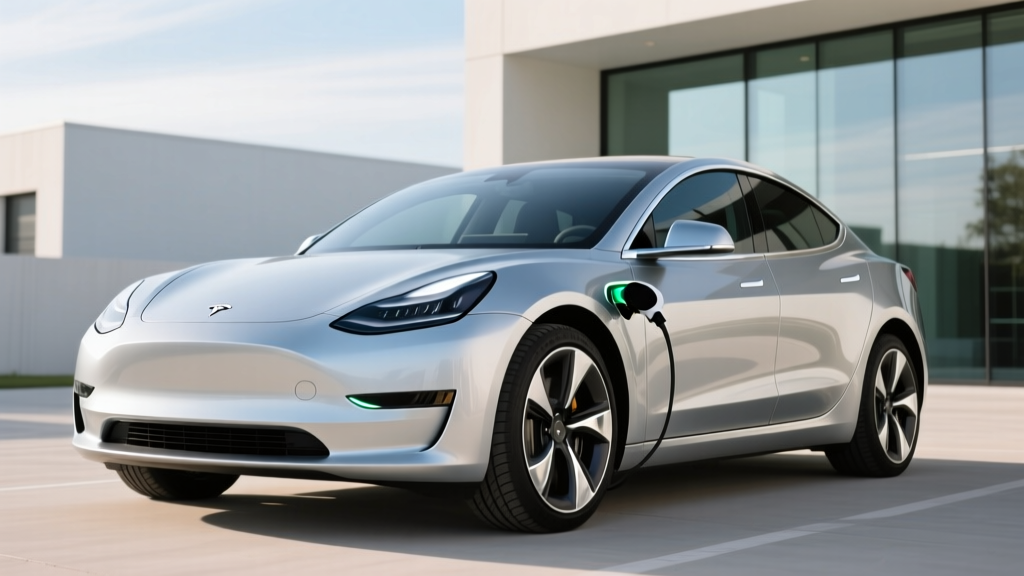
The 2026 Tesla Model Y remains the benchmark compact electric SUV — not because it's flawless, but because its charging network access, efficiency, and software ecosystem are still unmatched in this segment. For 2026, the refreshed "Juniper" styling, updated interior materials, and ventilated front seats address the most common complaints from the prior generation. If you're researching Tesla Model Y leases, you're likely weighing the Long Range AWD (EPA 320 miles) against the Performance trim (EPA 293 miles) and deciding whether a 36-month lease or a purchase with the federal tax credit makes more financial sense.
Real-World Range Reality Check
EPA Estimated: 320 miles (Long Range AWD) / 293 miles (Performance)
Real-World Expectation: Plan for 260–290 miles on mixed highway driving at 70 mph. In freezing temperatures (below 32°F), expect a 20–30% reduction, dropping effective range to roughly 200–240 miles. City driving with regenerative braking recovers closer to the EPA sticker.
This review covers every number you need before signing a lease: battery chemistry, charge-curve behavior, total cost of ownership, and how the §30D tax credit interacts with a lease structure.
2026 Tesla Model Y Spec Table: Range, Battery, Charging & Performance
| Specification | Long Range AWD | Performance AWD |
|---|---|---|
| EPA Range | 320 miles | 293 miles |
| Battery Capacity (usable) | ~78 kWh (NMC) | ~78 kWh (NMC) |
| Battery Chemistry | NMC (Nickel Manganese Cobalt) | NMC |
| Max DC Fast Charge | 250 kW peak | 250 kW peak |
| 10–80% DC Charge Time | ~25 minutes | ~25 minutes |
| Level 2 Home Charging | 11.5 kW (~44 mi/hr) | 11.5 kW (~44 mi/hr) |
| 0–60 mph | 4.8 seconds | 3.5 seconds |
| Horsepower | 384 hp (dual motor) | 456 hp (dual motor) |
| Drivetrain | AWD (dual motor) | AWD (dual motor) |
| Efficiency | 122 MPGe / 28 kWh/100mi | 111 MPGe / 30 kWh/100mi |
| Base MSRP (2026) | $48,990 | $53,990 |
| Battery Warranty | 8 years / 120,000 miles | 8 years / 120,000 miles |
Source: EPA Fuel Economy, Tesla spec sheets.
Charging Speed: DC Fast Charging and Home Level 2 Setup
The 2026 Model Y supports a peak DC fast-charge rate of 250 kW on V3 Superchargers and equivalent CCS/NACS stations. However, peak rate is not sustained rate — the charge curve tapers significantly above 50% state of charge (SoC). In real-world testing, the Long Range AWD pulls roughly 250 kW from 10–30%, then drops to ~150 kW through 50%, and falls below 100 kW past 70%. This is why Tesla quotes a 10–80% time of approximately 25 minutes rather than a theoretical minimum.
| Charging Level | Power (kW) | Miles Added Per Hour | Typical Use Case |
|---|---|---|---|
| Level 1 (120V) | ~1.4 kW | ~4–5 mi/hr | Emergency / trickle top-off |
| Level 2 (240V, 48A) | 11.5 kW | ~44 mi/hr | Home daily charging |
| DC Fast (V3 Supercharger) | 250 kW peak | ~162 mi in 15 min | Road trips |
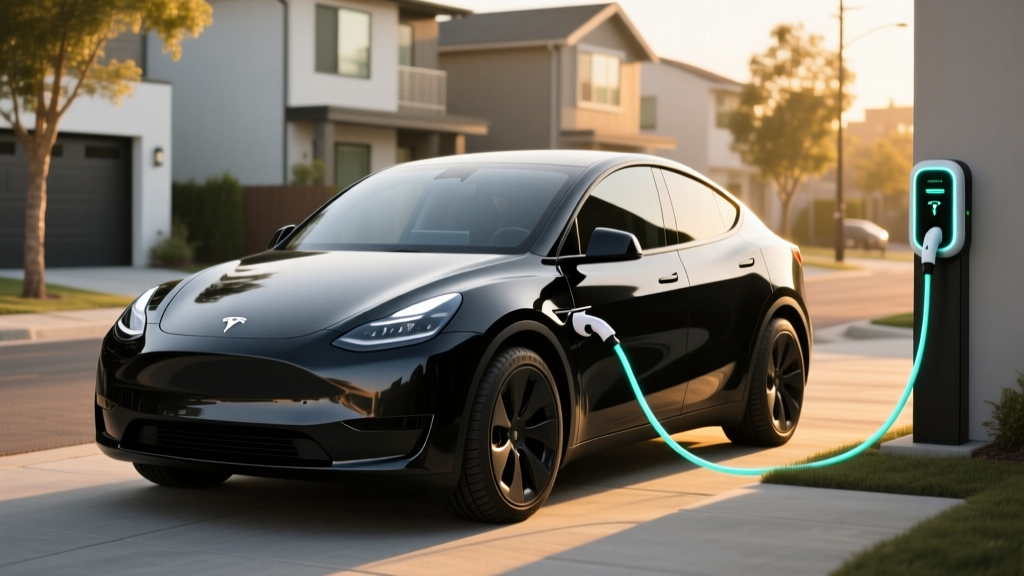
For home Level 2 charging, the Model Y's onboard charger maxes out at 11.5 kW (48 amps). You'll need a NEMA 14-50 outlet or a hardwired wall connector on a 60-amp circuit. Installation typically runs $800–$2,000 depending on panel proximity and whether your electrical panel needs an upgrade to 200 amps.
Preconditioning matters: If you navigate to a Supercharger in the Tesla app or in-car navigation, the battery thermal management system preheats or cools the pack to optimize charge acceptance. Without preconditioning in cold weather, your initial charge rate can be cut in half for the first 10–15 minutes.
2026 Tesla Model Y Pricing, Lease Options & Tax Credit Eligibility
The 2026 Model Y Long Range AWD starts at $48,990 (including destination). The Performance trim is $53,990. Common add-ons include FSD (Supervised) at $8,000 or $99/month, premium interior colors ($1,000–$2,000), and 20" wheels ($2,000), which reduce range by approximately 5–7%.
| Cost Factor | Long Range AWD | Performance AWD |
|---|---|---|
| Base MSRP | $48,990 | $53,990 |
| Federal Tax Credit (§30D) | Up to $7,500* | Up to $7,500* |
| Effective Price After Credit | ~$41,490 | ~$46,490 |
| Est. Monthly Lease (36 mo, $4,500 down) | ~$549/mo** | ~$619/mo** |
*Eligibility depends on MSRP caps, buyer income limits, and battery critical-mineral sourcing requirements. **Lease estimates vary by region, credit tier, and dealer.
IRS §30D Federal Tax Credit Requirements (2026)
- MSRP Cap: SUVs must be under $80,000 — both Model Y trims qualify.
- Income Cap: AGI must not exceed $150,000 (single), $225,000 (head of household), or $300,000 (joint).
- Battery Sourcing: A percentage of critical minerals and battery components must be sourced from the US or free-trade-agreement countries. Full $7,500 requires meeting both thresholds; partial credit ($3,750) applies if only one is met.
- Point-of-Sale Transfer: You can transfer the credit to the dealer at purchase to reduce the upfront price — or apply it on your tax return.
Verify current sourcing compliance at IRS.gov clean vehicle pages before purchasing.
Lease vs. Buy: When you lease a Model Y through Tesla Financial Services, the lessor (Tesla) technically claims the §30D credit — but Tesla typically passes this savings through as a "lease credit" applied to the capitalized cost. Confirm the exact pass-through amount in your lease agreement, as this is not legally guaranteed the way a purchase credit is.
Interior, Cargo Space & Tech Features
The 2026 Juniper refresh brought meaningful improvements: ventilated front seats, ambient lighting, a rear-seat touchscreen for climate and media, and softer-touch dashboard materials. The minimalist interior still polarizes — there are no physical stalks (turn signals are on the steering wheel), and all climate and mirror adjustments route through the 15.4" center touchscreen.
Cargo and Passenger Dimensions
- Cargo (rear seats up): 30.2 cu ft
- Cargo (rear seats folded): 72.1 cu ft
- Front trunk (frunk): 4.1 cu ft
- Rear legroom: 41.6 inches
- Front headroom: 41.0 inches
Compared to the Hyundai Ioniq 5 (27.2 cu ft behind the rear row) or the Ford Mustang Mach-E (29.7 cu ft), the Model Y offers class-leading cargo volume — a key reason it dominates family EV adoption.
Standout Tech
- Supercharger Network: Over 20,000 DC fast-charger stalls in North America, with best-in-class reliability and plug-and-charge billing.
- Over-the-Air Updates: Continuous feature additions (theater mode, battery preconditioning improvements, UI refinements).
- Autopilot (standard): SAE Level 2 driver assistance with lane-centering and adaptive cruise. Full Self-Driving (Supervised) adds automated lane changes, traffic-light recognition, and navigate-on-autopilot — but still requires full driver attention at all times.
- Sentry Mode & Dashcam: Continuous 360° recording while parked.
SAE Automation Level: Level 2
Autopilot and FSD (Supervised) are SAE Level 2 systems. The driver must remain fully engaged, hands on or near the wheel, and eyes on the road. This is not autonomous driving. Tesla's camera-only vision system is capable but has documented limitations in construction zones, faded lane markings, and heavy rain.
Pros and Cons: The Honest Assessment
Pros
- Best-in-class Supercharger network access (NACS connector now the industry standard)
- Excellent efficiency — 28 kWh/100mi is among the lowest in the segment
- Class-leading cargo space and practicality
- Strong resale value and low depreciation relative to EV peers
- Over-the-air updates add features post-purchase
- Extensive service center and mobile service footprint
Cons
- No physical controls — everything through the touchscreen frustrates some drivers
- Ride quality is firm, especially with 20" wheels
- Turn-signal buttons on the steering wheel are a learning curve
- FSD (Supervised) is expensive and still requires full driver engagement
- Insurance premiums are 15–30% higher than comparable gas SUVs
- Panel-gap inconsistency still appears on some deliveries
How the Model Y Stacks Up Against Key Competitors
The compact electric SUV segment is crowded in 2026. Here's how the Model Y Long Range compares on the metrics that matter most:
| Spec | Tesla Model Y LR | Hyundai Ioniq 5 LR AWD | Ford Mustang Mach-E ER AWD |
|---|---|---|---|
| EPA Range | 320 mi | 290 mi | 290 mi |
| Battery (usable) | ~78 kWh | 77.4 kWh | 88 kWh |
| Max DC Charge | 250 kW | 235 kW | 150 kW |
| 10–80% Time | ~25 min | ~26 min | ~38 min |
| 0–60 mph | 4.8 sec | 5.1 sec | 5.1 sec |
| Cargo (rear up) | 30.2 cu ft | 27.2 cu ft | 29.7 cu ft |
| Base MSRP | $48,990 | $49,900 | $48,995 |
| Charging Network | Supercharger (native) | NACS adapter needed* | NACS adapter needed* |
*As of 2026, Hyundai and Ford provide NACS adapters for Supercharger access, but the native experience (plug-and-charge, stall availability) still favors Tesla.
The Ioniq 5 offers an 800V architecture and a more comfortable ride. The Mach-E delivers a more traditional interior with physical controls. But neither matches the Model Y's combination of range, efficiency, cargo space, and charging infrastructure.
Who Should Lease the 2026 Tesla Model Y?
Decision Framework
Choose the Model Y Long Range if: You prioritize range, cargo practicality, and access to the most reliable DC fast-charging network. Ideal for families, daily commuters with home charging, and road-trip-capable households.
Choose the Model Y Performance if: You value acceleration (3.5-second 0–60) and sportier handling, and can accept a ~27-mile range penalty and a stiffer ride.
Look at competitors if: You want physical buttons and a more plush ride (Ioniq 5, EV6), need third-row seating (Kia EV9), or want a lower entry price with competitive range (Chevrolet Equus EV).
Leasing the Model Y makes the most sense for drivers who: (1) want to ride out rapid EV technology evolution without long-term commitment, (2) drive 10,000–15,000 miles annually (within typical lease limits), and (3) have reliable home Level 2 charging. If you drive more than 15,000 miles per year or want to claim the full §30D tax credit directly on your return, purchasing is usually the better financial path.
Frequently Asked Questions
What is the real-world range of the 2026 Tesla Model Y?
The EPA rates the Long Range AWD at 320 miles and the Performance at 293 miles. In real-world highway driving at 70 mph, expect 260–290 miles. Cold weather (below freezing) can reduce range by 20–30%, bringing effective range down to 200–240 miles on the Long Range trim. Preconditioning the battery and using seat heaters instead of cabin heat can recover some of this loss.
How fast does the Model Y charge at home and on DC fast chargers?
On a Level 2 home charger (240V, 48A), the Model Y charges at up to 11.5 kW, adding roughly 44 miles of range per hour — a full charge takes about 7–8 hours from empty. On a V3 Supercharger, the peak rate is 250 kW, and a 10–80% charge takes approximately 25 minutes. Charging slows significantly above 80% SoC to protect battery longevity.
Does the 2026 Tesla Model Y qualify for the federal EV tax credit?
Both trims fall under the $80,000 MSRP cap for SUVs. Eligibility for the full $7,500 §30D credit depends on your adjusted gross income (under $150K single / $300K joint), and whether the battery meets critical-mineral and component-sourcing thresholds for the 2026 model year. The credit can be applied as a point-of-sale reduction or claimed on your tax return. Confirm eligibility at IRS.gov.
Is leasing a Model Y better than buying in 2026?
Leasing offers lower monthly payments and protects you from EV depreciation risk. However, when you buy, you can claim the §30D credit directly. In a Tesla lease, the lessor claims the credit and typically passes it through as a cap-cost reduction — verify this in writing. If you drive over 15,000 miles/year, excess-mileage fees (typically $0.20–$0.25/mile) can erase lease savings.
How much does insurance cost for the Model Y?
Model Y insurance averages $2,200–$3,200 annually depending on state, driving record, and coverage level — roughly 15–30% higher than a comparable gas-powered SUV like the Toyota RAV4. Tesla offers its own insurance product in many states, which uses real-time driving data to set premiums and can be cheaper for safe drivers.
What is the Model Y's battery warranty?
Tesla covers the battery and drive unit for 8 years or 120,000 miles (whichever comes first) with a guaranteed minimum 70% capacity retention. Tesla's NMC batteries historically show moderate degradation — typically 8–12% loss over the first 100,000 miles based on fleet data. Keeping charge between 20–80% for daily use and avoiding repeated 100% charges extends longevity.
Does the Model Y have a heat pump?
Yes. The 2026 Model Y includes Tesla's octovalve heat pump system, which significantly improves cold-weather efficiency compared to resistive heating. You'll still see range loss in freezing temperatures, but the heat pump recovers waste heat from the powertrain to warm the cabin more efficiently than earlier EV designs.
For the latest safety ratings, see NHTSA Model Y ratings and IIHS crash test results.