Tesla's leasing program has quietly become one of the most flexible paths into EV ownership — but the fine print matters. If you've been searching for how does Tesla leasing options work, you're not alone: the program differs meaningfully from a traditional dealer lease, and the 2026 Model Y is the vehicle most buyers are considering. Below, we dissect the full lease structure, pair it with hard vehicle specs, and help you decide whether leasing or buying is the smarter financial move this year.
2026 Tesla Model Y: The Vehicle Behind the Lease
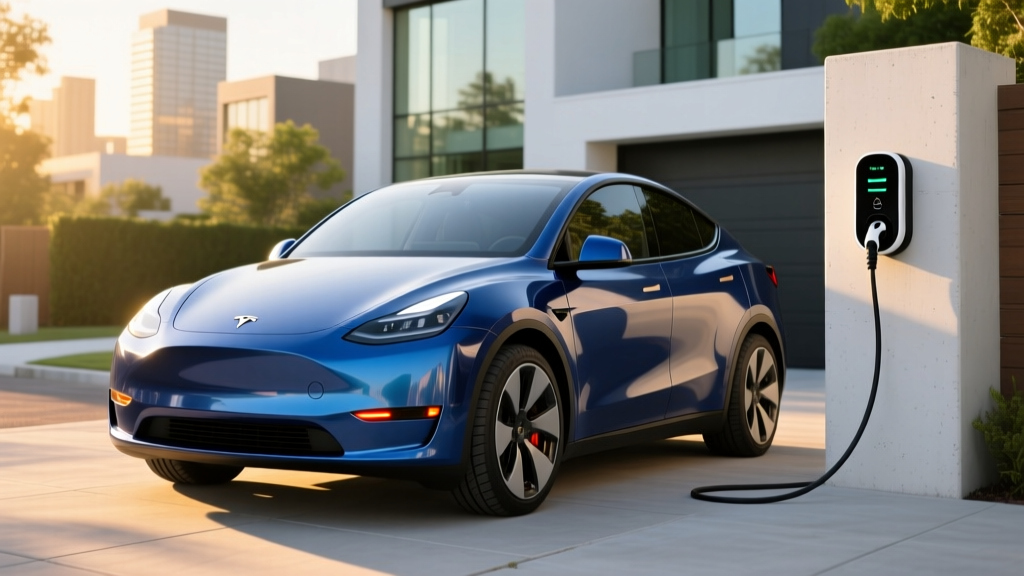
Before evaluating the lease itself, you need to know exactly what you're driving. The 2026 Model Y continues as Tesla's best-selling vehicle globally, offered in three trims: Long Range RWD, Long Range AWD, and Performance. Tesla's recent "Juniper" refresh brought revised styling, a ventilated-seat interior, ambient lighting, and a rear touchscreen for passengers.
| Spec | Long Range RWD | Long Range AWD | Performance |
|---|---|---|---|
| EPA Range | 320 mi | 295 mi | 277 mi |
| Battery (usable) | ~75 kWh (NMC) | ~75 kWh (NMC) | ~75 kWh (NMC) |
| 0-60 mph | 5.8 sec | 4.8 sec | 3.5 sec |
| Horsepower | 346 hp | 384 hp | 456 hp |
| Drivetrain | RWD | Dual-Motor AWD | Dual-Motor AWD |
| MPGe (combined) | 122 MPGe | 116 MPGe | 111 MPGe |
| Efficiency | 27 kWh/100mi | 29 kWh/100mi | 30 kWh/100mi |
| Base MSRP | $44,990 | $47,990 | $52,490 |
Tesla Lease Structure Explained: Terms, Mileage, and Monthly Costs
Tesla offers leases directly through its website — no dealership middleman. Here is how the structure works in practice:
- Term length: Typically 24 or 36 months. A 36-month term is most common and usually offers the lowest monthly payment relative to depreciation.
- Annual mileage tiers: 10,000, 12,000, or 15,000 miles per year. Choose carefully — excess mileage penalties run $0.20–$0.25 per mile at lease-end, which adds up fast.
- Down payment (due at signing): Usually $0–$7,500 depending on the promotion. Tesla frequently offers $0-down lease deals on slower-selling trims.
- Monthly payment: As of early 2026, a 36-month Model Y Long Range AWD lease at 12,000 miles/year with $0 down runs approximately $499–$599/month, though this fluctuates with Tesla's dynamic pricing and promotional cycles.
- Acquisition fee: Typically $695, rolled into the lease or due at signing.
- Disposition fee: $395 if you return the vehicle at lease-end and do not purchase or lease another Tesla.
Unlike traditional leases, Tesla's lease agreement is fully digital — configured and signed in the Tesla app. There's no negotiation; the numbers are what the algorithm produces based on your credit tier, mileage selection, and current promotional rates.
The Federal Tax Credit Question: Does It Apply to a Lease?
This is the single most important financial distinction in the lease-vs-buy decision. Under IRS §30D rules, the federal EV tax credit of up to $7,500 is available to purchasers who meet income caps, MSRP limits, and battery-sourcing requirements. However, when you lease a vehicle, the lessor (Tesla Finance) technically owns the car.
Here's where it gets interesting: under the commercial clean vehicle credit (§45W), Tesla can claim the credit as the vehicle owner in a lease arrangement and may pass the savings to you as a capitalized-cost reduction — effectively lowering your monthly payment. Tesla has historically done this, advertising leases with a "$7,500 lease credit" baked in. In 2026, this practice continues, but it is not guaranteed for every trim or every promotional period.
- Vehicle MSRP must not exceed $80,000 for SUVs (Model Y qualifies)
- Buyer modified AGI: ≤$150,000 single / ≤$300,000 joint filers
- Battery critical minerals and components must meet North American sourcing thresholds (phased in annually — check fueleconomy.gov for current eligibility)
- Credit is non-refundable — you need sufficient tax liability to claim it
- Point-of-sale transfer to the dealer is available, reducing purchase price directly
Bottom line: If you qualify for the full $7,500 purchase credit and have the tax liability, buying and applying the credit at point-of-sale may be financially equivalent to (or better than) a lease with the credit passed through. But if your income exceeds the §30D caps, leasing may be the only way to access a credit reduction, since the §45W commercial credit has no buyer income cap.
| Factor | 36-Month Lease | Purchase (with §30D credit) |
|---|---|---|
| Sticker / Cap Cost | $47,990 | $47,990 |
| Credit Applied | $7,500 (via §45W passthrough) | $7,500 (via §30D point-of-sale) |
| Effective Cost Basis | $40,490 | $40,490 |
| Monthly (approx, 36 mo, 6% rate) | ~$549/mo | ~$749/mo (financed at 6% over 60 mo) |
| Equity at Term End | $0 (return vehicle) | ~$22,000–$26,000 trade value |
| Income Cap? | No (§45W) | Yes (§30D: $150K/$300K AGI) |
Charging Speed: What You Need to Know Before Signing
Charging infrastructure is the backbone of EV ownership, and the Model Y's charging capability is a core reason buyers choose it. Here are the exact figures for the 2026 Model Y Long Range AWD:
| Charging Level | Power / Rate | Speed |
|---|---|---|
| Level 1 (120V household) | ~1.4 kW | ~3–4 miles/hour |
| Level 2 (240V home, 48A) | 11.5 kW | ~37 miles/hour |
| DC Fast Charge (peak) | 250 kW (CCS/NACS) | 10–80% in ~25 minutes |
| DC Fast Charge (sustained avg) | ~150 kW (10–80% session) | ~200 miles in 15 minutes |
| Tesla Supercharger V4 | Up to 250 kW | Optimized for Tesla battery curve |
Important charging-curve reality: The 250 kW peak is only sustained between roughly 10–30% state of charge. Above 50%, the rate tapers to ~100 kW, and above 80%, it drops further to ~40 kW. This is normal lithium-ion behavior, but it means a 10–90% session takes significantly longer than 10–80%. For road trips, plan stops around the 10–80% window for maximum efficiency.
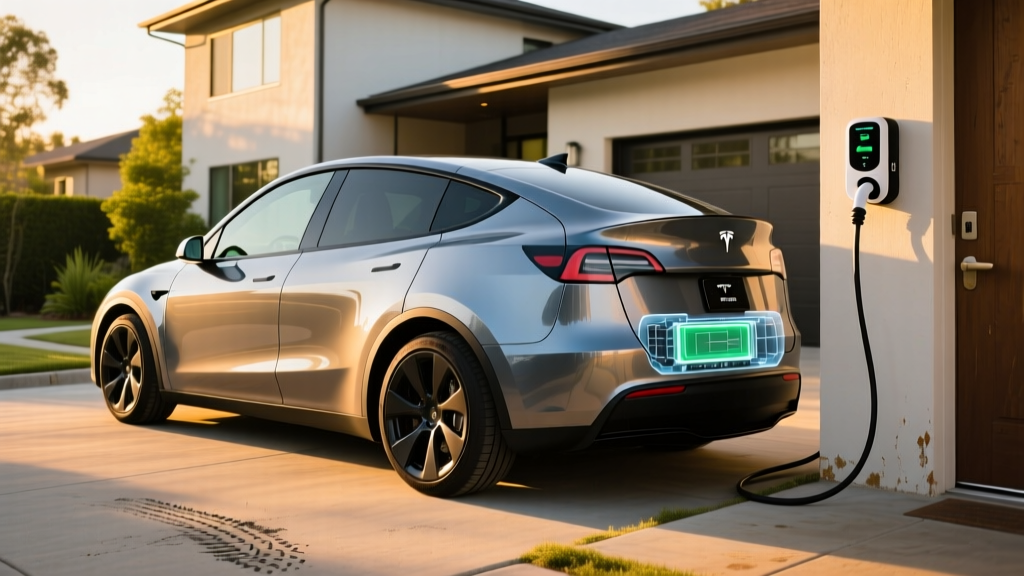
For home charging, a Level 2 Tesla Wall Connector on a 60-amp circuit (48A continuous) delivers a full overnight charge in roughly 7–8 hours. Installation costs range from $500–$2,000 depending on panel proximity and local electrician rates. If your home has a 100-amp electrical panel, a panel upgrade to 200 amps may be required — budget $1,500–$3,000 for that work.
Interior, Cargo, and Technology
The Juniper-refreshed Model Y interior is noticeably improved over pre-2025 versions. Key dimensions:
- Cargo volume: 30.2 cu ft behind the second row; 72.1 cu ft with rear seats folded
- Front legroom: 41.8 inches
- Rear legroom: 37.4 inches (adequate for adults on longer trips)
- Frunk (front trunk): 4.1 cu ft — useful for charging cables or a small bag
- Seating: 5-passenger standard; ventilated front seats and heated rear seats now standard on Long Range trims
Tech highlights:
- 15.4-inch front touchscreen with Tesla's latest UI; 8-inch rear passenger touchscreen
- Basic Autopilot (SAE Level 2) standard — includes Traffic-Aware Cruise Control and Autosteer
- Full Self-Driving (Supervised) available as a $8,000 option or $99/month subscription — still SAE Level 2, requiring full driver attention at all times
- Over-the-air updates, Sentry Mode dashcam, and Tesla app remote preconditioning
- Native NACS connector — access to Tesla's Supercharger network (20,000+ stalls in North America) without adapters
Warranty Coverage
- Basic vehicle warranty: 4 years / 50,000 miles
- Battery and drive unit: 8 years / 120,000 miles (Long Range/Performance) with a guaranteed minimum 70% capacity retention over the warranty period
- Lease consideration: On a 36-month lease at 12,000 miles/year (36,000 total miles), you will use only a fraction of the powertrain warranty. Any major battery issue during the lease is Tesla's responsibility, not yours — a significant risk-reduction advantage of leasing.
Lease-End Options: Buyout, Return, or Re-Lease
Tesla's lease-end process has evolved. Here are your options when the term concludes:
- Return the vehicle: Schedule an inspection through the Tesla app. Excess wear (dents, tire wear below 4/32", windshield damage) and excess mileage will incur charges. The $395 disposition fee applies unless you lease or purchase another Tesla.
- Purchase the vehicle: Tesla now allows lease buyouts. The residual value is set at lease signing — typically 55–60% of MSRP for a 36-month term. You can finance the buyout through Tesla or a third-party lender. This is attractive if the used-EV market has inflated the car's value above the residual.
- Lease or buy a new Tesla: Tesla often offers loyalty incentives (reduced acquisition fees or promotional rates) for returning lessees.
Key advantage over traditional leases: Tesla's buyout option was unavailable in earlier years but is now standard. This gives you flexibility that some competitor leases (which prohibit buyouts) do not.
Pros, Cons, and Who Should Lease the Model Y
- Access to $7,500 credit even if your income exceeds §30D caps (via §45W passthrough)
- Lower monthly payment vs financing a purchase
- Full warranty coverage for entire lease term — no out-of-warranty battery risk
- Drive the latest Tesla tech every 2–3 years via OTA updates and re-leasing
- Supercharger network access with native NACS — the most reliable DC network in the US
- Lease buyout option at term end provides equity-capture flexibility
- No equity built — you own nothing at term end unless you buy out
- Mileage restrictions (10K–15K/yr) penalize high-mileage drivers at $0.20–$0.25/mile
- Cannot modify the vehicle (no wraps, aftermarket wheels, or tint without potential penalty)
- Tesla's dynamic pricing means lease terms can change weekly — timing matters
- FSD subscription does not transfer to a new vehicle at lease-end
- Insurance costs for leased Teslas can run 15–25% higher than comparable non-EVs
- Lease if: Your AGI exceeds §30D income caps but you still want credit savings; you drive under 15,000 miles/year; you prefer lower monthly payments and plan to upgrade in 3 years; you want zero exposure to battery-degradation risk.
- Buy if: You qualify for the full §30D credit, drive more than 15,000 miles/year, plan to keep the vehicle 5+ years, or want to build equity and avoid mileage penalties.
- Consider a competitor if: You need third-row seating (Kia EV9), want a more traditional dealer lease experience (Hyundai Ioniq 5), or require towing beyond 3,500 lbs (Rivian R1S, Ford F-150 Lightning).
Frequently Asked Questions
Can I negotiate a Tesla lease?
No. Tesla's lease terms are generated algorithmically based on your credit score, selected mileage tier, and current promotional rates. There is no negotiation — the price shown in the Tesla app is the price. However, Tesla periodically adjusts money factors and residuals, so checking weekly for rate drops can save $20–$50/month.
Does the Model Y qualify for the $7,500 federal tax credit if I buy instead of lease?
Yes, if you meet all IRS §30D requirements: income under $150K (single) or $300K (joint), and the vehicle's battery meets current-year critical-mineral and component sourcing thresholds. The Model Y's MSRP is under the $80,000 SUV cap. Check fueleconomy.gov for the latest eligibility status, as sourcing rules tighten annually.
What happens if I exceed my lease mileage?
Tesla charges $0.20–$0.25 per excess mile at lease-end. If you selected 12,000 miles/year and drive 45,000 miles over 3 years (9,000 over), expect a bill of roughly $1,800–$2,250. If you anticipate exceeding your tier, it's usually cheaper to select the 15,000-mile tier upfront — the monthly increase is typically less than the end-of-term penalty.
Is Tesla insurance required on a leased Model Y?
Tesla does not require you to use Tesla Insurance, but you must carry full coverage (comprehensive + collision) with specific minimums outlined in the lease agreement. Tesla Insurance is available in most states and can be competitive, but always compare quotes from Geico, Progressive, and State Farm — EV insurance premiums vary widely by zip code and driving record.
Can I transfer my Tesla lease to someone else?
As of 2026, Tesla does not permit third-party lease transfers (assumptions). If you need to exit the lease early, your options are limited to buying out the vehicle and selling it, or contacting Tesla Finance to discuss early termination — which typically involves significant fees.
Is it worth buying vs key competitors like the Hyundai Ioniq 5 or Ford Mustang Mach-E?
The Model Y's advantages are clear: Supercharger network access, best-in-class efficiency (27 kWh/100mi for the RWD), and strong software. The IIHS Top Safety Pick+ rating adds confidence. However, the Ioniq 5 charges faster (10–80% in ~18 min at 350 kW) and offers a more distinctive design, while the Mach-E provides a more traditional crossover feel. If Supercharger reliability is your top priority, the Model Y wins. If peak charging speed or interior materials matter more, test-drive the competition.
Understanding how Tesla leasing options work requires looking past the monthly payment to the full financial picture — credit access, mileage risk, buyout flexibility, and long-term equity. For the right buyer, a 2026 Model Y lease is a low-risk gateway into the Tesla ecosystem with built-in protection against battery depreciation. For others, a purchase with the §30D credit applied at point-of-sale builds equity that a lease simply cannot match. Run the numbers for your specific income, mileage, and ownership timeline before signing.