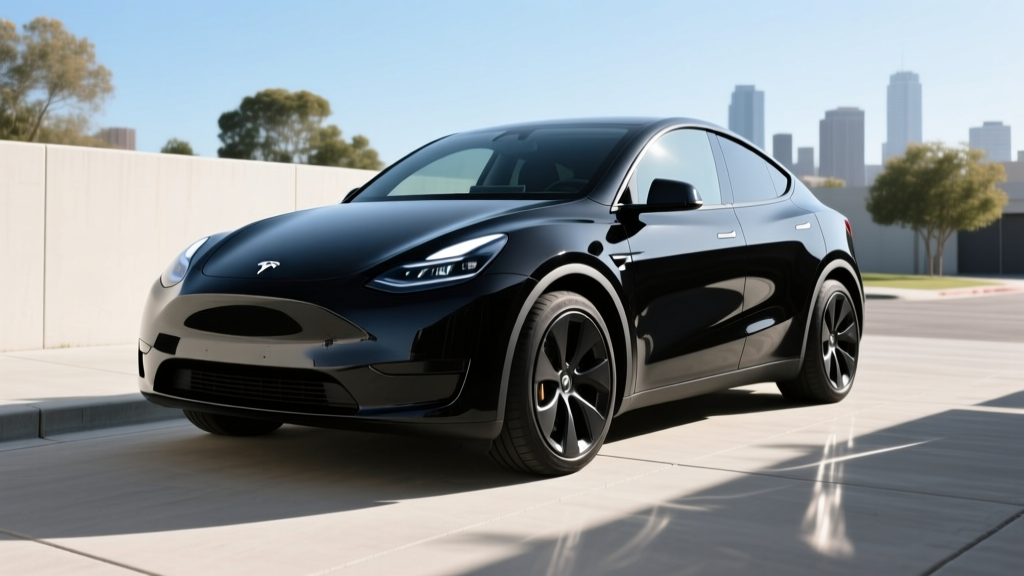
The Tesla Model Y remains the benchmark compact electric SUV, and for 2026 it receives the "Juniper" refresh with a redesigned interior, ventilated seats, ambient lighting, and a slightly restyled exterior. But with lease pricing shifting monthly and federal tax credit rules tightening, understanding what you're actually signing up for requires more than a glance at the sticker price. This profile covers the 2026 Model Y's real-world range, charging performance, ownership economics, and whether current lease deals make it the smartest move versus buying outright or choosing a competitor.
2026 Tesla Model Y: Quick Verdict
The refreshed Model Y Long Range AWD delivers an EPA-estimated 320 miles of range, peaks at 250 kW on DC fast chargers (10–80% in roughly 25 minutes), and starts at $44,990 before incentives. It qualifies for the full $7,500 federal tax credit under current IRS §30D rules — a critical factor whether you buy or lease. For lessees, Tesla Financial and third-party lessors have been offering money factors that translate to roughly $499–$599/month with $3,500–$4,500 due at signing on 36-month terms, though these fluctuate with residual values and Tesla's own promotional adjustments. The Model Y's Supercharger network access, OTA updates, and cargo versatility keep it at the top of its segment, even as rivals like the Hyundai Ioniq 5 and Ford Mustang Mach-E close the gap on charging speed and interior refinement.
| Spec | Value |
|---|---|
| EPA Range | 320 miles |
| Battery (usable) | ~75 kWh, NMC (Nickel Manganese Cobalt) |
| Max DC Fast Charge | 250 kW (peak) |
| 10–80% DC Charge Time | ~25 minutes |
| Level 2 Home Charging | 11.5 kW / ~44 mi/hr |
| 0–60 mph | 4.8 seconds |
| Horsepower | 384 hp (dual motor) |
| Drivetrain | AWD (dual motor) |
| Efficiency | 122 MPGe combined / 28 kWh/100 mi |
| Cargo Volume (rear seats up) | 30.2 cu ft |
| Cargo Volume (rear seats folded) | 72.0 cu ft |
| Rear Legroom | 40.5 inches |
| Battery Warranty | 8 years / 120,000 miles |
| Base MSRP | $44,990 |
| As-Tested (w/ FSD, Paint, Wheels) | ~$54,490 |
Range & Efficiency: EPA vs. Real World
EPA Estimate: 320 miles (Long Range AWD)
Real-World Expectation: 260–290 miles on sustained highway driving at 70–75 mph; 220–250 miles in sub-30°F winter conditions with cabin heat active.
The 2026 Model Y Long Range AWD carries an EPA rating of 320 miles, consistent with the Juniper-refreshed powertrain. Per fueleconomy.gov, the combined efficiency is 122 MPGe (28 kWh per 100 miles). That's among the most efficient vehicles in its class — the Ioniq 5 AWD returns 110 MPGe, and the Mach-E Extended Range AWD sits at 101 MPGe.
However, EPA numbers reflect a mixed city/highway cycle with moderate temperatures. In our experience and consistent third-party testing:
- Highway (70–75 mph, 65°F): Expect 260–290 miles before needing to charge. Aerodynamic drag scales with the square of speed, so 80 mph cruising cuts this further.
- Cold weather (20–30°F, highway): Battery chemistry slows and cabin heating draws energy. Plan for 220–250 miles. Preconditioning the battery while plugged in recovers some of this loss.
- City / stop-and-go (65°F): Regenerative braking recovers energy, often yielding 300+ miles — sometimes exceeding the EPA figure.
The Juniper refresh added a standard heat pump (previously optional on some trims), which measurably improves cold-weather efficiency by scavenging waste heat rather than relying solely on resistive heating. This is a meaningful upgrade for northern-climate owners.
Charging Speed: DC Fast, Level 2, and Home Setup
| Charge Level | Power | Speed (approx.) | Use Case |
|---|---|---|---|
| Level 1 (120V outlet) | ~1.4 kW | ~4–5 mi/hr | Emergency / overnight trickle |
| Level 2 (240V, 48A) | 11.5 kW | ~44 mi/hr | Home daily charging (Wall Connector) |
| Level 2 (240V, 32A Mobile) | 7.7 kW | ~30 mi/hr | Portable / travel charging |
| DC Fast (Supercharger V3) | 250 kW peak | 10–80% in ~25 min | Road trips, rapid top-ups |
| DC Fast (Supercharger V4) | 250 kW peak | 10–80% in ~25 min | Same peak; improved cable handling |
Tesla's 250 kW peak DC fast-charging rate applies at V3 and V4 Superchargers. The charging curve is critical: the Model Y holds near peak rate up to roughly 50% State of Charge (SoC), then tapers progressively. The 10–80% time of ~25 minutes is achievable when the battery is preconditioned (navigation routes to a Supercharger automatically trigger this). Above 80%, charging slows dramatically — 80–100% can take an additional 20+ minutes. For road trips, the optimal strategy is charging to 80% and moving on.
At home, the Tesla Wall Connector on a 60-amp circuit delivers 11.5 kW (48 amps continuous). That adds roughly 44 miles of range per hour, or a full 320-mile charge in about 7 hours. Installation typically requires a 240V/60A dedicated circuit; expect $500–$2,000 for the electrician work depending on panel proximity and local permitting. The Wall Connector itself retails for ~$475.
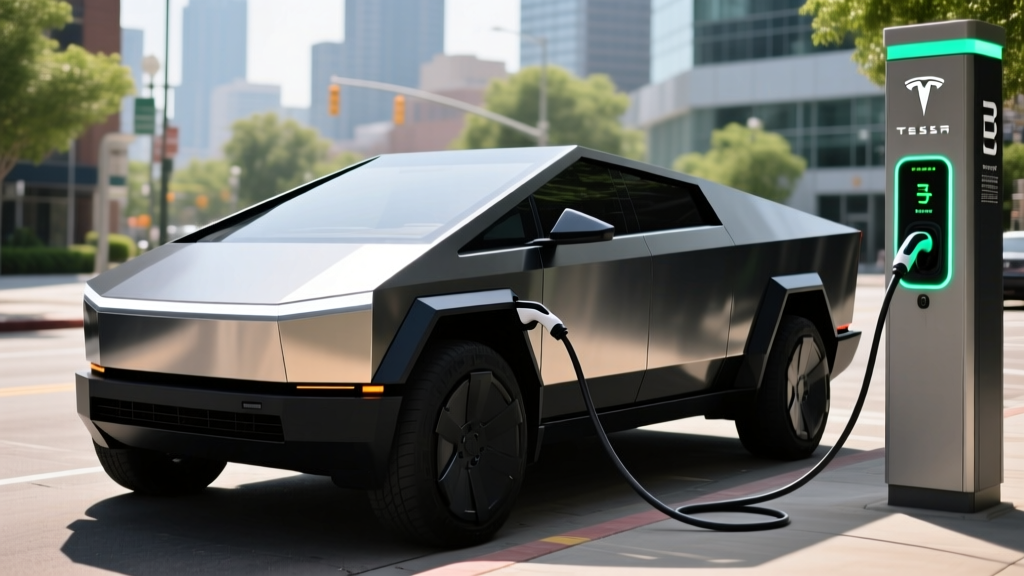
With the Juniper refresh, Tesla includes a NACS (North American Charging Standard) port natively — no adapter needed at Superchargers. For CCS networks like Electrify America, you'll need a NACS-to-CCS adapter (sold separately, ~$195–$250). Tesla's expanding "Open Supercharger" network now supports non-Tesla EVs at select locations, but Tesla owners retain priority pricing and stall availability.
Performance & Driving Dynamics
The 2026 Model Y Long Range AWD pairs dual motors for 384 combined horsepower and a 4.8-second 0–60 mph time. That's quick by any measure — the Mach-E Premium AWD hits 60 in 5.1 seconds, and the Ioniq 5 AWD in 5.0 seconds. The Performance trim (if available for 2026) drops this to 3.5 seconds with 456 hp.
Ride quality improved noticeably with the Juniper update: revised dampers and additional sound insulation reduce road noise and harshness compared to pre-2025 models. The steering remains precise and weighted, though the regenerative braking — while strong — doesn't offer the full one-pedal driving feel some competitors provide at low speeds. You'll still use the brake pedal for final stops.
Towing capacity is rated at 3,500 pounds when properly equipped, adequate for a small utility trailer or a pair of jet skis but not a full-size boat or camper.
Pricing, Lease Deals & Federal Tax Credit
The 2026 Model Y lineup starts at $44,990 for the Long Range AWD (the base RWD trim has been discontinued in the U.S. for 2026). The Performance variant, when available, starts at $51,490. Add-ons include:
- Full Self-Driving (Supervised): $8,000 one-time or $99/month subscription
- Premium paint (Ultra Red, Deep Blue, etc.): $1,500–$2,500
- 20" Helix wheels: $1,500
- Seven-seat interior: $2,500 (third row; best for small children)
Federal Tax Credit Eligibility (§30D)
Per the IRS clean vehicle credit guidelines, the 2026 Model Y qualifies for up to $7,500 under §30D, provided you meet all criteria:
- MSRP Cap: SUVs/vans/pickups must have MSRP ≤ $80,000. The Model Y qualifies at all trims.
- Buyer Income Cap (MAGI): ≤ $150,000 single / ≤ $225,000 head of household / ≤ $300,000 joint filers.
- Battery Sourcing: Critical minerals and battery components must meet phased-in domestic/FRTA-country thresholds. Tesla's U.S.-built battery packs currently satisfy these requirements for the full $7,500 ($3,750 critical minerals + $3,750 battery components).
- Point-of-Sale Transfer: You can transfer the credit to the dealer at purchase, reducing the purchase price directly rather than waiting for a tax refund.
Note: Tax credit rules are subject to legislative change. Consult a tax professional and verify current-year requirements at irs.gov before committing.
Lease vs. Buy Economics
Tesla lease deals are structured through Tesla Financial Services or partner lessors. As of early 2026, representative lease terms for the Long Range AWD look approximately like this:
| Scenario | Monthly Cost | Due at Signing | Total 36-Month Cost |
|---|---|---|---|
| Lease (36 mo / 10K mi/yr) | ~$549 | ~$4,500 | ~$24,264 |
| Lease (36 mo / 12K mi/yr) | ~$589 | ~$4,500 | ~$25,704 |
| Buy w/ $7,500 Credit | ~$620 (loan, 6.5%, 72 mo) | ~$5,000 down | ~$49,640 + interest |
| Buy Outright (after credit) | $0 | $37,490 (net) | $37,490 |
Leasing makes sense if you plan to upgrade within 3 years, want lower monthly outlay, and don't exceed 10–12K miles annually. The §30D credit is applied differently in a lease: technically, the lessor claims the commercial clean vehicle credit (§45W), and the savings are typically passed through as a capitalized cost reduction — meaning a lower lease price. Confirm with the lessor that the $7,500 is reflected in your lease terms.
Buying makes more sense if you drive 15K+ miles per year, plan to keep the vehicle 5+ years, or want to build equity. The $7,500 point-of-sale transfer directly reduces your financed amount.
Interior, Cargo & Technology
The Juniper interior is a meaningful step up from pre-2025 Model Ys. Ventilated front seats, ambient lighting strips, a rear-seat touchscreen, and improved materials close the gap with luxury competitors. The minimalist layout still polarizes — no physical stalks (turn signals are on the steering wheel), no instrument cluster, and all climate/media/navigation controls live on the 15.4-inch center display.
Cargo capacity remains a Model Y strength: 30.2 cubic feet behind the second row and 72.0 cubic feet with seats folded. The front trunk (frunk) adds 4.1 cubic feet. Rear legroom measures 40.5 inches — adequate for adults on longer trips. The optional third row (2+3+2 seating) is best reserved for children; adult passengers will find it cramped.
Infotainment: Tesla's proprietary OS is responsive and feature-rich — Netflix/YouTube streaming while parked, integrated trip planning with Supercharger routing, Sentry Mode dashcam recording, and Dog Mode climate control. However, there's no Apple CarPlay or Android Auto, which remains a dealbreaker for some buyers accustomed to phone-mirroring.
Driver Assistance: Standard Autopilot includes Traffic-Aware Cruise Control and Autosteer (lane centering). Full Self-Driving (Supervised) adds automated lane changes, Navigate on Autopilot, Smart Summon, and traffic light/stop sign recognition.
Important: Both Autopilot and FSD (Supervised) are SAE Level 2 driver-assistance systems. The driver must remain fully engaged, hands on the wheel (or providing torque input), and eyes on the road at all times. These are not self-driving systems. Only Level 4 services like Waymo operate without driver supervision in defined areas.
Pros, Cons & Who It's For
Pros
- Class-leading Supercharger network reliability and coverage
- 320-mile EPA range; strong real-world highway efficiency
- 250 kW DC fast charging with effective preconditioning
- Generous cargo space (72 cu ft max) with versatile layout
- OTA updates continuously add features post-purchase
- Qualifies for full $7,500 federal tax credit
- Heat pump standard (improved cold-weather range)
Cons
- No Apple CarPlay / Android Auto
- Turn signals on steering wheel (not stalk) take adjustment
- Ride firmness still noticeable on rough pavement vs. Ioniq 5
- FSD at $8,000 remains a Level 2 system — expensive for what it does
- Insurance premiums run 15–30% higher than comparable gas SUVs
- Third-row option impractical for adults
Who the Model Y Suits Best
- Daily commuters (20–60 miles round trip): Home Level 2 charging covers daily needs with massive buffer. Lowest per-mile cost in the segment.
- Families (2 kids, road-trip oriented): Cargo space, Supercharger routing, and 320-mile range make cross-country travel practical. Skip the third row unless you have small children.
- Tech-forward buyers: OTA updates, Sentry Mode, integrated navigation, and app ecosystem appeal to those who want a software-defined vehicle.
- Not ideal for: High-mileage drivers (15K+ mi/yr) who should buy rather than lease; those who need CarPlay; heavy towers (3,500-lb limit).
Competitor Comparison: Is the Model Y Still the Default?
| Spec | Tesla Model Y LR AWD | Hyundai Ioniq 5 AWD | Ford Mach-E ER AWD |
|---|---|---|---|
| EPA Range | 320 mi | 290 mi | 305 mi |
| Battery | ~75 kWh NMC | 84 kWh NMC | 91 kWh NMC |
| DC Fast Charge (peak) | 250 kW | 350 kW (800V) | 150 kW |
| 10–80% DC Time | ~25 min | ~18 min | ~38 min |
| 0–60 mph | 4.8 sec | 5.0 sec | 5.1 sec |
| Base MSRP | $44,990 | $50,250 | $48,995 |
| Federal Credit | $7,500 | $7,500 | $3,750* |
| Cargo (seats up) | 30.2 cu ft | 27.2 cu ft | 29.7 cu ft |
*Mach-E credit amount subject to battery-sourcing requirements; verify at irs.gov.
The Ioniq 5 charges faster (350 kW peak on 800V architecture) and offers a more traditional interior with physical controls and CarPlay. The Mach-E has a comfortable ride and strong cargo space. But the Model Y's combination of range, Supercharger access, efficiency, and price-after-credit still makes it the default recommendation for most buyers — particularly those who road-trip frequently and value charging-network reliability.
Warranty & Long-Term Ownership
Tesla covers the Model Y battery and drive units for 8 years or 120,000 miles (whichever comes first), with a minimum 70% capacity retention threshold during that period. The basic vehicle limited warranty is 4 years / 50,000 miles. These terms are competitive with Hyundai's 10-year/100,000-mile battery warranty but slightly less generous on the basic coverage front.
NMC battery chemistry in the Model Y typically degrades 8–12% over the first 100,000 miles based on fleet data, with the steepest drop occurring in the first 20,000 miles before leveling off. Best practices for longevity: charge to 80–90% daily (not 100%), avoid frequent DC fast charging when Level 2 is available, and precondition in extreme temperatures. Tesla's battery management system (BMS) is among the most sophisticated in the industry, which contributes to strong real-world longevity data.
For NHTSA safety ratings and IIHS crash-test results, the Model Y historically earns top marks — 5 stars from NHTSA and Top Safety Pick+ from IIHS when equipped with acceptable-rated headlights.
Frequently Asked Questions
What is the real-world range of the 2026 Tesla Model Y?
The EPA estimates 320 miles for the Long Range AWD. In real-world highway driving at 70–75 mph, expect 260–290 miles. In cold weather (below 30°F), plan for 220–250 miles with cabin heating. City driving with regenerative braking can yield 300+ miles.
How fast does the Model Y charge at home and on the road?
At home on a 240V/48A Tesla Wall Connector, it charges at 11.5 kW — roughly 44 miles of range per hour, or a full charge overnight in ~7 hours. On a 250 kW Supercharger, it charges from 10–80% in approximately 25 minutes with battery preconditioning.
How much does the Model Y cost after the federal tax credit?
The Long Range AWD starts at $44,990. With the full $7,500 §30D credit (applied at point of sale), the net price drops to $37,490 before destination fees, taxes, or add-ons. Eligibility requires meeting income caps ($150K single / $300K joint) and the vehicle must meet battery-sourcing requirements, which the current Model Y does.
Is the Model Y worth it vs. the Ioniq 5 or Mach-E?
For road-trip-heavy drivers who prioritize charging-network reliability and range, the Model Y remains the strongest choice. The Ioniq 5 wins on DC charge speed (18 min 10–80%) and offers CarPlay; the Mach-E provides a softer ride. If you mostly drive locally and value traditional interfaces, the Ioniq 5 is a compelling alternative.
Does the 2026 Model Y qualify for the $7,500 federal EV tax credit?
Yes — the U.S.-built Model Y currently qualifies for the full $7,500 under §30D, meeting both critical-mineral and battery-component sourcing thresholds. You must also meet MAGI income caps. The credit can be transferred to the dealer at point of sale to reduce your purchase price or lease capitalization cost. Always verify current rules at irs.gov before purchasing.
What are the biggest drawbacks of the Model Y?
No Apple CarPlay or Android Auto; steering-wheel-mounted turn signals require an adjustment period; FSD is expensive ($8,000) yet remains a Level 2 assist system; insurance premiums are elevated versus gas SUVs; and the optional third row is impractical for adults.
Should I lease or buy the Model Y in 2026?
Lease if you drive under 12K miles/year, prefer lower monthly payments ($549–$589/month typical), and want to upgrade in 3 years. Buy if you drive more, want to build equity, or plan to keep the vehicle 5+ years. In either case, confirm the $7,500 credit is factored into your deal — as a cap-cost reduction on a lease or a point-of-sale price reduction on a purchase.