2026 Tesla Model Y Lease Pricing: What You'll Actually Pay
If you've searched "how much to lease a Tesla Model Y" and found conflicting numbers, you're not alone. Lease pricing shifts monthly based on Tesla's residual values, money factors, and incentive structures. As of early 2026, here's what buyers are seeing at signing and over a 36-month term across the current Model Y lineup.
| Trim | MSRP | Est. Down Payment | Est. Monthly | Federal Credit (§30D) | Effective Cost |
|---|---|---|---|---|---|
| Long Range RWD | $44,990 | $3,500–$4,500 | $449–$519 | Up to $7,500* | ~$379–$449/mo after credit |
| Long Range AWD | $47,990 | $3,500–$5,000 | $499–$569 | Up to $7,500* | ~$429–$499/mo after credit |
| Performance AWD | $52,490 | $4,000–$5,500 | $579–$649 | Up to $7,500* | ~$509–$579/mo after credit |
*The IRS §30D clean vehicle credit can be transferred to the dealer at point of sale under current rules, effectively reducing your capitalized cost on a lease. Eligibility depends on MSRP caps ($80,000 for SUVs), buyer income limits ($300K joint / $150K single modified AGI), and battery critical-mineral sourcing requirements that shift annually. Confirm with your tax professional before signing.
Tesla does not publish a traditional money factor or residual schedule the way legacy automakers do. The company adjusts lease terms frequently — sometimes weekly — so the numbers above represent the range shoppers have reported in Q1 2026. The single biggest lever reducing your effective monthly payment is the §30D point-of-sale transfer, which Tesla applies as a cap-cost reduction on qualifying leases.
Range, Battery, and Real-World Efficiency
Real-World Expectation: Plan for ~260–285 miles on sustained highway driving at 70+ mph. In sub-freezing winter conditions, expect a 15–25% reduction, bringing usable range to roughly 220–255 miles depending on cabin heat usage and terrain.
The 2026 Model Y Long Range AWD uses an ~78 kWh usable battery pack built on NMC (nickel manganese cobalt) chemistry, which prioritizes energy density over the LFP (lithium iron phosphate) chemistry found in some standard-range Teslas. NMC delivers more range per kilogram but benefits from staying between 20–80% state of charge for daily use, while LFP packs tolerate regular 100% charging.
| Spec | Long Range AWD | Performance AWD |
|---|---|---|
| EPA Range | 320 mi | 305 mi |
| Battery (usable) | ~78 kWh, NMC | ~78 kWh, NMC |
| Efficiency | 122 MPGe / 28 kWh/100mi | 115 MPGe / 30 kWh/100mi |
| 0–60 mph | 4.8 sec | 3.5 sec |
| Horsepower | 384 hp (dual motor) | 456 hp (dual motor) |
| Drivetrain | AWD (dual motor) | AWD (dual motor) |
| Top Speed | 135 mph | 155 mph |
| Cargo (rear seats up) | 30.2 cu ft | 30.2 cu ft |
| Cargo (rear seats folded) | 72.1 cu ft | 72.1 cu ft |
| Rear Legroom | 38.4 in | 38.4 in |
| Battery Warranty | 8 yr / 120,000 mi | 8 yr / 120,000 mi |
| Basic Warranty | 4 yr / 50,000 mi | 4 yr / 50,000 mi |
Efficiency is where the Model Y continues to outclass most rivals. At 28 kWh per 100 miles (Long Range AWD), it sips electricity compared to heavier competitors like the Ford Mustang Mach-E (34 kWh/100mi) or the Hyundai Ioniq 5 AWD (32 kWh/100mi). Over 12,000 annual miles, that difference translates to roughly $50–$80 in annual electricity savings at the national average of $0.16/kWh.
Charging Speed: DC Fast, Level 2, and the Supercharger Advantage
| Charging Level | Power (kW) | Speed | Notes |
|---|---|---|---|
| Level 1 (120V outlet) | ~1.4 kW | ~3–4 mi/hr | Emergency/trickle only |
| Level 2 (240V home) | 11.5 kW (48A) | ~37 mi/hr | Full charge in ~8.5 hrs |
| DC Fast (Supercharger V3) | 250 kW peak | 10–80% in ~25 min | Peak rate tapers above 50% SoC |
| DC Fast (Supercharger V4) | Up to 250 kW* | 10–80% in ~22–25 min | *Model Y architecture limits peak |
A common misconception is that a 250 kW peak charge rate means sustained 250 kW delivery. In practice, the Model Y's charge curve peaks near 250 kW only between roughly 10–25% state of charge, then steps down progressively. From 50–80%, you're typically seeing 60–90 kW. This is normal lithium-ion behavior driven by thermal management and cell-protection protocols, but it means your actual time at a Supercharger is closer to 25 minutes for a 10–80% session, not the theoretical minimum.
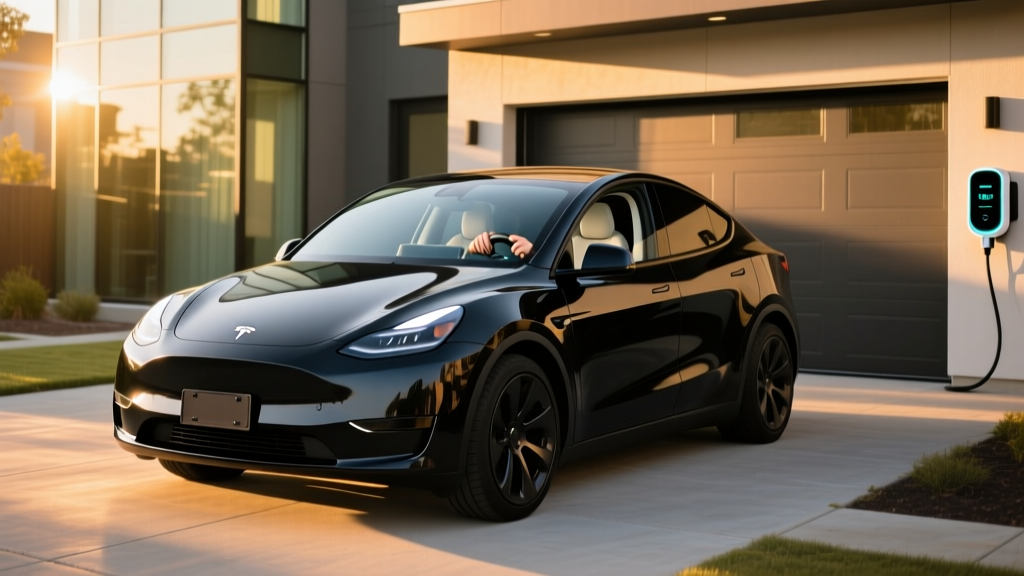
Home charging on a Level 2 wall connector at 48 amps (11.5 kW) adds about 37 miles of range per hour. Most owners who charge overnight at home never need to visit a public charger for daily driving. Installation of a 240V/60A circuit typically runs $800–$2,000 depending on your electrical panel's capacity and the distance from panel to charging location. If your home has a 200-amp panel with spare capacity, expect the lower end; older 100-amp panels may require a $2,000–$4,000 upgrade.
The Model Y ships with the NACS (North American Charging Standard) connector natively. With the broader industry adopting NACS through 2025–2026, access to non-Tesla DC fast chargers from Electrify America, EVgo, and others is expanding — though Tesla's Supercharger network remains the most reliable and geographically dense fast-charging system in the U.S.
Technology, Driver Assistance, and Interior
The 2026 Model Y continues Tesla's minimalist interior approach: a single 15.4-inch center touchscreen handles navigation, climate, media, and vehicle settings. There is no traditional instrument cluster — speed and drive data appear in the upper-left corner of the main display. The refreshed "Juniper" interior introduced in 2025 added ventilated front seats, ambient lighting, a rear-seat touchscreen for passengers, and improved sound insulation that noticeably reduces road noise at highway speeds.
Autopilot and FSD (Supervised): Every Model Y includes basic Autopilot (traffic-aware cruise control and lane centering). Full Self-Driving (Supervised) remains a $8,000 add-on or $99/month subscription. FSD adds automatic lane changes, traffic light and stop sign recognition, and enhanced navigation-based routing. However, it is critical to understand that FSD is an SAE Level 2 driver-assistance system — you must keep your hands on the wheel and eyes on the road at all times. It does not make the vehicle autonomous.
Standout tech includes over-the-air software updates that regularly add features, Sentry Mode (360° security recording), Dog Mode (climate maintenance for pets), and the Tesla app's remote preconditioning — which warms or cools the cabin and battery while plugged in, preserving range before you depart.
Pros, Cons, and Who the Model Y Suits Best
Pros
- Best-in-class Supercharger network access — most reliable DC fast-charging in the U.S.
- Segment-leading efficiency (28 kWh/100mi) lowers electricity costs vs. rivals
- Strong cargo capacity (72.1 cu ft) rivals midsize SUVs
- OTA updates continuously improve the vehicle post-purchase
- Qualifies for up to $7,500 §30D credit (subject to sourcing/income rules)
- Low 0–60 times (3.5s Performance) for the price point
Cons
- Minimalist interior lacks physical controls — frustrating for some drivers
- No Apple CarPlay or Android Auto integration
- Ride quality firm on rough pavement, especially with 21-inch Performance wheels
- FSD ($8,000) remains Level 2 — expensive for what it delivers
- Insurance premiums run 15–30% higher than comparable gas SUVs in many states
- Rear visibility limited by sloping roofline; camera dependency
Best for: Tech-comfortable commuters and small families who have reliable home charging access and want minimal public-charging friction. The Model Y's combination of range, efficiency, and Supercharger infrastructure makes it one of the most practical EVs for road trips. It's less ideal for buyers who prioritize traditional luxury interiors, physical buttons, or who lack access to overnight Level 2 charging.
Model Y vs. Key Competitors: Is It Still the Default Choice?
| Spec | Tesla Model Y LR AWD | Ford Mach-E ER AWD | Hyundai Ioniq 5 AWD |
|---|---|---|---|
| EPA Range | 320 mi | 305 mi | 290 mi |
| Battery | ~78 kWh (NMC) | 91 kWh (NMC) | 77.4 kWh (NMC) |
| Peak DC Charge | 250 kW | 150 kW | 235 kW |
| 10–80% DCFC | ~25 min | ~38 min | ~20 min |
| 0–60 mph | 4.8 sec | 5.1 sec | 5.0 sec |
| Cargo (rear up) | 30.2 cu ft | 29.7 cu ft | 27.2 cu ft |
| Base MSRP | $47,990 | $48,995 | $50,100 |
| Native Connector | NACS | NACS (2025+) | NACS (2025+) |
The Model Y's advantage has narrowed significantly. The Ioniq 5 charges faster (10–80% in ~20 minutes thanks to its 800V architecture), the Mach-E offers a more conventional interior with physical controls, and both competitors now have NACS access to Superchargers. However, the Model Y still wins on overall efficiency, cargo space, and the seamlessness of Tesla's vertically integrated charging ecosystem. If you prioritize the lowest cost-per-mile and the most proven road-trip charging experience, the Model Y retains a slight edge.
Federal Tax Credit: Does the Model Y Qualify?
- MSRP Cap: Model Y qualifies — classified as an SUV under IRS rules, the cap is $80,000 (all trims well under)
- Buyer Income Cap: Modified AGI must not exceed $300,000 (joint), $225,000 (head of household), or $150,000 (single)
- Battery Sourcing: Critical minerals and battery component requirements tighten annually through 2026. Tesla's supply chain has adapted, but confirm current-year eligibility on the fueleconomy.gov credit lookup before purchasing
- Point-of-Sale Transfer: You can elect to transfer the credit to Tesla at purchase/lease, reducing your cap cost immediately — no need to wait for a tax refund
- Lease Loophole: Even if your income exceeds the cap, some lessees benefit because the leasing entity (Tesla's finance arm) claims the commercial clean vehicle credit under §45W and may pass savings through as a reduced monthly payment. This is not guaranteed — ask Tesla finance directly
The interplay between leasing and tax credits deserves attention. Under IRS rules, the §30D credit technically belongs to the vehicle's owner — in a lease, that's the lessor (Tesla), not you. However, Tesla has historically reflected this credit as a capitalized-cost reduction in lease offers, effectively passing the savings to the lessee as lower monthly payments. This structure can benefit buyers who exceed the §30D income cap, since the income restriction applies to individual purchasers, not to the commercial entity claiming the credit in a lease arrangement. Always confirm with Tesla's finance team and your tax advisor before relying on this structure.
Bottom Line: Lease, Buy, or Look Elsewhere?
Leasing the 2026 Model Y makes financial sense if you want the lowest monthly payment, plan to stay under 10,000–12,000 miles annually, and prefer swapping into a new vehicle every three years without worrying about battery degradation or resale value. The effective monthly cost after the §30D credit transfer can drop into the high $300s for the Long Range RWD, making it competitive with gas-powered compact SUVs once fuel savings are factored in.
Buying makes more sense if you drive 15,000+ miles annually (lease overage penalties add up fast), want to keep the vehicle beyond five years, or want to claim the full §30D credit on your own tax return. Over a five-year ownership horizon, the Model Y Long Range AWD's total cost of ownership — factoring electricity vs. gas, lower maintenance, and the tax credit — undercuts comparably priced gas SUVs by an estimated $4,000–$7,000, depending on local electricity rates and insurance premiums.
Frequently Asked Questions
What is the real-world range of the 2026 Tesla Model Y?
The EPA rates the Long Range AWD at 320 miles. In mixed real-world driving, expect 280–300 miles. Sustained highway speeds above 70 mph reduce that to roughly 260–285 miles. In winter conditions below 32°F, plan for 220–255 miles due to battery thermal losses and cabin heating demands. Preconditioning the battery while plugged in recovers some of this loss.
How fast does the Model Y charge at home and on the road?
At home on a Level 2 (240V/48A) Tesla Wall Connector, the Model Y charges at 11.5 kW, adding roughly 37 miles of range per hour — a full overnight session replenishes the entire battery. On DC fast chargers, peak rate is 250 kW at a V3/V4 Supercharger, with a 10–80% session taking approximately 25 minutes. The charge curve tapers significantly above 50% SoC, so charging to 100% on DC adds substantial time.
Does the Tesla Model Y qualify for the $7,500 federal EV tax credit?
Yes, the Model Y qualifies for up to $7,500 under IRS §30D, provided the buyer meets income thresholds ($300K joint / $150K single MAGI) and the vehicle's battery meets current-year critical-mineral and component sourcing requirements. The credit can be transferred to the dealer at point of sale, reducing your lease cap cost or purchase price immediately. Verify current eligibility at fueleconomy.gov before signing.
Is leasing a Tesla Model Y better than buying?
Leasing offers lower monthly payments and avoids long-term depreciation risk — especially relevant as EV technology evolves rapidly. However, leases cap annual mileage (typically 10,000–12,000 miles) and you build no equity. If you drive under 12,000 miles yearly and prefer a new vehicle every three years, leasing at current rates (effectively $379–$499/mo after credit) is compelling. High-mileage drivers or those planning to keep the car 5+ years will save more by purchasing.
How does Model Y insurance cost compare to gas SUVs?
Tesla insurance premiums average 15–30% higher than comparable gas-powered compact SUVs, according to industry data. Average annual premiums range from $1,800–$2,800 depending on state, driving record, and trim. Tesla offers its own insurance product in many states that uses real-time driving data to set rates, which can be cheaper for safe drivers. Always get quotes before committing to a lease or purchase.