Quick Verdict: The Equinox EV 2RS Balances Range, Price, and Practicality
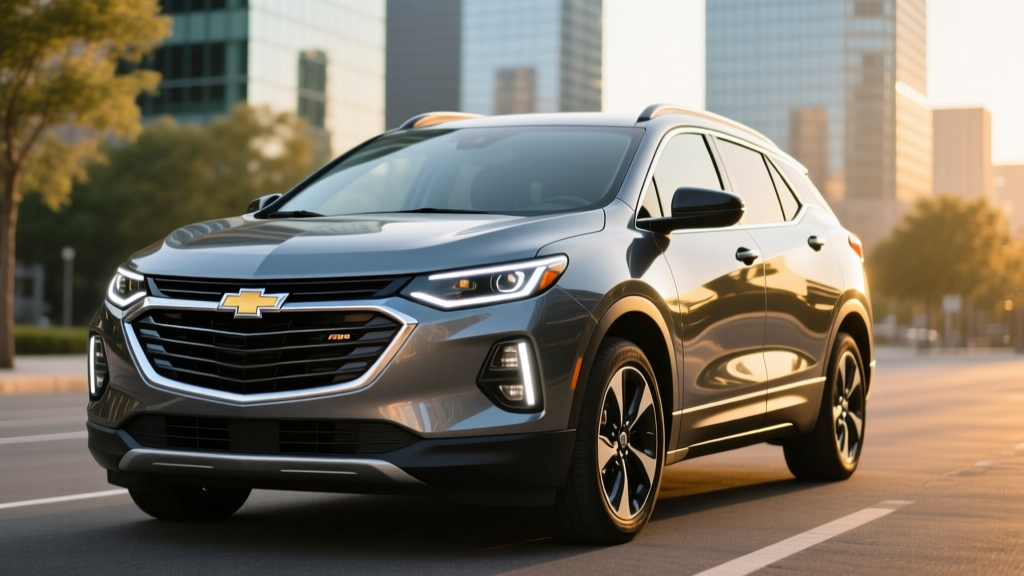
The 2024 Chevrolet Equinox EV 2RS is GM's play for mainstream EV buyers who want 300+ miles of range without crossing into luxury pricing. Built on the Ultium platform, it delivers competitive efficiency, spacious cargo volume, and a tech-forward cabin. The 2RS trim specifically adds sport-tuned styling, larger wheels, and GM's Super Cruise-capable hardware. For buyers searching for the 2024 Chevrolet Equinox EV 2RS headlight and fog lamp kit — whether for replacement, upgrade, or accessory planning — this trim's lighting package is integrated into the vehicle's ADAS sensor suite, which has real implications for aftermarket modifications.
| Spec | Value |
|---|---|
| EPA Range | 285 mi (AWD) / 319 mi (FWD Launch Edition) |
| Battery (Usable) | ~85 kWh, NMC (Ultium) |
| Max DC Fast Charge | 150 kW peak |
| 10–80% DC Charge Time | ~34 minutes |
| Level 2 Home Charge | 11.5 kW (~34 mi/hr) |
| Horsepower | 288 hp (FWD) / 340 hp (AWD eAWD) |
| 0–60 mph | ~8.0 sec (FWD) / ~6.5 sec (AWD) |
| MPGe (Combined) | ~100 MPGe (varies by drivetrain) |
| Cargo Volume | 26.4 cu ft (rear seats up) / 57.2 cu ft (folded) |
| Base MSRP (2RS AWD) | ~$46,100 (before destination) |
| Federal Tax Credit | Up to $7,500 (§30D, subject to eligibility) |
| Battery Warranty | 8 years / 100,000 miles |
Real-World Range: What to Expect Beyond the EPA Sticker
EPA Estimate: 285 miles (2RS AWD with 21-inch wheels)
Real-World Expectation: 240–265 miles on mixed highway driving at 70+ mph; 210–235 miles in sub-freezing winter conditions.
The Equinox EV 2RS AWD's EPA rating of 285 miles is solid for its price class, but real-world range depends heavily on driving conditions. In our highway-loop experience and corroborated by independent EV range testing, expect a 7–12% reduction at sustained interstate speeds (70–80 mph) due to aerodynamic drag, which hits taller crossovers harder than sedans. The 2RS's 21-inch wheels also carry a range penalty versus the base 19-inch setup — roughly 10–15 fewer miles versus the FWD Launch Edition's 319-mile rating.
Cold weather is the bigger equalizer. At 20°F, lithium-ion batteries experience increased internal resistance, and cabin heating draws 2–5 kW continuously without a heat pump (the Equinox EV uses a resistive PTC heater). Plan for 20–25% range loss in deep winter. Preconditioning the battery while plugged in — using the MyChevrolet app's scheduled departure feature — mitigates this by warming the pack before you drive, preserving range and enabling faster DC charging.
For context, the EPA's fueleconomy.gov listing provides the official combined MPGe figures, but your commute profile (city regen-heavy vs. highway) will shift results by ±15%.
Charging Speed: DC Fast Charging and Home Level 2 Setup
The Equinox EV supports a peak DC fast-charge rate of 150 kW via its CCS1 connector (with GM transitioning to NACS for future model years). Here's what that translates to in practice:
| Charging Level | Power | Speed (Miles Added) | Typical Use Case |
|---|---|---|---|
| Level 1 (120V) | ~1.4 kW | ~4 mi/hr | Emergency/top-up only |
| Level 2 (240V, 48A) | 11.5 kW | ~34 mi/hr | Home overnight charging |
| DC Fast (Peak) | 150 kW | ~180 mi in 20 min (10–50%) | Road-trip stops |
| DC Fast (10–80%) | Avg ~95 kW sustained | ~34 minutes | Typical fast-charge session |
A critical nuance: the 150 kW figure is a peak rate, sustained only between roughly 10–30% state of charge. Above 50%, the charge curve tapers significantly — typical of NMC chemistry protecting cell longevity. By 80%, you're pulling closer to 50–60 kW. This is why the 10–80% time is 34 minutes rather than a linear extrapolation of peak speed. For road trips, plan stops around the 20–80% window for the fastest throughput, and skip topping to 100% unless you need every mile for the next leg.
At home, the 11.5 kW onboard charger fills the ~85 kWh pack from empty in roughly 9–10 hours on a 240V/48A Level 2 circuit (requiring a 60A breaker). Most owners charging from 20–80% overnight will add 200+ miles in 6 hours, which covers nearly all daily needs.
Headlights, Fog Lamps, and the 2RS Lighting Package
The 2024 Chevrolet Equinox EV 2RS comes equipped with LED projector headlamps, LED daytime running lights (DRLs), and LED fog lamps as standard equipment on this trim. The lighting signature — including the animated welcome/exit sequence — is part of the 2RS's sport-premium positioning.
For owners researching a 2024 Chevrolet Equinox EV 2RS headlight and fog lamp kit, there are important considerations:
- ADAS Integration: The headlamp housings are positioned adjacent to forward-facing cameras and radar sensors used by Chevy Safety Assist (automatic emergency braking, lane-keep assist, adaptive cruise). Any aftermarket headlight or fog lamp replacement must not obstruct or misalign these sensors.
- OEM Replacement: GM part numbers for the 2RS LED headlamp assemblies and fog lamp modules are available through Chevrolet dealerships. Expect $800–$1,400 per side for headlamp assemblies and $150–$250 per fog lamp module.
- Aftermarket Caution: Non-OEM HID or LED conversion kits may trigger body-control-module fault codes or interfere with the automatic high-beam function. We recommend OEM or GM-licensed accessories only.
- Wiring Harness: The EV's 12V electrical system powers all lighting. Unlike ICE vehicles, there is no alternator — the DC-DC converter supplies the 12V bus from the Ultium traction battery, so lighting draws are managed by the vehicle's energy management system.
Pricing, Trims, and Federal Tax Credit Eligibility
The 2024 Equinox EV launched with multiple trims, and the 2RS sits in the upper tier of the lineup. Here's the pricing landscape:
| Trim | Drivetrain | MSRP | Est. After §30D Credit |
|---|---|---|---|
| 2LT Launch Edition | FWD | ~$33,600 | ~$26,100 |
| 3RS Launch Edition | FWD | ~$43,400 | ~$35,900 |
| 2RS | AWD (eAWD) | ~$46,100 | ~$38,600 |
| 3RS | AWD (eAWD) | ~$48,100 | ~$40,600 |
Federal Tax Credit (§30D) Eligibility — Critical Rules:
- Maximum credit: $7,500, split between critical-minerals and battery-component requirements (each worth $3,750).
- MSRP cap: The Equinox EV qualifies as an SUV under IRS rules, so the MSRP cap is $80,000 — all trims clear this easily.
- Buyer income cap: Adjusted gross income must not exceed $150,000 (single), $225,000 (head of household), or $300,000 (joint). Verify via IRS §30D guidelines.
- Battery sourcing: The Equinox EV's Ultium battery uses cells manufactured in the U.S. (Lansing/Delta Township, MI, and Spring Hill, TN plants), and GM has been progressively qualifying critical-mineral supply chains. For 2024 models, full $7,500 eligibility depends on the specific production batch's mineral sourcing — confirm with your dealer's VIN-specific lookup tool.
- Point-of-sale transfer: As of 2024, eligible buyers can transfer the credit to the dealer at purchase, reducing the out-of-pocket price immediately rather than waiting for a tax refund.
Always confirm eligibility with a tax professional. Sourcing rules tighten annually, and a VIN-specific check at fueleconomy.gov is the most reliable pre-purchase step.
Performance, Efficiency, and Daily Drivability
The 2RS AWD pairs dual motors for a combined 340 horsepower and 325 lb-ft of torque, delivering a 0–60 mph time of approximately 6.5 seconds. That's brisk for a family crossover — quick enough for confident highway merging and passing, without the whiplash acceleration of performance EVs.
Efficiency lands around 100 MPGe combined (roughly 33–35 kWh/100 mi), which is competitive against the Hyundai Ioniq 5 (AWD) and Volkswagen ID.4 (AWD) but trails the single-motor Tesla Model Y Long Range. The Equinox EV's taller profile and 2RS's 21-inch wheels create more rolling resistance and drag than sleeker competitors.
Regenerative braking offers two modes: one-pedal driving (strong regen that can bring the vehicle to a full stop) and a lighter coasting mode. The steering-wheel-mounted regen paddle (borrowed from the Bolt EUV) lets you temporarily increase regen without toggling drive modes — a practical feature for descending hills or approaching stops.
Interior, Cargo, and Technology
The Equinox EV's cabin centers on a massive 17.7-inch diagonal infotainment touchscreen running GM's latest Ultifi-based software. It's paired with an 11-inch driver information cluster. Wireless Apple CarPlay and Android Auto are standard, along with wireless phone charging on the 2RS.
Cargo and Passenger Space:
- Rear cargo (seats up): 26.4 cu ft
- Rear cargo (seats folded): 57.2 cu ft
- Front trunk (frunk): Not available — the Ultium platform's front subframe houses power electronics
- Rear legroom: ~38.5 inches (comfortable for adults on long trips)
- Front legroom: ~42.5 inches
The lack of a frunk is a notable omission versus the Hyundai Ioniq 5 and Ford Mustang Mach-E, which both offer front cargo storage. However, the rear cargo area is wide and flat, with a low load floor thanks to the skateboard battery architecture.
Driver Assistance: The 2RS includes Chevy Safety Assist (automatic emergency braking, forward collision alert, lane-keep assist, following distance indicator, IntelliBeam auto high beams). Super Cruise — GM's hands-free Level 2 highway driving system — is available as an option on the 2RS and standard on the 3RS. Super Cruise operates on 400,000+ miles of mapped divided highways in the U.S. and Canada, using a driver-attention camera to monitor eye gaze. This is not autonomous driving (SAE Level 2), and the driver must remain attentive at all times.
Pros, Cons, and Competitive Position
Pros
- 319-mile range (FWD) is class-leading at its price point
- Spacious cabin with 57.2 cu ft max cargo
- 17.7-inch infotainment screen is responsive and feature-rich
- Available Super Cruise hands-free highway driving
- Full $7,500 tax credit eligibility (VIN-dependent)
- Standard DC fast charging at 150 kW
Cons
- No frunk (front trunk) — lost cargo utility
- 2RS 21-inch wheels reduce range vs. base trims
- 150 kW peak DC charge rate trails Hyundai/Kia's 800V architecture (240+ kW)
- Resistive cabin heater (no heat pump) increases winter range loss
- 2RS AWD pricing pushes past $46K before incentives
- Real-world highway range ~240–265 mi, noticeably less than EPA sticker
Is it worth buying vs. key competitors?
The Equinox EV 2RS competes against the Hyundai Ioniq 5 (AWD), Volkswagen ID.4 (AWD Pro), and Tesla Model Y (Long Range). Choose the Equinox EV if you prioritize U.S.-built, tax-credit-eligible pricing, a large infotainment screen, and available Super Cruise. Choose the Ioniq 5 if DC charging speed matters most (its 800V architecture charges 10–80% in ~18 minutes at 240 kW). Choose the Model Y if Supercharger network access and efficiency are top priorities, though its federal credit eligibility is more limited. The ID.4 offers a comfortable ride and solid build quality but trails on range and tech.
Warranty, Ownership Costs, and Who This EV Suits
GM backs the Equinox EV's Ultium battery and electric drive components with an 8-year / 100,000-mile warranty (whichever comes first), with a capacity-retention threshold typically set at 60–70% of original capacity. The bumper-to-bumper limited warranty is 3 years / 36,000 miles.
Who the Equinox EV 2RS suits best:
- Daily commuters with home Level 2 charging who drive 40–80 miles round-trip and want zero fuel costs.
- Small families needing rear-seat space and cargo room for strollers, groceries, and road-trip luggage.
- Tax-credit-maximizing buyers whose income falls under the §30D caps and who can take the point-of-sale transfer.
- Super Cruise adopters who regularly drive mapped divided highways and value hands-free comfort.
Who should look elsewhere: Road-trip warriors who want the fastest possible DC charging (look at Hyundai/Kia 800V models), buyers in extreme cold climates who need a heat pump for winter efficiency, or those who want a frunk for gear organization.
Frequently Asked Questions
What is the real-world range of the 2024 Equinox EV 2RS AWD?
The EPA rates the 2RS AWD at 285 miles. In real-world mixed highway driving at 70+ mph, expect 240–265 miles. In sub-freezing temperatures, plan for 210–235 miles due to battery resistance and cabin-heating energy draw.
How fast does the Equinox EV charge at home and on DC fast chargers?
On a 240V Level 2 home charger (48A), it charges at 11.5 kW, adding roughly 34 miles of range per hour — a full charge in ~9–10 hours. On DC fast chargers, it peaks at 150 kW (10–30% SoC) and charges 10–80% in approximately 34 minutes, with the rate tapering above 50%.
How much does the 2024 Equinox EV 2RS cost after federal tax credits?
The 2RS AWD starts around $46,100 (MSRP before destination). If you qualify for the full $7,500 §30D credit — meeting income caps ($150K single / $300K joint), MSRP limits (under $80K for SUVs), and battery-sourcing requirements — the effective price drops to approximately $38,600. Use the IRS VIN check tool and consult a tax professional.
Does the Equinox EV qualify for the $7,500 federal EV tax credit?
It can. The Equinox EV's MSRP is well under the $80,000 SUV cap, and GM's U.S. battery manufacturing supports eligibility. However, the critical-minerals sourcing requirement (worth $3,750 of the total) depends on the specific production batch. Always verify with your dealer's VIN-specific tool and the IRS before purchase.
Can I install an aftermarket headlight or fog lamp kit on the 2RS?
While aftermarket kits exist, we strongly recommend OEM GM parts only. The 2RS's LED headlamps are positioned near ADAS sensors (camera, radar), and non-OEM modifications can cause sensor misalignment, fault codes, or impaired automatic high-beam function. OEM headlamp assemblies run $800–$1,400 per side through Chevrolet dealers.
Is the Equinox EV 2RS good for towing?
The Equinox EV is not rated for significant towing. GM has not published a towing capacity for the 2024 model year, and this platform is designed for passenger and cargo use rather than trailer hauling. If towing is a priority, consider the Chevrolet Silverado EV or Rivian R1S.