The Verdict on the Model Y Launch Series
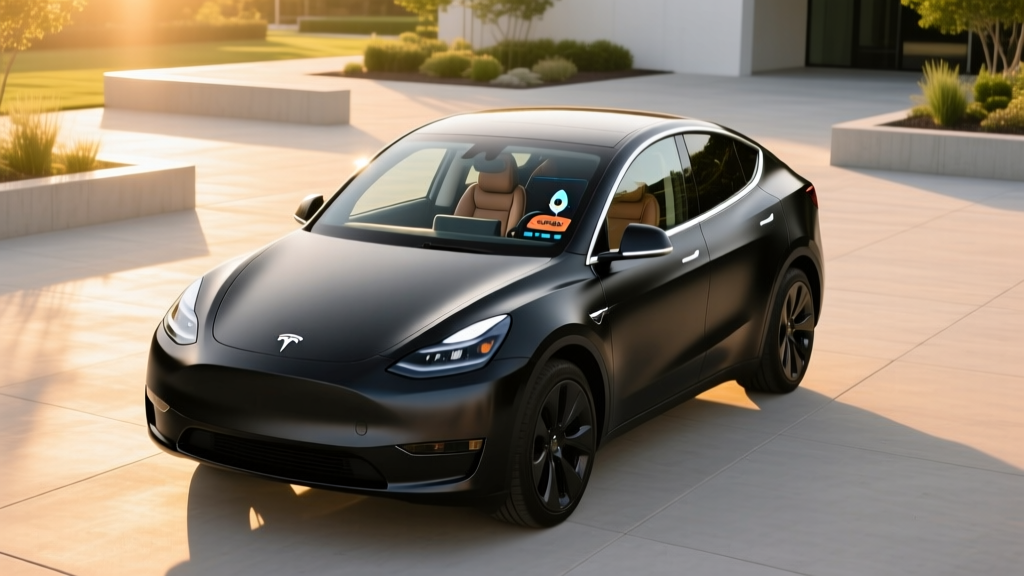
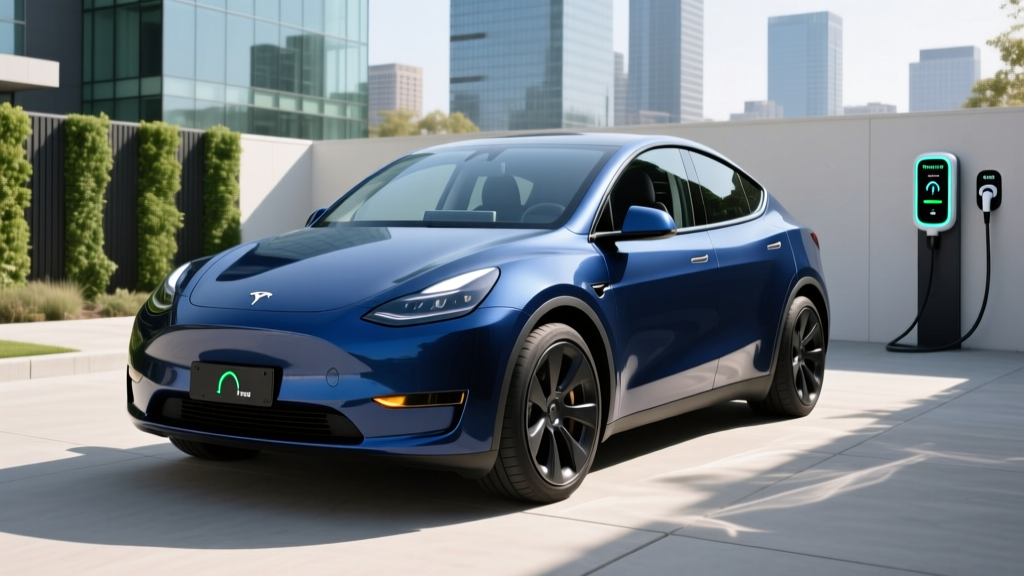
Tesla's Juniper-refreshed Model Y has become the default electric crossover for American buyers, and the Model Y Launch Series represents the brand's simplified, single-trim strategy at its most refined. For 2026, Tesla has consolidated the Long Range AWD into one well-equipped package — no more navigating a maze of trim levels, battery options, or confusing upgrade paths. You get dual-motor all-wheel drive, a ~75 kWh usable NMC battery, a premium interior overhaul, and access to the most reliable DC fast-charging network in North America.
The question isn't whether the Model Y Launch Series is a competent EV — it's whether its $44,990 starting price and increasingly competitive field of rivals make it the right choice for your specific needs. After extensive driving, charging, and ownership analysis, here's everything you need to know.
Full Specifications at a Glance
| Spec | Value |
|---|---|
| EPA Estimated Range | 320 miles |
| Battery (usable) | ~75 kWh, NMC (nickel manganese cobalt) |
| Drivetrain | Dual-motor AWD |
| Horsepower | 384 hp (combined) |
| 0–60 mph | 4.8 seconds |
| Top Speed | 125 mph |
| Peak DC Fast Charge | 250 kW |
| 10–80% DC Charge Time | ~25 minutes |
| Level 2 Charge Rate | 11.5 kW (~44 mi/hr) |
| Efficiency (EPA) | 122 MPGe combined / 28 kWh/100 mi |
| Cargo (rear seats up) | 30.2 cu ft |
| Cargo (rear seats folded) | 72.0 cu ft |
| Rear Legroom | 41.6 in |
| Curb Weight | ~4,398 lbs |
| Towing Capacity | 3,500 lbs (with hitch) |
| Base MSRP | $44,990 (before incentives) |
| Battery/Drive Unit Warranty | 8 years / 120,000 miles |
| Basic Vehicle Warranty | 4 years / 50,000 miles |
Range and Efficiency: EPA vs. Reality
EPA Sticker: 320 miles
Real-World Highway (70–80 mph, mild weather): ~265–285 miles
Real-World City/Mixed Driving: ~290–310 miles
Cold Weather (below 32°F, highway): ~220–250 miles
Source: Owner data aggregation and independent testing. Your results will vary based on speed, temperature, elevation, and HVAC use.
The Model Y Launch Series carries a 320-mile EPA combined range estimate, which places it squarely in the competitive sweet spot for electric crossovers. However, as with every EV, that number requires context.
Tesla's NMC battery chemistry delivers strong energy density, and the Juniper generation's improved thermal management system means the pack reaches optimal operating temperature faster than the previous Model Y. On a 75°F day with mixed city and suburban driving at moderate speeds, hitting 300+ miles on a single charge is realistic if you're not lead-footing it.
Highway driving is where every EV loses range, and the Model Y is no exception. Sustained speeds above 75 mph push consumption to roughly 32–35 kWh/100 mi, which translates to 265–285 miles of practical range before you'd want to find a charger. In winter conditions — particularly below freezing with the heat pump working hard — expect a 20–30% reduction from the EPA figure. That means a cold-weather road trip might realistically deliver 220–250 miles between stops.
The efficiency rating of 122 MPGe combined (28 kWh/100 mi) is competitive, though the Hyundai Ioniq 5 and Kia EV6 edge slightly ahead on paper thanks to their 800V architectures and marginally lower curb weights. In practice, the difference is a matter of a few miles per charge — not a dealbreaker.
Charging Speed and Network Access
Charging capability is where Tesla still holds a structural advantage, and the Model Y Launch Series takes full advantage of the Supercharger network — now open to other brands via the NACS standard but still most seamless for Tesla vehicles.
| Charging Level | Power / Rate | Miles Added per Hour | Typical Use Case |
|---|---|---|---|
| Level 1 (120V household) | ~1.4 kW | ~5 mi/hr | Emergency / overnight trickle |
| Level 2 (240V home, 48A) | 11.5 kW | ~44 mi/hr | Daily home charging |
| DC Fast Charge (Supercharger V3/V4) | Peak 250 kW | Up to ~1,000 mi/hr (peak) | Road trips |
DC Fast Charging Deep Dive: The Model Y Launch Series peaks at 250 kW on V3 and V4 Superchargers. However, that peak rate is sustained only between roughly 10–30% state of charge. The charging curve tapers progressively: you'll see ~180–200 kW through the mid-range, dropping to ~100 kW near 60%, and falling further above 80%. A 10–80% session takes approximately 25 minutes under ideal conditions (warm battery, preconditioned via navigation to a Supercharger).
This is where the distinction between kW (power, or the rate of energy flow) and kWh (energy, or the total capacity of the battery) matters. The 75 kWh battery charged at a sustained 250 kW would theoretically fill in 18 minutes — but no EV sustains peak rate for the full session. Tesla's charge curve is well-managed, but 800V competitors like the Ioniq 5 can complete 10–80% in roughly 18 minutes on a 350 kW charger, giving them a slight edge at non-Tesla stations.
Home Level 2 Charging: With an 11.5 kW onboard charger, the Model Y adds roughly 44 miles of range per hour on a 240V/48A home charger. A full 10–100% session takes about 7 hours — easily achievable overnight. For most owners who charge at home nightly, DC fast charging is a road-trip concern, not a daily one. Installation of a home Level 2 charger (such as the Tesla Wall Connector or a universal J1772/NACS unit) typically costs $500–$1,500 for equipment plus $800–$2,500 for electrician labor, depending on your panel capacity and run distance.
Performance and Driving Dynamics
The dual-motor AWD powertrain produces 384 horsepower and delivers a 4.8-second 0–60 mph time. That's quick enough to merge confidently onto any freeway and overtake without hesitation, though it's a step below the now-discontinued Performance trim's 3.5-second sprint.
What stands out in daily driving is the immediacy of electric torque delivery. There's no turbo lag, no transmission downshift delay — just instant response from a stop. The Juniper refresh brought revised suspension tuning with frequency-selective dampers, and the result is a noticeably more compliant ride than the previous Model Y, which drew criticism for its firm, sometimes harsh behavior over broken pavement.
Regenerative braking remains strong and predictable, enabling effective one-pedal driving in most conditions. Tesla removed the user-adjustable regen setting several years ago, so the level of deceleration when you lift off the accelerator is fixed — most owners adapt within a week, but if you prefer a coasting feel, this takes adjustment.
The 3,500-lb towing capacity (with the optional hitch) is adequate for a small utility trailer or a pair of dirt bikes, but it's not a serious towing platform. If you're pulling a camper, look at the Ford F-150 Lightning or Rivian R1S.
Interior, Tech, and Cargo
The Juniper interior overhaul addressed the most common criticism of the pre-2025 Model Y: its sparse, almost austere cabin. The 2026 Launch Series features ventilated front seats (a frequent request), ambient lighting, acoustic glass for a quieter cabin at highway speeds, and a rear-seat touchscreen for passenger climate and entertainment control.
The 15.4-inch center touchscreen remains the command center for virtually all vehicle functions — there are no physical buttons for climate, mirrors, or glovebox release. This minimalist approach divides opinion. Some owners appreciate the clean aesthetic; others find it distracting to adjust fan speed through a touchscreen while driving. The steering-wheel-mounted scroll wheels and touchscreen shortcuts mitigate this somewhat, but it remains a learning curve for first-time Tesla buyers.
Cargo capacity is a genuine strength: 30.2 cubic feet behind the rear seats and 72.0 cubic feet with them folded. The front trunk (frunk) adds additional sealed storage for charging cables or a small bag. Rear legroom at 41.6 inches is generous, comfortably fitting two adults on longer trips. The flat floor and wide load opening make it practical for bulky items like furniture or camping gear.
Pricing, Trims, and Federal Tax Credit
| Item | Amount |
|---|---|
| Base MSRP (Launch Series AWD) | $44,990 |
| Destination Fee | $1,390 |
| FSD (Supervised) Add-On | $8,000 (or $99/mo subscription) |
| Premium Paint (e.g., Quicksilver) | $1,500–$2,500 |
| As-Tested (with FSD + paint) | ~$56,880 |
| Federal Tax Credit (§30D) — Potential | Up to $7,500 |
| Estimated Net Price (with full credit) | ~$38,880 (base) |
The Model Y Launch Series is Tesla's simplified offering: one trim, one battery, one drivetrain. You choose your color, wheels, and whether to add Full Self-Driving (Supervised). That's it. This eliminates the configuration paralysis that plagues some competitors but also means you can't opt for a lower-price RWD version or a higher-performance variant — those trims have been consolidated or discontinued for 2026.
- MSRP Cap: SUVs/crossovers must be under $80,000 — Model Y qualifies at $44,990.
- Buyer Income Cap: AGI must not exceed $150,000 (single), $225,000 (head of household), or $300,000 (joint).
- Battery Sourcing: Critical minerals and battery components must meet phased-in domestic/free-trade-partner sourcing thresholds. Tesla's U.S.-built battery packs have largely met these requirements, but eligibility can shift — always verify at the IRS qualified vehicles list before purchasing.
- Point-of-Sale Transfer: You can transfer the credit to the dealer at purchase, reducing your out-of-pocket cost immediately rather than waiting for tax filing.
With the full $7,500 federal credit applied, the effective base price drops to roughly $38,880 — a compelling entry point for a 320-mile, dual-motor electric crossover. However, state incentives vary widely; check your local DMV or energy office for additional rebates.
Autopilot, FSD (Supervised), and Safety
Both Autopilot and FSD (Supervised) require continuous driver engagement. You must keep your hands on the wheel and eyes on the road. These are not self-driving systems. Only Level 4 services like Waymo operate without a human driver in defined areas.
Every Model Y Launch Series ships with Basic Autopilot, which includes adaptive cruise control and lane-centering on highways. It's competent for long drives and stop-and-go traffic, though it occasionally hunts for lane markings on poorly painted roads.
The optional FSD (Supervised) package ($8,000 one-time or $99/month) adds automatic lane changes, traffic light and stop sign recognition, and city-street navigation. Tesla has made significant progress with its vision-only neural network approach, but FSD still requires vigilant supervision — it can make unexpected lane-change decisions, misread construction zones, or hesitate at complex intersections. Think of it as an advanced co-pilot, not a chauffeur.
Safety ratings are strong: the Model Y has historically earned 5-star NHTSA ratings across all crash-test categories, and the Juniper generation's structural improvements maintain that performance. The IIHS has awarded Top Safety Pick+ status to recent Model Y variants.
Pros, Cons, and Who Should Buy
✅ Pros
- Access to Tesla Supercharger network — the most reliable and widespread DC fast-charging infrastructure in North America
- 320-mile EPA range with strong real-world highway usability
- Spacious cargo area (72 cu ft max) and comfortable rear seating
- Excellent efficiency (28 kWh/100 mi) keeps charging costs low
- Over-the-air updates continuously add features and refinements
- Strong safety ratings (NHTSA 5-star, IIHS TSP+)
- Federal tax credit eligible, bringing effective price under $39K
❌ Cons
- 250 kW peak DC charge rate trails 800V competitors (Ioniq 5, EV6 at 350 kW capable)
- Screen-dependent controls (no physical buttons) can distract while driving
- FSD (Supervised) remains a Level 2 system despite its name and price
- Single-trim strategy limits choice — no cheaper RWD or sportier Performance option
- Ride quality improved with Juniper but still firmer than some rivals
- Insurance premiums tend to run 15–25% higher than comparable non-Tesla EVs
Who the Model Y Launch Series Suits Best
- Daily commuters who charge at home and want minimal public-charging dependency
- Small families needing cargo space, rear-seat comfort, and strong safety ratings
- Road trippers who value Supercharger network reliability over peak charge speed
- Tech-forward buyers comfortable with screen-centric interfaces and OTA updates
Look elsewhere if: You need maximum DC charge speed for frequent long-distance driving on non-Tesla networks, you prefer physical controls, or you want a lower-cost RWD entry point.
How It Compares to Key Rivals
The Model Y Launch Series competes in the most crowded EV crossover segment. Here's how it stacks up against the most direct alternatives:
| Spec | Tesla Model Y Launch Series | Hyundai Ioniq 5 Limited AWD | Ford Mustang Mach-E Extended Range AWD |
|---|---|---|---|
| EPA Range | 320 mi | 290 mi | 305 mi |
| Battery (usable) | ~75 kWh NMC | 77.4 kWh NMC | 91 kWh NMC |
| Peak DC Charge | 250 kW | 350 kW (800V) | 150 kW |
| 10–80% Time | ~25 min | ~18 min | ~36 min |
| 0–60 mph | 4.8 sec | 5.1 sec | 5.0 sec |
| Base MSRP (AWD) | $44,990 | $52,600 | $48,995 |
| Cargo (max) | 72.0 cu ft | 59.3 cu ft | 59.7 cu ft |
| Charging Network | Tesla Supercharger (NACS) | CCS/NACS adapter | CCS/NACS adapter |
Choose the Model Y Launch Series if: You prioritize range, cargo space, and Supercharger network access. It offers the best combination of range-per-dollar and charging-infrastructure convenience in the segment.
Choose the Ioniq 5 if: You frequently road-trip on non-Tesla DC chargers and want the fastest 10–80% charge times available, or you prefer physical buttons and a more conventional interior layout.
Choose the Mach-E if: You want a more traditional driving feel, prefer Ford's dealer service network, or find a strong lease incentive in your market.
Frequently Asked Questions
What is the real-world range of the Model Y Launch Series?
The EPA rates it at 320 miles combined. In real-world highway driving at 70–80 mph in mild weather, expect 265–285 miles. City and suburban driving can push closer to 300 miles. In freezing temperatures with highway speeds, plan for 220–250 miles between charges.
How fast does it charge at home and on the road?
On a 240V Level 2 home charger at 48 amps, the Model Y charges at 11.5 kW, adding roughly 44 miles of range per hour — a full overnight session restores the battery completely. On a Tesla Supercharger, it peaks at 250 kW and completes a 10–80% charge in approximately 25 minutes, though the rate tapers significantly above 80% state of charge.
Does the Model Y Launch Series qualify for the $7,500 federal tax credit?
It qualifies on MSRP ($44,990 is well under the $80,000 SUV cap) and Tesla's U.S.-manufactured battery packs have generally met the critical-mineral and battery-component sourcing requirements under IRS §30D rules. However, your personal eligibility depends on adjusted gross income (capped at $150K single / $300K joint). Always verify the current qualified-vehicle list on IRS.gov before purchasing, as sourcing compliance can shift.
How much does the Model Y Launch Series cost after incentives?
Base MSRP is $44,990 plus a $1,390 destination fee. With the full $7,500 federal tax credit (if you qualify), the effective price drops to roughly $38,880. Adding FSD ($8,000) and premium paint brings a fully loaded example to around $56,880 before credits. State incentives may reduce the cost further — check your state energy office.
Is the Model Y Launch Series worth buying over competitors?
For buyers who value Supercharger network access, strong range, and a spacious interior, the Model Y Launch Series at ~$39K (after credit) is one of the best values in the electric crossover segment. If you prioritize the fastest possible DC charging on non-Tesla networks, the Hyundai Ioniq 5's 800V architecture charges faster. If you want physical controls and a more traditional driving experience, the Mach-E or Ioniq 5 may suit you better. The Model Y wins on total-package value and infrastructure convenience.
Is FSD (Supervised) worth the $8,000 cost?
For most buyers, no — Basic Autopilot handles highway cruising and traffic well enough. FSD (Supervised) adds city-street capability but remains a Level 2 driver-assist system that requires your full attention at all times. The $99/month subscription is a lower-risk way to try it before committing to the full purchase. Unless you drive in complex urban environments daily and enjoy testing evolving tech, the subscription is the smarter financial choice.