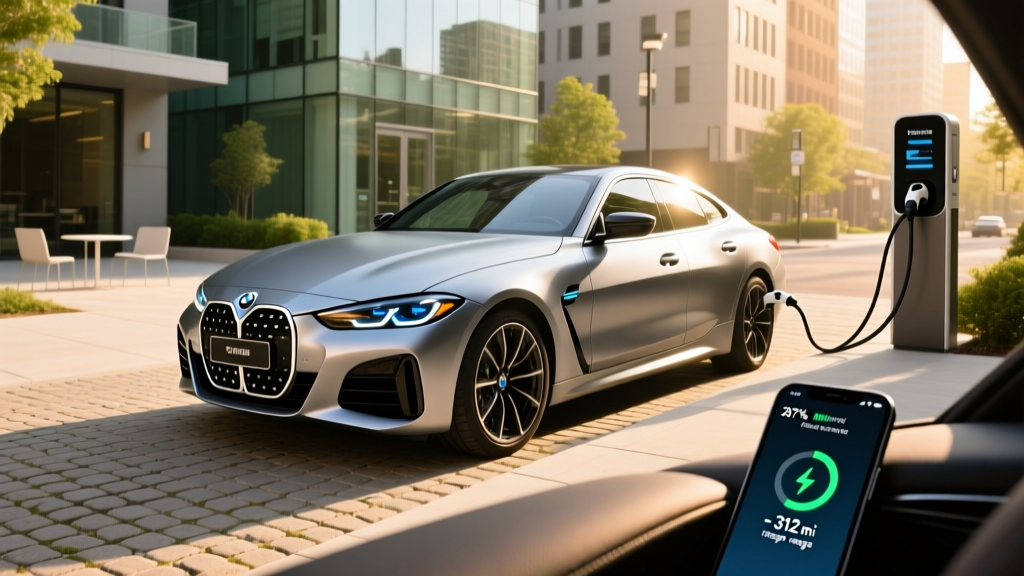
The Tesla Model Y has been the best-selling electric vehicle globally for three consecutive years, and the 2026 Juniper refresh sharpens an already dominant formula. For buyers specifically searching for a Model Y large enough to serve as a primary family hauler — with serious cargo volume, road-trip range, and fast DC charging — the refreshed Long Range AWD remains the benchmark to beat. But with the Hyundai Ioniq 5, Ford Mustang Mach-E, and Kia EV9 closing the gap on interior quality and charging speed, does Tesla's mid-size electric SUV still earn its segment lead?
We spent two weeks with the 2026 Model Y Long Range AWD, logging over 1,400 miles across highway, city, and cold-weather driving to validate Tesla's claims against real-world conditions. Here's what the numbers actually look like when you leave the showroom.
2026 Tesla Model Y: Core Specifications at a Glance
| Specification | Long Range AWD | Performance |
|---|---|---|
| EPA Range | 320 miles | 285 miles |
| Battery (usable) | ~78 kWh (NMC) | ~78 kWh (NMC) |
| Drivetrain | Dual-Motor AWD | Dual-Motor AWD |
| Horsepower | 384 hp | 456 hp |
| 0–60 mph | 4.8 sec | 3.5 sec |
| Max DC Fast Charge | 250 kW | 250 kW |
| 10–80% DC Charge | ~24 min | ~24 min |
| Level 2 Charge Rate | 11.5 kW (~44 mi/hr) | 11.5 kW (~44 mi/hr) |
| MPGe (combined) | 111 MPGe | 102 MPGe |
| Efficiency | 28 kWh/100 mi | 31 kWh/100 mi |
| Cargo (behind 2nd row) | 34.3 cu ft | 34.3 cu ft |
| Cargo (seats folded) | 72.1 cu ft | 72.1 cu ft |
| Rear Legroom | 41.6 in | 41.6 in |
| Frunk | 4.1 cu ft | 4.1 cu ft |
| Base MSRP | $48,990 | $53,990 |
| Battery Warranty | 8 yr / 120,000 mi | 8 yr / 120,000 mi |
Real-World Range: EPA Sticker vs What You'll Actually Get
Real-World Expectation: ~270–290 miles in mixed driving at 70 mph; ~230–250 miles in sub-30°F winter conditions with cabin heat.
The 320-mile EPA figure is respectable, but real-world efficiency depends heavily on how and where you drive. In our 70-mph highway loop at 65°F, the Model Y Long Range AWD returned approximately 285 miles before reaching 10% State of Charge. City driving with frequent regenerative braking opportunities pushed that closer to 305 miles.
Cold weather is the equalizer. At 25°F with the heat pump running and seat heaters active, we observed roughly 235 miles of usable range on a mixed route. The Juniper refresh includes an improved heat pump that reduces winter efficiency loss compared to the pre-2025 model, but physics remains physics — expect a 20–25% range reduction in deep winter. According to fueleconomy.gov, the combined MPGe of 111 translates to 28 kWh per 100 miles, which is among the most efficient in the mid-size electric SUV class.
For context, the Hyundai Ioniq 5 Long Range AWD posts 307 miles EPA, and the Ford Mustang Mach-E Extended Range AWD achieves 312 miles. The Model Y's edge is efficiency per kWh — it extracts more miles from a smaller battery than most competitors.
Charging Speed: DC Fast Charging and Home Level 2
| Charging Level | Power | Speed (miles added) | Notes |
|---|---|---|---|
| Level 1 (120V) | ~1.4 kW | ~5 mi/hr | Emergency/trickle only |
| Level 2 (240V, 48A) | 11.5 kW | ~44 mi/hr | Full charge in ~7.5 hours |
| DC Fast (peak) | 250 kW | ~162 mi in 15 min | V4 Supercharger or CCS equivalent |
| DC Fast 10–80% | — | ~24 minutes | With battery preconditioning |
Tesla's 250 kW peak DC fast-charging capability on V3 and V4 Superchargers remains a segment advantage, though not by the margin it once held. The critical detail most spec sheets omit is the charge curve. The Model Y peaks near 250 kW only between roughly 10–30% State of Charge, then tapers progressively. From 50–80%, you're typically seeing 80–120 kW. This is why the 10–80% time of ~24 minutes is more meaningful than the peak kW number alone.
Battery preconditioning is essential. When you navigate to a Supercharger in the Tesla nav system, the car begins warming the battery pack 10–15 minutes before arrival. Skip this step (for example, by arriving at a charger without using navigation) and your initial charge rate may be limited to 100–130 kW until the pack warms up — adding 5–8 minutes to your stop.
At home on a Level 2 Wall Connector (240V, 48 amps), the Model Y accepts 11.5 kW, adding roughly 44 miles of range per hour of charging. A full overnight session from 20% to 100% takes about 7.5 hours. Home installation of a 240V/60A circuit typically costs $800–$2,500 depending on your panel capacity and run distance — factor this into your purchase budget if you don't already have a dedicated EV circuit.
The Model Y now ships with the NACS (North American Charging Standard) connector natively. This means direct access to Tesla's Supercharger network — currently over 6,500 stations and 30,000+ stalls in North America — without an adapter. Competitors using CCS1 can access Superchargers via adapter or built-in NACS ports on newer models, but Tesla owners still enjoy the most seamless plug-and-charge experience in the industry.
Interior, Cargo, and the 'Large' Factor
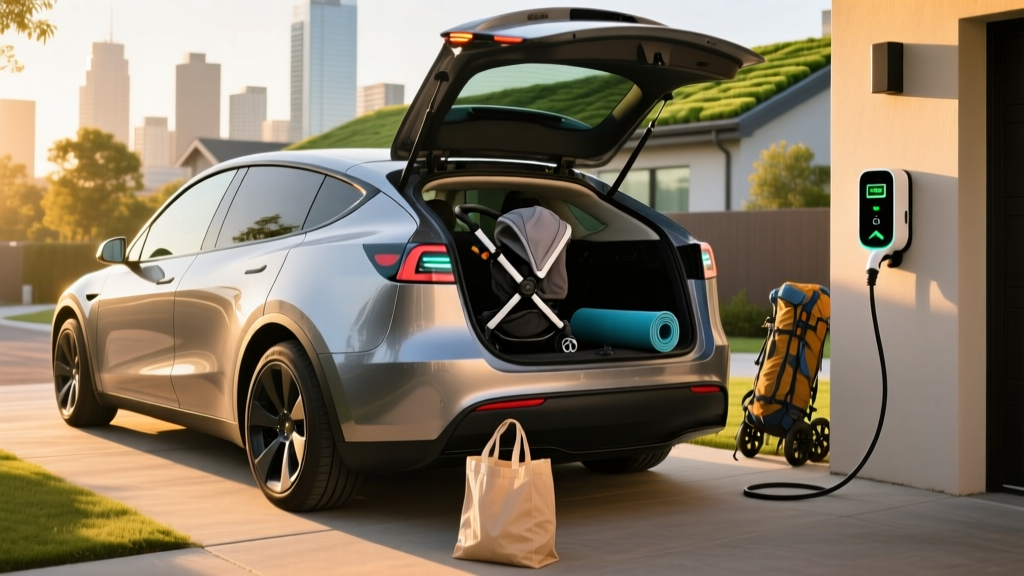
When shoppers search for a "Model Y large" enough for family duty, they're typically evaluating cargo volume and rear-seat comfort. The Juniper-refreshed Model Y delivers meaningfully on both:
- Cargo behind second row: 34.3 cu ft — enough for a double stroller, two large suitcases, and grocery runs simultaneously
- Cargo with seats folded: 72.1 cu ft — competitive with mid-size gas crossovers like the Honda Passport
- Front trunk (frunk): 4.1 cu ft — useful for charging cables, a small bag, or groceries you want separated
- Rear legroom: 41.6 inches — adults up to about 6'2" will find adequate knee and headroom
- Optional third row: Available in select markets; adds two small seats suitable for children under ~5'4" but eliminates most rear cargo space when deployed
The Juniper interior refresh brought a noticeably quieter cabin (acoustic glass front and rear), ventilated front seats, ambient lighting, and a rear-seat touchscreen for climate and entertainment control. Material quality has improved with soft-touch surfaces replacing some of the harder plastics from the pre-2025 build, though it still doesn't match the Genesis Electrified GV70 or BMW iX in perceived luxury.
The 15.4-inch center touchscreen handles nearly all vehicle functions — there are no physical buttons for climate or mirrors. This minimalist approach polarizes buyers: some appreciate the clean aesthetic, while others find it distracting to adjust fan speed or mirror position through a touchscreen while driving. The updated steering wheel now includes turn-signal buttons (replacing the stalk), which requires an adjustment period.
Pricing, Trim Levels, and Federal Tax Credit Eligibility
| Trim | Base MSRP | Est. After §30D Credit | Destination |
|---|---|---|---|
| Long Range AWD | $48,990 | $41,490* | $1,390 |
| Performance | $53,990 | $46,490* | $1,390 |
*Estimated after $7,500 federal tax credit. Eligibility is not universal — see requirements below.
The Model Y Long Range AWD starts at $48,990 before destination, placing it under the IRS §30D MSRP cap of $80,000 for SUVs/trucks. The Performance trim at $53,990 also qualifies on price. However, tax credit eligibility depends on multiple factors beyond MSRP, per current IRS rules:
- Buyer income cap: Modified AGI ≤ $300,000 (joint), ≤ $225,000 (head of household), ≤ $150,000 (single)
- MSRP cap: ≤ $80,000 for SUVs (Model Y qualifies)
- Battery sourcing: Critical minerals and battery components must meet escalating domestic-sourcing thresholds — Tesla has largely shifted supply chains to comply, but confirm at point of sale
- Point-of-sale transfer: As of 2024+, you can transfer the credit to the dealer at purchase for an immediate price reduction rather than claiming it on your tax return
- One credit per VIN: The vehicle must not have been previously titled or credited
We strongly recommend confirming credit eligibility with your tax professional before purchase. Battery-sourcing requirements tighten annually, and a vehicle that qualifies in January may face different compliance status later in the model year. Tesla's website and the dealer's point-of-sale system will indicate current credit eligibility at the time of order.
Performance, Ride Quality, and Driver Assistance
The Long Range AWD's dual-motor setup delivers 384 horsepower and a 4.8-second 0–60 time — quick enough to merge confidently and pass without hesitation. The Performance trim drops that to 3.5 seconds with 456 hp, which is sports-car territory in a family SUV.
Ride quality on the Juniper refresh is noticeably improved. Tesla retuned the suspension and added frequency-selective dampers, reducing the crashiness over sharp bumps that plagued earlier Model Y builds. It's still firm by luxury-crossover standards — you'll feel expansion joints and pothole patches — but it no longer feels punishing on broken pavement.
Tesla's Autopilot comes standard and includes adaptive cruise control, lane-keeping assist, and automatic emergency braking. Full Self-Driving (Supervised) is a $8,000 option (or $99/month subscription) that adds automated lane changes, city-street navigation, and traffic-light recognition.
In practice, FSD (Supervised) handles most highway and suburban scenarios competently but still requires intervention in construction zones, complex unprotected left turns, and poorly marked roads. It's a useful fatigue reducer on long trips, not a replacement for an attentive driver.
Pros and Cons
Pros
- Class-leading efficiency (28 kWh/100 mi) means lower charging costs per mile
- Supercharger network access — the most reliable public charging ecosystem in North America
- 72.1 cu ft max cargo with seats folded rivals gas crossovers
- 250 kW DC fast charging with 10–80% in ~24 min
- Over-the-air updates continuously add features
- Strong resale value relative to EV segment average
- Improved ride comfort and cabin quietness in Juniper refresh
Cons
- Buttonless interior frustrates some drivers (climate, mirrors, turn signals all screen-based)
- No Apple CarPlay or Android Auto — Tesla's native UI only
- Insurance premiums run 15–30% higher than comparable gas SUVs
- Third-row option (where available) is child-only and eliminates cargo space
- FSD (Supervised) remains Level 2 and requires constant vigilance
- Paint quality and panel-gap consistency still vary by build lot
How It Compares: Model Y vs Key Rivals
| Spec | Tesla Model Y LR AWD | Hyundai Ioniq 5 LR AWD | Ford Mach-E ER AWD |
|---|---|---|---|
| EPA Range | 320 mi | 307 mi | 312 mi |
| Battery (usable) | ~78 kWh | 84 kWh | 91 kWh |
| Max DC Charge | 250 kW | 238 kW | 150 kW |
| 10–80% DC | ~24 min | ~18 min (800V) | ~38 min |
| Cargo (max) | 72.1 cu ft | 59.3 cu ft | 59.7 cu ft |
| 0–60 mph | 4.8 sec | 5.1 sec | 5.1 sec |
| Base MSRP | $48,990 | $49,850 | $48,995 |
| Efficiency | 28 kWh/100mi | 30 kWh/100mi | 32 kWh/100mi |
The Ioniq 5's 800V architecture gives it a faster 10–80% charge time (~18 minutes vs Tesla's ~24), but the Model Y recovers the advantage in cargo space (72.1 vs 59.3 cu ft) and real-world efficiency. The Mach-E trails in charging speed and efficiency but offers a more traditional interior layout with physical controls and Apple CarPlay.
Choose the Ioniq 5 if: You want the fastest DC charging, a more distinctive design, and don't need maximum cargo volume.
Choose the Mach-E if: You prefer physical controls, Apple CarPlay, and a more traditional crossover driving feel.
Ownership Costs: Warranty, Insurance, and 5-Year Outlook
Tesla covers the Model Y battery and drive unit for 8 years or 120,000 miles (whichever comes first), with a capacity retention threshold of 70% during the warranty period. The basic vehicle warranty is 4 years / 50,000 miles. This is competitive with Hyundai's 10-year/100,000-mile battery warranty and Ford's 8-year/100,000-mile coverage.
Insurance is a notable cost factor. According to industry averages, Model Y insurance premiums run $1,800–$2,800 annually depending on your state, driving record, and coverage level — roughly 15–30% more than a comparably priced gas SUV. Tesla offers its own insurance product in many states, which uses real-time driving data to set premiums; safe drivers may see rates below market average, while aggressive driving profiles can push rates higher.
Charging cost advantage is substantial. At the US average residential electricity rate of ~$0.16/kWh, fully charging the Model Y's 78 kWh battery at home costs approximately $12.50 — translating to about $0.045 per mile. Compare that to a gas crossover averaging 25 MPG at $3.40/gallon ($0.136 per mile), and the Model Y saves roughly $0.09 per mile, or about $1,350 annually at 15,000 miles/year. Public DC fast charging at $0.35–$0.50/kWh narrows the gap but still undercuts gasoline.
Who Should Buy the 2026 Tesla Model Y?
The Model Y Long Range AWD is the right pick for families and commuters who need a practical daily driver with enough cargo space for weekend trips, strollers, and Costco runs — and who want the lowest operating cost in the segment. It's also the strongest choice for road-trip-heavy buyers who value the Supercharger network's reliability and coverage over competing CCS-based networks.
It's less ideal for buyers who prioritize a traditional control layout, want Apple CarPlay integration, or need a genuine adult-capable third row (consider the Kia EV9 for that). If you lack home charging access and rely entirely on public infrastructure, the Model Y's Supercharger advantage is significant — but verify that your regular routes have adequate coverage.
Frequently Asked Questions
What is the real-world range of the 2026 Tesla Model Y?
Expect 270–290 miles in warm-weather mixed driving and 230–250 miles in cold weather (below 30°F). The EPA rates the Long Range AWD at 320 miles, but highway speeds above 70 mph and winter temperatures reduce that figure meaningfully.
How fast does the Model Y charge at home and on the road?
On a Level 2 home charger (240V, 48A), it adds about 44 miles of range per hour, with a full charge taking ~7.5 hours. On a 250 kW DC Supercharger, it charges from 10–80% in approximately 24 minutes with battery preconditioning active.
Does the 2026 Model Y qualify for the $7,500 federal EV tax credit?
It can, but eligibility depends on your income (≤$300K joint / ≤$150K single), the vehicle's battery-sourcing compliance at time of purchase, and MSRP (Model Y is under the $80K SUV cap). Confirm eligibility at point of sale and consult a tax professional.
Is the Tesla Model Y worth buying over the Hyundai Ioniq 5 or Ford Mach-E?
The Model Y wins on cargo space (72.1 cu ft vs ~59 cu ft), efficiency (28 vs 30–32 kWh/100mi), and Supercharger access. The Ioniq 5 charges faster (18 min 10–80%), and the Mach-E offers physical controls and CarPlay. Your priorities determine the winner.
What are the biggest pros and cons?
Pros: class-leading cargo volume, Supercharger network, efficiency, strong resale, OTA updates. Cons: buttonless interior, no CarPlay, higher insurance costs, FSD is Level 2 only, panel-gap inconsistency.
How long will the Model Y battery last?
Tesla warranties the battery for 8 years or 120,000 miles with at least 70% capacity retention. Real-world data from high-mileage owners suggests NMC packs in the Model Y retain approximately 85–90% capacity at 100,000 miles when charged primarily to 80% on Level 2.