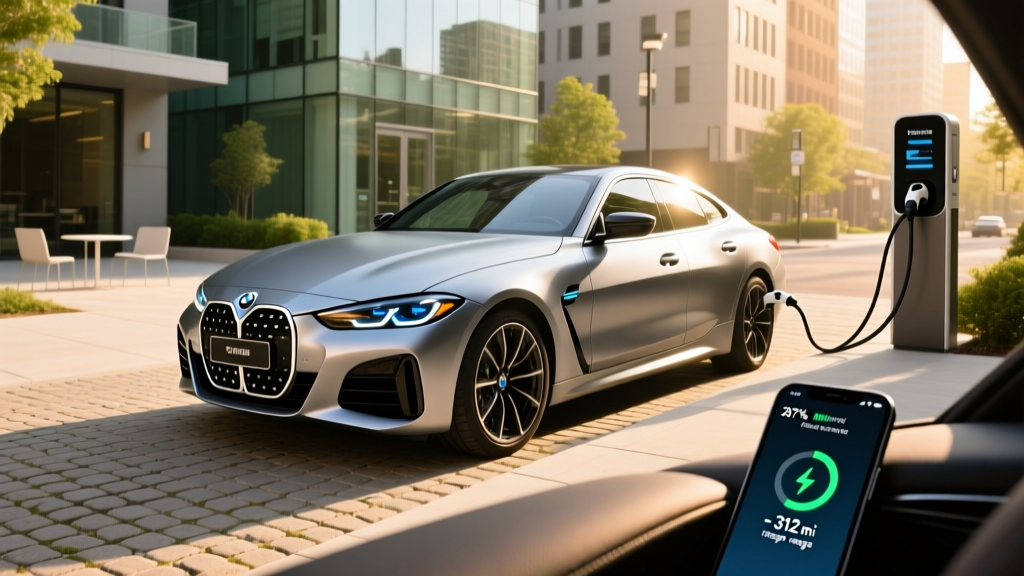
The BMW i4 has occupied a unique niche since its debut: a premium electric sport sedan that looks, drives, and feels like a conventional BMW 4 Series Gran Coupe — just without the tailpipe. For the 2026 model year, the electric BMW i4 lineup continues with the rear-wheel-drive eDrive40, the dual-motor all-wheel-drive xDrive40, and the performance-flagship M50. It remains one of the few EVs that prioritizes driving dynamics over maximum cabin volume, which makes it a compelling pick for enthusiasts — and a compromised one for families.
This review breaks down every number that matters: EPA range versus what you'll actually see on the highway in January, DC fast-charging curves and taper behavior, home Level 2 charging realities, IRS §30D tax credit eligibility, and how the i4 stacks up against the Tesla Model 3, Hyundai Ioniq 6, and Polestar 2 in the real world.
2026 BMW i4 at a Glance: Key Specs by Trim
| Spec | eDrive40 | xDrive40 | M50 |
|---|---|---|---|
| Drivetrain | RWD (single motor) | AWD (dual motor) | AWD (dual motor) |
| Horsepower | 335 hp | 396 hp | 536 hp |
| 0–60 mph | 5.5 sec | 4.6 sec | 3.7 sec |
| Battery (gross / usable) | 83.9 kWh / ~81.5 kWh | 83.9 kWh / ~81.5 kWh | 83.9 kWh / ~81.5 kWh |
| Battery Chemistry | NMC (nickel manganese cobalt) | NMC | NMC |
| EPA Range | Up to 318 mi | Up to 287 mi | Up to 270 mi |
| EPA Efficiency | ~98 MPGe / 34 kWh/100mi | ~93 MPGe / 36 kWh/100mi | ~89 MPGe / 38 kWh/100mi |
| Max DC Fast Charge | 205 kW | 205 kW | 205 kW |
| 10–80% DC Charge Time | ~31 min | ~31 min | ~31 min |
| Level 2 (AC) Charge Rate | 11 kW (~34 mi/hr) | 11 kW (~34 mi/hr) | 11 kW (~34 mi/hr) |
| Base MSRP | $52,200 | $58,200 | $69,700 |
Source: fueleconomy.gov and BMW USA specifications. EPA range varies by wheel size and options.
Real-World Range: What the EPA Sticker Doesn't Tell You
EPA Estimated: 318 miles
Real-World Highway (70–75 mph, mild weather): ~265–280 miles
Real-World Combined (mixed city/highway, 60°F): ~275–295 miles
Cold Weather (20–30°F, highway, heater on): ~210–240 miles
The eDrive40's 318-mile EPA figure is achieved with the standard 19-inch wheel package. Opt for the 20-inch M Sport wheels and that drops to roughly 290 miles. The dual-motor xDrive40 and M50 carry heavier powertrains and more aggressive tuning, sacrificing range for traction and acceleration.
In real-world highway driving at 70–75 mph, the i4 eDrive40 typically delivers 265–280 miles before you'll want to stop — consistent with the ~10–15% highway penalty most EVs experience versus the EPA combined cycle. The M50, with its 536 hp and performance-biased motor mapping, is thirstier: expect 220–240 highway miles in mild weather.
Cold weather is the bigger concern. BMW's heat pump (standard on 2026 models) helps mitigate cabin energy draw, but battery chemistry still suffers in sub-freezing temperatures. At 20–30°F on a highway run with the heater active, plan for 30–35% range reduction from the EPA figure. If your commute is a 200-mile round trip in a Minnesota winter, the eDrive40 can still handle it — but the M50 will be cutting it close without a mid-route top-up.
Charging Speed: DC Fast Charging and Home Level 2
| Charging Level | Power (kW) | Connector | Speed (miles added/hr) | Notes |
|---|---|---|---|---|
| Level 1 (120V household) | ~1.4 kW | J1772 / NACS | ~4 mi/hr | Emergency/trickle only |
| Level 2 (240V home) | 11 kW | J1772 / NACS | ~34 mi/hr | Full charge in ~8 hrs |
| DC Fast Charge | Up to 205 kW | CCS1 / NACS | ~195 mi in 10 min (peak) | 10–80% in ~31 min |
The i4's 83.9 kWh battery (gross) supports a peak DC fast-charge rate of 205 kW via its 400-volt architecture. That's competitive but not class-leading — the Hyundai Ioniq 6 and Kia EV6 use 800V systems that can peak higher, though real-world sustained rates are closer than the spec sheets suggest.
Here's the charging-curve reality: the i4 hits its 205 kW peak only in a narrow state-of-charge (SoC) window, roughly 10–30%. From 30–60%, it sustains around 150–170 kW. Above 80%, the rate tapers sharply to protect the NMC cells — dropping below 50 kW. That's why the 10–80% time is 31 minutes while a hypothetical 10–100% charge would take closer to 50 minutes. On a road trip, this means you should plan to charge to 80% and drive on, rather than waiting for a full battery.
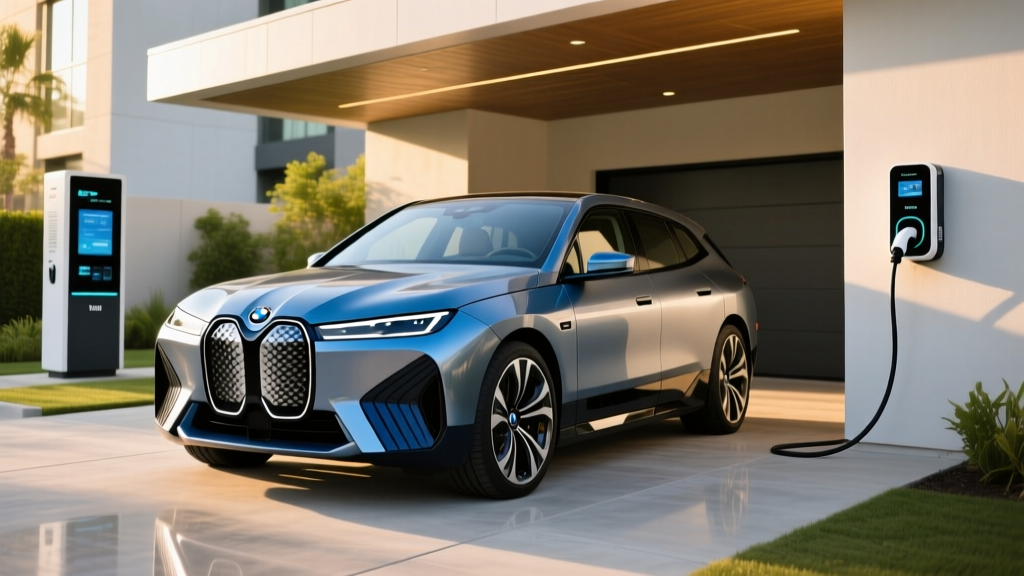
For home charging, the onboard 11 kW AC charger is a strong point. Plugged into a 48-amp Level 2 wallbox (like a ChargePoint Home Flex or BMW Wallbox), the i4 adds roughly 34 miles of range per hour. A full 0–100% charge takes about 8 hours, which is ideal for overnight replenishment. If your home electrical panel supports a 60-amp circuit, you'll get the full 11 kW benefit; older panels limited to 40 amps will cap you around 7.7 kW (~24 mi/hr).
2026 i4 models come with NACS (Tesla-style) charge ports in North America, granting native access to Tesla Superchargers. CCS1 adapters are available for Electrify America and other legacy networks. This dual-network flexibility is a significant practical advantage for road-trippers.
Performance and Driving Dynamics
The i4 rides on BMW's CLAR platform (shared with the 4 Series Gran Coupe), which means it was engineered as a driver's car first and electrified second. The result is genuinely engaging handling — weighted steering, balanced chassis tuning, and a low center of gravity from the floor-mounted battery pack.
The eDrive40 (335 hp, RWD) is the sweet spot for daily driving: 0–60 in 5.5 seconds is brisk, and the single-motor rear-drive layout delivers the classic BMW feel. The xDrive40 (396 hp, AWD) adds all-weather traction with a modest 0.9-second improvement to 60. The M50 (536 hp, AWD) is the performance flagship — 3.7 seconds to 60, M-tuned adaptive suspension, and an electronic limited top speed of 130 mph. It's quick enough to embarrass most sports cars at a stoplight, though the 4,600+ lb curb weight is noticeable in tight corners.
Regenerative braking offers three levels (adaptive, high, low) plus a "B" mode for strong one-pedal-style driving. BMW's adaptive regen uses radar and navigation data to automatically modulate regeneration based on traffic ahead — one of the smarter implementations in the segment.
Pricing, Trims, and Federal Tax Credit Eligibility
| Trim | Base MSRP | Est. As-Tested* | §30D Credit Eligible? | Effective Price (after max credit) |
|---|---|---|---|---|
| eDrive40 | $52,200 | $56,000–$62,000 | Yes (if sourcing + income met) | ~$44,700 |
| xDrive40 | $58,200 | $63,000–$70,000 | Yes (if sourcing + income met) | ~$50,700 |
| M50 | $69,700 | $75,000–$82,000 | Yes (MSRP under $55K cap? No — M50 exceeds sedan cap) | ~$69,700 (no credit) |
*As-tested pricing includes common options (Premium Package, larger wheels, driver-assist packages). Destination charge additional (~$995).
Under current IRS §30D rules, the i4 eDrive40 and xDrive40 qualify for up to $7,500 in federal tax credits — but only if multiple conditions are met:
- MSRP Cap: Sedans must be at or below $55,000 MSRP. The eDrive40 ($52,200) clears this. The xDrive40 ($58,200) does not — it is classified as a sedan and exceeds the cap. Verify classification with your dealer, as IRS vehicle-class definitions can differ from marketing labels.
- Buyer Income Cap: Modified AGI must not exceed $150,000 (single), $225,000 (head of household), or $300,000 (joint). Source: IRS.gov §30D.
- Battery Sourcing: At least a percentage of critical minerals and battery components must be sourced from the U.S. or FTA partners. BMW's supply chain has been gradually qualifying, but the exact credit amount ($3,750 or $7,500) depends on the specific model year's sourcing compliance. Check the fueleconomy.gov tax credit lookup for the VIN-specific amount.
- Point-of-Sale Transfer: As of 2024+, you can transfer the credit to the dealer at purchase, reducing your out-of-pocket cost immediately rather than waiting for tax filing.
Important: The M50 at $69,700 exceeds the $55,000 sedan MSRP cap and does not qualify for the federal credit. Tax credit rules are subject to change — always confirm with a tax professional and the IRS before purchasing.
Interior, Cargo, and Technology
The i4's cabin is where the BMW DNA is most apparent — and where the EV compromise is most visible. The interior materials, fit, and finish are excellent: Sensafin synthetic leather is standard, with Vernasca and Merino leather options. The curved display running BMW iDrive 8.5 (updated for 2026) pairs a 12.3-inch instrument cluster with a 14.9-inch infotainment touchscreen in a single curved glass panel.
Cargo space is the i4's most significant weakness versus competitors:
- Rear cargo (behind second row): 16.6 cu ft
- Cargo with rear seats folded: 45.8 cu ft
- Rear legroom: 33.1 inches
- Front legroom: 41.5 inches
Compare that to the Tesla Model 3 (23 cu ft trunk + frunk) or the Hyundai Ioniq 6 (12.3 cu ft trunk but with a frunk), and the i4's Gran Coupe liftback design shows its limitations. There is no front trunk (frunk) — the space is occupied by power electronics. For two people with moderate luggage, the i4 is fine. For a family of four on a road trip, you'll be packing strategically.
Tech highlights:
- BMW iDrive 8.5 with wireless Apple CarPlay and Android Auto
- BMW Digital Key Plus (UWB-based phone-as-key)
- Harman Kardon surround sound (standard on M50, optional on lower trims)
- BMW IconicSounds Electric (Hans Zimmer-composed drive soundscapes — polarizing but switchable)
Driver assistance (SAE Level 2): The Driving Assistant Professional package includes adaptive cruise control with stop-and-go, lane-keeping assist, and BMW's Highway Assistant (hands-off-capable on divided highways up to 85 mph with eyes on the road). This is not autonomous driving — the driver must remain attentive and the system monitors via an interior camera. Think of it as BMW's equivalent to Tesla Autopilot or Ford BlueCruise: capable Level 2 assist, not self-driving.
Pros and Cons: The Honest Scorecard
Pros
- Class-leading driving dynamics — genuine sport sedan feel
- Premium interior quality, excellent NVH (noise/vibration/harshness)
- Competitive 318-mile EPA range (eDrive40)
- 205 kW DC fast charging with NACS native access
- iDrive 8.5 is one of the best infotainment systems in the segment
- Strong regenerative braking with smart adaptive mode
- eDrive40 qualifies for up to $7,500 federal credit (conditions apply)
Cons
- Tight rear seat and cargo space vs. rivals (no frunk)
- M50 does not qualify for federal tax credit (MSRP cap)
- 400V architecture limits peak charge rate vs. 800V competitors
- Real-world cold-weather range drops ~30–35%
- Driver-assist packages are expensive add-ons, not standard
- Higher insurance premiums typical of BMW (plan 15–25% above Model 3)
How the BMW i4 Compares to Key Rivals
The electric BMW i4 competes in the premium midsize electric sedan segment against strong alternatives. Here's how the numbers stack up:
| Metric | BMW i4 eDrive40 | Tesla Model 3 LR | Hyundai Ioniq 6 SEL | Polestar 2 LR SM |
|---|---|---|---|---|
| EPA Range | 318 mi | 341 mi | 361 mi | 320 mi |
| Base MSRP | $52,200 | $42,880 | $42,450 | $50,400 |
| 0–60 mph | 5.5 sec | 4.2 sec | 6.1 sec | 5.9 sec |
| Max DC Charge | 205 kW | 250 kW | 233 kW (800V) | 205 kW |
| Cargo (rear) | 16.6 cu ft | 23 cu ft | 12.3 cu ft | 14.4 cu ft (hatch) |
| §30D Credit | Up to $7,500* | Up to $7,500* | Up to $7,500* | Up to $7,500* |
*Credit eligibility depends on buyer income, battery sourcing, and MSRP caps. Verify at purchase. Source: fueleconomy.gov
The Tesla Model 3 Long Range wins on range, price, charging speed, and Supercharger network access. The Ioniq 6 wins on range and 800V charging architecture. But neither matches the i4's interior refinement, ride quality, or steering feel. If you prioritize the drive, the i4 is the answer. If you prioritize value and efficiency, the Model 3 or Ioniq 6 is harder to argue against.
Who Should Buy the Electric BMW i4?
- You want a premium sport sedan experience with electric powertrain
- Your daily commute is under 200 miles round-trip
- You have access to home Level 2 charging
- You value interior quality and driving dynamics over maximum cargo space
- You qualify for the §30D credit (income under $150K single / $300K joint)
- You want 536 hp and 3.7-second 0–60 performance
- Range of ~220–240 real-world highway miles is acceptable
- The $69,700+ price (without tax credit) fits your budget
- You need family-hauler cargo space (consider the iX, Model Y, or Ioniq 5)
- Maximum range per dollar is your priority (Model 3 LR, Ioniq 6)
- You frequently drive 300+ miles in cold weather without charging access
Battery Warranty and Long-Term Ownership
BMW covers the i4's high-voltage battery with an 8-year / 100,000-mile warranty against defects and excessive capacity loss (defined as dropping below 70% of original capacity). The powertrain (electric motors, power electronics) carries the same 8-year/100,000-mile coverage. The standard vehicle limited warranty is 4 years / 50,000 miles, with 3 years / 36,000 miles of complimentary scheduled maintenance.
NMC battery chemistry in the i4 has proven durable in early fleet data, with most owners reporting less than 5% degradation at 30,000–40,000 miles. BMW recommends keeping daily charge limits at 80–90% and only charging to 100% when needed for long trips — a practice that significantly extends NMC cell life. The i4's battery management system includes active liquid cooling and heating, which helps maintain cell health across temperature extremes.
Insurance costs are worth budgeting for: expect annual premiums 15–25% higher than a comparable gas-powered 4 Series, driven by the battery replacement cost (estimated at $15,000–$20,000 out of warranty) and BMW's parts pricing. Get quotes before purchasing.
Frequently Asked Questions
What is the real-world range of the electric BMW i4?
The eDrive40 achieves up to 318 miles EPA, but real-world highway driving yields approximately 265–280 miles in mild weather and 210–240 miles in cold conditions (20–30°F). The M50 delivers around 220–240 real-world highway miles.
How fast does the BMW i4 charge?
On a DC fast charger, the i4 peaks at 205 kW and charges from 10–80% in approximately 31 minutes. At home on a Level 2 (240V, 48-amp) charger, it adds about 34 miles of range per hour, with a full charge taking roughly 8 hours.
Does the BMW i4 qualify for the federal EV tax credit?
The i4 eDrive40 (MSRP $52,200) can qualify for up to $7,500 under IRS §30D, provided the buyer meets income limits ($150K single / $300K joint) and the battery meets critical-mineral and component sourcing requirements. The M50 ($69,700) exceeds the $55,000 sedan MSRP cap and does not qualify. Always verify current eligibility at IRS.gov.
Is the BMW i4 worth buying over the Tesla Model 3?
If you prioritize driving dynamics, interior luxury, and a traditional premium sedan experience, the i4 is worth the price premium. If you prioritize maximum range, lowest cost, fastest charging, and the largest charging network, the Model 3 Long Range is the more rational choice.
What are the biggest drawbacks of the BMW i4?
Limited cargo and rear-seat space (no frunk), a 400V charging architecture that limits peak DC speed versus 800V rivals, significant cold-weather range loss, and the M50's ineligibility for the federal tax credit. Insurance premiums also run higher than average.
Does the BMW i4 have a NACS or CCS charge port?
2026 North American i4 models come equipped with the NACS (Tesla-style) charge port natively, providing direct access to Tesla Superchargers. CCS1 adapters are available for use with Electrify America and other CCS-based networks.
How long will the BMW i4 battery last?
BMW warranties the battery for 8 years / 100,000 miles against dropping below 70% capacity. Real-world data from early i4 owners shows less than 5% degradation at 30,000–40,000 miles. With proper care (avoiding frequent 100% charges, preconditioning for DC charging), NMC batteries in this class typically retain 85–90% capacity at 100,000 miles.