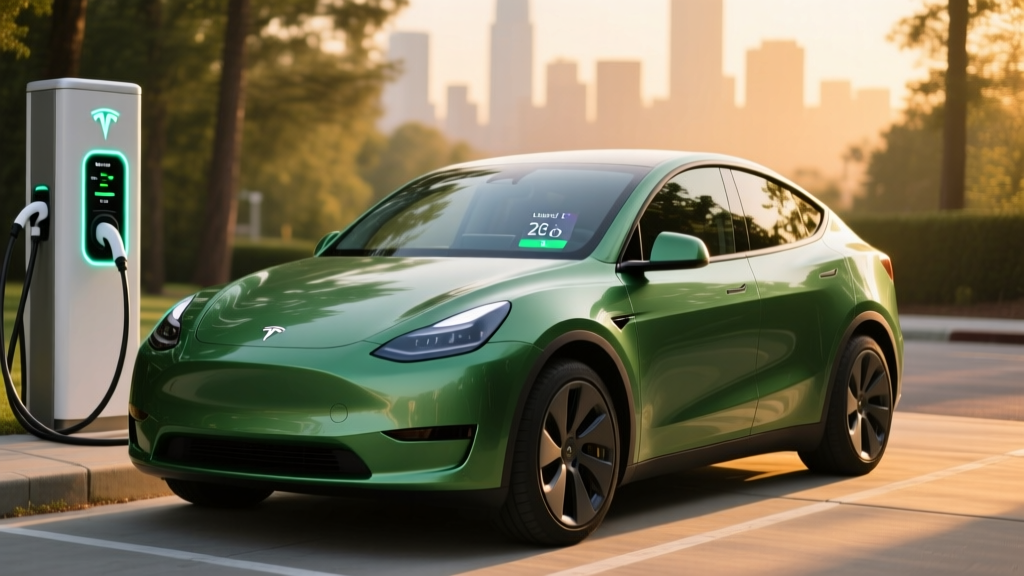
If you've been searching for a "tesla charlie 5 entrance" into the EV world, you're likely encountering voice-to-text or autocorrect mangling of what most buyers actually mean: the Tesla Model Y — specifically the refreshed Juniper generation that launched in 2025 and carries into the 2026 model year. The Model Y remains the best-selling EV globally and Tesla's volume leader, and the Juniper refresh brought meaningful upgrades to interior quality, ride comfort, and efficiency. This review breaks down every number that matters: real-world range, charging speeds, battery chemistry, pricing after federal tax credits, and whether it still deserves its benchmark status against a growing field of rivals.
Quick Verdict: The Model Y Juniper in 2026
The 2026 Tesla Model Y is a midsize electric crossover available in Long Range AWD and Performance trims, built on the Juniper platform that debuted for the 2025 model year. It pairs a refined interior with Tesla's proven powertrain efficiency and the most extensive DC fast-charging network in North America. For buyers seeking a practical family EV with strong range and minimal charging hassle, it remains the default recommendation — though the competition has narrowed the gap considerably.
Range, Battery, and Efficiency: The Numbers That Matter
| Spec | Long Range AWD | Performance |
|---|---|---|
| EPA Range | 320 miles | 295 miles |
| Battery Capacity (usable) | ~78 kWh | ~78 kWh |
| Battery Chemistry | NMC (Nickel Manganese Cobalt) | NMC |
| Efficiency | 122 MPGe / 28 kWh/100mi | 111 MPGe / 30 kWh/100mi |
| 0–60 mph | 4.8 seconds | 3.5 seconds |
| Horsepower | 384 hp | 456 hp |
| Drivetrain | Dual-Motor AWD | Dual-Motor AWD |
| Max DC Fast Charge | 250 kW | 250 kW |
| 10–80% DC Fast Charge | ~25 minutes | ~25 minutes |
| Level 2 Home Charge Rate | 11.5 kW (~37 mi/hr) | 11.5 kW (~37 mi/hr) |
| Base MSRP | $44,990 | $48,990 |
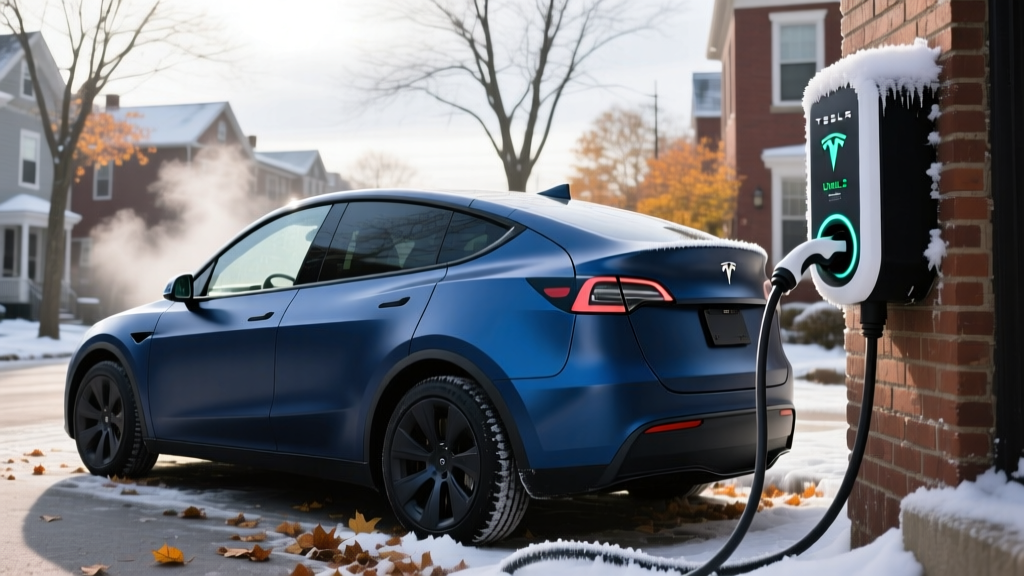
The EPA estimates 320 miles for the Long Range AWD. In real-world driving, expect approximately 275–295 miles on highway road trips at 70–75 mph. In cold weather (below 32°F), range can drop 20–30%, bringing usable range to roughly 225–255 miles depending on cabin heating use. City driving with regenerative braking recovers energy more effectively, often matching or exceeding the EPA figure. Tesla's heat pump (standard on Juniper) mitigates cold-weather losses compared to older resistance-heater EVs, but physics still applies.
The Model Y's NMC (nickel manganese cobalt) battery chemistry prioritizes energy density — that's how Tesla packs 320 miles into a relatively compact crossover. The trade-off versus LFP (lithium iron phosphate) chemistry, which Tesla uses in the base rear-wheel-drive Model 3, is that NMC batteries prefer not to sit at 100% state of charge for extended periods. Tesla recommends daily charging to 80–90% for NMC packs and saving 100% for road trips. This is worth understanding before you buy: if you need a car you can charge to full every night without thinking, an LFP-equipped vehicle may suit you better.
Efficiency is where Tesla continues to lead. At 28 kWh per 100 miles (Long Range), the Model Y Juniper extracts more miles per kilowatt-hour than nearly every competing midsize electric SUV. For context, the Ford Mustang Mach-E Extended Range AWD uses roughly 34 kWh/100mi, and the Hyundai Ioniq 5 AWD sits around 32 kWh/100mi. Over 12,000 miles of annual driving at the national average electricity rate of $0.17/kWh, that efficiency gap translates to roughly $100–$150 in annual energy savings versus less efficient rivals.
Charging Speed and Infrastructure: Still Tesla's Biggest Advantage
| Charging Level | Power (kW) | Speed (miles added/hr) | Typical Use Case |
|---|---|---|---|
| Level 1 (120V household) | ~1.4 kW | ~4 mi/hr | Emergency / overnight trickle |
| Level 2 (240V home, 48A) | 11.5 kW | ~37 mi/hr | Daily home charging |
| DC Fast Charge (V3 Supercharger) | Up to 250 kW | ~1,000 mi/hr (peak) | Road trips, 10–80% in ~25 min |
| DC Fast Charge (V4 Supercharger) | Up to 250 kW* | ~1,000 mi/hr (peak) | Newer stations with cable management |
*The Model Y Juniper's onboard charge system peaks at 250 kW. V4 Supercharger stalls can deliver higher power to vehicles equipped to accept it, but the Model Y caps at 250 kW.
Tesla's native NACS (North American Charging Standard) connector is now the industry standard, with Ford, GM, Rivian, Hyundai, and others adopting it through 2025–2026. This means the Model Y charges natively at every Supercharger without an adapter — a significant usability advantage over CCS-equipped vehicles that still rely on adapters for Tesla network access.
Charging curve reality: The Model Y peaks at 250 kW only at low states of charge (roughly 10–25% SoC). The charge rate tapers progressively: expect ~175 kW around 40% SoC, ~100 kW by 60%, and ~50 kW approaching 80%. This is why Tesla quotes a 10–80% time of approximately 25 minutes rather than a theoretical minimum. On a road trip, plan your stops around the 15–20 minute mark to stay in the fast-charging sweet spot and avoid the slow taper above 80%.
At home, a Tesla Wall Connector on a 60-amp circuit delivers the full 11.5 kW (48 amps), adding roughly 37 miles of range per hour. An overnight charge from 20% to 80% takes about 4.5 hours — more than sufficient for daily use. Installation costs for a Level 2 home setup typically range from $500 to $2,000 depending on panel proximity and whether your electrical panel needs an upgrade. Always consult a licensed electrician for a site-specific quote.
Performance, Ride Quality, and the Juniper Refinement
The Juniper refresh addressed the most common criticism of the pre-2025 Model Y: ride quality. Tesla retuned the suspension with new damper tuning, added acoustic glass, and improved sound deadening throughout the cabin. The result is a noticeably quieter and more composed ride, particularly on rough pavement and at highway speeds. It's still firm compared to a Hyundai Ioniq 5 or Volkswagen ID.4, but the gap has closed meaningfully.
Performance remains strong across both trims:
- Long Range AWD: 384 hp, dual-motor all-wheel drive, 0–60 mph in 4.8 seconds. More than adequate for highway merging and confident in rain or light snow.
- Performance: 456 hp, 0–60 mph in 3.5 seconds. Genuinely quick by any standard, with track-capable braking and handling. Includes Performance brakes, 21-inch wheels, and a lowered suspension.
Both trims feature Tesla's standard regenerative braking system, which provides strong one-pedal-driving capability. Lift off the accelerator and the car decelerates assertively, often eliminating the need to touch the brake pedal in normal driving. There is no adjustable regen setting — Tesla removed that option years ago, and it remains a polarizing choice for buyers accustomed to customizable regen levels in competitors.
Interior, Tech, and Cargo Space
The Juniper interior is a meaningful step up from the pre-2025 Model Y. New materials include ventilated front seats (standard), ambient lighting, a rear-seat touchscreen for climate and entertainment, and improved fit-and-finish on dash and door panels. The minimalist aesthetic remains — there are still no physical buttons, and all controls route through the 15.4-inch center touchscreen.
Cargo and passenger dimensions:
- Cargo volume (rear seats up): 30.2 cu ft
- Cargo volume (rear seats folded): 72.1 cu ft
- Front trunk (frunk): 4.1 cu ft
- Rear legroom: 38.4 inches
- Front headroom: 40.3 inches
Cargo space is competitive with the segment. The frunk adds useful space for charging cables or a small bag. The power-folding rear seats create a flat load floor that accommodates large items easily — a practical advantage over sedans.
Tech highlights:
- Tesla's infotainment OS remains the most responsive in the EV segment, with native navigation, streaming apps (Netflix, YouTube, Spotify), and over-the-air updates that add features regularly.
- Autopilot (basic) is standard: includes Traffic-Aware Cruise Control and Autosteer (lane-centering). This is a SAE Level 2 driver-assistance system — you must keep your hands on the wheel and eyes on the road at all times.
- Full Self-Driving (Supervised) is an optional $8,000 upgrade (or $99/month subscription). Despite the name, FSD Supervised is also SAE Level 2 — it handles more complex scenarios including city streets and traffic lights, but requires constant driver supervision. It is not autonomous driving.
- Sentry Mode, Dog Mode, and the Tesla app's remote climate/preconditioning controls remain best-in-class features that competitors still haven't fully matched.
Neither Autopilot nor Full Self-Driving (Supervised) makes the Model Y a self-driving car. Both are SAE Level 2 systems requiring active driver engagement. You are legally and practically responsible for the vehicle at all times. FSD Supervised can make errors at construction zones, unusual intersections, and in adverse weather. Treat it as an advanced cruise-control and lane-assist system — not a replacement for your attention.
Pricing, Trims, and Federal Tax Credit Eligibility
| Trim | Base MSRP | Est. Federal Credit (§30D) | Effective Price* |
|---|---|---|---|
| Long Range AWD | $44,990 | Up to $7,500 | ~$37,490 |
| Performance | $48,990 | Up to $7,500 | ~$41,490 |
*Effective price assumes full §30D credit eligibility. Actual credit depends on buyer income, battery component sourcing, and MSRP caps. Delivery fees, taxes, and options not included. Verify eligibility at IRS.gov or with a tax professional.
Federal tax credit (§30D) eligibility checklist for the 2026 Model Y:
- MSRP cap: The Model Y qualifies as an SUV under IRS rules, with a cap of $80,000. Both trims clear this threshold comfortably.
- Buyer income cap: Modified adjusted gross income (MAGI) must not exceed $150,000 (single), $225,000 (head of household), or $300,000 (married filing jointly).
- Battery sourcing requirements: The $7,500 credit is split into two halves — $3,750 for critical minerals sourcing and $3,750 for battery component manufacturing. Tesla's US-built battery packs (from the Nevada and Texas Gigafactories) have progressively met more of these requirements, but the exact credit amount can shift based on supply-chain changes. Confirm the current credit amount on fueleconomy.gov before purchasing.
- Point-of-sale transfer: As of 2024, buyers can transfer the credit to the dealer at purchase, receiving the benefit as an immediate price reduction rather than waiting to claim it on their tax return. Tesla participates in this program.
Destination fee adds $1,390 to the MSRP. Common options include FSD ($8,000), premium paint colors ($1,000–$2,500), and 20-inch wheels ($2,000). A fully loaded Long Range AWD with FSD can approach $58,000 before credits.
Warranty and Long-Term Ownership
Tesla's warranty coverage for the 2026 Model Y:
- Basic vehicle warranty: 4 years / 50,000 miles
- Battery and drive unit warranty: 8 years / 120,000 miles (Long Range AWD and Performance), with a minimum 70% capacity retention guarantee over the warranty period
The 8-year/120,000-mile battery warranty is competitive with the segment. Hyundai and Kia offer 10-year/100,000-mile battery warranties, which provide longer calendar coverage but fewer miles. In practice, Tesla's NMC packs have demonstrated strong longevity: data aggregated from owner reports and fleet studies (including those referenced by NHTSA filings) suggest typical degradation of 8–12% over the first 100,000 miles, meaning most owners retain 88–92% of original capacity well within the warranty window.
Insurance costs for the Model Y tend to run 15–25% higher than comparable gas-powered crossovers, reflecting repair costs for aluminum body panels and Tesla's proprietary parts ecosystem. Get a quote before purchasing — in some states, Model Y insurance can exceed $2,500/year for a clean-record driver.
How It Compares: Model Y vs. Key Competitors
- You want native access to the Supercharger network (still the most reliable DC fast-charging network in North America)
- Software, OTA updates, and app integration are top priorities
- You value best-in-class efficiency (28 kWh/100mi)
- You want strong resale value — the Model Y historically depreciates less than most EVs
- You prefer physical buttons and a more traditional interior layout (Hyundai Ioniq 5, Kia EV6)
- You need adjustable regenerative braking settings
- You want a longer basic warranty (Hyundai: 5yr/60k; Kia: 7yr/100k)
- You're uncomfortable with Tesla's camera-only vision approach (no radar or ultrasonic sensors on Juniper)
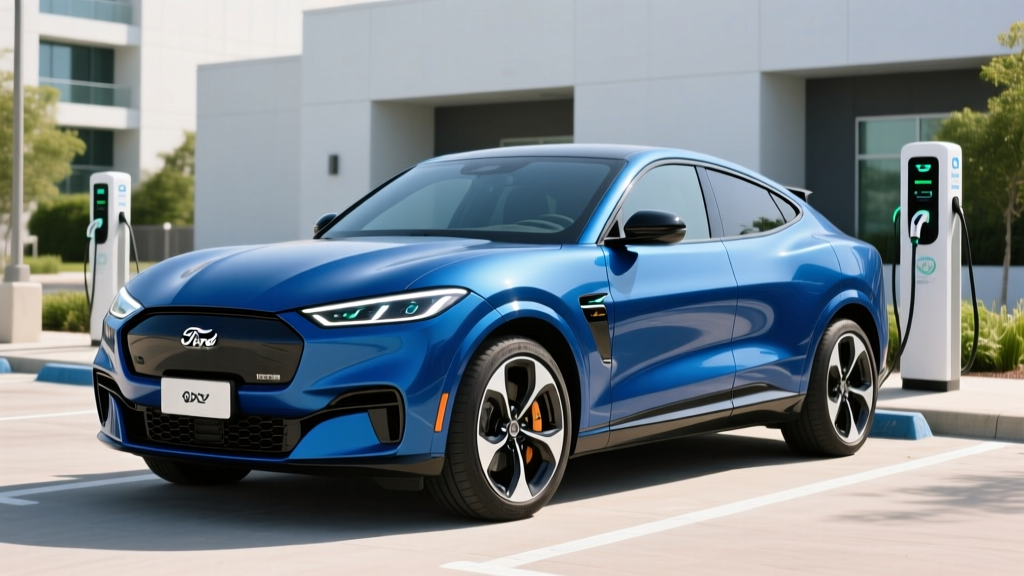
The Hyundai Ioniq 5 (330 miles EPA, 350 kW peak charging with 800V architecture, ~$47,000) charges faster and offers a more distinctive design, but lacks Supercharger-native access. The Ford Mustang Mach-E (312 miles EPA Extended Range, ~$45,000) offers a sportier driving feel and BlueCruise hands-free highway driving, but trails in efficiency. The Kia EV6 shares the Ioniq 5's 800V platform and adds a more aggressive design. All three now use NACS connectors for Supercharger access, narrowing Tesla's infrastructure moat — but native integration still means fewer adapter headaches and better station-finding in the Tesla navigation system.
Frequently Asked Questions
What is the real-world range of the 2026 Tesla Model Y?
The EPA estimates 320 miles for the Long Range AWD and 295 miles for the Performance trim. In real-world highway driving at 70–75 mph, expect 275–295 miles. In cold weather below freezing, plan for 225–255 miles depending on conditions and cabin heat usage. City driving with frequent regenerative braking can match or slightly exceed the EPA estimate.
How fast does the Model Y charge at home and on the road?
At home on a 240V Level 2 charger (48A), the Model Y charges at 11.5 kW, adding approximately 37 miles of range per hour. A full overnight charge easily covers daily driving. On DC fast chargers (Tesla V3/V4 Superchargers), it peaks at 250 kW and charges from 10–80% in approximately 25 minutes. Expect to spend 15–20 minutes at a Supercharger on a typical road-trip stop.
Does the 2026 Model Y qualify for the $7,500 federal EV tax credit?
It can, but eligibility depends on your income (MAGI caps: $150k single / $300k married filing jointly), the vehicle's MSRP (under the $80,000 SUV cap — both trims qualify), and current battery-sourcing requirements under IRS §30D rules. The credit can be transferred at point of sale for an immediate price reduction. Always verify current eligibility on IRS.gov and consult a tax professional, as sourcing rules have shifted periodically.
Is the Tesla Model Y worth buying over the Hyundai Ioniq 5 or Ford Mach-E?
The Model Y wins on efficiency (fewer kWh per mile), native Supercharger integration, software polish, and resale value. The Ioniq 5 wins on peak charging speed (350 kW vs 250 kW) and interior design. The Mach-E wins on driving dynamics and offers hands-free BlueCruise. If charging convenience and software are your top priorities, the Model Y remains the strongest overall package. If you value faster charging and a more distinctive cabin, the Ioniq 5 is a compelling alternative.
What are the biggest pros and cons of the Model Y Juniper?
Pros: Class-leading efficiency, Supercharger network access, strong real-world range, excellent software and app, spacious cargo area, competitive pricing after tax credits, strong safety ratings from IIHS.
Cons: No physical buttons (everything through the touchscreen), non-adjustable regen braking, camera-only sensor suite (no radar backup), higher insurance costs, ride still firmer than some rivals, FSD remains a Level 2 system despite its name.
Is Tesla Vision (camera-only) safe without radar or ultrasonic sensors?
Tesla removed radar and ultrasonic sensors from the Model Y in favor of a pure camera-vision approach. NHTSA has investigated several Tesla Vision-related incidents, and the system can struggle in heavy rain, fog, direct sun glare, and low-visibility conditions. Tesla's active safety features (automatic emergency braking, lane-departure prevention) still function via cameras, but some owners report occasional phantom braking events. If sensor redundancy is a priority, competitors with radar-equipped ADAS (Ford, Hyundai) may give you more confidence.