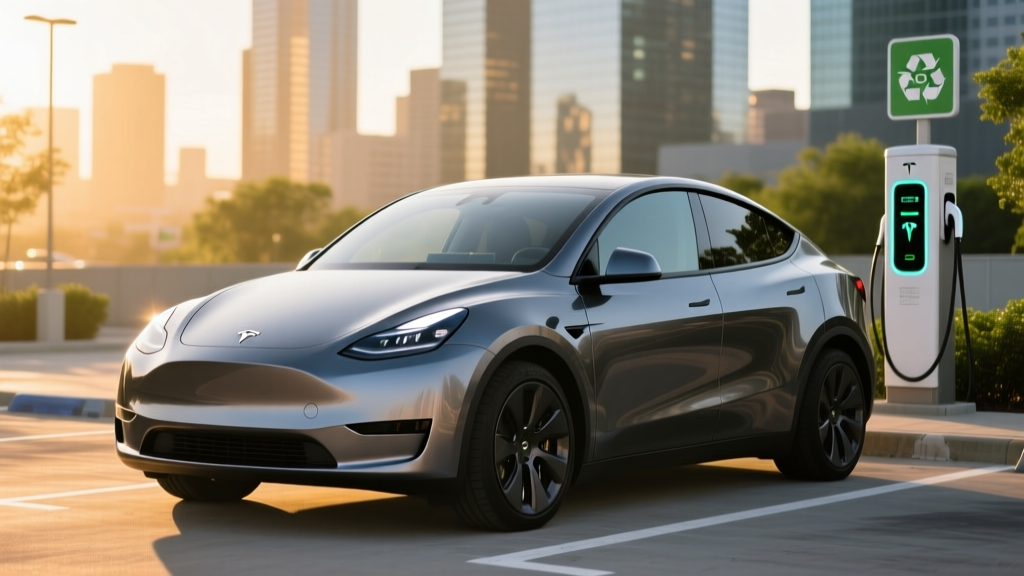
Finding the right Tesla Model Y in dealer or online inventory requires more than just picking a color. As Tesla's best-selling vehicle and one of the most popular EVs globally, the Model Y dominates search results, but specifications, pricing, and federal tax credit eligibility shift frequently. Whether you're browsing Tesla's online inventory configurator or evaluating a specific VIN, this guide gives you the exact numbers — range, charging speed, battery chemistry, and real ownership costs — you need to make an informed purchase in 2026.
2026 Tesla Model Y Quick Specs at a Glance
| Specification | Long Range RWD | Long Range AWD | Performance |
|---|---|---|---|
| EPA Range | 320 miles | 303 miles | 277 miles |
| Battery (usable) | ~75 kWh (NMC) | ~75 kWh (NMC) | ~75 kWh (NMC) |
| Max DC Fast Charge | 250 kW | 250 kW | 250 kW |
| 10–80% DC Time | ~27 min | ~27 min | ~27 min |
| Level 2 Home Charge | 11.5 kW (~44 mi/hr) | 11.5 kW (~44 mi/hr) | 11.5 kW (~44 mi/hr) |
| 0–60 mph | 6.5 sec | 4.8 sec | 3.5 sec |
| Horsepower | 295 hp | 384 hp | 456 hp |
| Drivetrain | RWD | Dual-Motor AWD | Dual-Motor AWD |
| MPGe (combined) | 123 MPGe | 117 MPGe | 111 MPGe |
| Efficiency | 27 kWh/100 mi | 29 kWh/100 mi | 30 kWh/100 mi |
| Base MSRP | $44,990 | $47,990 | $52,990 |
| Battery Warranty | 8 yr / 120,000 mi | 8 yr / 120,000 mi | 8 yr / 120,000 mi |
Real-World Range: What the EPA Sticker Doesn't Tell You
Real-World Expectation: 260–290 miles at sustained highway speeds (70–80 mph); 220–250 miles in freezing weather with cabin heat; up to 310 miles in city/regen-heavy driving at moderate temperatures.
The Model Y Long Range RWD's 320-mile EPA rating is among the best in the compact electric SUV segment, but real-world results depend heavily on driving style, terrain, and ambient temperature. Tesla's NMC (nickel manganese cobalt) battery chemistry provides strong energy density, which is why the Model Y achieves this range in a relatively compact package.
On a 300-mile highway road trip at 75 mph in 65°F weather, expect to arrive with roughly 30–50 miles of buffer remaining. In winter conditions (below 30°F), range loss of 20–30% is typical for any EV, including the Model Y, due to cabin heating demands and reduced battery efficiency. Tesla's standard heat pump helps mitigate this compared to older resistive-heating EVs, but cold-weather range reduction remains a physical reality of lithium-ion chemistry.
For daily commuting with regenerative braking in moderate climates, many owners report exceeding 300 miles before needing a charge. The key variable is speed: efficiency drops sharply above 70 mph due to aerodynamic drag, which affects all EVs but is especially noticeable in taller crossover bodies like the Model Y.
Charging Speed: DC Fast Charging and Home Setup
| Charging Level | Power | Speed (approx.) | Use Case |
|---|---|---|---|
| Level 1 (120V outlet) | 1.2 kW | ~4 miles/hour | Emergency / overnight trickle |
| Level 2 (240V home) | 11.5 kW | ~44 miles/hour | Daily home charging |
| DC Fast Charge | Up to 250 kW | 10–80% in ~27 min | Road trips, Superchargers |
The Model Y's peak DC fast-charge rate of 250 kW is available at Tesla V3 Superchargers and compatible third-party CCS stations (with adapter, which Tesla now includes). However, peak kW is not sustained kW. The charging curve tapers significantly above 60% state of charge (SoC), meaning the 10–80% time of approximately 27 minutes is realistic, but charging from 80–100% can add another 20–25 minutes. For road trips, plan stops around the 10–80% window to minimize time plugged in.
At home, the Model Y's onboard charger accepts up to 11.5 kW on a 48-amp Level 2 circuit (hardwired 60-amp breaker). This adds roughly 44 miles of range per hour, meaning a full charge from 10% takes about 7 hours — easily completed overnight. Installation costs for a home Level 2 setup typically range from $500 to $2,000 depending on panel capacity, conduit run length, and local permit fees. Homes with older 100-amp electrical panels may require a $1,500–$3,000 panel upgrade to support a 60-amp EV circuit alongside existing loads.
One practical note: Tesla's NACS (North American Charging Standard) connector is now the industry standard adopted by Ford, GM, Rivian, and others. This means Model Y owners benefit from the widest DC fast-charging network in North America — Tesla Superchargers — while also gaining access to Electrify America, EVgo, and other networks via the included CCS adapter.
Pricing, Trims, and Federal Tax Credit Eligibility
| Trim | Base MSRP | Est. §30D Credit | Effective Price | MSRP Cap Status |
|---|---|---|---|---|
| Long Range RWD | $44,990 | Up to $7,500* | ~$37,490* | Under $80,000 cap ✓ |
| Long Range AWD | $47,990 | Up to $7,500* | ~$40,490* | Under $80,000 cap ✓ |
| Performance | $52,990 | Up to $7,500* | ~$45,490* | Under $80,000 cap ✓ |
All 2026 Model Y trims fall under the IRS §30D MSRP cap of $80,000 for SUVs, making them potentially eligible for the full $7,500 federal tax credit — but eligibility is not automatic. Three additional requirements must be met:
- Buyer income caps: Modified adjusted gross income (MAGI) must not exceed $150,000 (single), $225,000 (head of household), or $300,000 (joint filers).
- Battery sourcing: A percentage of critical minerals and battery components must be sourced from the U.S. or free-trade-agreement partners. Tesla has shifted significant battery production to U.S. plants, but specific eligibility can change quarterly based on supply-chain composition.
- Point-of-sale transfer: As of 2024, buyers can transfer the credit to the dealer at purchase, reducing the upfront price rather than waiting for a tax refund. Tesla's online checkout supports this option.
Always verify current credit eligibility on the IRS Clean Vehicle Credit page before purchasing, as battery-sourcing requirements tighten annually. Tesla also displays estimated credit eligibility during the online ordering process, but the final determination rests with your tax professional and the IRS.
Interior, Cargo, and Daily Practicality
The Model Y's crossover body delivers meaningful cargo and passenger advantages over the Model 3 sedan. Rear legroom measures 41.6 inches — generous for adults on longer trips — and cargo volume reaches 30.2 cubic feet behind the second row, expanding to 72.1 cubic feet with the rear seats folded. The front trunk (frunk) adds 4.1 cubic feet of secure, weatherproof storage for charging cables or groceries.
The minimalist interior centers on a 15.4-inch touchscreen that controls virtually all vehicle functions, including climate, mirrors, and glovebox. There is no traditional instrument cluster; speed and navigation appear on the left side of the main display. This design polarizes buyers — some appreciate the clean aesthetic, while others miss physical buttons for volume and climate adjustments.
Notable standard features include heated front and rear seats, a panoramic glass roof (with UV/IR protection, though aftermarket sunshades are popular for summer heat), a 14-speaker audio system, and wireless phone charging. The Model Y also supports Tesla's over-the-air (OTA) update system, which regularly adds features and refinements post-purchase.
Driver Assistance: Autopilot and FSD Supervised
The driver must remain fully engaged, hands on the wheel (or providing torque input), and eyes on the road at all times. This is not self-driving.
Every Model Y ships with Tesla's Basic Autopilot, which includes Traffic-Aware Cruise Control and Autosteer (lane centering) for highway use. The optional Full Self-Driving (Supervised) package, currently $8,000 upfront or $99/month, adds Navigate on Autopilot (automatic highway interchanges), Auto Lane Change, Autopark, and Smart Summon (low-speed parking lot navigation to the driver).
FSD Supervised has improved substantially through neural-network-based vision processing, but it remains a Level 2 driver-assist system. It performs well on well-marked highways and in stop-and-go traffic, but requires active supervision in construction zones, complex intersections, and adverse weather. Tesla's driver-monitoring camera enforces attention, and repeated warnings will disengage the system. For a detailed breakdown of Tesla's driver-assist capabilities versus competitors like GM's Super Cruise and Ford's BlueCruise, see our NHTSA ADAS safety resource guide.
Pros and Cons: The Honest Scorecard
Pros
- Class-leading 320-mile EPA range (Long Range RWD)
- Access to the Tesla Supercharger network — the most reliable DC fast-charging system in North America
- 250 kW peak charging; 10–80% in ~27 minutes on V3 Superchargers
- Spacious cargo area (72.1 cu ft max) and comfortable rear seat
- Strong performance even in base trim (6.5-sec 0–60)
- OTA updates continuously improve the vehicle post-purchase
- Falls under §30D MSRP cap for potential $7,500 credit
Cons
- Minimalist interior lacks physical controls — not for everyone
- FSD Supervised is expensive ($8,000) and still requires full driver attention
- No Apple CarPlay or Android Auto — Tesla's proprietary infotainment only
- Ride quality can feel firm over rough pavement, especially with 20-inch wheels
- Insurance premiums tend to run 15–25% higher than comparable non-Tesla EVs
- Cold-weather range loss of 20–30% is typical and should be planned for
Is the Model Y Worth It vs. Key Competitors?
The Model Y's strongest competitors in the compact electric SUV segment include the Hyundai Ioniq 5, Ford Mustang Mach-E, and Kia EV6. Each has trade-offs:
- Hyundai Ioniq 5: Offers 800V architecture for faster peak charging (up to 350 kW at compatible stations), but EPA range tops out at 305 miles. Interior is more conventional with physical buttons.
- Ford Mustang Mach-E: Competitive range (up to 320 miles on Extended RWD) and a more traditional cockpit layout, but DC charging peaks at 150 kW — significantly slower on road trips.
- Kia EV6: Shares the Ioniq 5's 800V platform and charges very fast, but cargo space is tighter (24.4 cu ft behind rear seats vs. the Model Y's 30.2).
Choose a competitor if: You want faster peak charging at 350 kW stations (Ioniq 5/EV6), physical buttons and CarPlay (Ioniq 5, Mach-E), or a lower insurance cost profile.
For a data-driven comparison of efficiency data across these models, the EPA's fueleconomy.gov tool allows side-by-side MPGe and range comparisons.
Who the Model Y Suits Best
The Model Y is the strongest all-around choice for EV buyers who need a daily driver that can also handle road trips without excessive charging stops. It excels for:
- Commuters with home charging: The 320-mile range means most drivers charge once or twice per week at home, rarely visiting a public charger.
- Young families: Rear-facing child seats fit easily, cargo space handles strollers and groceries, and the 5-star NHTSA safety rating provides confidence.
- Road-trip enthusiasts: Supercharger coverage across all 48 contiguous states makes long-distance travel practical, with 20–25 minute stops every 200–250 miles.
- Tech-forward buyers: OTA updates, app-based climate and charging controls, and the FSD Supervised suite appeal to those who want a software-defined vehicle.
It's less ideal for buyers who prefer a traditional interior with physical buttons, those who need Apple CarPlay integration, or drivers in extreme cold climates who may want a larger battery buffer (consider the Rivian R1S or a larger SUV for sub-zero commutes).
Frequently Asked Questions
What is the real-world range of the Tesla Model Y?
The Long Range RWD achieves an EPA-estimated 320 miles, but real-world highway driving at 75 mph typically yields 260–290 miles. In freezing temperatures with cabin heat, expect 220–250 miles. City driving with regenerative braking in moderate weather can approach or slightly exceed the EPA figure.
How fast does the Model Y charge at home and on the road?
At home on a 240V Level 2 charger (48 amps), the Model Y charges at 11.5 kW, adding about 44 miles of range per hour — a full overnight charge. On a Tesla V3 Supercharger (250 kW DC), charging from 10–80% takes approximately 27 minutes, with the curve tapering significantly above 60% SoC.
Does the Tesla Model Y qualify for the $7,500 federal EV tax credit?
All 2026 Model Y trims fall under the $80,000 MSRP cap for SUVs under IRS §30D. However, buyers must also meet income caps ($150K single / $300K joint) and the vehicle must meet battery-sourcing requirements, which can change. Verify eligibility on the IRS Clean Vehicle Credit page before purchasing. The credit can be transferred at point of sale to reduce the purchase price.
Is the Model Y worth buying over the Hyundai Ioniq 5 or Ford Mach-E?
The Model Y wins on Supercharger network access, cargo volume, and OTA feature updates. The Ioniq 5 charges faster at 350 kW stations and offers a more traditional interior. The Mach-E provides a familiar cockpit layout but charges slower. Your choice depends on whether charging network reliability and cargo space (Model Y) outweigh faster peak charging and physical controls (Ioniq 5).
What is the battery warranty on the Tesla Model Y?
Tesla covers the Model Y's battery and drive unit for 8 years or 120,000 miles (whichever comes first), with a guaranteed minimum 70% capacity retention over that period. Real-world degradation data from Tesla's fleet suggests most Model Y batteries retain 85–90% capacity at 100,000 miles, though individual results vary based on charging habits and climate.
Is Tesla's Full Self-Driving actually self-driving?
No. FSD Supervised is an SAE Level 2 driver-assist system. The driver must remain fully attentive, with hands providing steering input and eyes on the road. It handles highway cruising, lane changes, and some city driving well, but requires active supervision and intervention in complex scenarios. Only Level 4 robotaxi services like Waymo operate without a driver.